
Vocabulary Building Building Vocabulary Worksheets for Ages 4-6
7 filtered results
Difficulty Level
Grade
Age
-
From - To
Subject
Activity
Standards
Discover our engaging Vocabulary Building Worksheets designed specifically for children ages 4-6! These interactive resources help young learners develop essential language skills in a fun and stimulating way. Each worksheet is tailored to enhance vocabulary through exciting activities that encourage reading, writing, and comprehension. With colorful illustrations and simple exercises, kids can explore new words while reinforcing their understanding of language. Perfect for parents and educators, our worksheets foster a love for learning and pave the way for future academic success. Start your child's vocabulary journey today and watch them grow into confident communicators! Visit us to explore our fantastic resources!
Favorites
With answer key
Interactive
 Assign to My Students











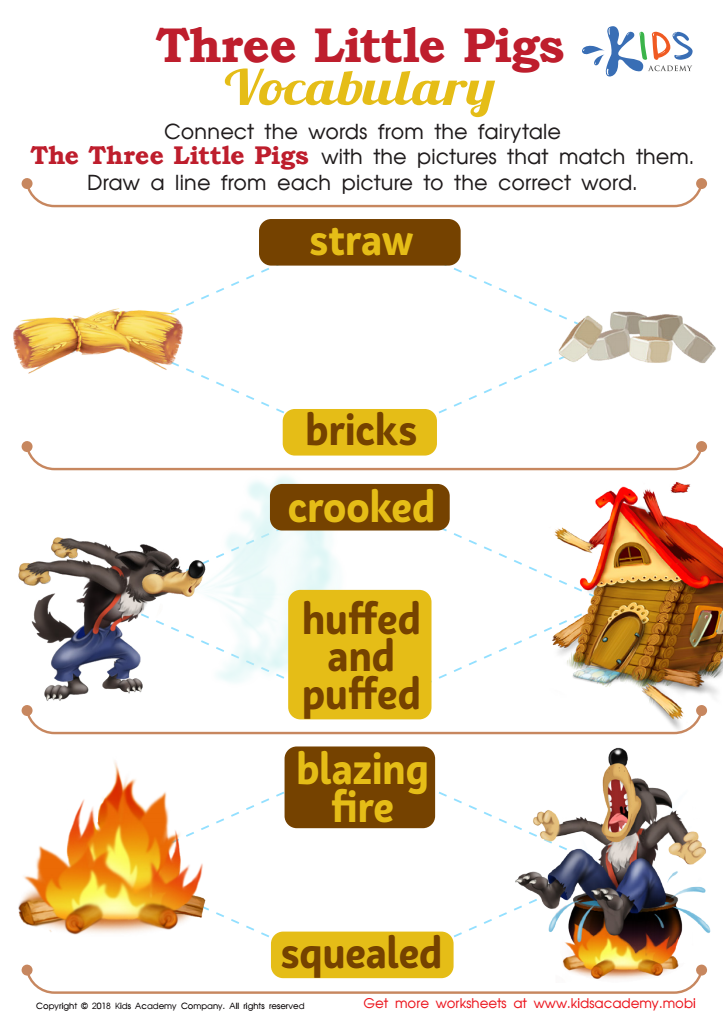
Three Little Pigs Vocabulary Worksheet
Read the Three Little Pigs to your children. Have them use the tracing sheet to connect the story words with the pictures. This is a fun and educational way to help them build their vocabulary.
Three Little Pigs Vocabulary Worksheet
Worksheet
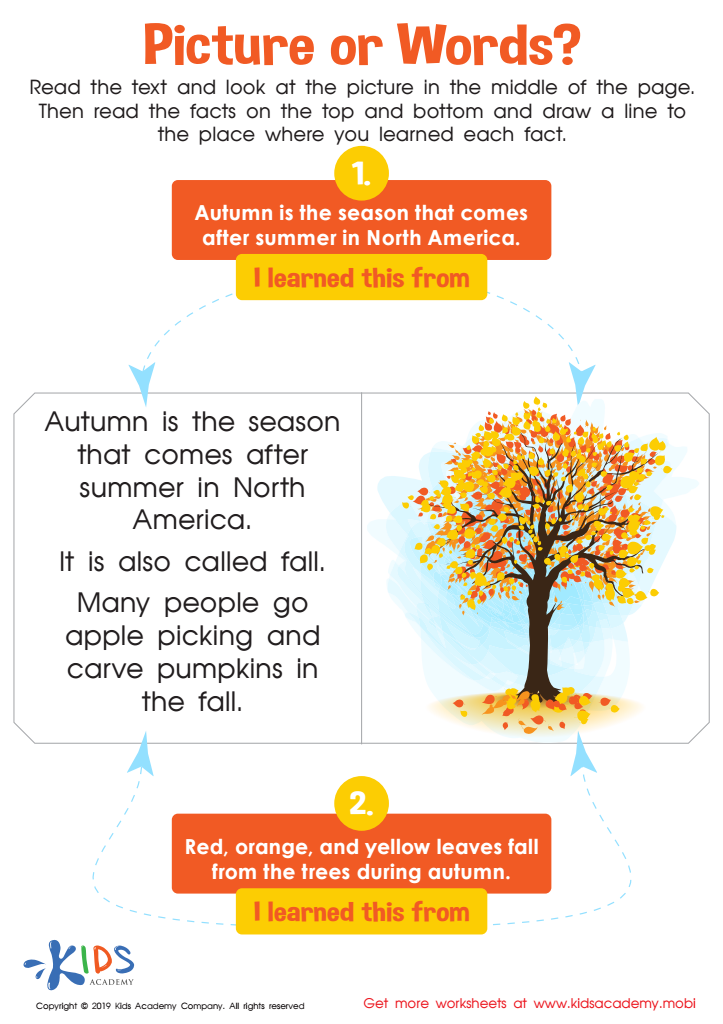
Picture Words Worksheet
Pictures are key for early reading skills. Remind children to use all resources when reading passages to understand meaning. With the free PDF, kids can learn through pictures & words, then answer questions based on what they learned. This hits home that all info in text is valuable, pics included!
Picture Words Worksheet
Worksheet
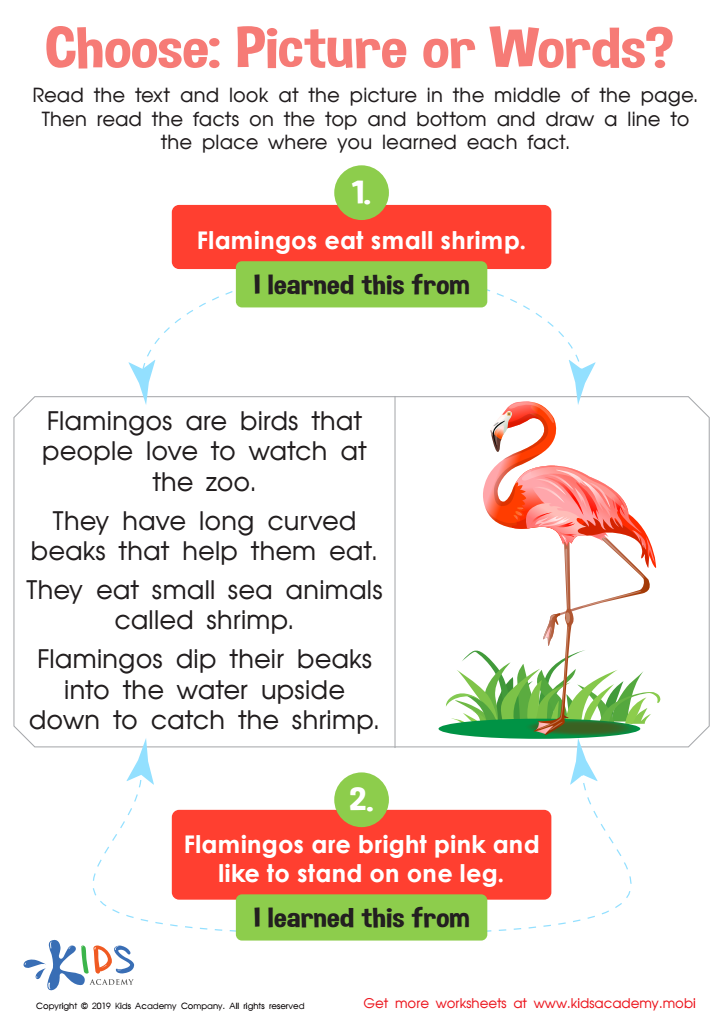
Choose Picture Words Worksheet
Pictures are powerful tools for children learning to read. Early readers apply their prior knowledge and pictures to create understanding. This PDF worksheet lets them understand the combined power of pictures and words, by having them choose one to answer how they learned the facts about flamingoes.
Choose Picture Words Worksheet
Worksheet
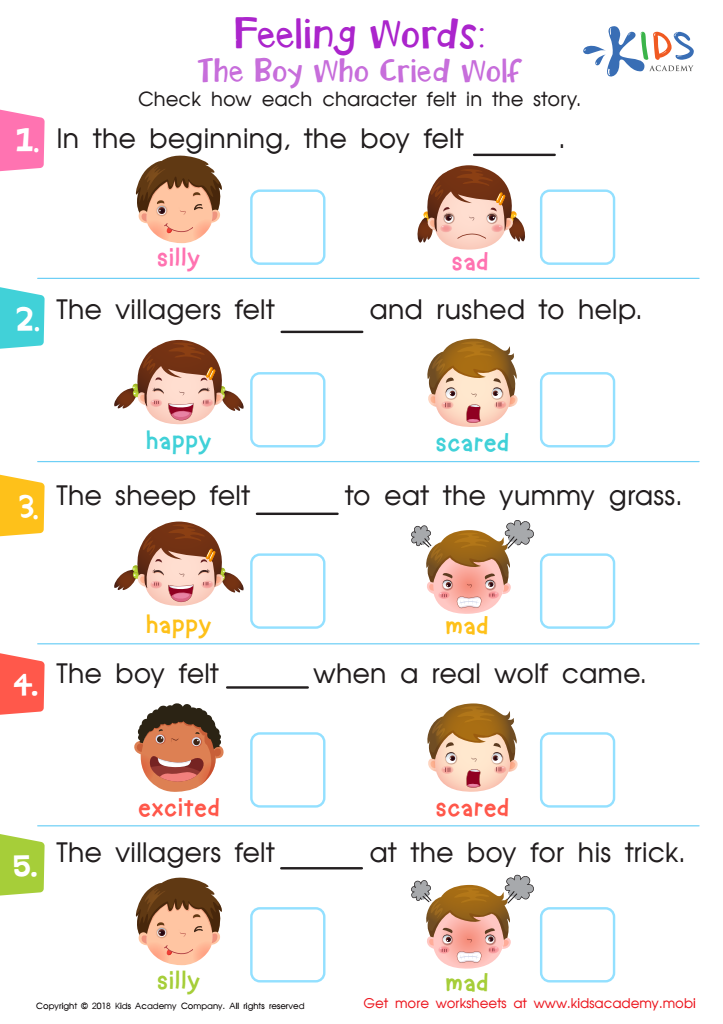
Feeling Words: The Boy Who Cried Wolf Worksheet
This worksheet helps students infer characters' traits and feelings by reading The Boy Who Cried Wolf. They choose the correct emotion for each character to improve their story comprehension. A great resource for the reading classroom, it teaches an essential comprehension skill.
Feeling Words: The Boy Who Cried Wolf Worksheet
Worksheet
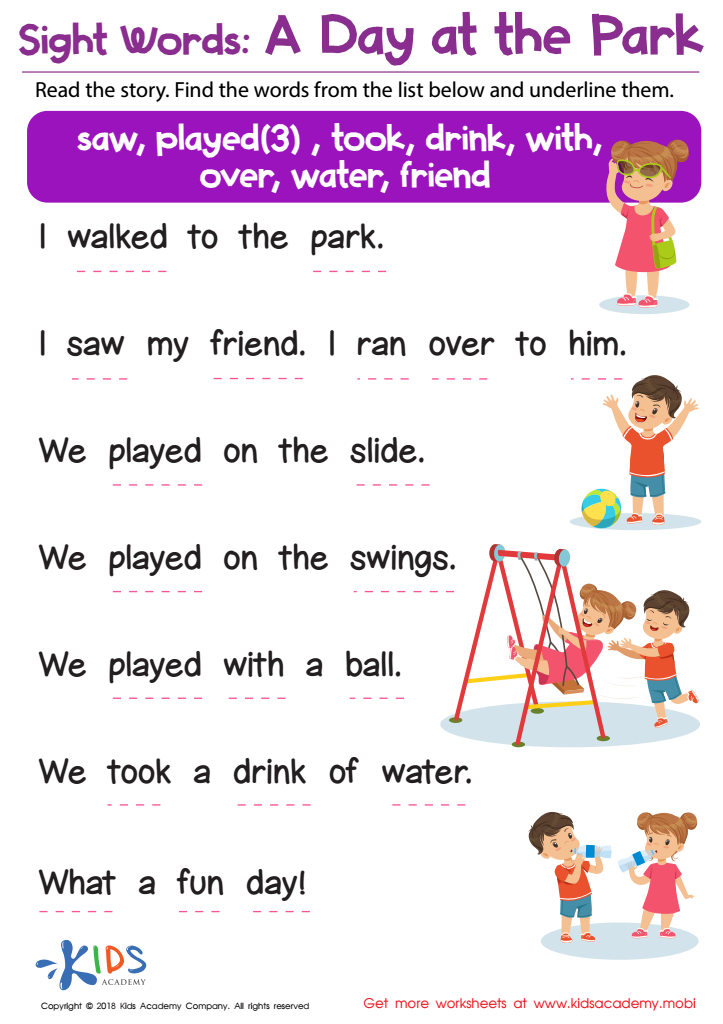
Sight Words: A Day at the Park Worksheet
This worksheet offers kids practice reading sight words in a story. With picture clues and repetitive wording, they'll work with words that can't be sounded out to reinforce their learning. This is an important step in the reading process that helps kids become more confident readers.
Sight Words: A Day at the Park Worksheet
Worksheet
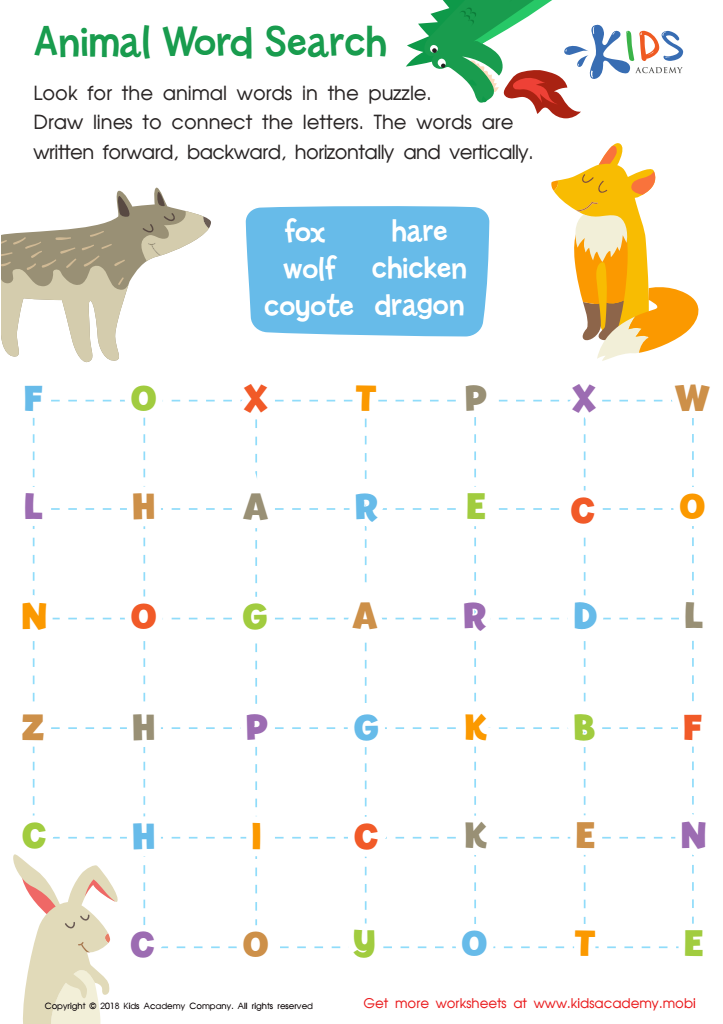
Animal Word Search Worksheet
Students can have fun and strengthen spelling and vocabulary skills with this word search worksheet. Search for animal words and circle the letters in the puzzle. Words can be found forwards, backwards, horizontally or vertically, providing a great challenge to foster critical thinking skills. An enriching activity for all ages!
Animal Word Search Worksheet
Worksheet
Join Kids Academy for Free
Who is primarily going to use this learning content?








Building vocabulary for ages 4-6 is crucial for several reasons. At this developmental stage, children's brains are like sponges, absorbing new information rapidly. A strong vocabulary is fundamental for reading comprehension and later academic success; children with richer vocabularies tend to perform better in school. When children learn new words, they also learn to express their thoughts, feelings, and ideas more effectively, enhancing their communication skills.
Engaging in vocabulary building fosters critical thinking and creativity, as children begin to connect words with concepts and experiences. This practice helps develop a love for language and learning, encouraging curiosity and exploration. Furthermore, having a diverse vocabulary promotes social skills; children become better able to engage in conversations with peers and adults, which builds their confidence and emotional intelligence.
Parents and teachers play a key role in this process by providing rich language experiences through reading, storytelling, and engaging discussions. Simple activities like naming objects, playing word games, or introducing new words during everyday routines can significantly impact a child's vocabulary growth. Investing in vocabulary development now sets the stage for a child’s lifelong journey of learning, empowering them to succeed academically and socially.








