Color recognition Reading Worksheets for Ages 4-6 - Page 2
28 filtered results
-
From - To
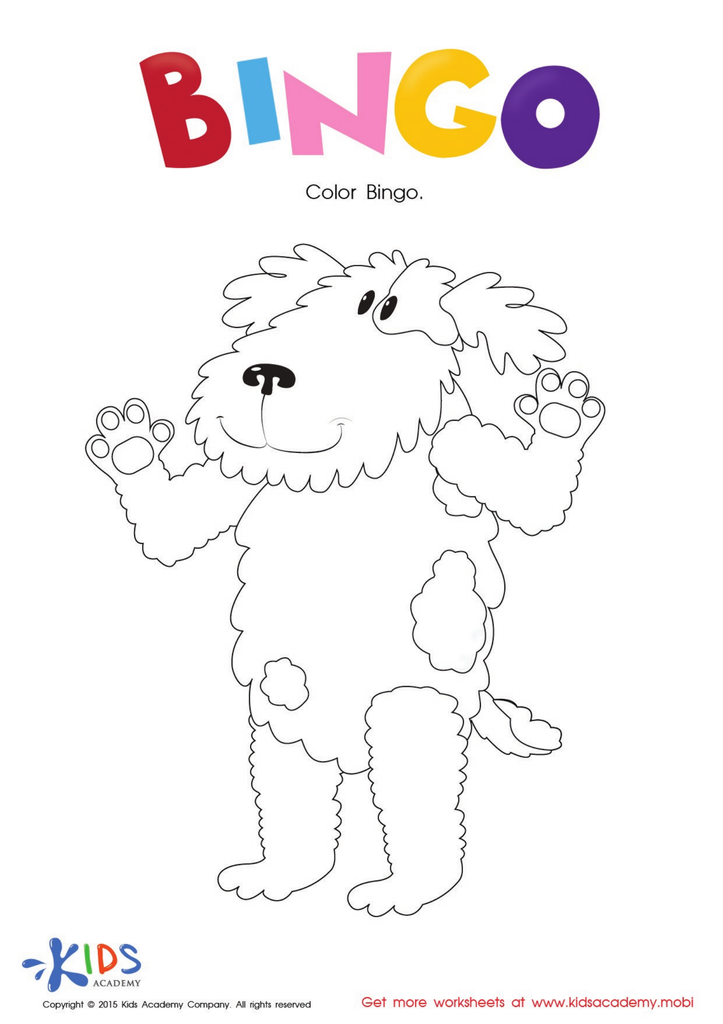
The Bingo Song: Coloring The Dog Worksheet
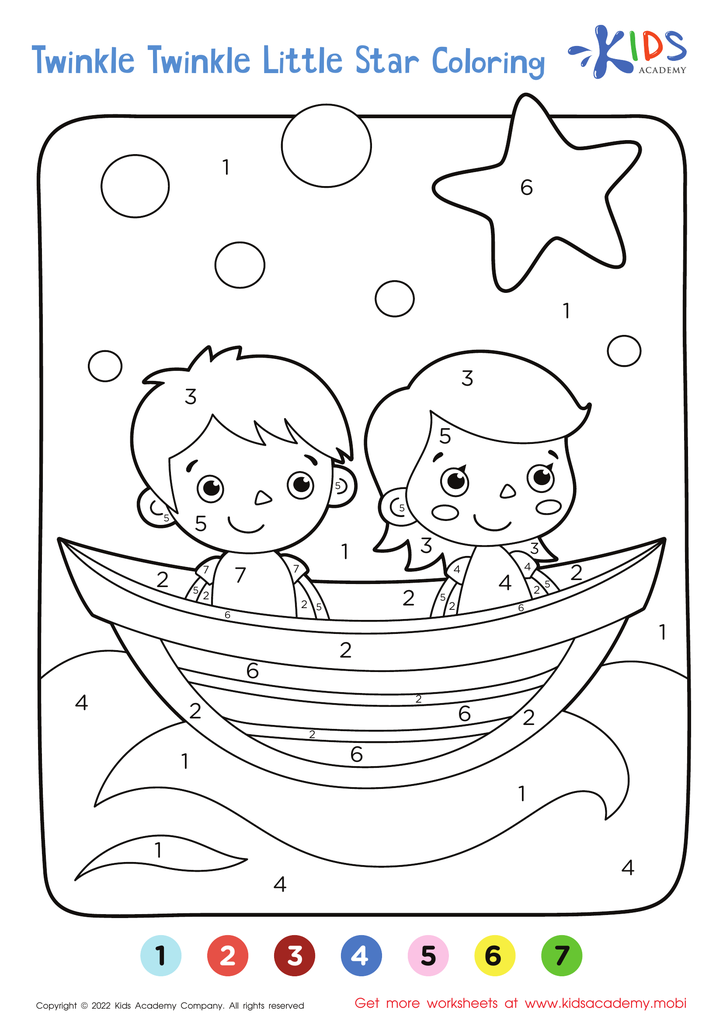
Twinkle, Twinkle, Little Star – Coloring by Numbers


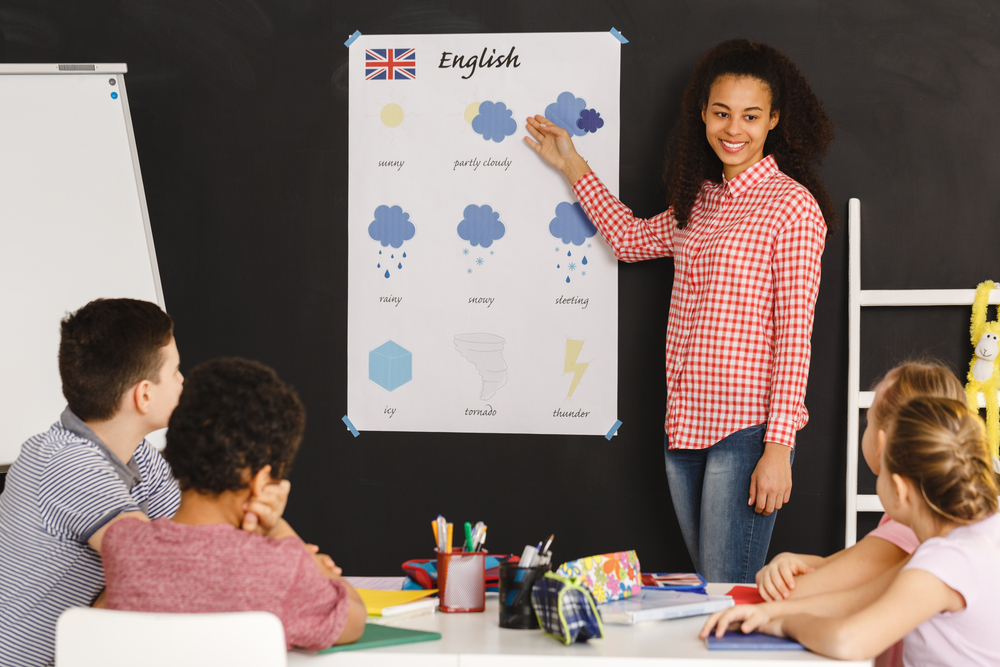





Color recognition is a fundamental aspect of early childhood education, especially for children aged 4-6. At this developmental stage, children are naturally curious and eager to explore their environment, making it an ideal time to introduce them to colors. Understanding colors enhances their cognitive skills, aiding in memory development and differentiation between objects within their visual world. It also lays the groundwork for more complex concepts such as categorization, pattern recognition, and mathematical skills, which are crucial as children progress in their education.
Moreover, color recognition can boost children's language and communication skills. When children learn to identify colors, they also expand their vocabulary and improve their ability to express themselves. This can enhance their ability to engage in both social and academic settings, fostering a sense of confidence and independence.
From an emotional perspective, engaging with colors can encourage creativity and self-expression in children. Parents and teachers play a vital role in providing fun, interactive activities—like arts and crafts or nature walks—that incorporate color learning. By nurturing this skill early, adults can help children develop a love for learning while promoting holistic development, preparing them for future educational challenges and fostering a lifelong enthusiasm for exploration.








