Sequence Understanding Reading Worksheets for Ages 4-6
3 filtered results
-
From - To
Welcome to our Sequence Understanding Reading Worksheets for Ages 4-6! These engaging worksheets are designed to help young learners develop critical sequencing skills essential for improving reading comprehension. Our colorful and interactive activities challenge kids to arrange events and stories in the correct order, fostering a deeper understanding of plots and narratives. Each worksheet is tailored to suit early learners, making reading fun and accessible. With visual aids and simple tasks, children will enhance their cognitive skills while enjoying vibrant illustrations. Perfect for classroom settings or at-home practice, these worksheets make learning exciting and effective. Start your child's journey to reading mastery today!
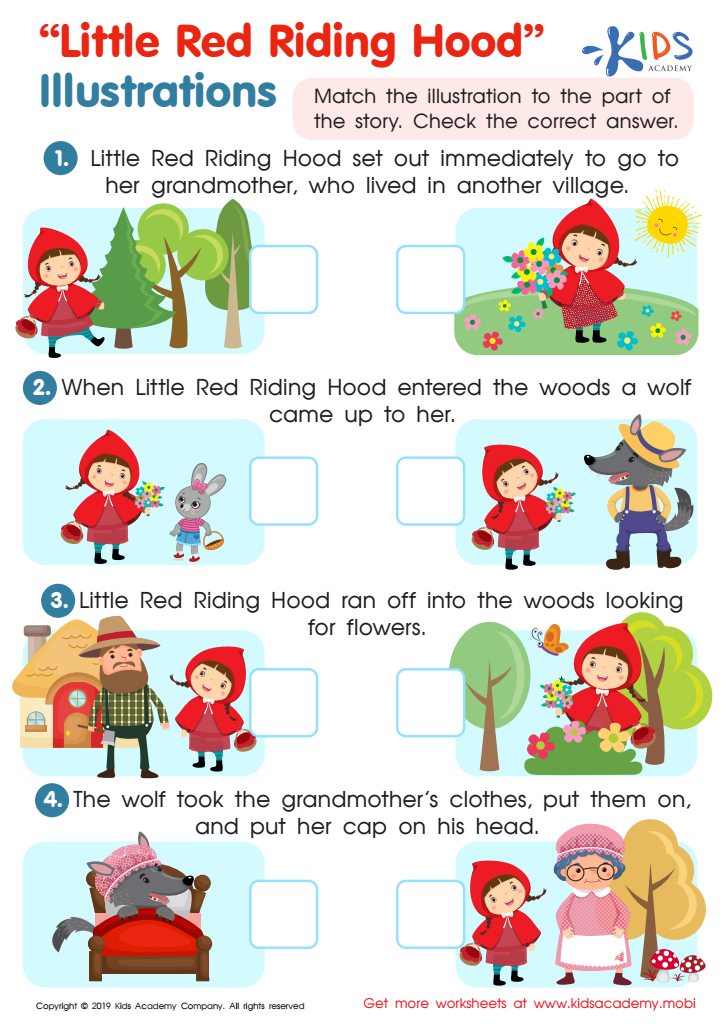
Little Red Riding Hood: Illustrations Worksheet
 Assign to My Students
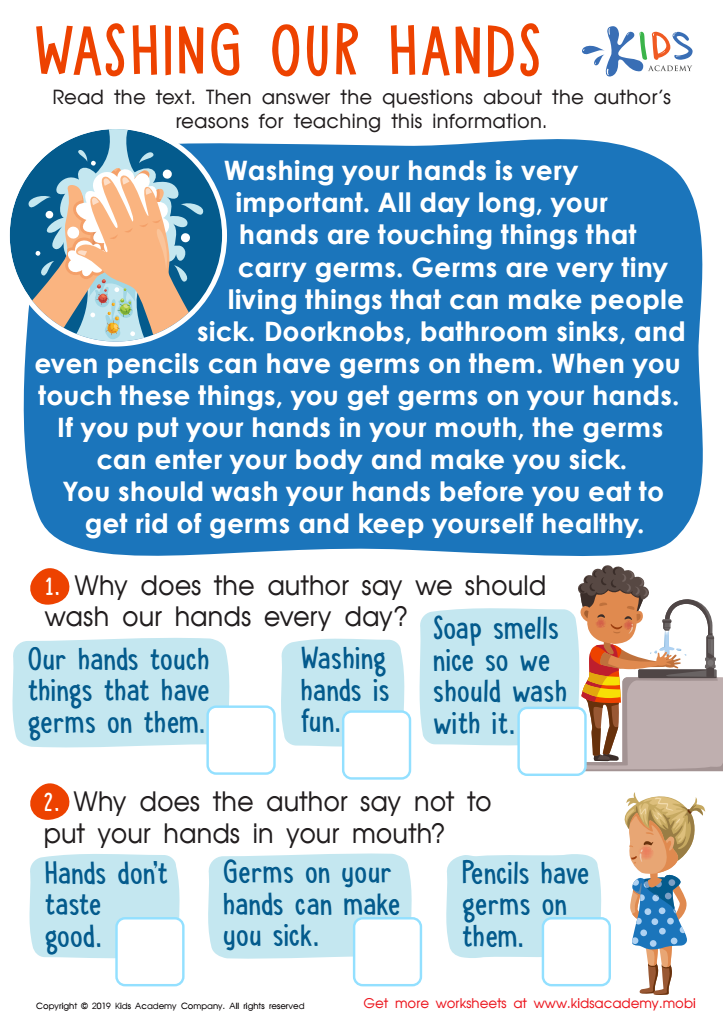
Washing Our Hands Worksheet
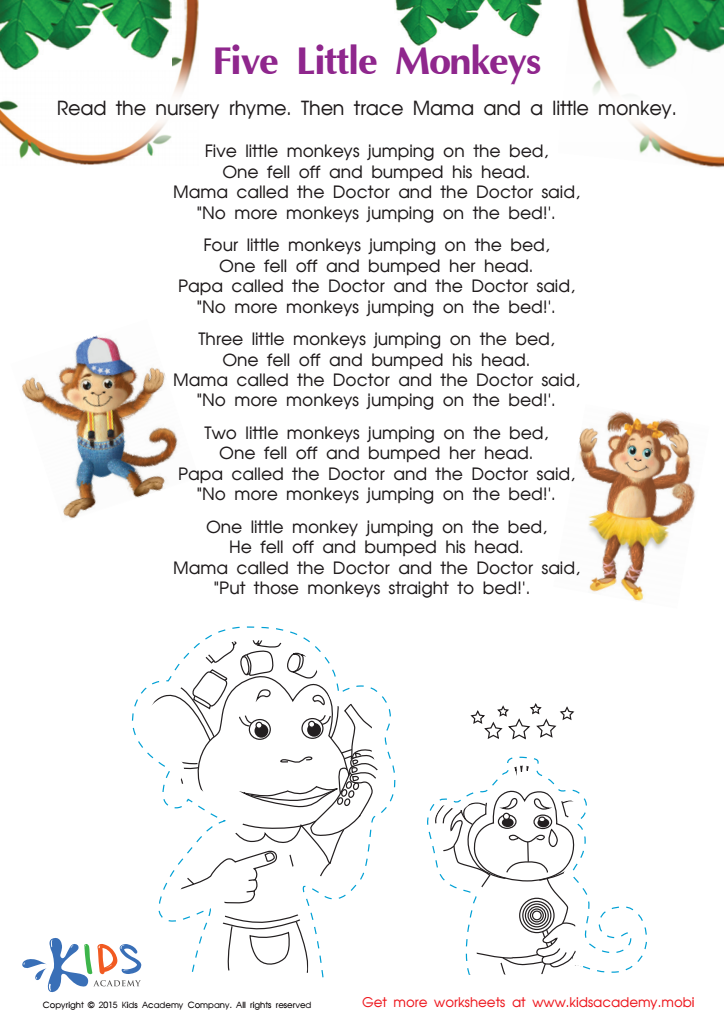
The Five Little Monkeys Nursery Rhyme Worksheet








Sequence understanding in reading, especially for children aged 4-6, is crucial for developing essential literacy skills that set the foundation for lifelong learning. At this stage, children are beginning to make sense of stories and their structures, identifying key events and the order in which they occur. This skill not only enhances comprehension but also encourages critical thinking and cognitive development. When children grasp the sequence of a story, they are better equipped to predict outcomes, make inferences, and engage in discussions about the text, which are vital for deepening their understanding.
Moreover, sequence understanding aids in nurturing communication skills. As children learn to retell stories in the correct order, they practice organizing their thoughts coherently, enhancing their ability to articulate ideas effectively. This skill is valuable beyond reading, enriching overall language development and academic success across subjects.
For parents and teachers, fostering sequence understanding through interactive reading, storytelling, and engaging activities is an opportunity to enrich children's learning experiences. It builds confidence and enthusiasm for reading, paving the way for a greater love of literature and learning. Consequently, supporting this aspect of literacy development is essential for cultivating enthusiastic, informed learners ready to explore the world through books.








