
Word association skills Reading Worksheets for Ages 4-6
3 filtered results
Difficulty Level
Grade
Age
-
From - To
Subject
Activity
Standards
Boost your child's early literacy with our engaging Word Association Skills Reading Worksheets, designed specifically for ages 4 to 6. These interactive worksheets help young learners develop critical thinking and vocabulary through fun and imaginative exercises. By connecting words to relevant images, children enhance their comprehension skills while exploring language in an enjoyable way. Our worksheets encourage creativity and promote a love for reading, laying a strong foundation for future literacy success. Ideal for preschool or kindergarten settings, these resources make learning both productive and entertaining. Discover the joy of word associations and watch your child flourish with every page!
Favorites
With answer key
Interactive
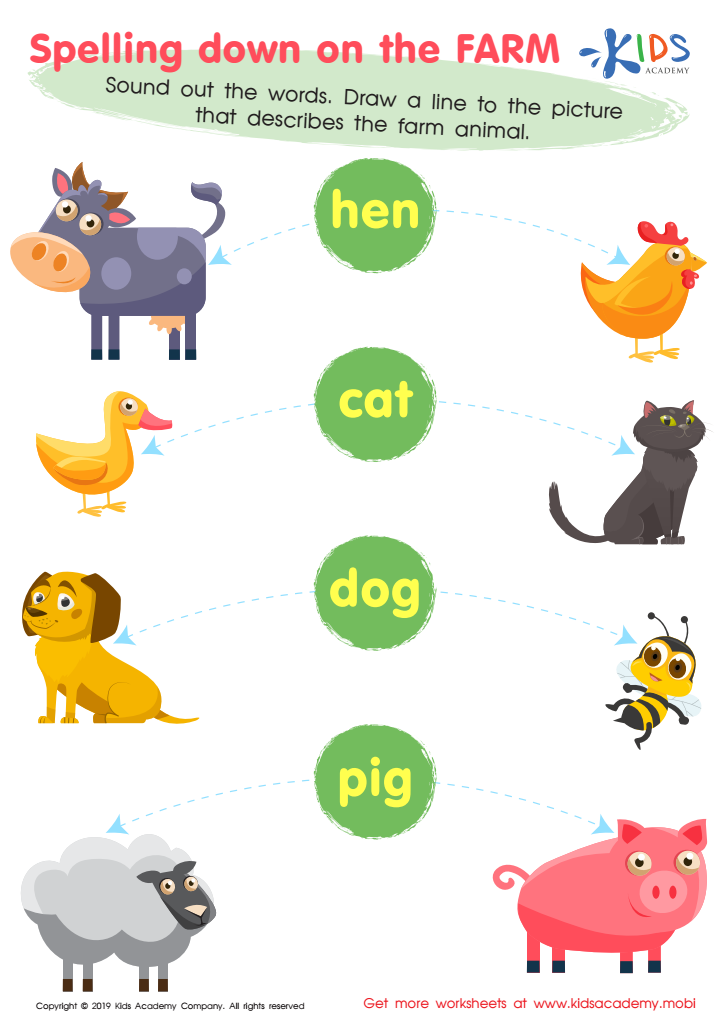
Spelling Down on the Farm Worksheet
Want to help your kids nail their spelling? Introduce them to this farm animal worksheet! Get them to look at the animals in the tracing sheet, name them and then sound out the words. Have them draw a line to the picture that describes it. You'll be surprised at how quickly their skills improve.
 Assign to My Students
Spelling Down on the Farm Worksheet
Worksheet
Join Kids Academy for Free
Who is primarily going to use this learning content?





.jpg)

Word association skills are crucial for children aged 4-6 as they lay the foundation for reading and language development. At this formative age, children are naturally curious and eager to explore the connections between words, which enhances their vocabulary and comprehension. When parents and teachers engage in activities that foster word association, they help children make meaningful connections between words, pictures, and concepts.
These skills aid in developing critical thinking and problem-solving abilities, as children learn to categorize and relate new information to what they already know. For instance, when children hear the word "dog," associating it with "bark," "pet," or "furry" creates a web of related concepts that nurtures deeper understanding.
Moreover, word association supports phonemic awareness, an essential building block for reading success. By recognizing patterns in words and sounds, children are better prepared to decode text, promoting fluency and confidence in their reading abilities.
Encouraging word association not only enhances literacy skills but also fosters a love for language and storytelling. As children learn to combine words and phrases, they become more expressive in their communication, preparing them for future academic and social success. Therefore, investing in word association skills at this developmental stage is vital for lifelong learning.








