Fine Motor Skills Reading Fiction Worksheets for Ages 4-6
6 filtered results
-
From - To
Enhance your child's fine motor skills with our engaging Fiction Reading Worksheets designed for ages 4-6! These interactive worksheets combine literacy development with essential hand-eye coordination activities. Through fun, themed exercises, children will practice skills such as tracing, cutting, and coloring, all while exploring captivating stories that ignite their imagination. Our resources make learning enjoyable and foster a love for reading from an early age. Perfect for home or classroom use, these worksheets ensure that children not only improve their reading comprehension but also build essential motor skills. Download now and watch your little one's confidence flourish!
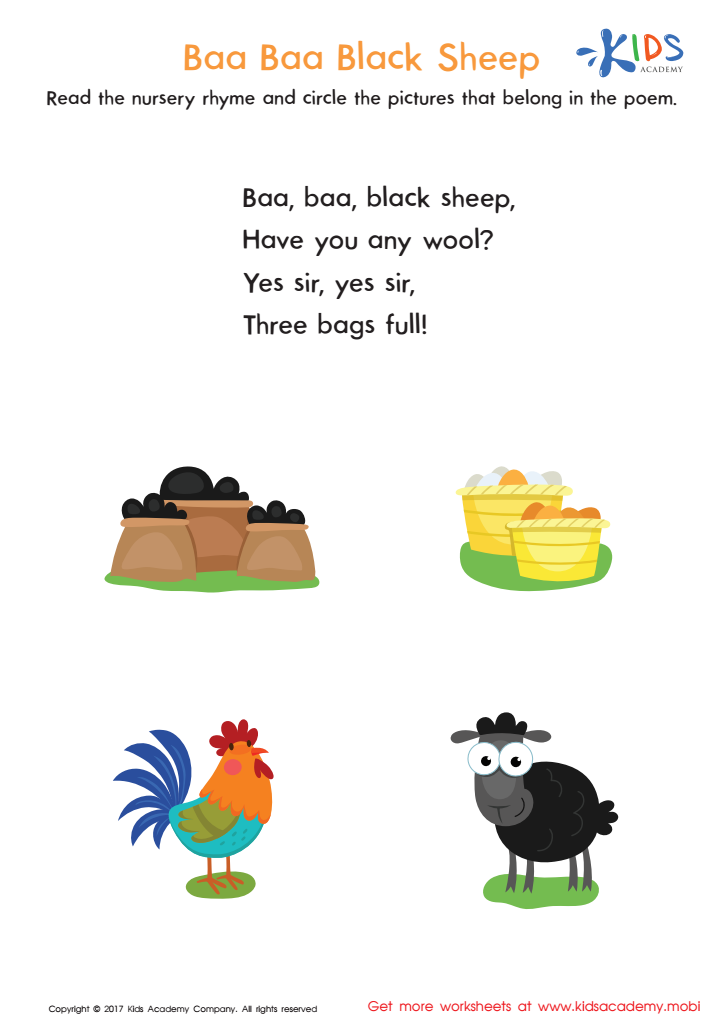
Baa Baa Black Sheep Printable
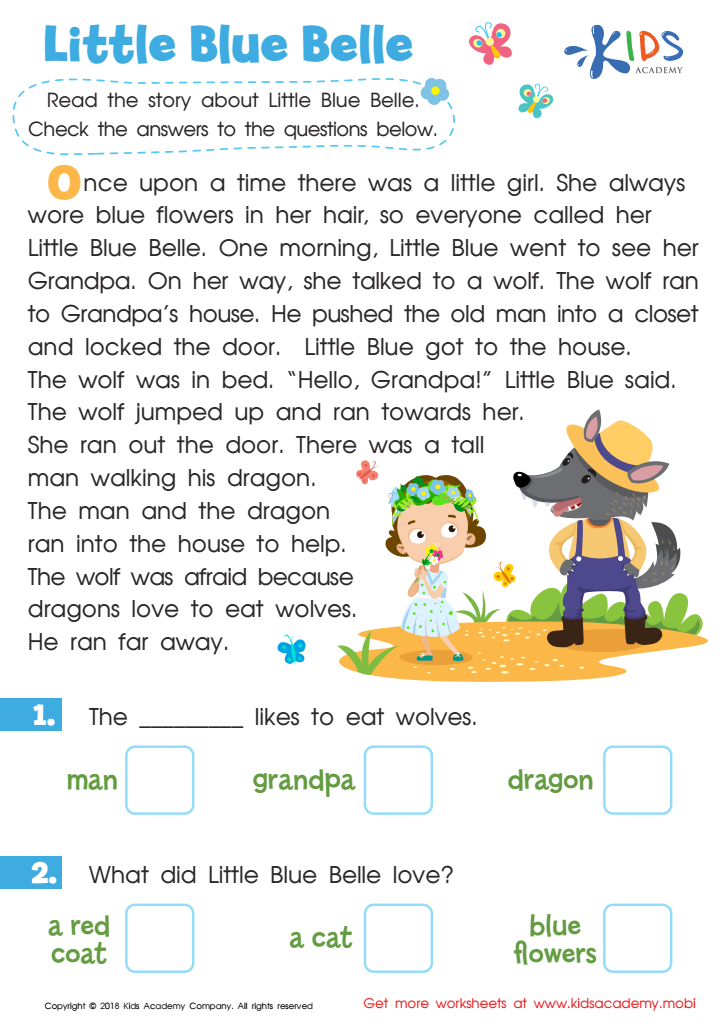
Little Blue Belle Worksheet

Twinkle Twinkle Little Star Coloring Page
 Assign to My Students
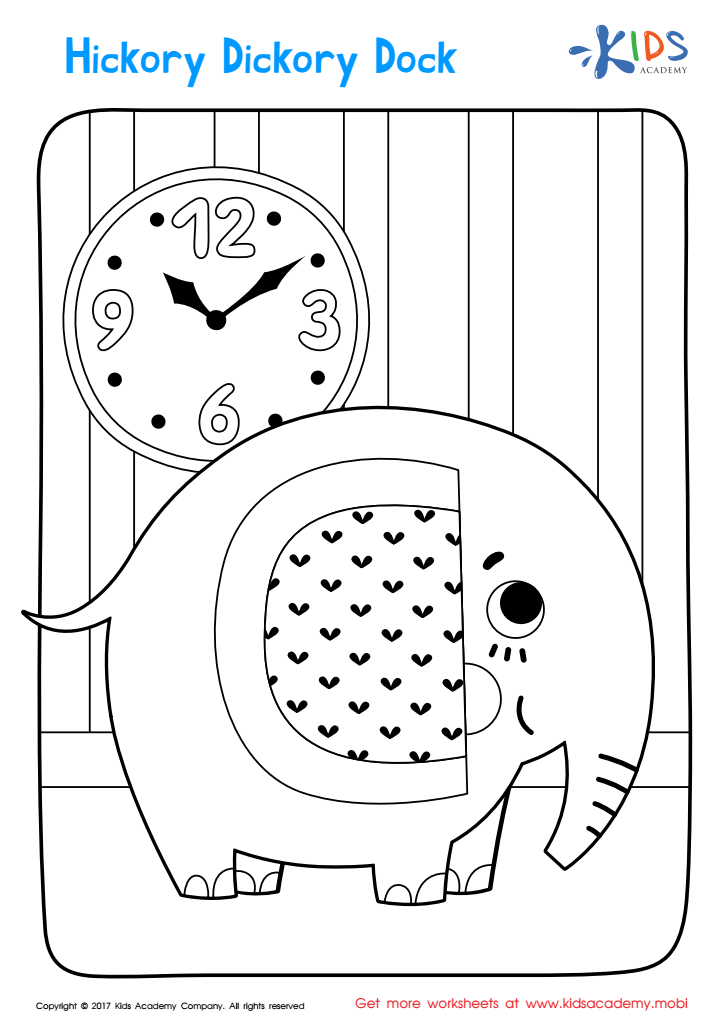
Hickory Dickory Dock Coloring Page
Assign to My Students
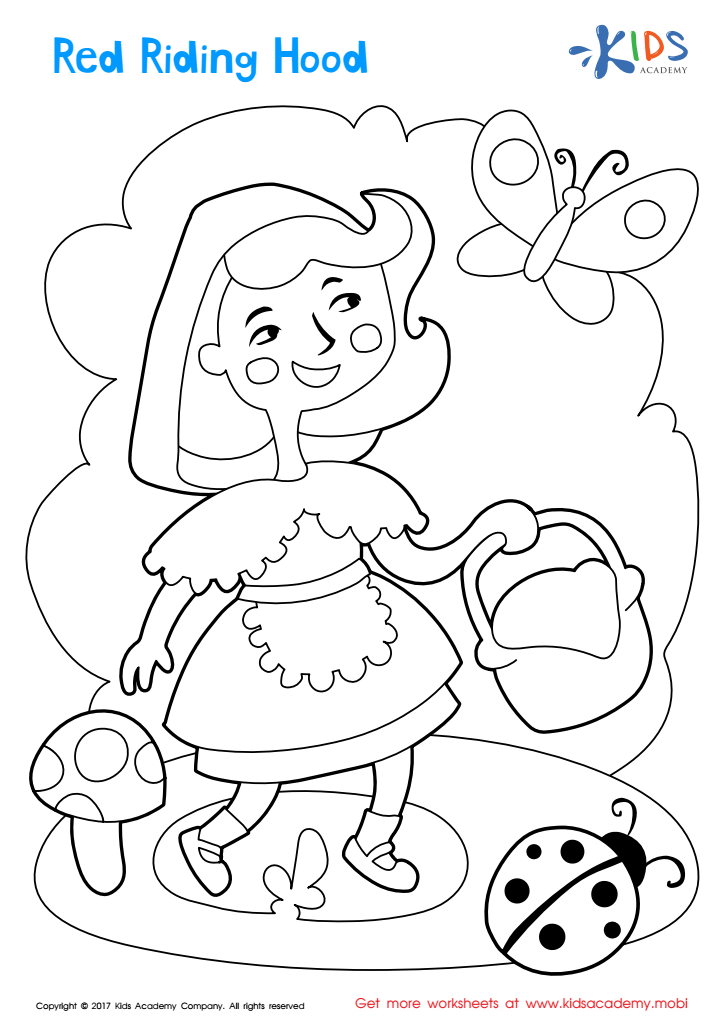
Red Riding Hood Coloring Page
Assign to My Students
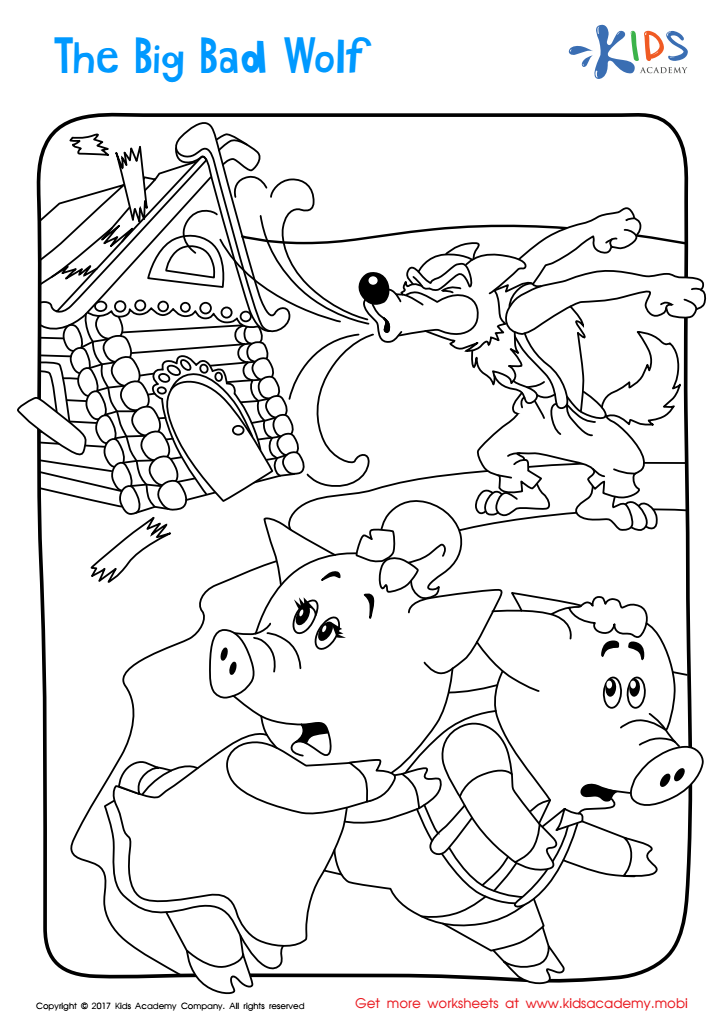
Big Bad Wolf Printable Coloring Page
Assign to My Students








Fine motor skills are essential for young children, particularly those aged 4-6, as they lay the foundation for various developmental milestones. Developing these skills enhances a child’s ability to perform everyday tasks like writing, drawing, and manipulating small objects. Reading fiction during this critical period can significantly support fine motor development in engaging and indirect ways.
When parents or teachers engage children with fiction, they often incorporate activities like drawing scenes, acting out stories, and crafting related artwork. These activities require precision and control, which practice fine motor skills. For example, tracing letters and making crafts based on story elements provide hands-on learning experiences that engage young learners, making them more conducive to refining their dexterity.
Moreover, reading fiction stimulates a child’s imagination, enhancing cognitive development while naturally incorporating fine motor-related tasks. Engaging storytelling often leads to more physical interactions—turning pages, using props, or drawing illustrations—leading to improved hand-eye coordination.
Prioritizing reading fiction alongside fine motor skill activities fosters holistic development, making children better prepared for school activities and everyday challenges. Therefore, parents and teachers should combine the joys of storytelling with opportunities for fine motor skill enhancement to promote well-rounded growth in early learners.








