Shape Recognition Reading Fiction Worksheets for Ages 4-6
3 filtered results
-
From - To
Boost your child's literacy and shape recognition skills with our engaging Shape Recognition Reading Fiction Worksheets, designed for ages 4-6. These interactive worksheets combine exciting storylines with interactive activities, allowing young learners to explore and recognize shapes in a fun context. Each worksheet encourages children to identify shapes within compelling narratives, enhancing both reading comprehension and visual perception. Perfect for at-home learning or classroom use, our resources promote critical thinking and creativity. Help your child build essential literacy foundations while expanding their understanding of shapes. Start your journey into the world of shapes and stories today!
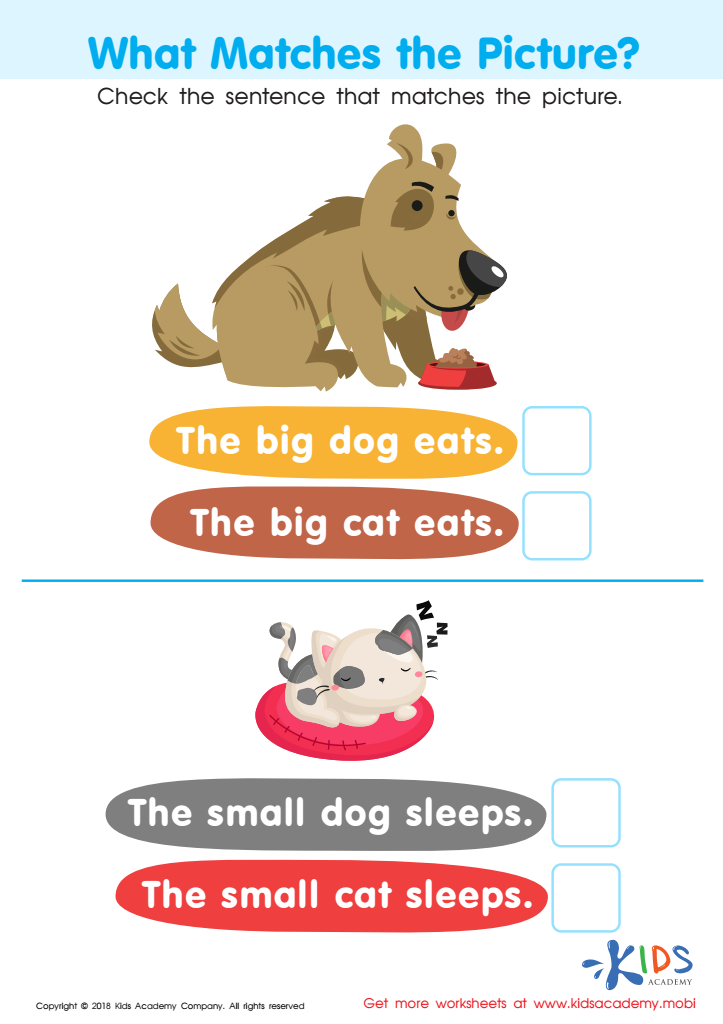
What Matches the Picture? Worksheet
 Assign to My Students
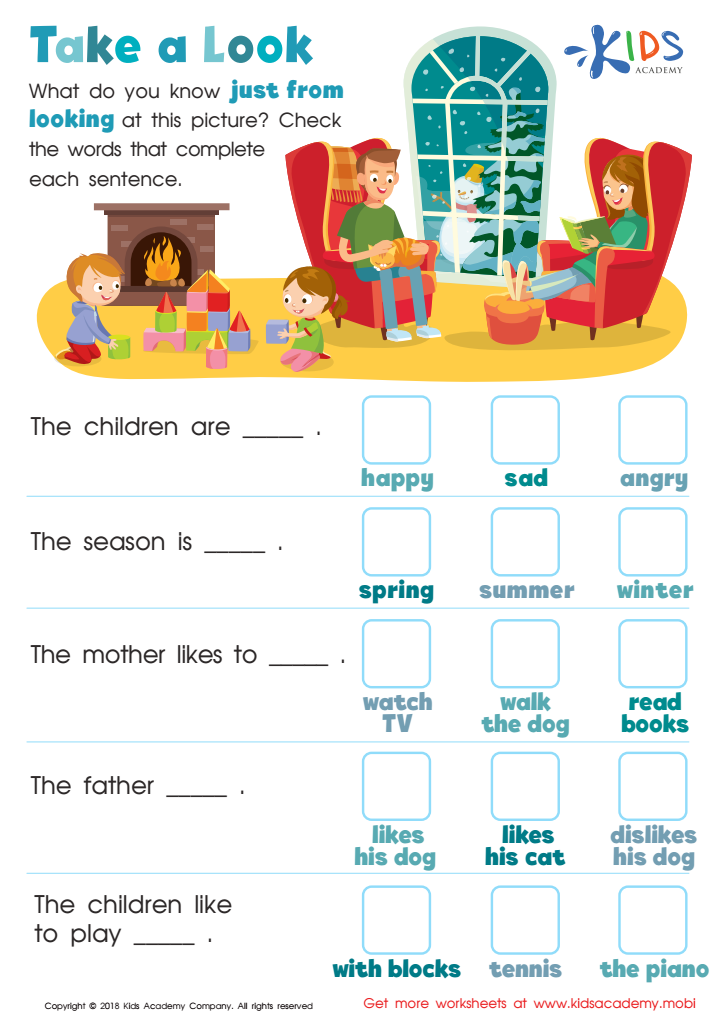
Take a Look - Part 1 Worksheet
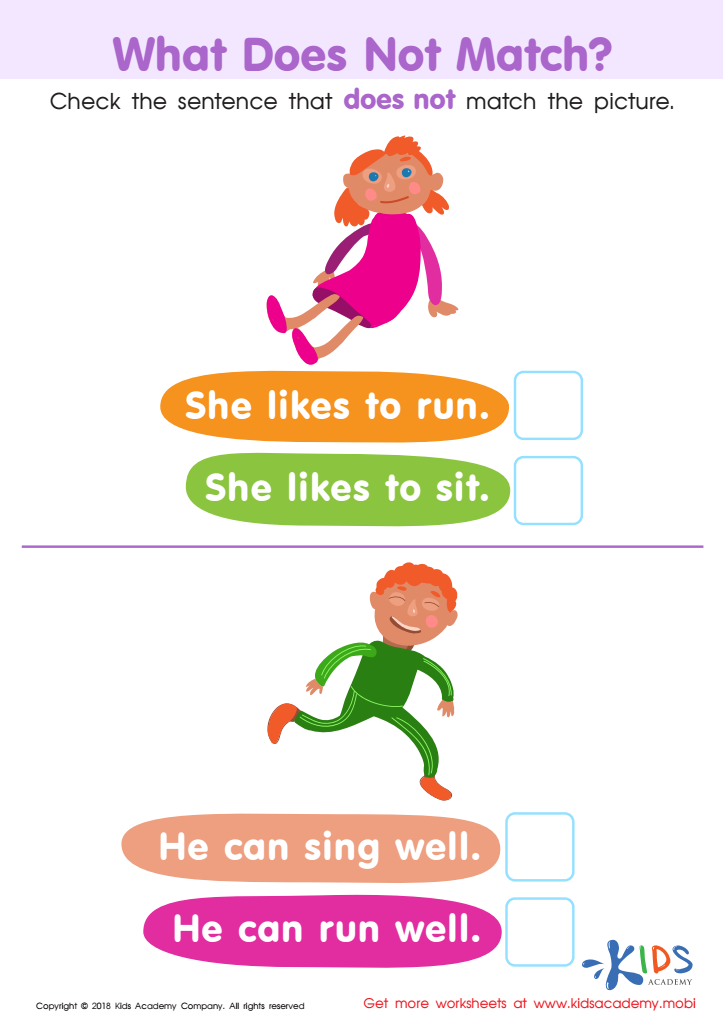
What Does Not Match? Worksheet







Shape recognition is a fundamental aspect of early childhood education, especially for ages 4-6, as it lays the groundwork for essential cognitive and literacy skills. When parents and teachers prioritize shape recognition, they aid children in understanding basic geometrical concepts, which are crucial for problem-solving and spatial awareness. This foundational skill is also intertwined with reading fiction through illustrations and storytelling, as recognizing shapes helps children make sense of visual cues in books.
Incorporating shape recognition into literacy activities enhances children's ability to predict story outcomes based on imagery, fostering comprehension and engagement. Moreover, it boosts their vocabulary, as they learn descriptive terms associated with different shapes while exploring story settings and characters.
Moreover, shape recognition contributes to fine motor development through hands-on activities like drawing, coloring, or creating shapes with various materials. This multidimensional learning approach promotes creativity and critical thinking.
By connecting shape recognition with reading fiction, parents and teachers can create a rich learning environment where children feel empowered to explore, imagine, and develop a love for learning. Emphasizing these skills early sets the stage for academic success and lifelong curiosity. Thus, supporting shape recognition is invaluable in nurturing well-rounded learners.








