Vocabulary expansion Reading Fiction Worksheets for Ages 4-6
6 filtered results
-
From - To
Our "Vocabulary Expansion Reading Fiction Worksheets for Ages 4-6" are designed to foster a love for reading while broadening young vocabularies. By exploring engaging stories, children develop essential language skills through fun, interactive exercises. Each worksheet features child-friendly fiction, promoting reading comprehension and new word usage. Perfect for early readers, these activities enhance cognitive development and set the foundation for lifelong literacy. Ideal for both classroom settings and at-home practice, our worksheets are a valuable tool to support your child's educational journey. Brighten their literary world and watch their vocabulary flourish with exciting, expertly crafted content.
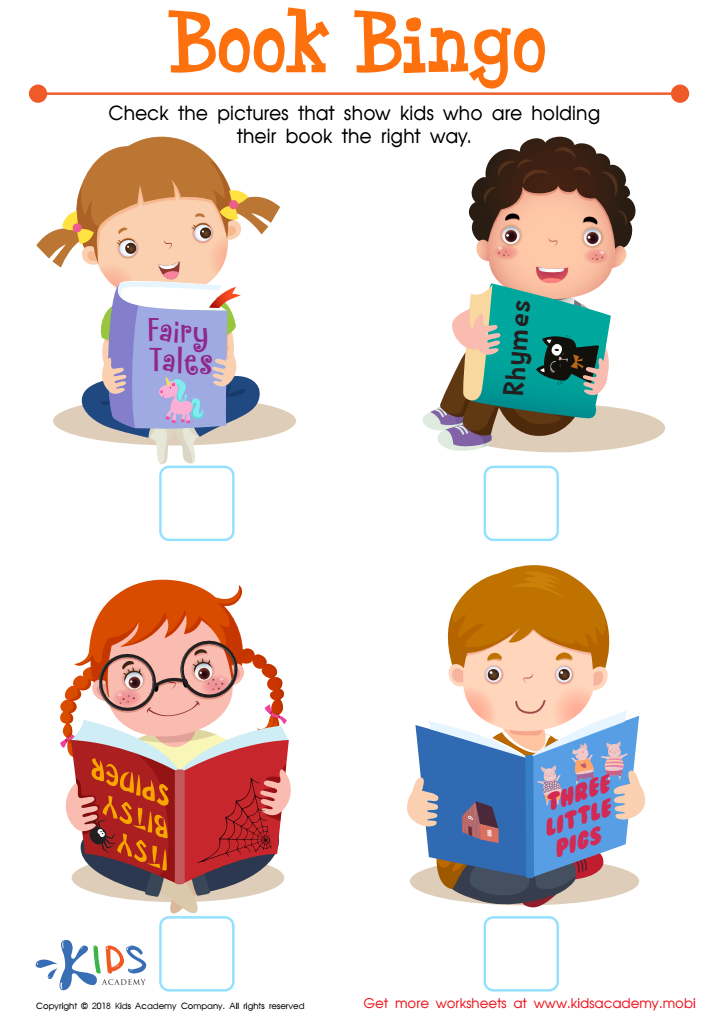
Book Bingo Worksheet
 Assign to My Students
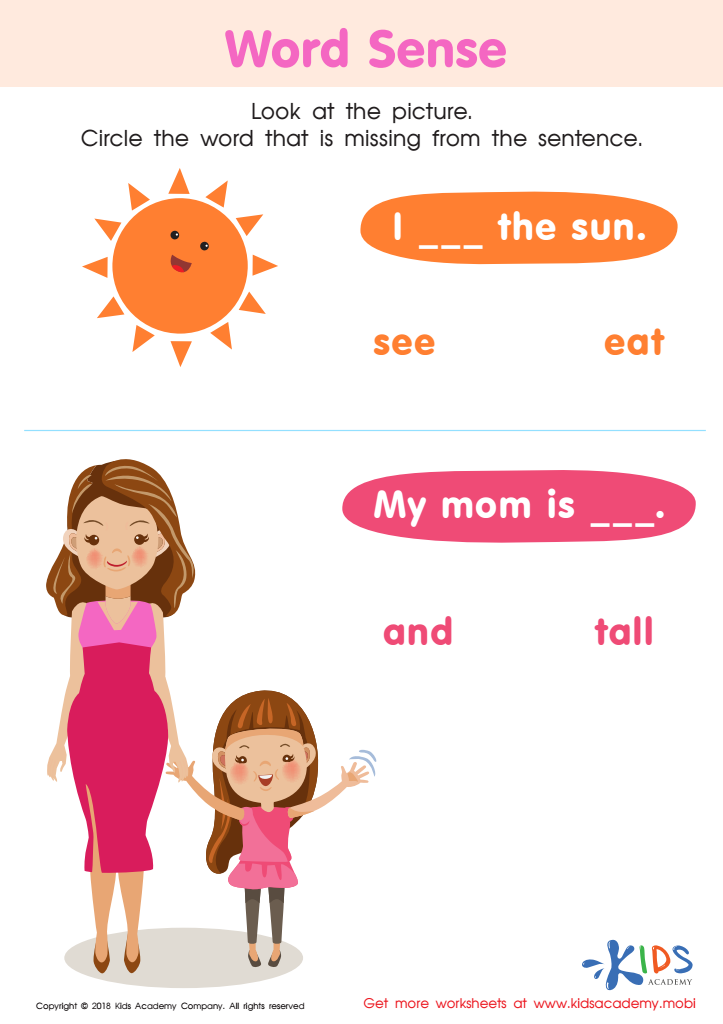
Word Sense Worksheet
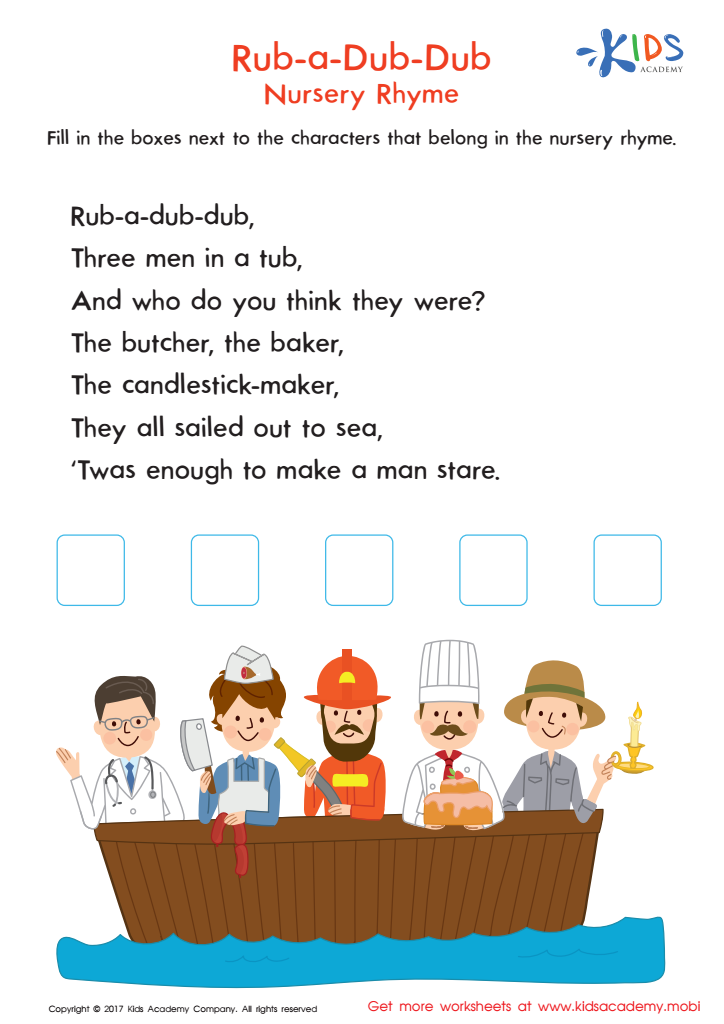
Rub a Dub Dub Printable
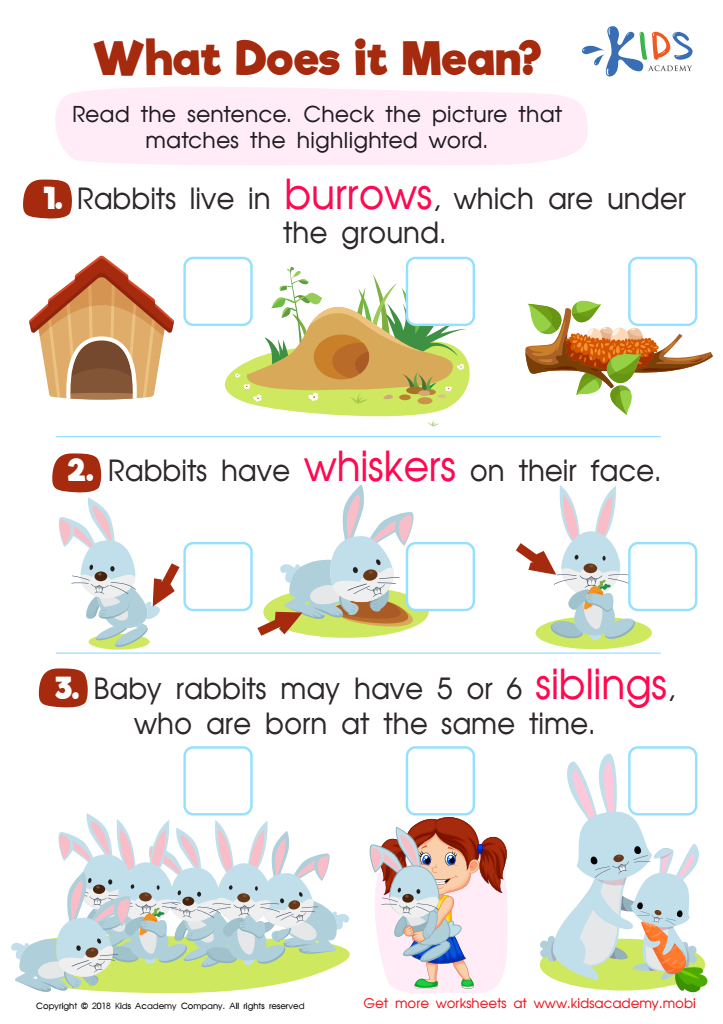
What Does It Mean? Worksheet
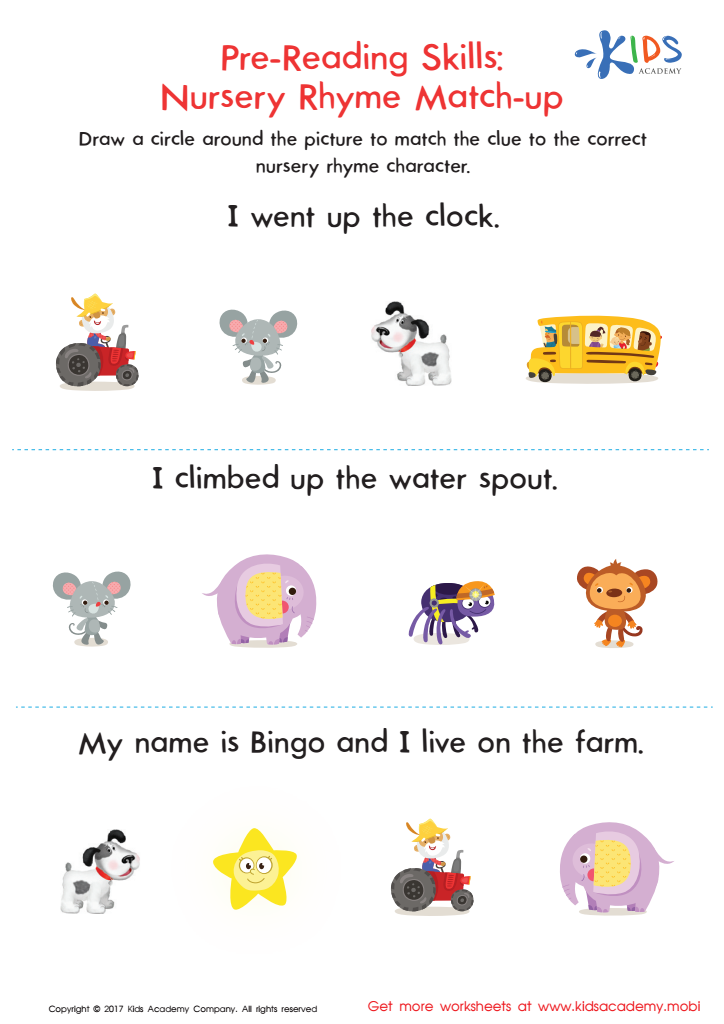
Nursery Rhyme Match–Up Worksheet
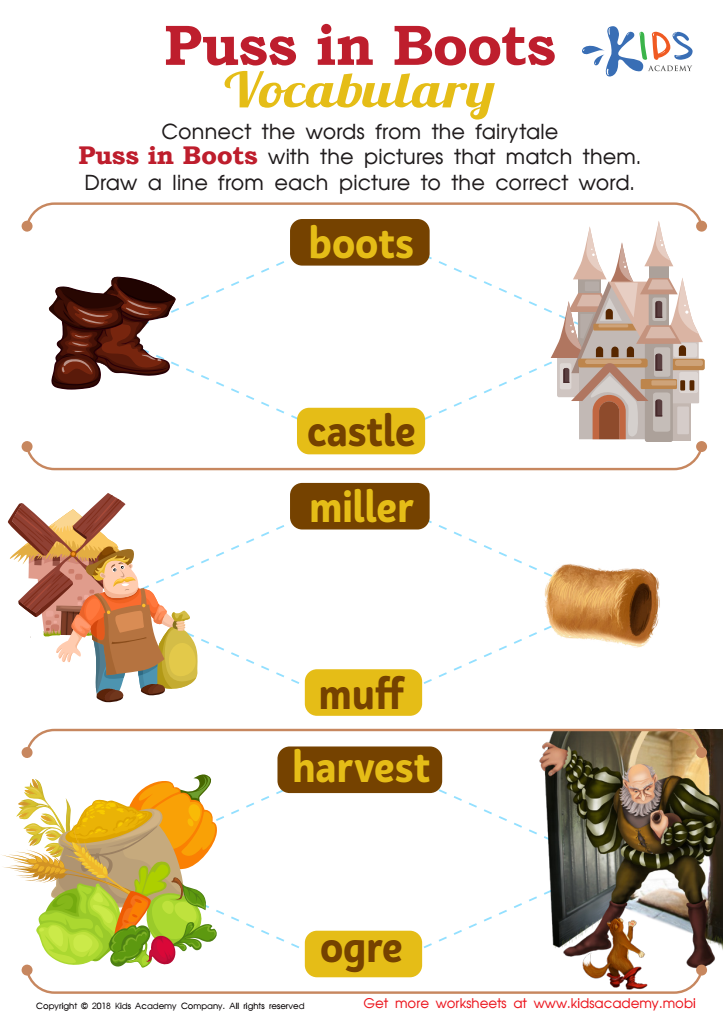
Puss in Boots Vocabulary Worksheet


.jpg)





Vocabulary expansion is crucial for early childhood development, particularly in ages 4-6, because this period is a critical window for language acquisition. Parents and teachers should prioritize encouraging vocabulary growth through reading fiction as it can yield multiple benefits.
Reading fiction to young children not only introduces them to new words but also contextualizes these words within imaginative and engaging stories. This context helps children grasp the meanings and usage of new vocabulary more effectively compared to rote memorization. Additionally, a rich vocabulary enhances a child's ability to express themselves more clearly and confidently, fostering better communication skills that are essential for all areas of learning.
Moreover, exposure to fiction cultivates children's love for reading, promoting lifelong literacy. Engaging stories, captivating characters, and diverse settings stimulate curiosity and imagination, making reading pleasurable and encouraging a habit that benefits educational achievement.
Also, in the age group of 4-6, children's brains are exceptionally receptive. Vocabulary acquired at this stage becomes a strong foundation for future language and literacy skills, which are key indicators of academic and social success.
Therefore, investing time in reading fiction provides a long-lasting positive impact on a child's cognitive, linguistic, and emotional development, forming a cornerstone for their educational journey.








