Simplifying Fractions Sight Words Worksheets for Ages 4-6
4 filtered results
-
From - To
Discover our engaging "Simplifying Fractions Sight Words Worksheets" designed for children aged 4-6. These worksheets combine essential reading practice with foundational math skills, making learning both fun and interactive. Young learners will enhance their sight word vocabulary while developing a key understanding of simplifying fractions. Each worksheet features bright illustrations and age-appropriate activities that captivate children's interest and motivate them to excel. Perfect for parents and educators, our resource encourages cognitive growth through hands-on learning. Foster a love for math and reading in your little ones with these innovative and interactive worksheets that make mastering fractions easier than ever!





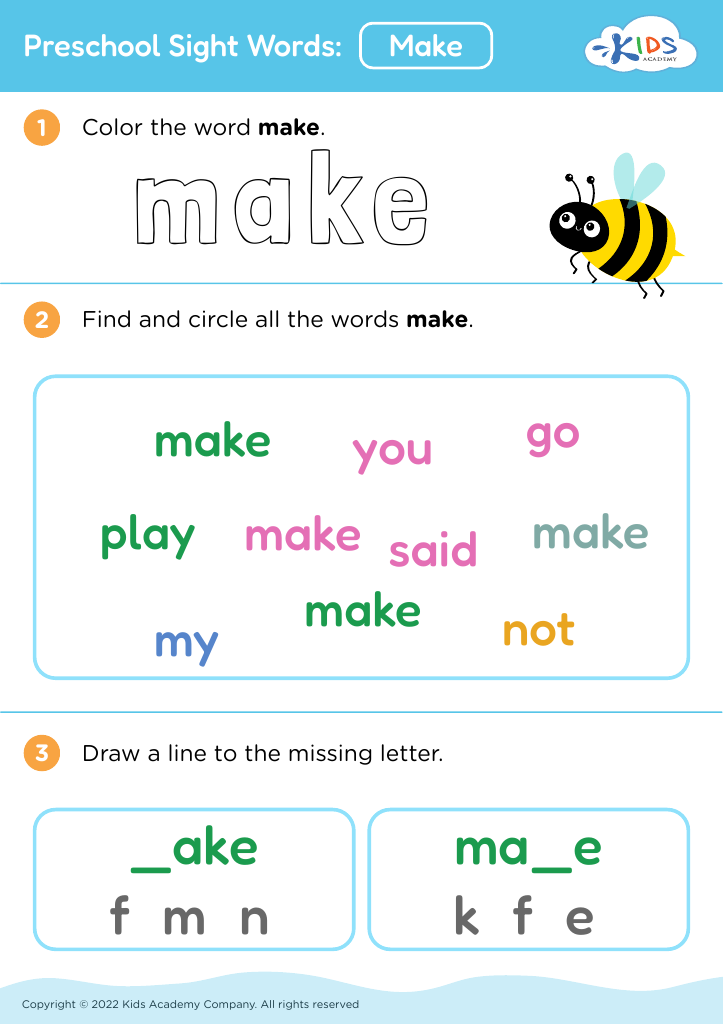
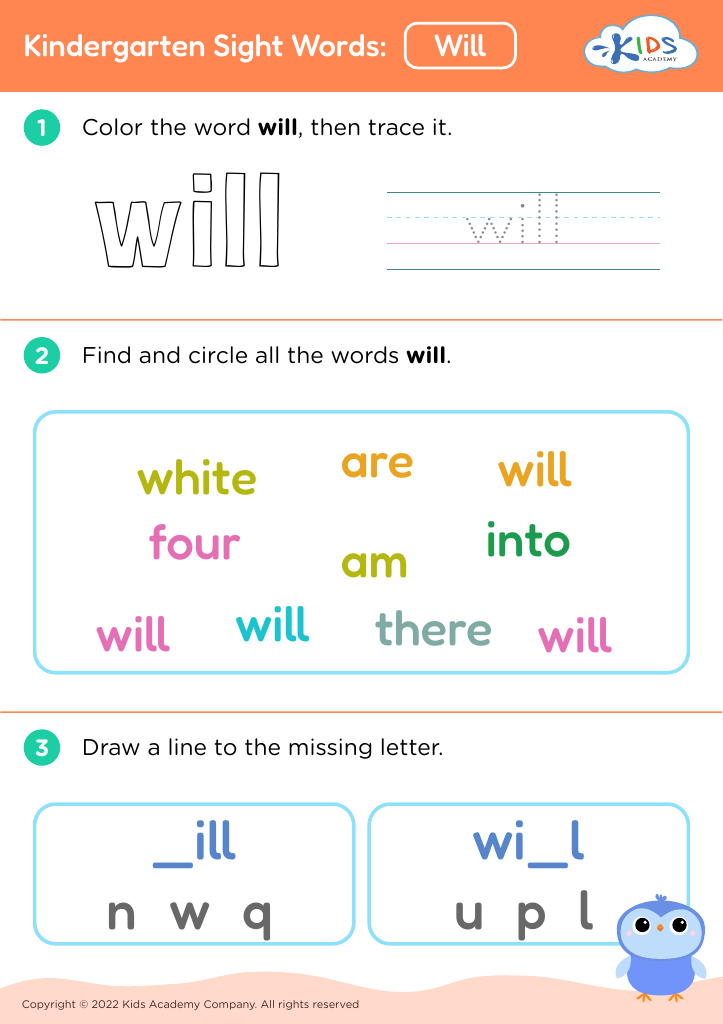
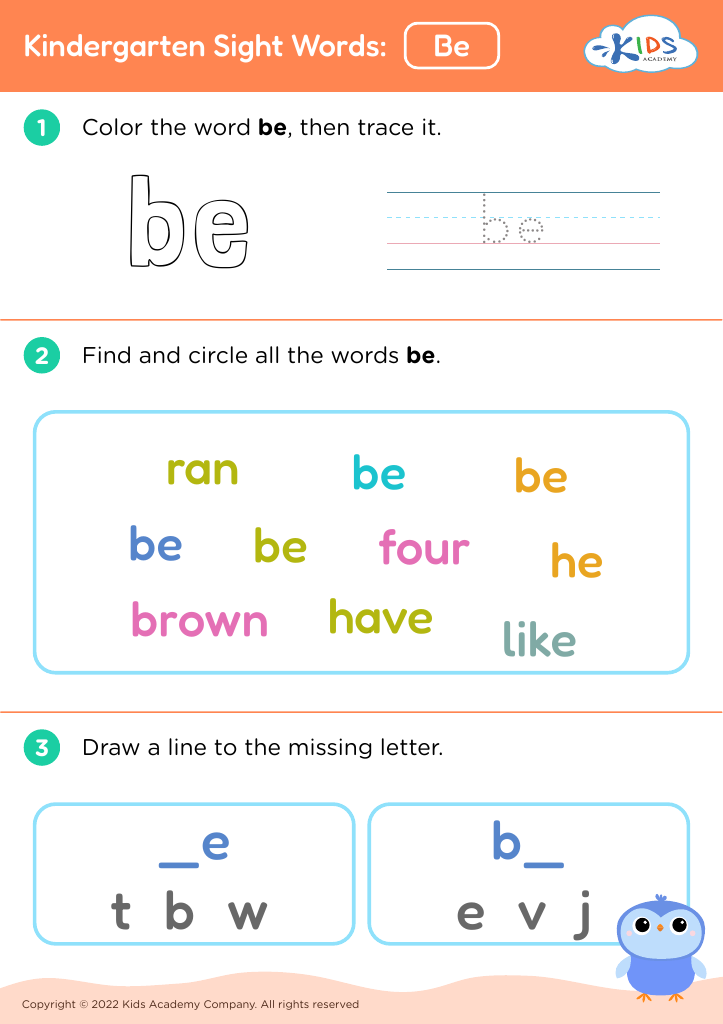








Parents and teachers should care about simplifying fractions and sight words for children aged 4-6 because these foundational skills significantly impact a child’s future learning. Simplifying fractions enhances a child's mathematical understanding by introducing concepts of division and proportion in a gentle and relatable manner. At this age, children are like sponges, ready to absorb and make sense of patterns and relationships in numbers, laying the groundwork for more complex mathematical thinking later on.
Sight words, on the other hand, play a crucial role in early literacy development. When children learn these high-frequency words, they begin to recognize them instantly, allowing for smoother reading fluency and comprehension. This skill unlocks their ability to enjoy stories, communicate effectively, and engage more fully with reading activities in school and at home.
Focusing on these elements promotes a well-rounded educational experience. Parents and teachers can cultivate a love for learning by making these subjects fun and interactive. By nurturing an understanding of mathematics and literacy in their early years, they increase children's confidence, motivation, and readiness to tackle more advanced topics as they progress in their education. Ultimately, caring about these foundational skills fosters lifelong learners who are better equipped for academic success.