
Rhyme recognition Songs Worksheets for Ages 4-6
3 filtered results
Difficulty Level
Grade
Age
-
From - To
Subject
Activity
Standards
Discover the joy of rhyme recognition with our engaging Songs Worksheets designed for children ages 4-6. These printable resources harness the power of music and playful activities to boost early literacy skills. Each worksheet combines colorful illustrations and catchy songs that not only capture attention but also reinforce phonemic awareness and vocabulary development. Perfect for home or classroom use, these worksheets provide fun, educational exercises to help children identify and create rhymes independently. Foster a love for reading and enhance auditory skills as your little ones learn through the magic of rhymes and melodies. Explore our printable worksheets today!
Favorites
With answer key
Interactive
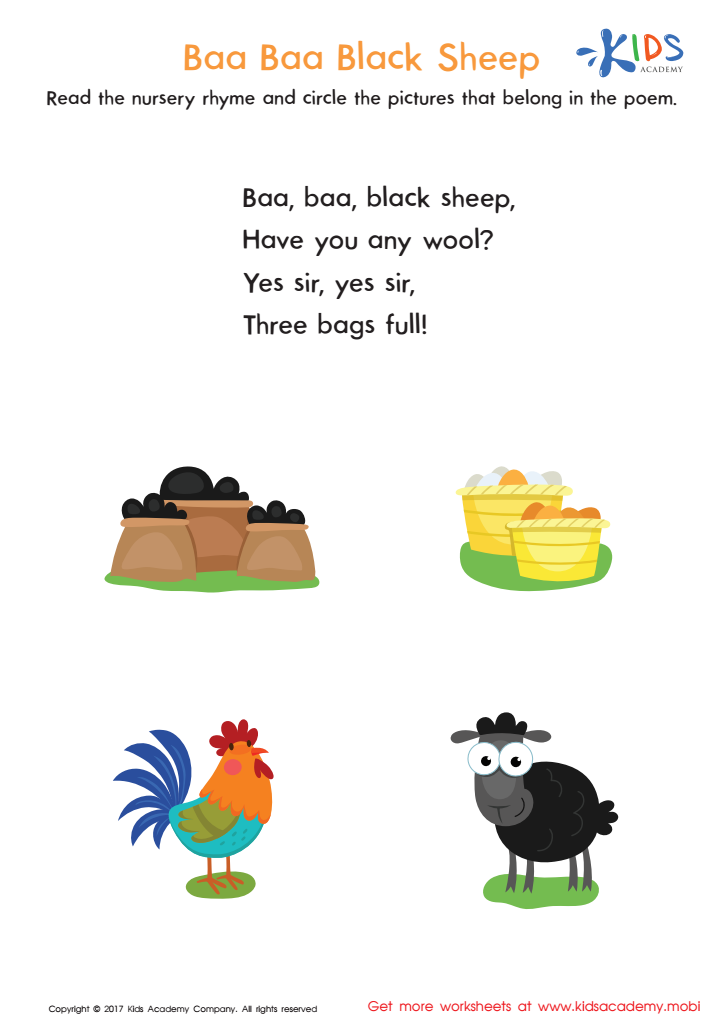
Baa Baa Black Sheep Printable
Jumpstart your child's reading skills with this printable Baa Baa Black Sheep worksheet! Recite the lines with them, then have them select the pictures associated with the poem to test comprehension. Fun and educational!
 Assign to My Students
Baa Baa Black Sheep Printable
Worksheet
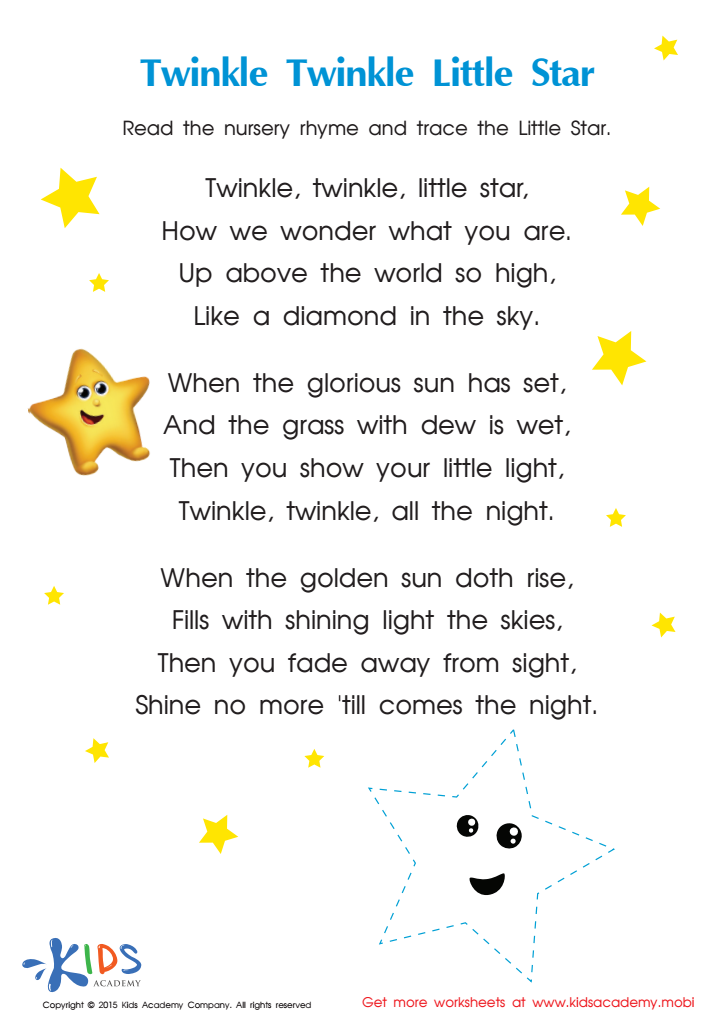
Nursery Rhymes: Twinkle Little Star Worksheet
Introduce your kindergartener to nursery rhymes using this printable worksheet. Sing Twinkle Little Star with your child and incorporate some simple actions. Even as a lullaby, it's a great way to teach letters and counting - have your child find and count all the letter 'S's in the song. For extra fun, try the Twinkle Little Star coloring page.
Nursery Rhymes: Twinkle Little Star Worksheet
Worksheet
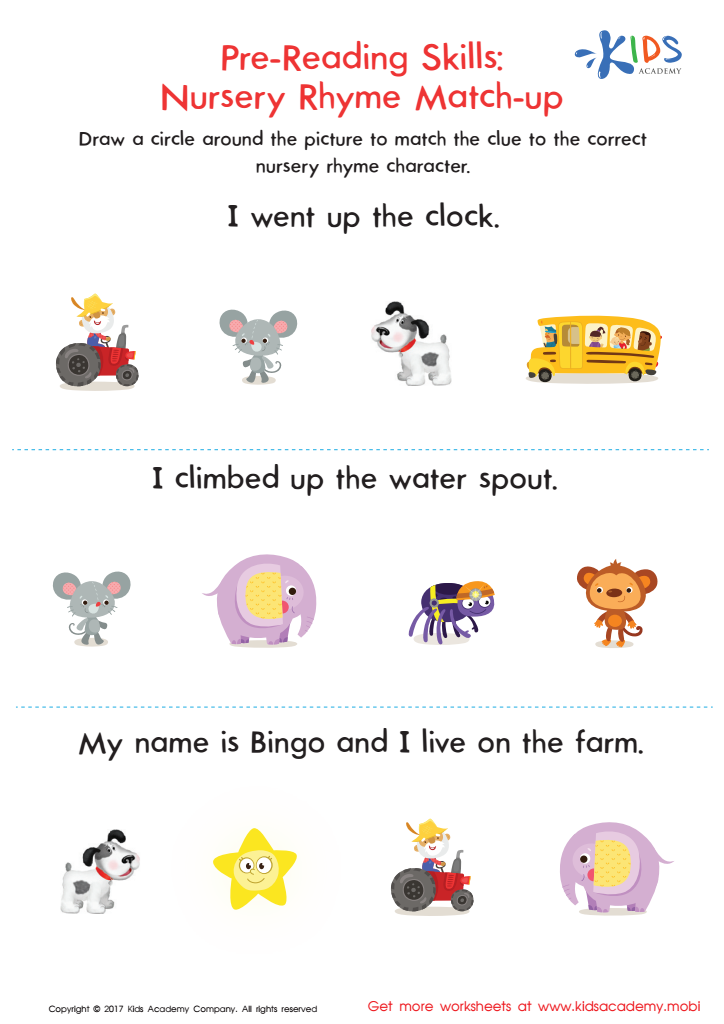
Nursery Rhyme Match–Up Worksheet
This worksheet helps kids build pre-reading skills using stories they know and love! By connecting with prior knowledge, kids can develop ideas about characters and set the stage for reading strategies.
Nursery Rhyme Match–Up Worksheet
Worksheet
Join Kids Academy for Free
Who is primarily going to use this learning content?







Rhyme recognition songs are a vital educational tool for children aged 4-6, offering numerous benefits that parents and teachers should prioritize. At this developmental stage, children are honing their linguistic skills, and exposure to rhymes helps enhance phonemic awareness, which is crucial for reading and spelling abilities later on. When children identify and produce rhyming words, they train their ears to hear sounds, aiding their understanding of how words are formed and segmented.
Additionally, rhyme recognition songs make learning enjoyable and engaging. The rhythmic patterns and melodic tunes captivate young learners, making them more likely to remember vocabulary and concepts. This playful approach creates a love for language, fostering a deeper appreciation for storytelling and poetry.
Moreover, these songs can significantly improve memory and listening skills, as children often repeat lyrics, enhancing their overall cognitive development. Sharing these songs together strengthens parent-child or teacher-student bonds, promoting collaborative learning and social interaction. In essence, incorporating rhyme recognition songs into early education not only lays a strong linguistic foundation but also nurtures creative expression, social skills, and a lifelong love for language. Therefore, their importance cannot be overlooked by parents and educators alike.








