Animal recognition Animals Worksheets for Ages 4-6
3 filtered results
Difficulty Level
Grade
Age
-
From - To
Subject
Activity
Standards
Discover our engaging Animal Recognition Worksheets designed for children ages 4-6! Perfect for young learners, these printable activities enhance observational skills while introducing various animals and their unique characteristics. Through fun and interactive exercises, children will match animals with their names, explore their habitats, and develop a deeper understanding of the natural world. Our worksheets support early childhood education by promoting critical thinking and boosting vocabulary, all while keeping learning enjoyable! Enhance your child’s knowledge of wildlife with colorful illustrations and age-appropriate challenges that spark curiosity and creativity. Start your adventure into the animal kingdom today with our delightful worksheets!
Favorites
With answer key
Interactive
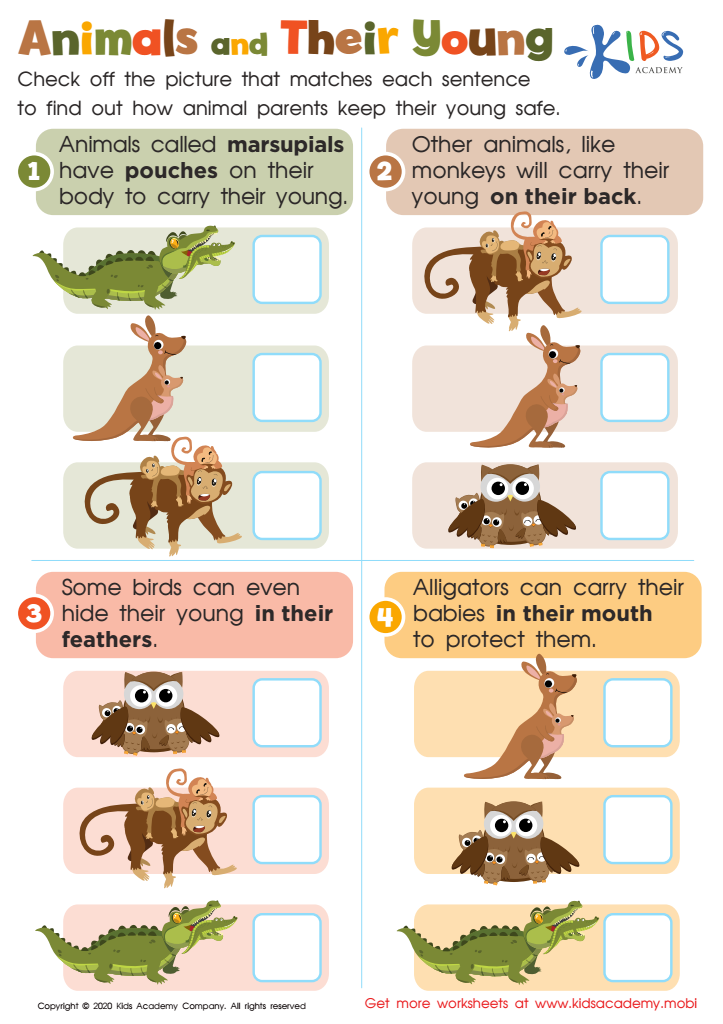
Animals and Their Young Worksheet
Help your child learn more about the animal kingdom with this cute science worksheet! They'll find out how animals protect and keep their babies close. From pouches to hitching a ride on mama’s back, they'll read the sentence above each illustration and select the description that fits. Check off the correct description as they go - a fun and educational activity!
 Assign to My Students
Animals and Their Young Worksheet
Worksheet
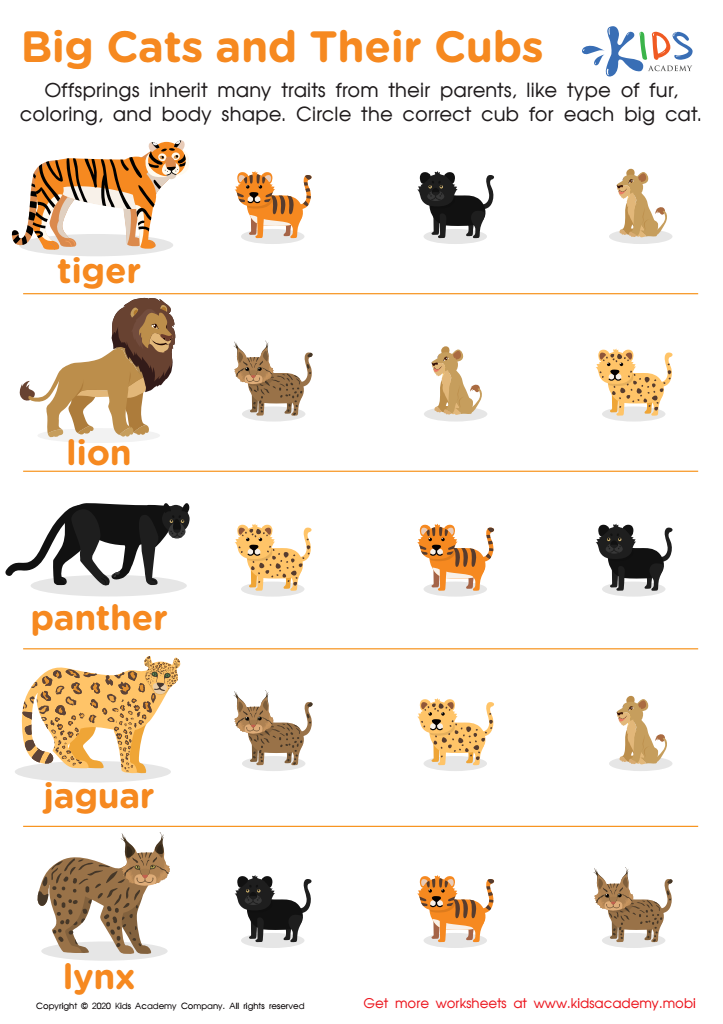
Big Cats and Their Cubs Worksheet
Kids are often like their parents, and the same is true for big cats and their cubs. Introduce your young scientists to genetics with this fun printable worksheet from Kids Academy! Observe the big cats and their cubs, then circle the right cub to complete! It's a great way to teach an early lesson in genetics.
Big Cats and Their Cubs Worksheet
Worksheet
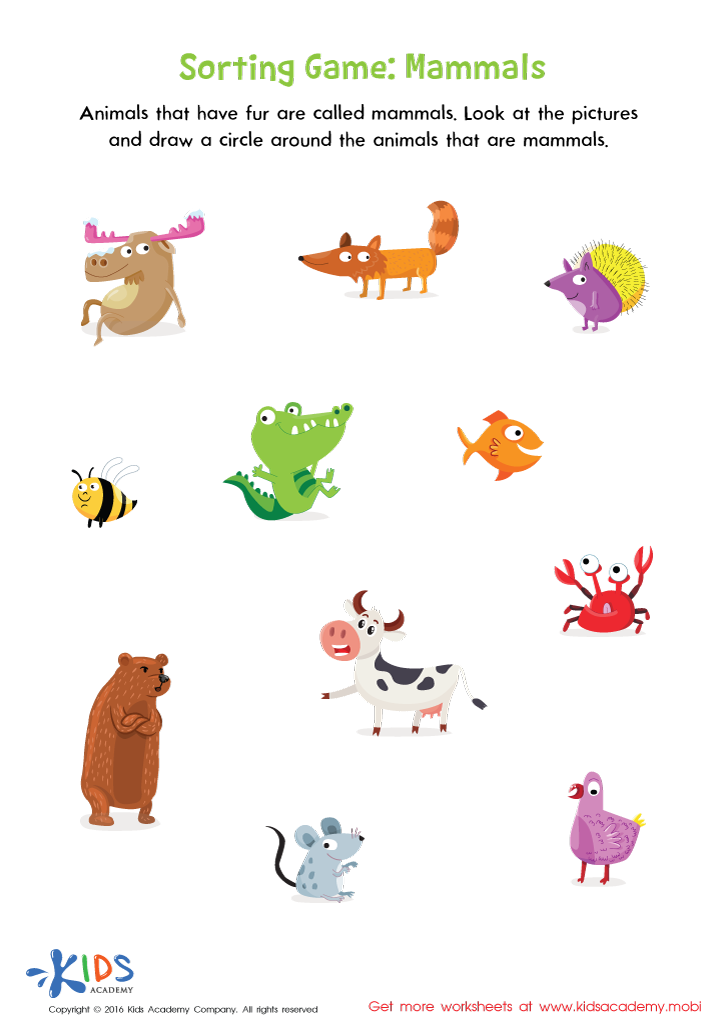
Mammals Sorting Worksheet
They'll practice sorting animals and learn their features with this fun worksheet.
Kids can test their scientific knowledge with this fun worksheet! They'll view pictures of animals, identify mammals based on their fur, and practice sorting them. This colorful worksheet is a great way for kids to learn about the differences between mammals and other animals.
Mammals Sorting Worksheet
Worksheet
Join Kids Academy for Free
Who is primarily going to use this learning content?



%20(1).jpg)




Animal recognition is a vital component of early childhood development that parents and teachers should prioritize for children aged 4-6. At this formative age, children are naturally curious and eager to explore the world around them. Introducing them to different animals not only enhances their cognitive skills but also lays the foundation for environmental awareness and empathy toward living creatures.
Through animal recognition, children learn to identify various species, understand their habitats, and recognize the importance of biodiversity. This knowledge fosters critical thinking as kids begin to categorize animals by traits such as size, color, and behavior. Moreover, engaging with animals—whether through books, pictures, or real-life encounters—enriches vocabulary and language skills, promoting effective communication.
Additionally, animal recognition can cultivate a sense of responsibility and compassion. As children learn about animals and their needs, they develop empathy, which can extend to human relationships and other areas of their lives. Ultimately, focusing on animal recognition in early education creates a well-rounded learning experience, contributes to emotional intelligence, and prepares children to be responsible stewards of the environment. By nurturing this interest, parents and teachers can help foster a generation that values and respects the natural world.