
Understanding seasons Science Worksheets for Ages 4-6
5 filtered results
Difficulty Level
Grade
Age
-
From - To
Subject
Activity
Standards
Introduce your child to the wonders of seasonal changes with our Understanding Seasons Science Worksheets for ages 4-6. These engaging, interactive activities help young learners observe and comprehend the four seasons through colorful visuals and simple exercises. Perfect for preschoolers and kindergarteners, the worksheets cover essential concepts, including weather patterns, appropriate seasonal clothing, and nature's transformations. Boost your child's critical thinking and vocabulary while nurturing their curiosity about the world. Ideal for homeschooling or supplemental learning, our worksheets provide a solid foundation in science, ensuring kids grasp the beauty and rhythm of our ever-changing environment.
Favorites
With answer key
Interactive
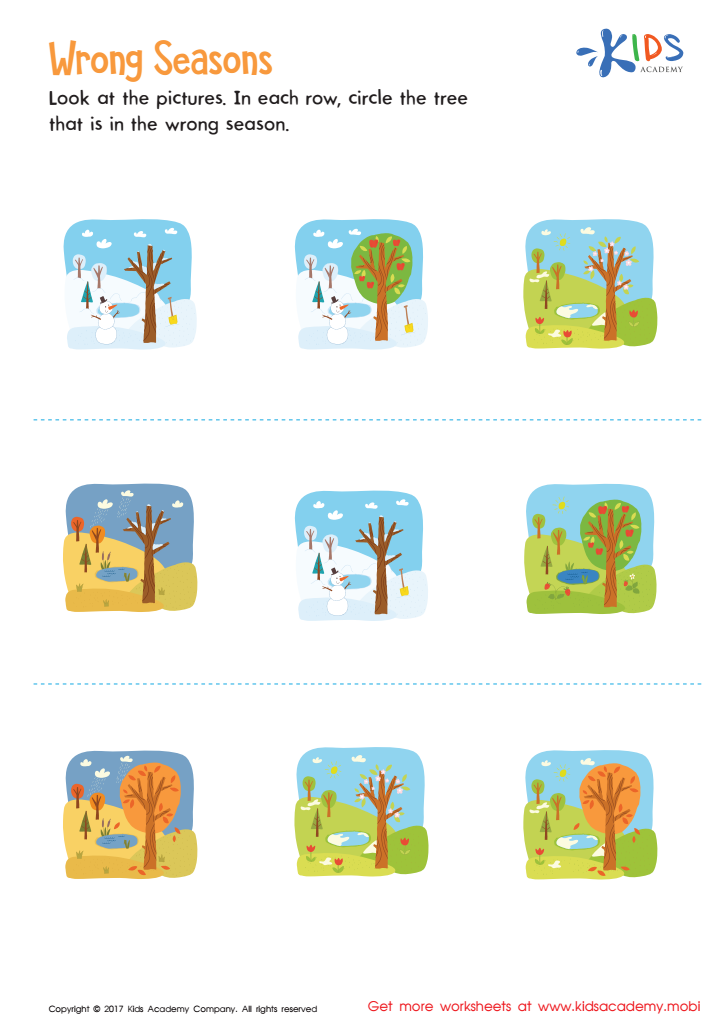
Wrong Seasons Worksheet
Uh oh! Trees are out of place in these vibrant pictures! Use this wrong seasons worksheet to help your child develop observation, analytical, and critical thinking skills. They'll learn about how the seasons change the surroundings, like trees. Print it out today to sharpen your child's eye for spotting the seasons!
Wrong Seasons Worksheet
Worksheet
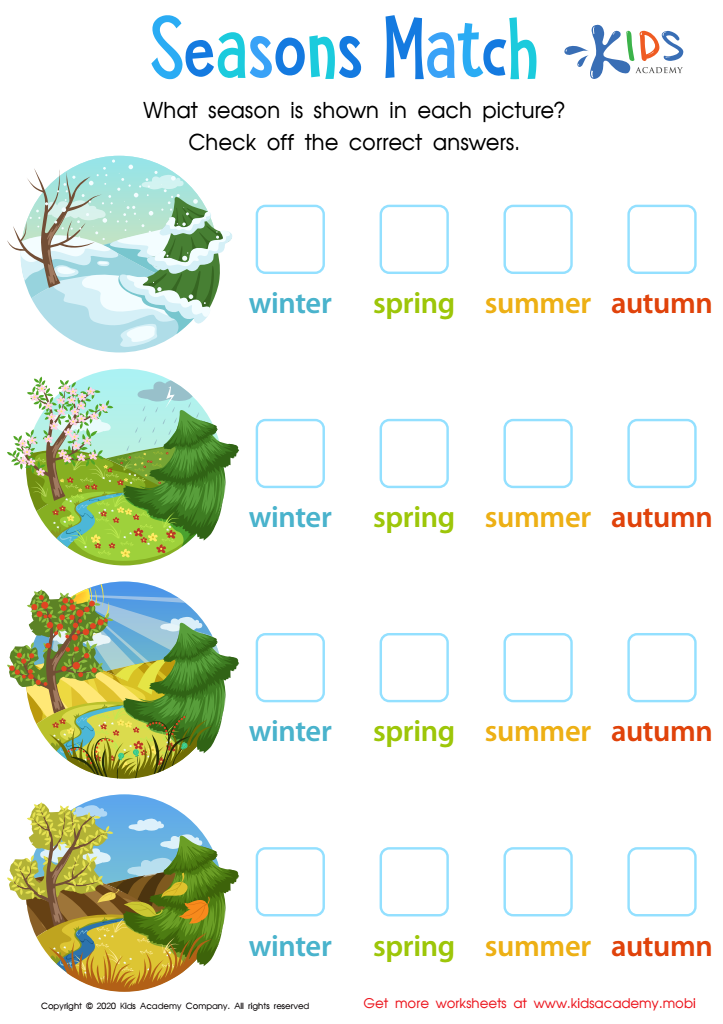
Seasons Match Worksheet
Preschoolers should begin learning about seasons and weather early. Most can tell what season it is by upcoming holidays or school activities. Test their knowledge with a printable PDF worksheet. It asks them to match each image with its corresponding season!
Seasons Match Worksheet
Worksheet
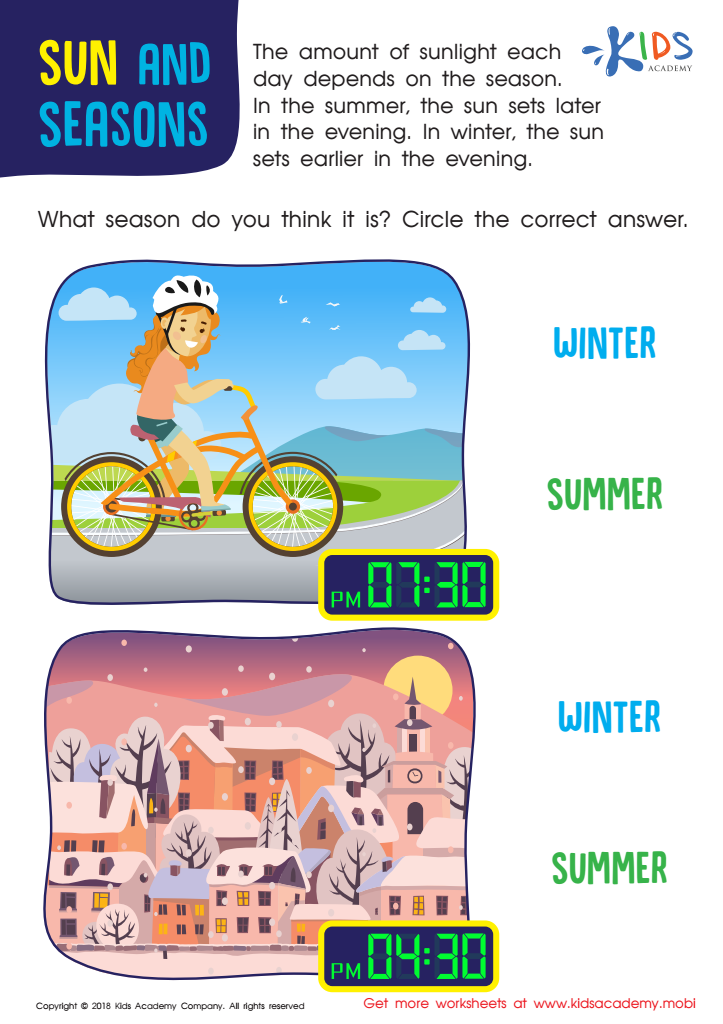
Sun and Seasons Worksheet
Help your child understand science and seasons with this Kids Academy worksheet! Discuss how the daylight varies in summer and winter with them. Guide them to note the digital clock on each page then circle the correct answers. With this sheet, your child will gain a better understanding of why days are longer in summer and shorter in winter!
Sun and Seasons Worksheet
Worksheet
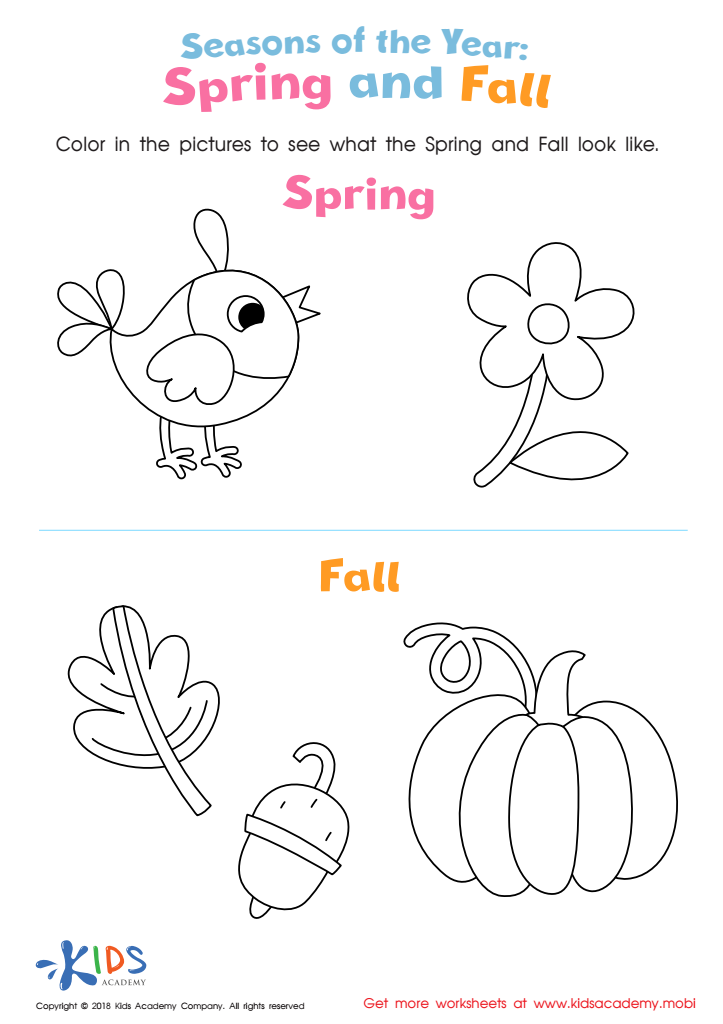
Spring and Fall Worksheet
This coloring sheet is great fun for kids. It features animals, shapes, and asks kids to identify spring and fall. Ask them to name the things in the sheet, and then help choose colors that fit each season. Let their imaginations run wild!
Download (PDF)
 Assign to My Students
Assign to My Students
Spring and Fall Worksheet
Worksheet
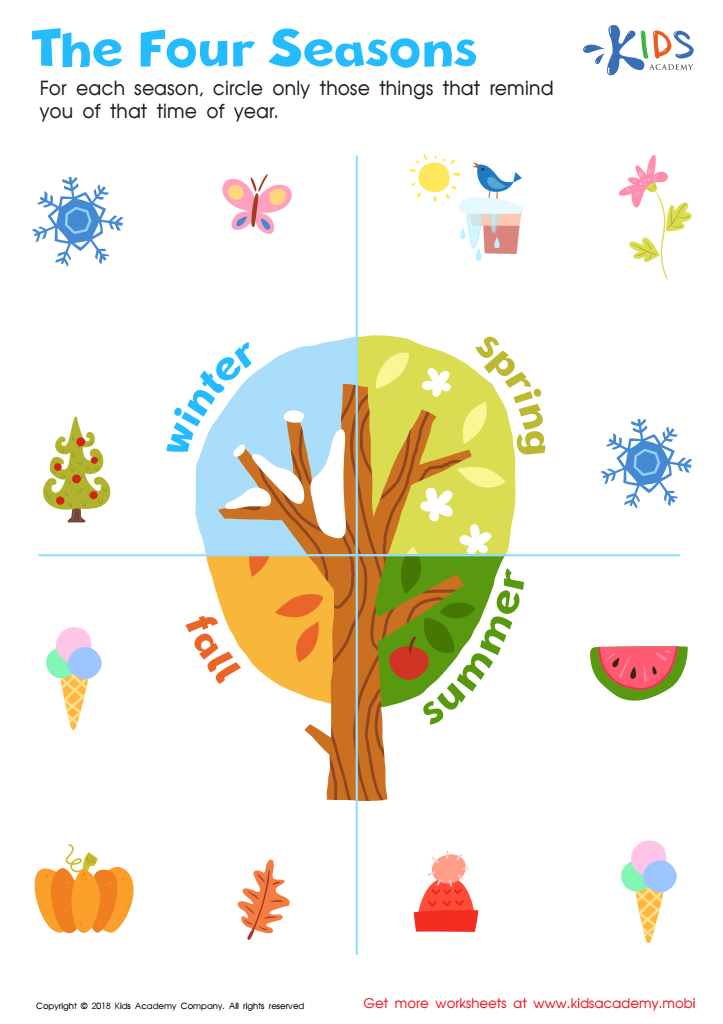
The Four Seasons Worksheet
Tell your child to circle things that remind them of each season. The tree has four squares, one for each season. Some things in each square match the season, others don't. Ask if any are out of place. Help them circle only items that remind them of that season.
The Four Seasons Worksheet
Worksheet
Join Kids Academy for Free
Who is primarily going to use this learning content?




.jpg)


Understanding seasons is crucial for young children, as it shapes their comprehension of the world around them. For ages 4-6, exploring the change of seasons introduces foundational scientific concepts in an engaging and easily grasped manner. Early familiarity with these changes fosters curiosity about natural processes and encourages observational skills. This knowledge helps children make sense of why the environment looks and feels different throughout the year, enhancing their experiential learning and cognitive development.
For parents and teachers, introducing seasons at this stage strengthens a child's appreciation for patterns and cycles in nature. It sets the base for more complex scientific principles, such as weather patterns and the Earth's rotation around the sun. Recognizing how seasons affect daily activities, clothing choices, and even the types of wildlife they see builds practical knowledge.
Moreover, learning about seasons supports children's emotional and social growth. Seasonal themes in education can create opportunities for related hands-on activities, storytelling, and crafts that foster creativity and collaboration. Establishing these connections from an early age helps children become more observant, inquisitive, and anchored in their experiences, paving the way for thriving in future academic endeavors and finding wonder in the world around them.







