Spatial awareness Physical Science Worksheets for Ages 4-6
3 filtered results
-
From - To
Our Spatial Awareness Physical Science Worksheets for Ages 4-6 are designed to foster early learning and understanding of spatial relationships. Through fun, interactive activities, children will explore concepts such as position, direction, and movement, helping them to develop essential cognitive and motor skills. These worksheets are tailored to keep young minds engaged while building foundational skills critical for future STEM learning. Perfect for classroom or at-home use, our worksheets encourage curiosity and exploration in young learners. Help your child navigate their world with confidence and a sense of spatial mastery through our carefully crafted science worksheets.
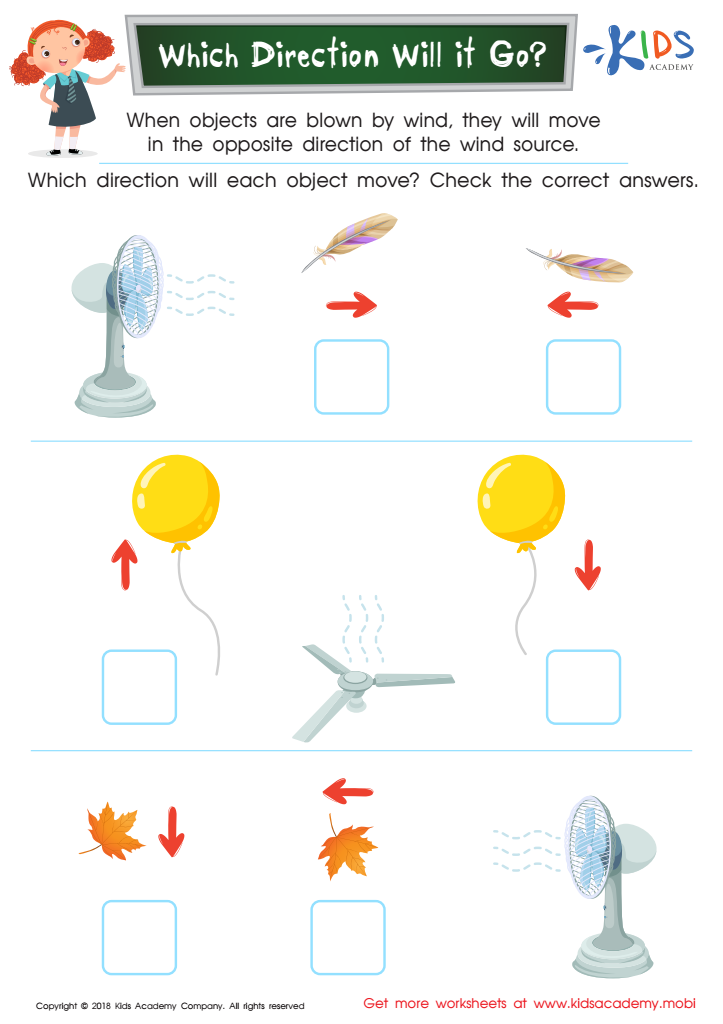
Which Direction Will it Go? Worksheet
 Assign to My Students
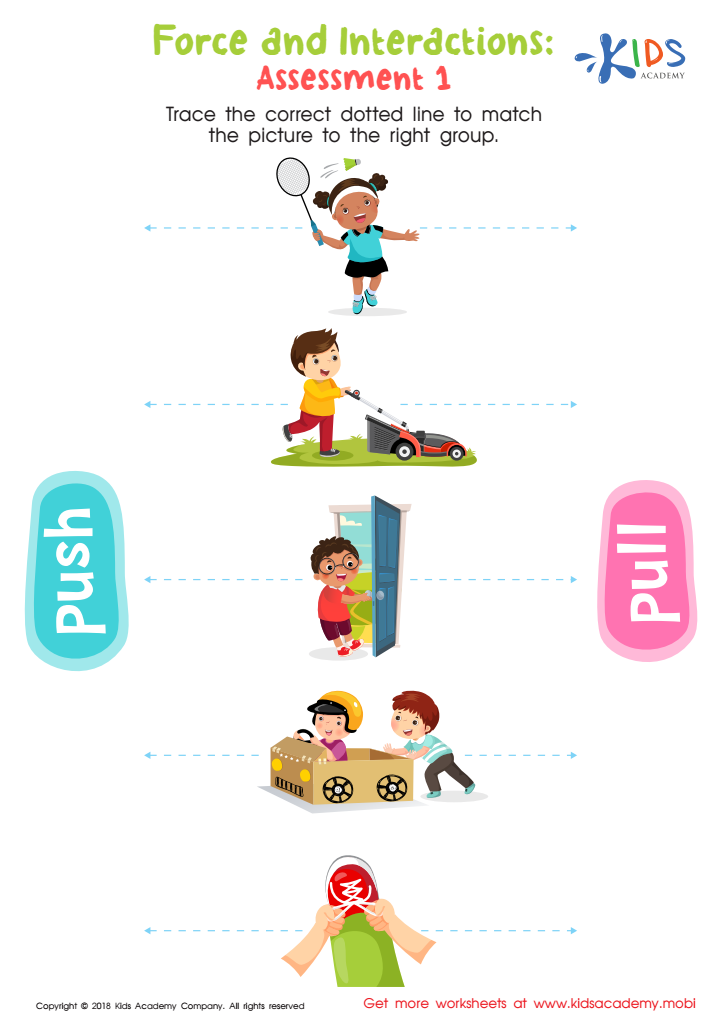
Force and Interactions: Assessment 2 Worksheet
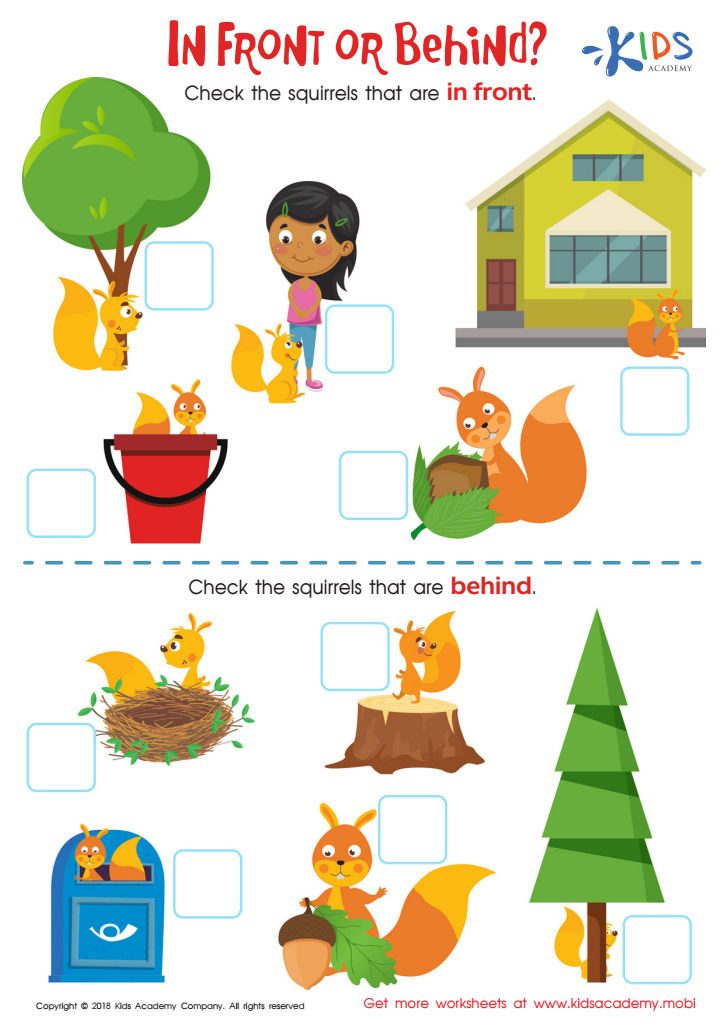
In Front or Behind: Part 2 Worksheet







Spatial awareness and physical science concepts may seem advanced for children ages 4-6, but they are foundational to early development and learning. Spatial awareness helps children understand relationships between objects, themselves, and their environment. This cognitive skill is crucial for everyday tasks, from maneuvering through spaces to understanding geometric relationships, which later support math and problem-solving abilities.
Incorporating physical science at an early age nurtures a child's natural curiosity. Activities like playing with blocks, pouring water into different containers, or identifying objects based on their physical properties allow kids to explore concepts of weight, volume, and distance. Such hands-on experiments introduce the practice of scientific inquiry, setting the stage for future STEM (Science, Technology, Engineering, Math) learning.
Parents and teachers play a vital role in fostering these skills through interactive and engaging activities. By providing opportunities for exploration and questioning, they create a rich learning environment. Encouraging a child to observe, predict, and test their ideas leads them to develop critical thinking skills that are transferable across a lifetime of learning.
Nurturing spatial awareness and physical science understanding in early years helps build resilient, inquisitive minds ready to grasp more complex concepts in their educational journey and beyond. This investment pays dividends in both academic success and practical life skills.







