
Vocabulary enhancement Physical Science Worksheets for Ages 4-6
5 filtered results
Difficulty Level
Grade
Age
-
From - To
Subject
Activity
Standards
Explore our fantastic "Vocabulary Enhancement Physical Science Worksheets" designed for ages 4-6! At Kids Academy, we prioritize making learning fun and engaging, ensuring young learners build a strong foundation in science. Our comprehensive worksheets introduce basic physical science concepts while enhancing vocabulary through playful and interactive activities. Kids will delight in discovering new words as they explore fascinating science topics. Each worksheet is crafted to boost essential early learning skills, fostering curiosity and a love for science from an early age. Perfect for both classroom and home learning, our resources are a must-have for nurturing young science enthusiasts.
Favorites
With answer key
Interactive
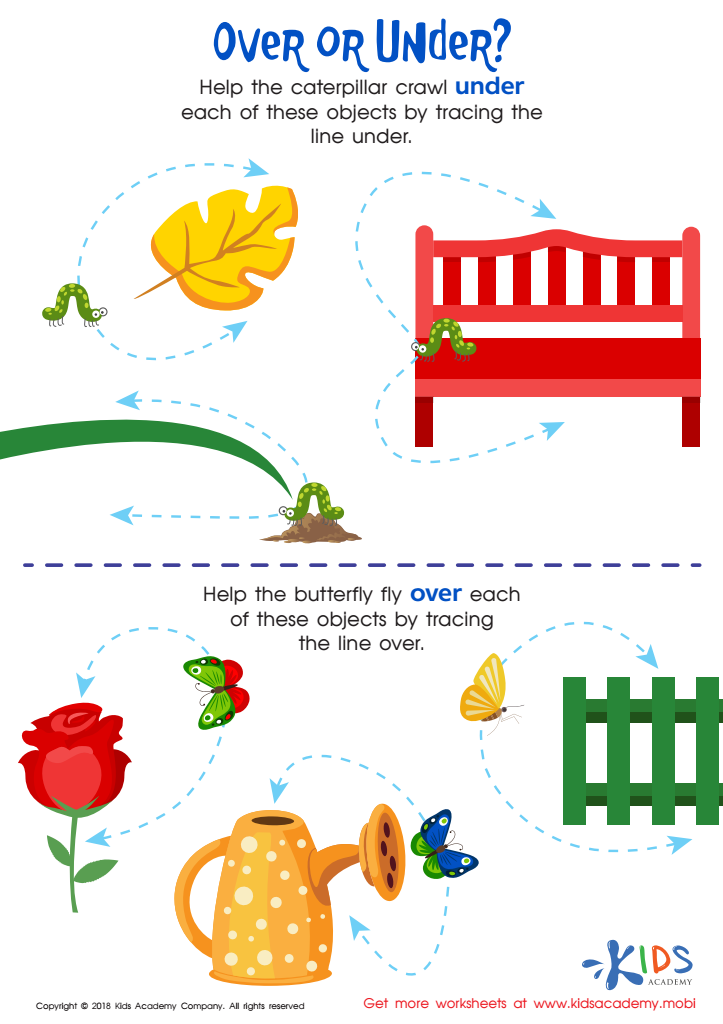
Over or Under? Worksheet
Math for young kids isn't just about numbers and counting, but also spatial concepts like geometry. This worksheet helps students learn "over" and "under" by tracing the movement of caterpillars and butterflies. Downloadable for free, it's an effective teaching tool for early learners.
 Assign to My Students
Over or Under? Worksheet
Worksheet
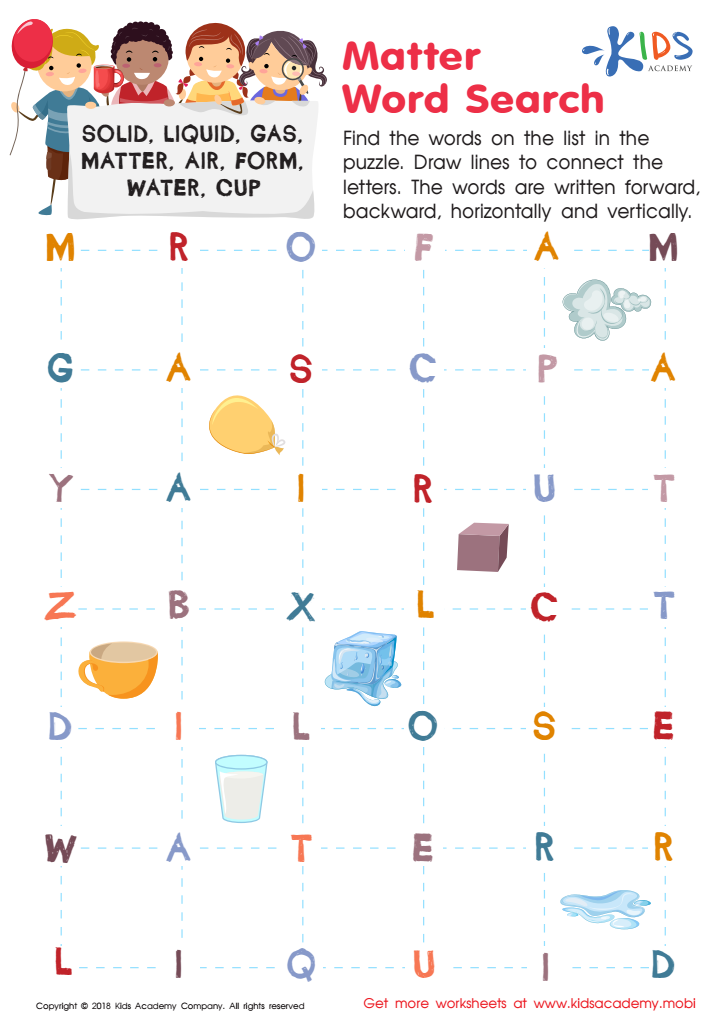
Matter Word Search Worksheet
Matter is anything with weight and taking up space. It exists in three forms: solid, gas and liquid. Examples of these are ice, air and water. Help kids find the words in the puzzle, which are written forward, backward, horizontally and vertically. Connect the letters!
Matter Word Search Worksheet
Worksheet
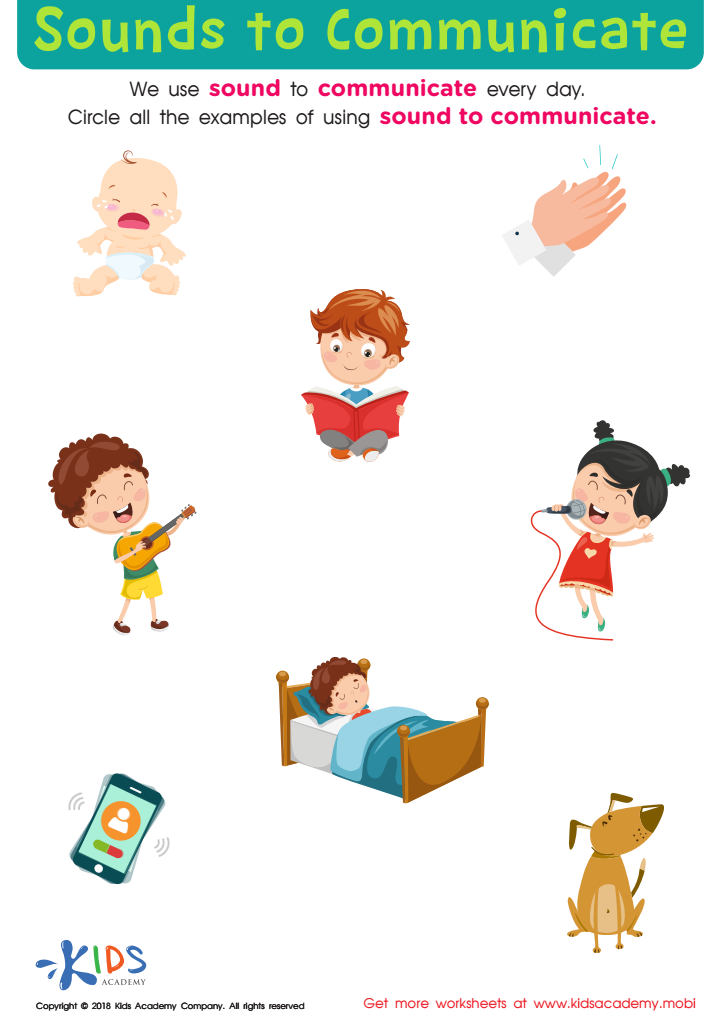
Sounds to Communicate Worksheet
Sounds are important for communication. Ask your students to name sounds people, animals and things make. Then, review this worksheet with them and see if they can identify the activities. Ask them to circle examples of sounds used to communicate.
Sounds to Communicate Worksheet
Worksheet
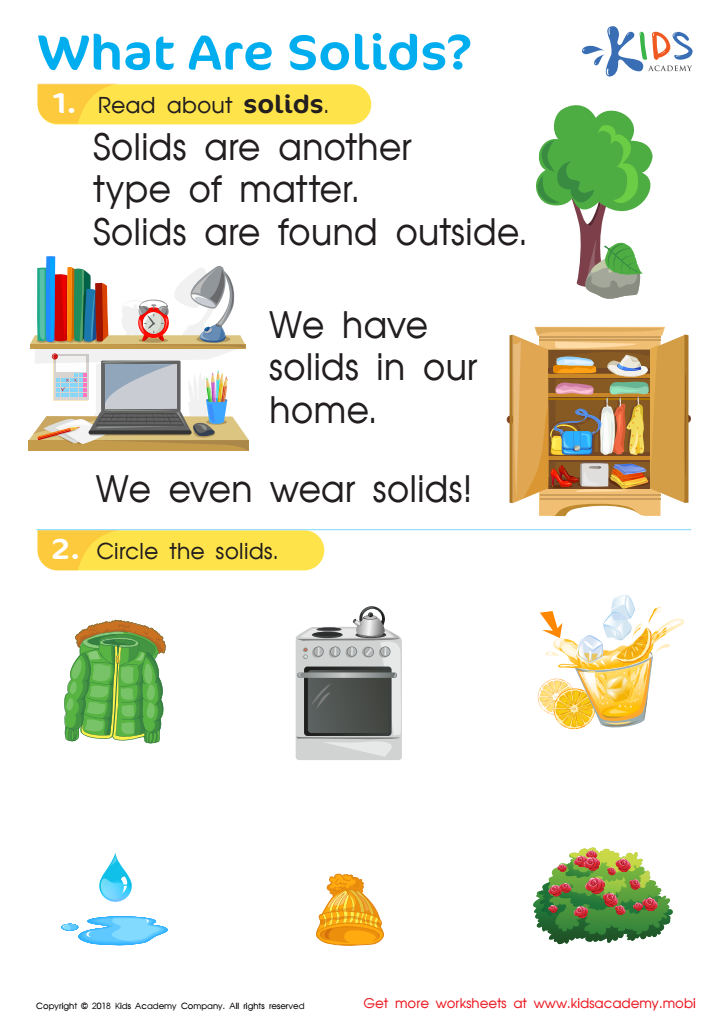
What Are Solids? Worksheet
Help your kids understand matter's three forms - solid, liquid, and gas - with examples. Ask them to give their own and where to find them. Then, read and discuss the worksheet's facts about solids. Afterward, have them circle the solids among the provided objects.
What Are Solids? Worksheet
Worksheet
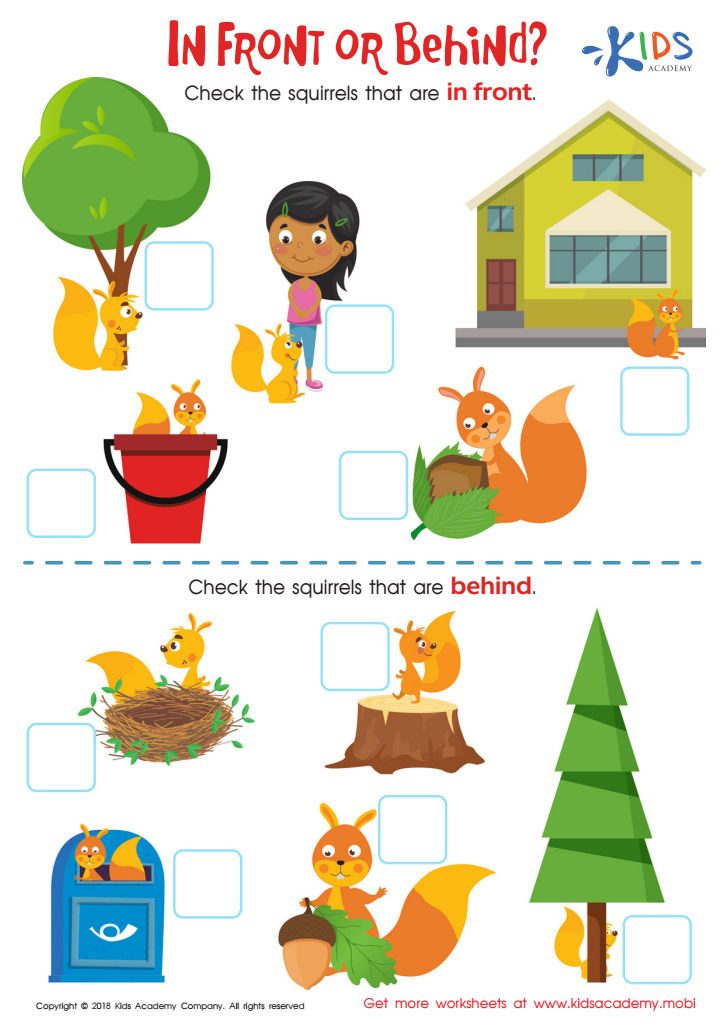
In Front or Behind: Part 2 Worksheet
Teach positional words "front" and "behind" with this fun worksheet! Students identify where the squirrel is in relation to the object - in front or behind. It's a great exercise to practice early geometry skills and understanding object movement.
In Front or Behind: Part 2 Worksheet
Worksheet
Join Kids Academy for Free
Who is primarily going to use this learning content?







Vocabulary enhancement in Physical Science for young learners, aged 4-6, is critical for several compelling reasons. First, this foundational period is characterized by rapid brain development, with children demonstrating remarkable capacity for language acquisition. By introducing them to basic physical science terms through hands-on activities and simple explanations, we foster linguistic growth alongside natural curiosity about the world.
Second, early exposure to scientific vocabulary helps children build the language skills necessary for academic success. Terms like "gravity," "magnet," and "force" become part of their lexicon, enabling them to better understand and articulate the phenomena they observe in everyday life. This not only boosts their cognitive skills but also encourages a positive association with learning and scientific inquiry.
Moreover, discussing scientific concepts in age-appropriate ways sparks excitement and interest in STEM (science, technology, engineering, and mathematics) subjects from a young age. This early engagement can nurture a lifelong passion for discovery and critical thinking.
Lastly, integrating vocabulary enhancement into physical science activities supports family and classroom bonding. By exploring simple experiments and discussing findings, parents and teachers create enriching, interactive experiences that build strong communication and relational skills in young learners.
Investing in vocabulary enhancement in early physical science education lays a vibrant groundwork that profoundly benefits children's academic, cognitive, and social-emotional development.







