Map reading skills Community Worksheets for Ages 4-6
3 filtered results
-
From - To
Explore our engaging "Map Reading Skills Community Worksheets" tailored for children ages 4-6! These interactive resources are designed to foster essential map-reading abilities while building understanding of community environments. Young learners will enjoy colorful visuals and fun activities that encourage critical thinking and spatial awareness. With easy-to-follow instructions, children will learn to identify common symbols, navigate simple maps, and recognize landmarks within their communities. Our worksheets are perfect for classroom integration or home learning, ensuring a well-rounded education. Help your child develop valuable skills for everyday life while having fun with our vibrant map-reading worksheets!
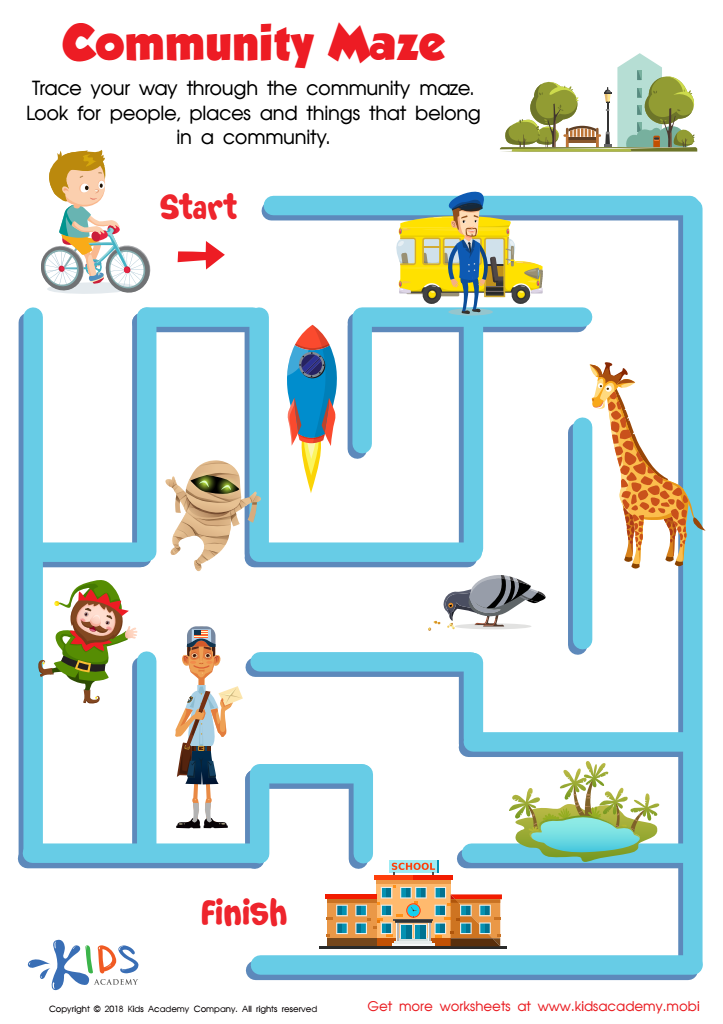
Community Maze Worksheet
 Assign to My Students
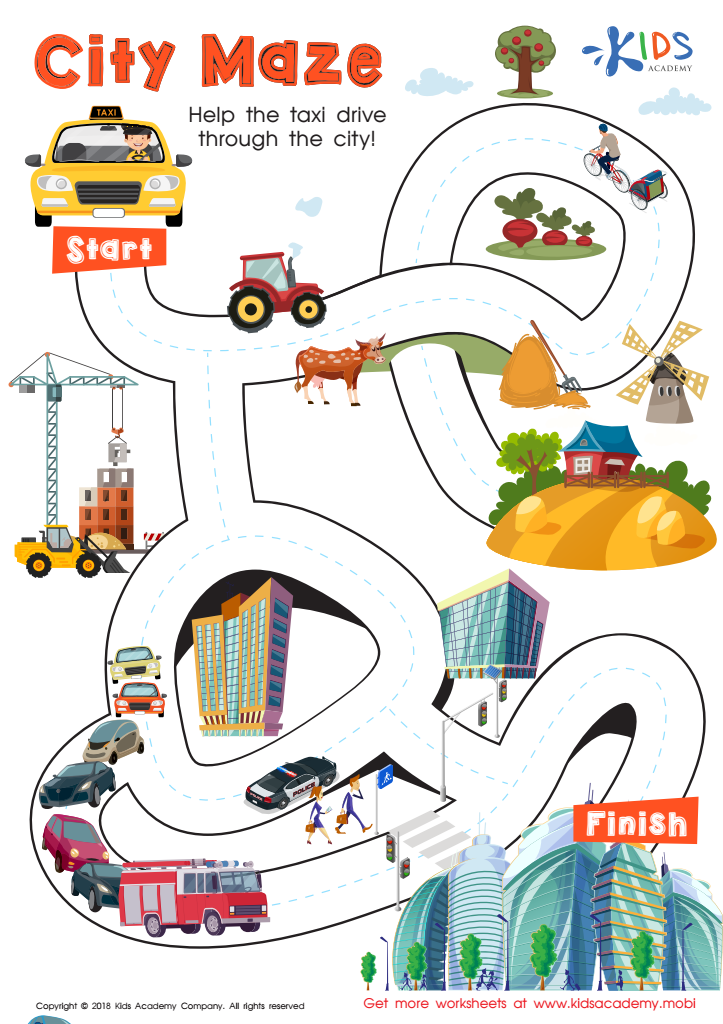
City Maze Worksheet

Towns Worksheet







Map reading skills are crucial for young children, particularly those aged 4-6, as they lay the foundation for spatial awareness, critical thinking, and problem-solving abilities. Parents and teachers should prioritize these skills for several compelling reasons.
First, map reading helps children understand their environment better, developing their ability to navigate both physical and social landscapes. When children learn to interpret simple maps, they cultivate an intrinsic sense of direction and space, essential for fostering independence.
Second, engaging with maps enhances cognitive skills. Children practice visualization and interpretation, translating symbols and scales into real-world understanding. This practice promotes early math skills and the ability to think logically.
Moreover, map reading encourages collaboration and communication. Small group activities centered around maps often lead to discussions, promoting social interaction and teamwork. As children work together to find locations or create their maps, they learn to express ideas and listen to others.
Incorporating map reading into early education fosters a sense of curiosity and adventure, motivating children to explore their surroundings. Ultimately, these skills are not just academic; they build confidence and lay the groundwork for lifelong learning and exploration, helping children navigate a complex world effectively.








