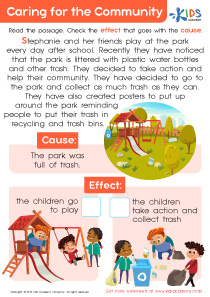
Understanding communities Community Worksheets for Ages 4-6
3 filtered results
-
From - To
Explore the vibrant world of communities with our "Understanding Communities Worksheets" designed for children ages 4-6. These engaging worksheets encourage little learners to discover the diverse elements that make up their community, from local places and people to vital community roles. With colorful illustrations and age-appropriate activities, children will learn essential social studies concepts while developing critical thinking and creativity skills. Perfect for home or classroom use, each worksheet facilitates meaningful discussions about teamwork, responsibility, and the importance of community members. Unlock your child's curiosity about their surroundings and foster a strong sense of belonging with these fun, educational resources!
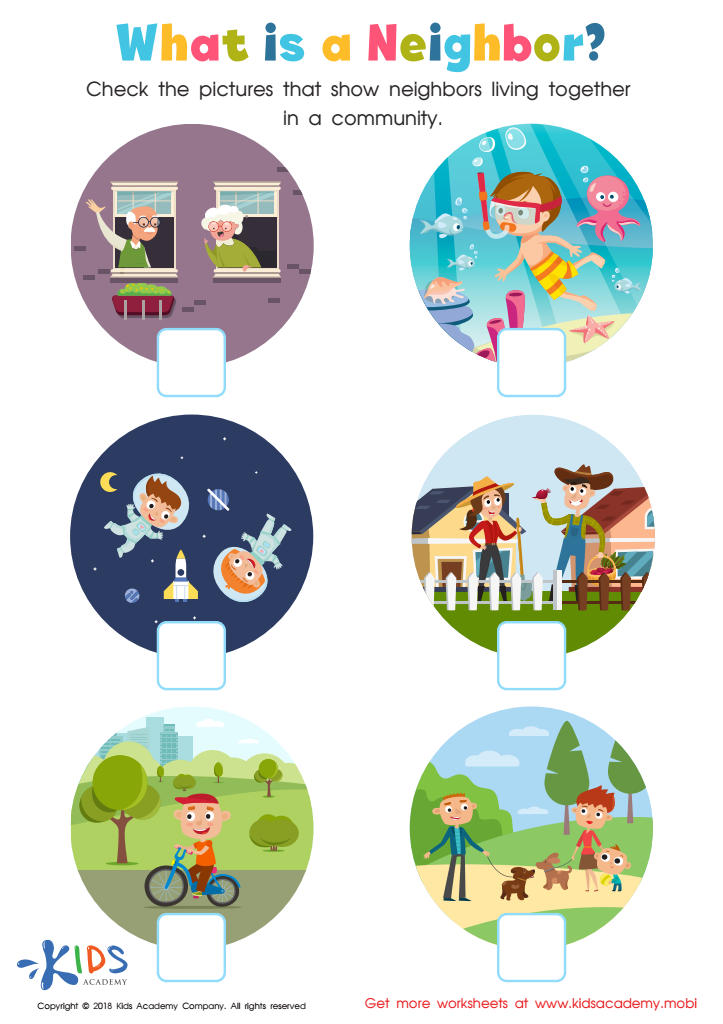
What is a neighbor Worksheet
 Assign to My Students
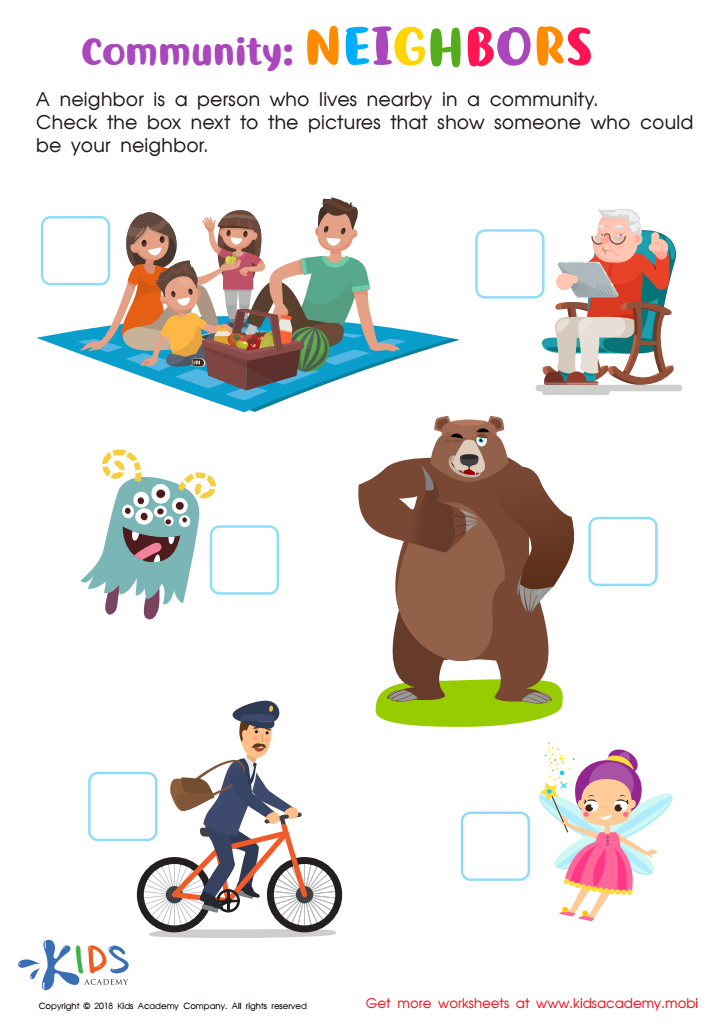
Community: Neighbors Worksheet
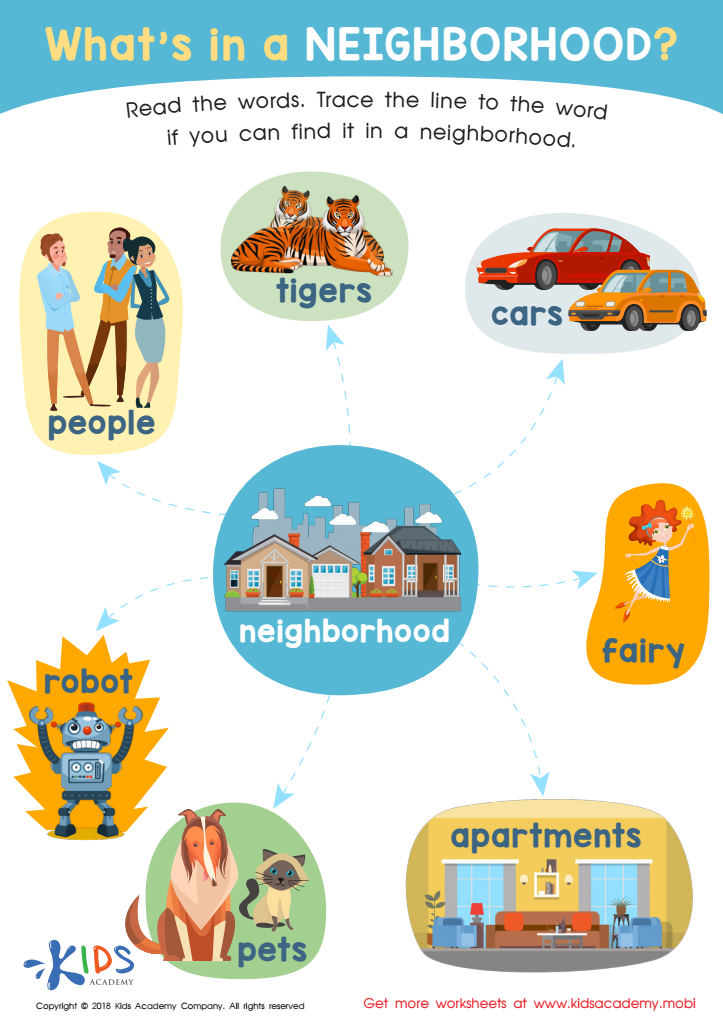
What's in a Neighborhood? Worksheet





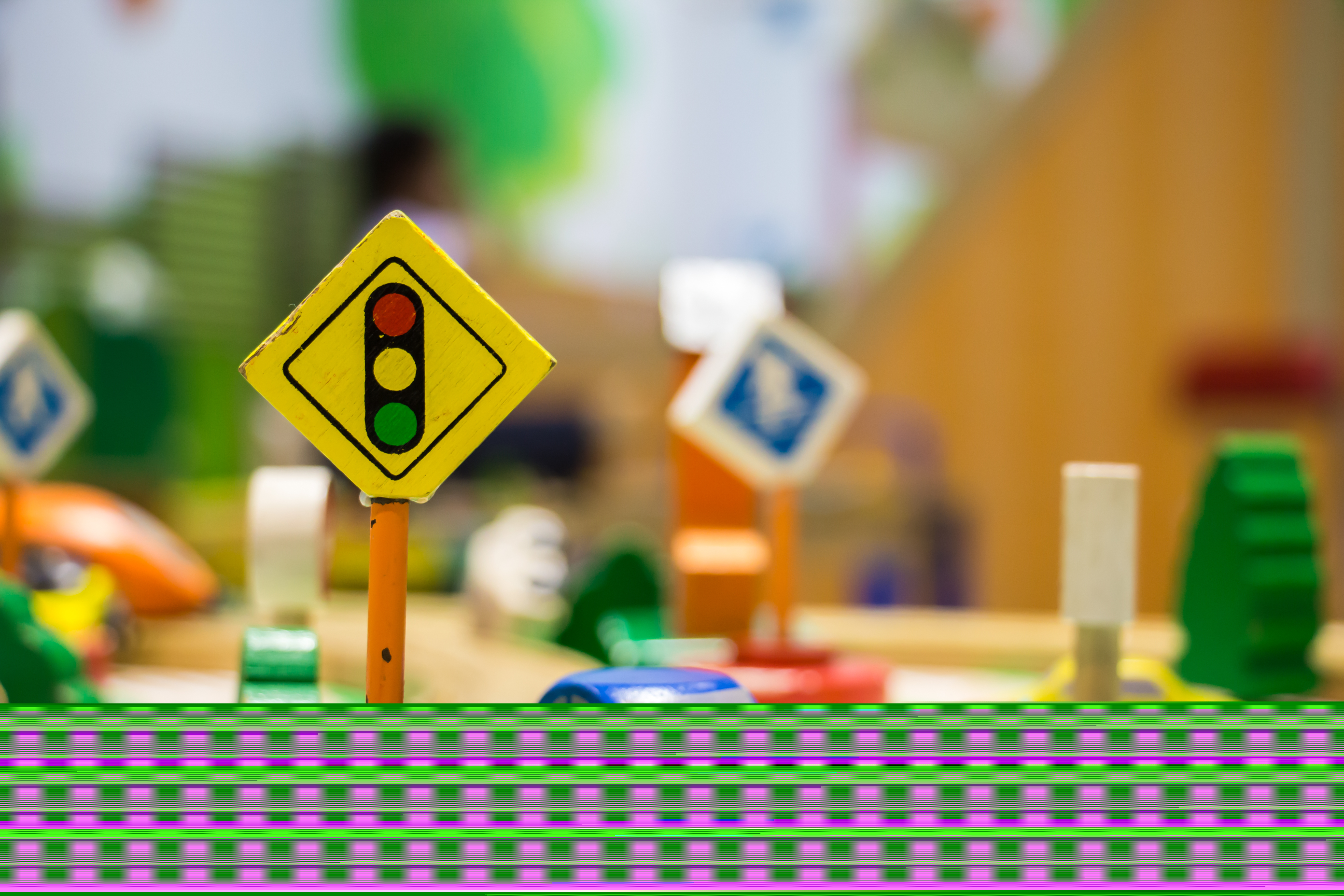


Understanding communities is essential for young children aged 4-6, as it helps them develop a sense of belonging and identity. Parents and teachers play a crucial role in fostering this understanding, which can significantly impact a child’s social and emotional development. When children learn about their community, they gain awareness of the people, places, and cultures that surround them. This awareness nurtures empathy, respect, and appreciation for diversity.
Incorporating community-themed activities into early education encourages exploration and critical thinking. When children see themselves as part of a group, they build foundational social skills, such as cooperation and communication, which are vital as they engage with peers. Moreover, understanding local resources, such as libraries, parks, and healthcare facilities, empowers children to make connections and seek support.
Parents and teachers can facilitate discussions about community roles, demographics, and important cultural events, allowing children to articulate their experiences and insights. This understanding enhances their ability to navigate their environment and engages them in responsible citizenship from a young age. Ultimately, a strong emphasis on community education fosters not only individual growth but also strengthens the bonds within the larger society. Thus, an investment in understanding communities is an investment in cultivating thoughtful, aware, and active members of society.