Understanding citizenship Good Citizenship Worksheets for Ages 4-6
5 filtered results
-
From - To
Welcome to our "Understanding Citizenship: Good Citizenship Worksheets for Ages 4-6" page! These engaging and interactive worksheets are designed to help young learners grasp the concept of citizenship. Through fun activities, kids will explore important qualities of a good citizen, including respect, responsibility, and kindness. Our easy-to-understand exercises encourage creative thinking and critical analysis, making the subject of citizenship approachable and exciting for preschoolers and kindergarteners. By fostering early understanding of civic values, we aim to inspire a generation of responsible, engaged citizens. Dive in, and help your little ones learn the importance of contributing positively to their communities!
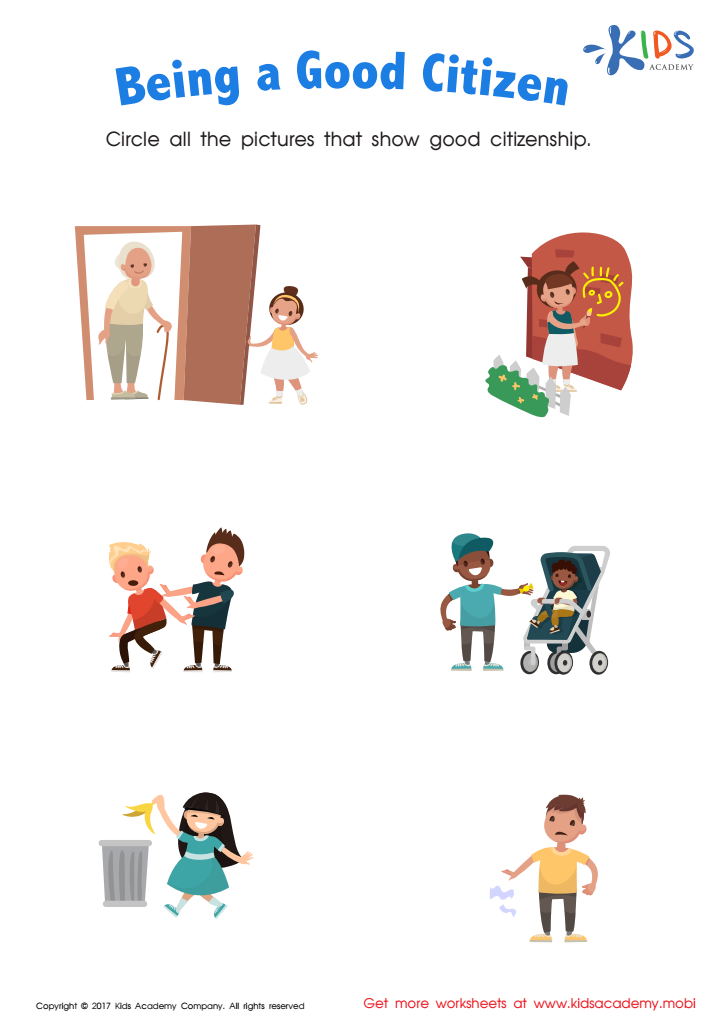
Being a Good Citizen Printable
 Assign to My Students
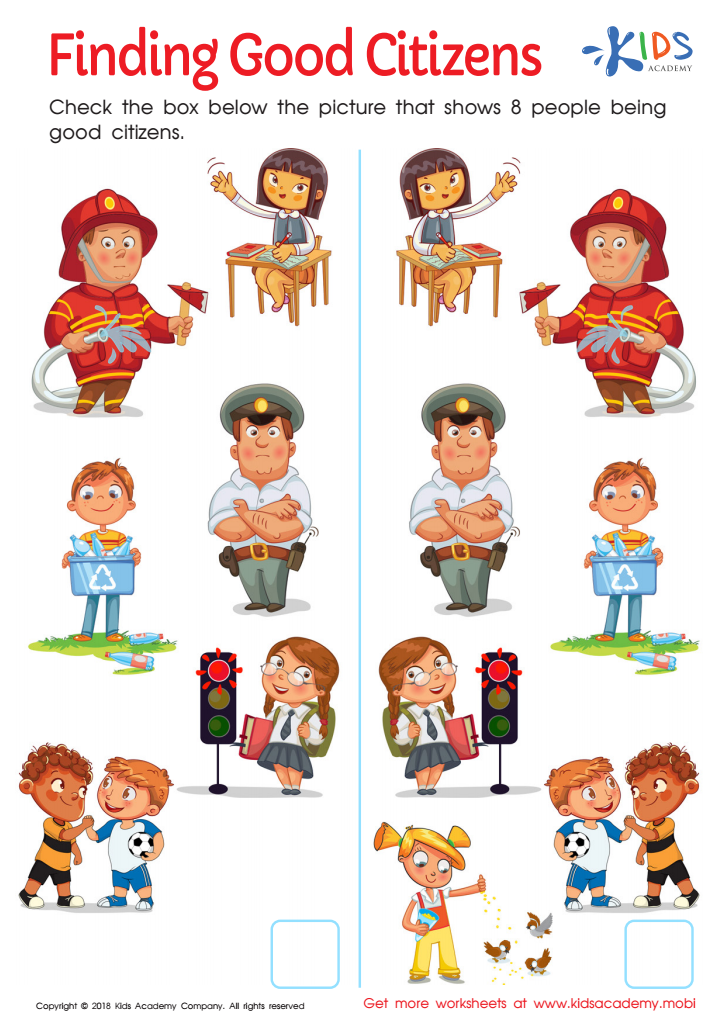
Finding Good Citizens Worksheet
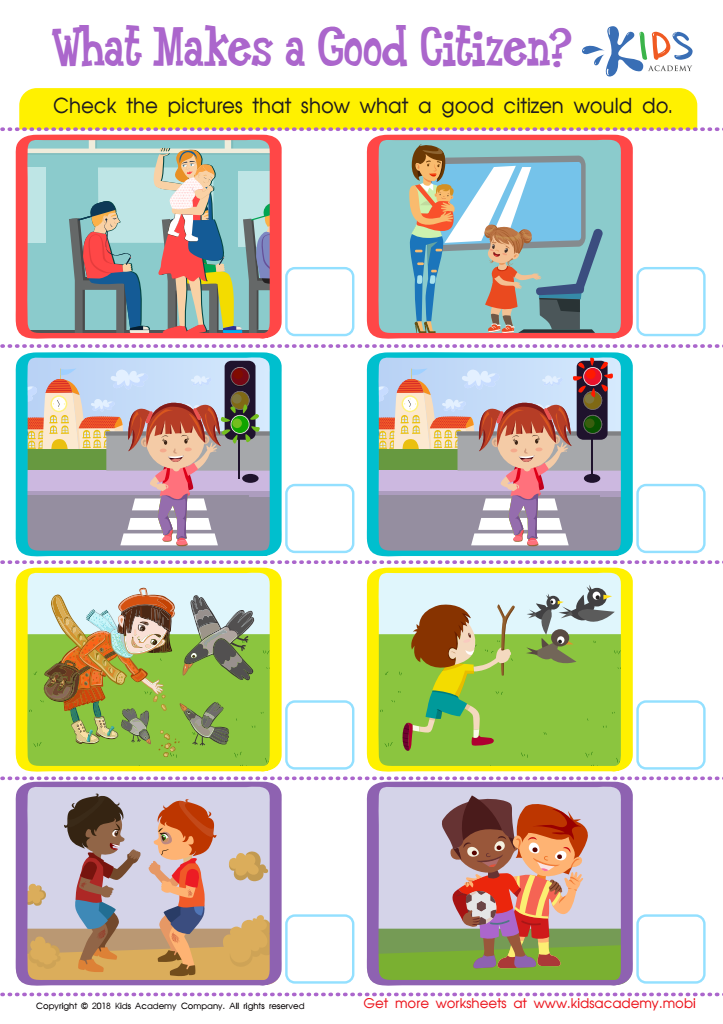
What Makes a Good Citizen? Worksheet
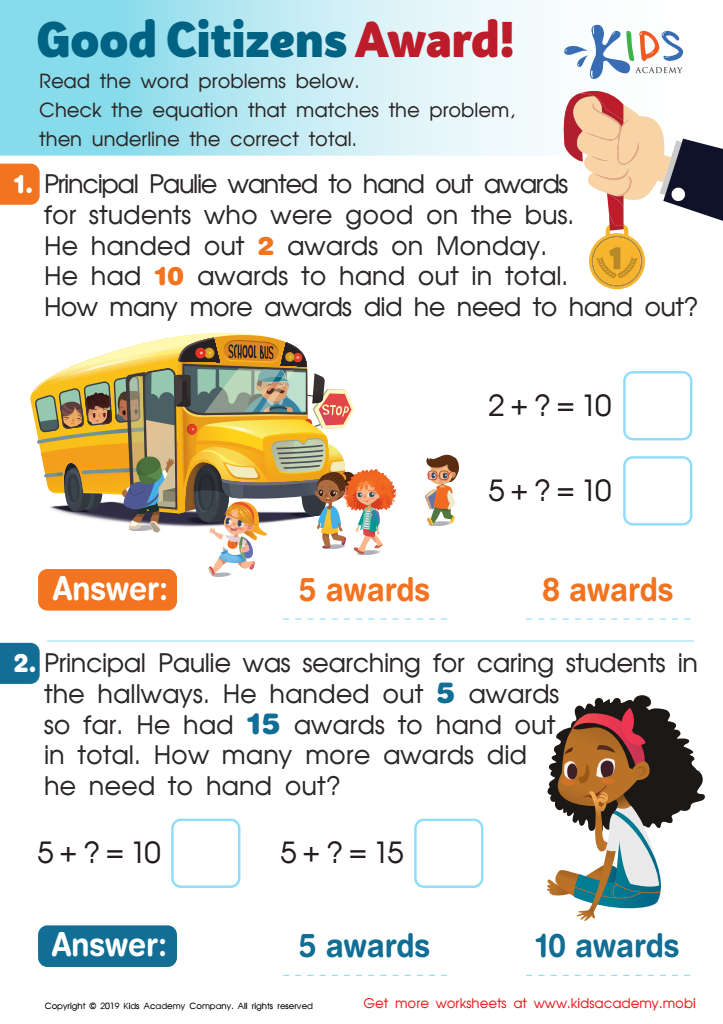
Good Citizens Award! Worksheet
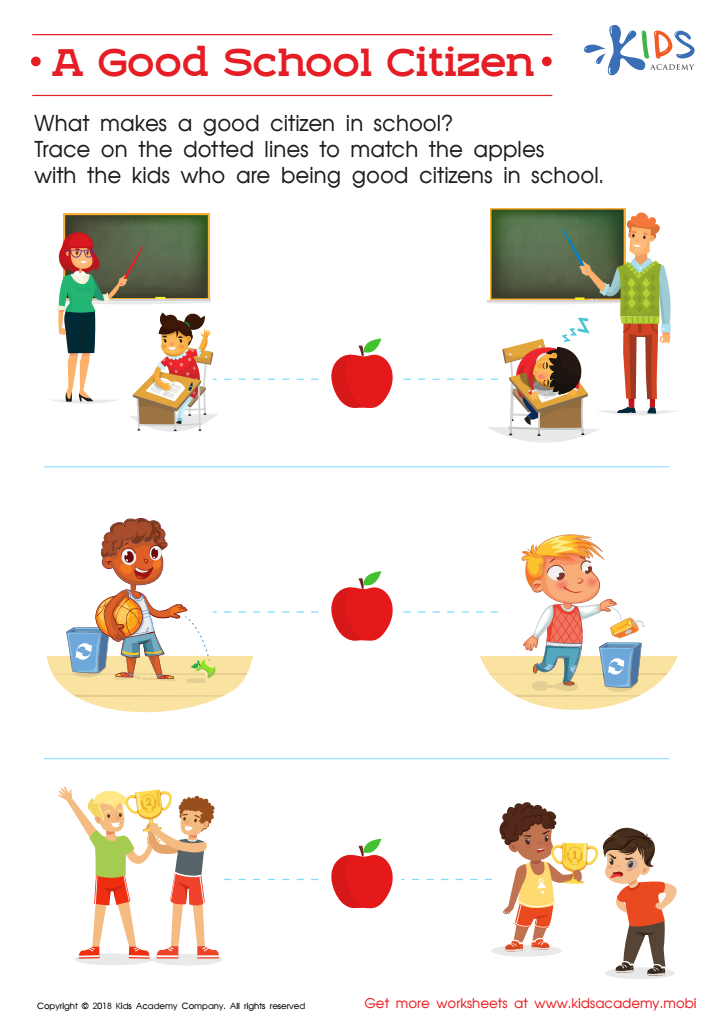
A Good School Citizen Worksheet




Understanding citizenship and promoting good citizenship among children aged 4-6 is essential for several reasons. At this foundational age, children are beginning to develop their social skills and sense of identity within their communities. Teaching them about citizenship helps instill values such as respect, empathy, and responsibility, which are crucial for their social development.
By integrating concepts of good citizenship, parents and teachers can cultivate an environment that fosters cooperation and inclusivity. Activities such as sharing, participating in group projects, or discussing stories about diverse communities help children understand their role within a larger society. This lays the groundwork for them to appreciate diversity and develop kindness, which are key components of good citizenship.
Moreover, nurturing these values early on creates a sense of belonging and encourages children to express themselves positively. As they grow, these lessons reinforce the importance of contributing to their communities, whether in small daily acts or through more active participation as they enter school and beyond.
Ultimately, understanding good citizenship empowers young children to become thoughtful, engaged, and compassionate members of society, setting the stage for a more harmonious future. Teachers and parents play a pivotal role in guiding this development, highlighting the need for concerted efforts in early education.