Capitalization rules Capitalization Worksheets for Ages 4-6
6 filtered results
-
From - To
Discover essential capitalization rules with our engaging Capitalization Worksheets designed for ages 4-6. These interactive worksheets help young learners grasp the basics of when to use uppercase letters, fostering strong writing habits early on. Each worksheet is thoughtfully crafted to make learning fun, featuring colorful illustrations and simple instructions that encourage children to practice and master capitalization skills. Perfect for home or classroom use, these resources aid in developing reading and writing proficiency, allowing kids to gain confidence in their abilities. Explore our Capitalization Worksheets to help your child become a proficient writer, one uppercase letter at a time!
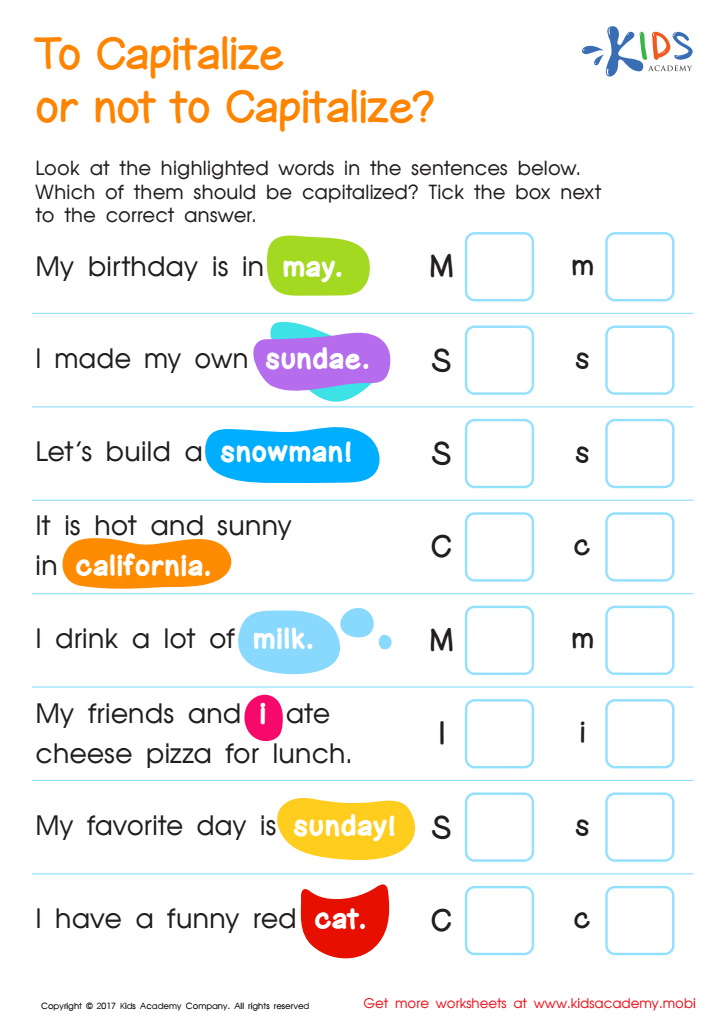
Capitalization: To Capitalize or Not? Printable
 Assign to My Students
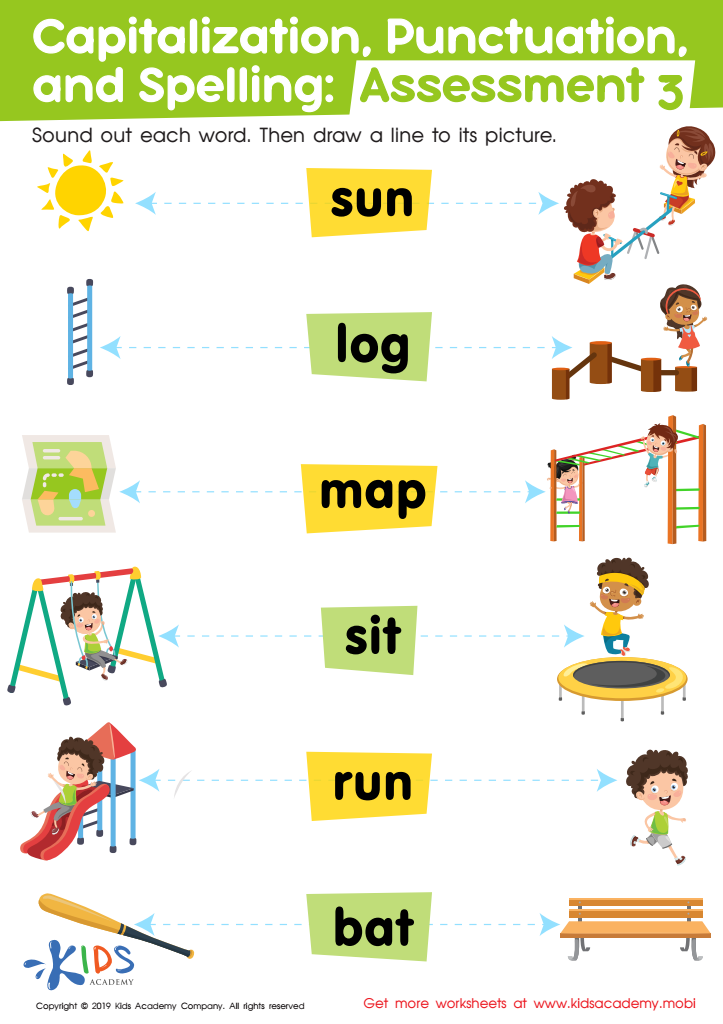
Capitalization. Punctuation. Spelling. Assessment 3 Worksheet
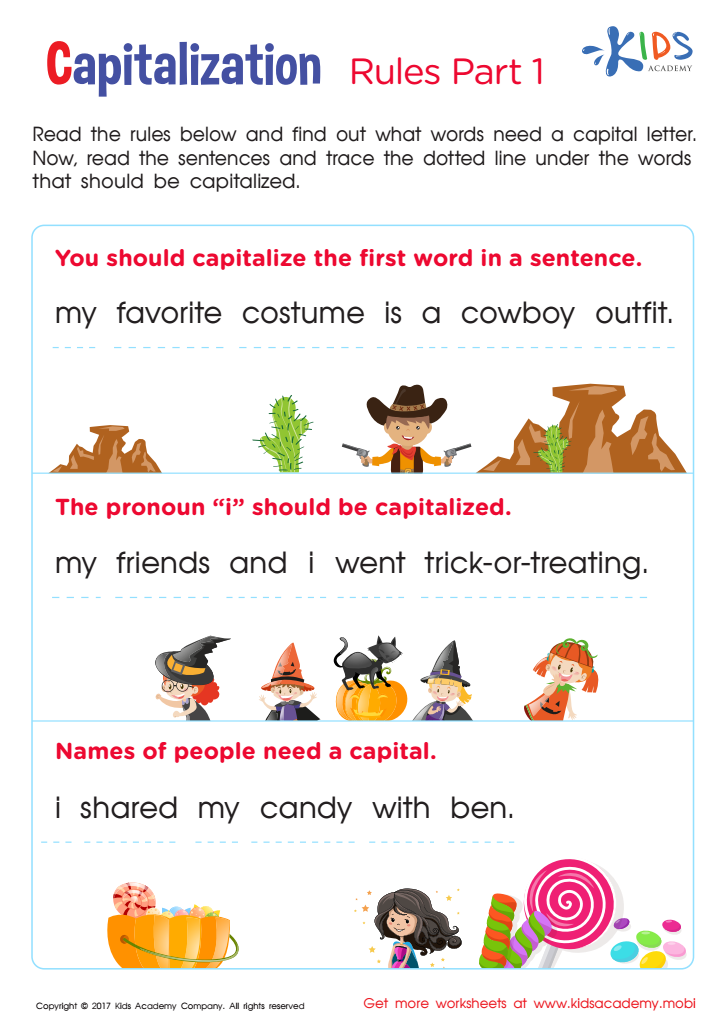
Capitalization Rules: Part 1 Worksheet
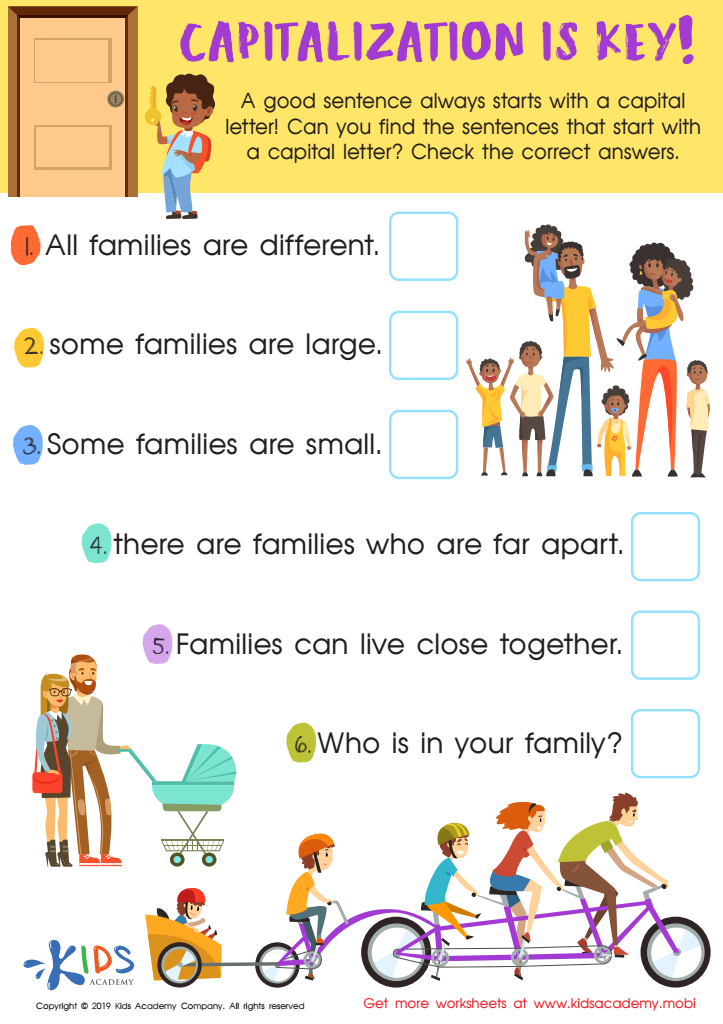
Capitalization Key Worksheet
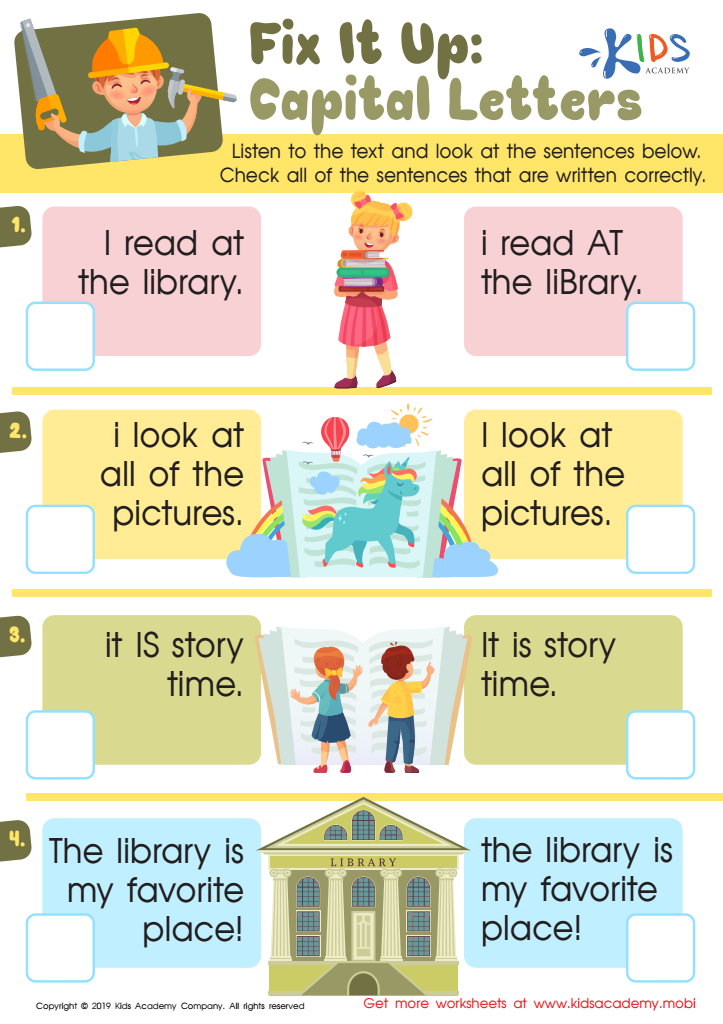
Fix Capital Letters Worksheet

How to Capitalize Worksheet






Understanding capitalization rules is vital for young learners aged 4-6, as it lays the foundation for their writing and reading skills. At this age, children are beginning to recognize and use letters and words, and capitalization plays a significant role in helping them understand the structure of written language.
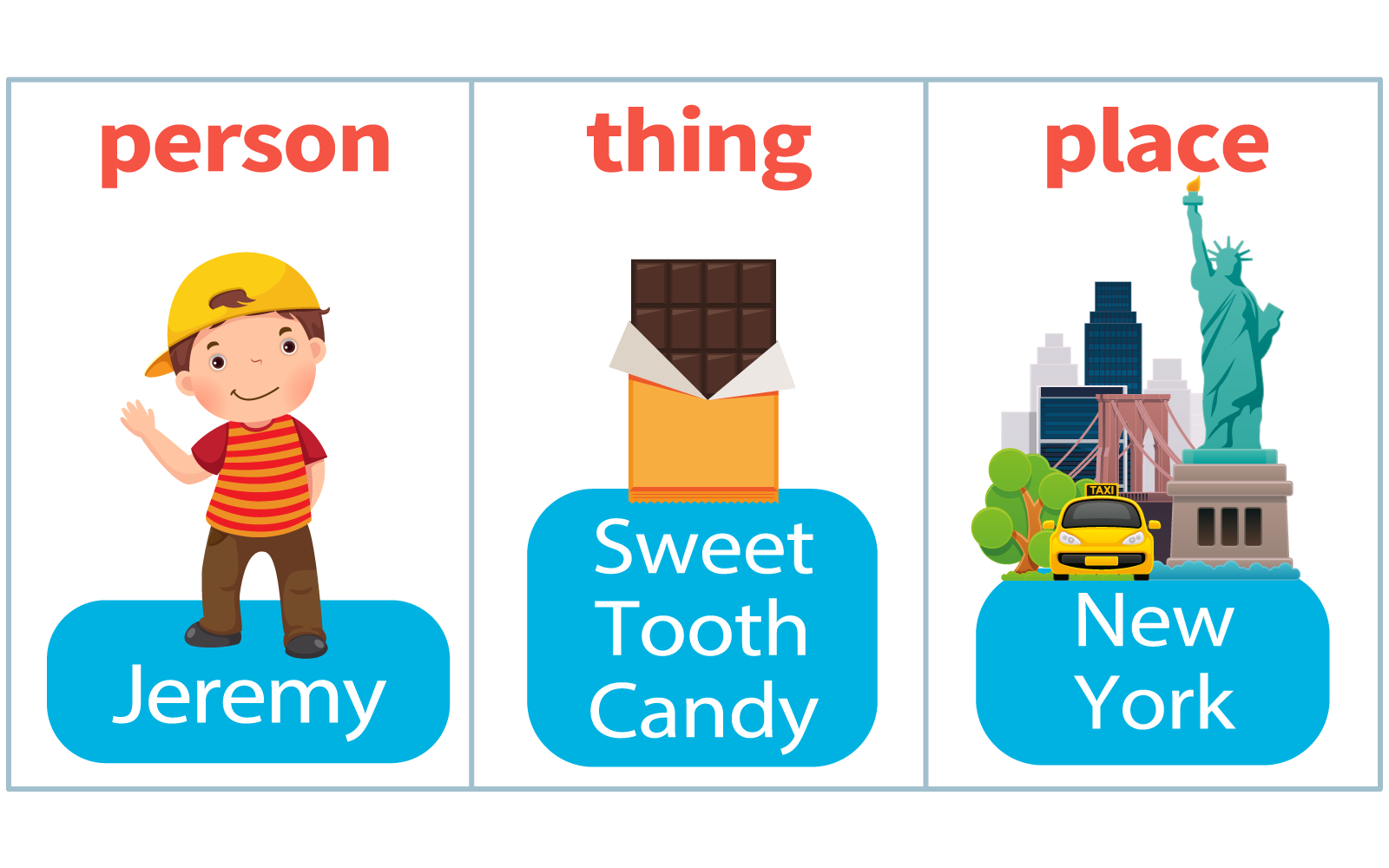
Firstly, capitalization helps children discern the beginning of sentences and identify proper nouns, such as names of people, places, and specific things. This recognition reinforces their reading comprehension, enabling them to follow narratives more effectively.
Additionally, teaching capitalization rules fosters a sense of clarity and professionalism in writing. When children learn to capitalize correctly, they gain confidence in their ability to communicate through writing. This is especially important as they begin to express their ideas, feelings, and stories in various formats, from drawings with captions to short sentences.
Furthermore, these foundational skills support language development and literacy, essential for academic success. By instilling these concepts early on, parents and teachers promote good habits that will serve children throughout their educational journey. Ultimately, understanding capitalization rules can enhance communication, support literacy skills, and encourage a lifelong love of reading and writing.








