
Counting practice Writing Worksheets for Ages 4-6
3 filtered results
Difficulty Level
Grade
Age
-
From - To
Subject
Activity
Standards
Discover our engaging Counting Practice Writing Worksheets designed for ages 4-6! These worksheets provide a fun and interactive way for young learners to develop their counting skills through writing. With a variety of exercises that include number tracing, counting objects, and completing fun activities, children will build a solid foundation in numeracy. Our resources are specifically crafted to enhance motor skills and promote confidence in writing numbers. Perfect for use at home or in the classroom, these worksheets make learning to count both enjoyable and effective. Start your child's counting journey today with our printable worksheets!
Favorites
With answer key
Interactive
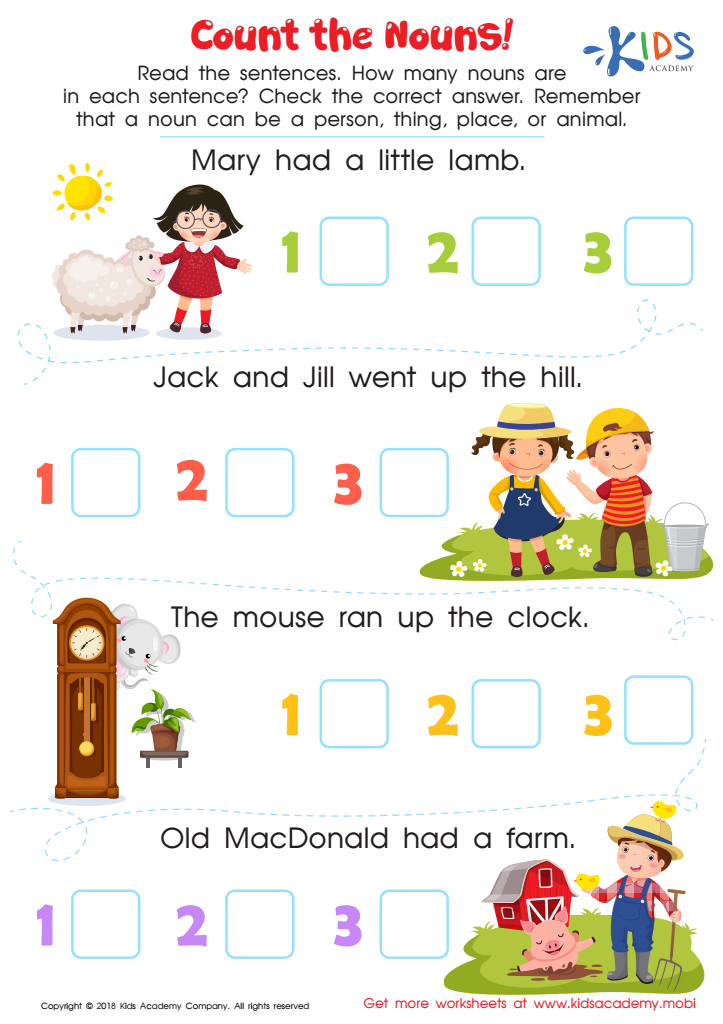
Count the Nouns Worksheet
Read the sentences with your children and ask them to find the nouns. Explain that nouns are names of people, animals, places or things. Point out the boxes with the answers to check.
 Assign to My Students
Count the Nouns Worksheet
Worksheet
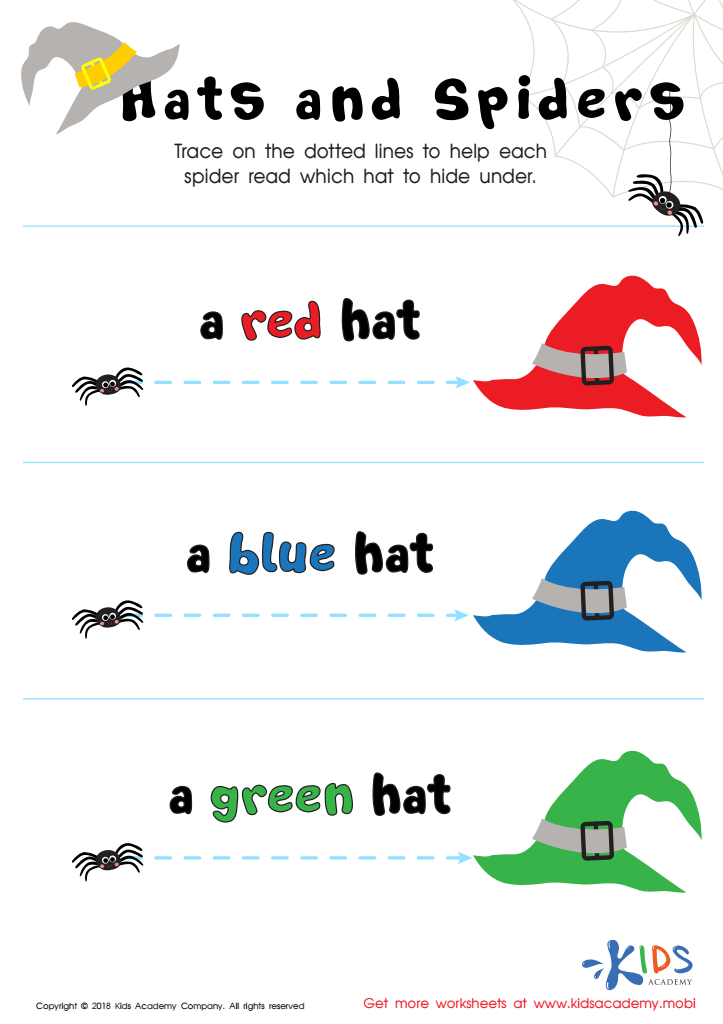
Read from Left to Right: Hats and Spiders Worksheet
Do your kids love or fear spiders? Either way, they'll enjoy helping the little critters with this traceable worksheet. Ask them to read out the words in the picture, explaining it's the description of the hats. Then help them trace on the dotted lines, so the spiders know which hat to hide under.
Read from Left to Right: Hats and Spiders Worksheet
Worksheet
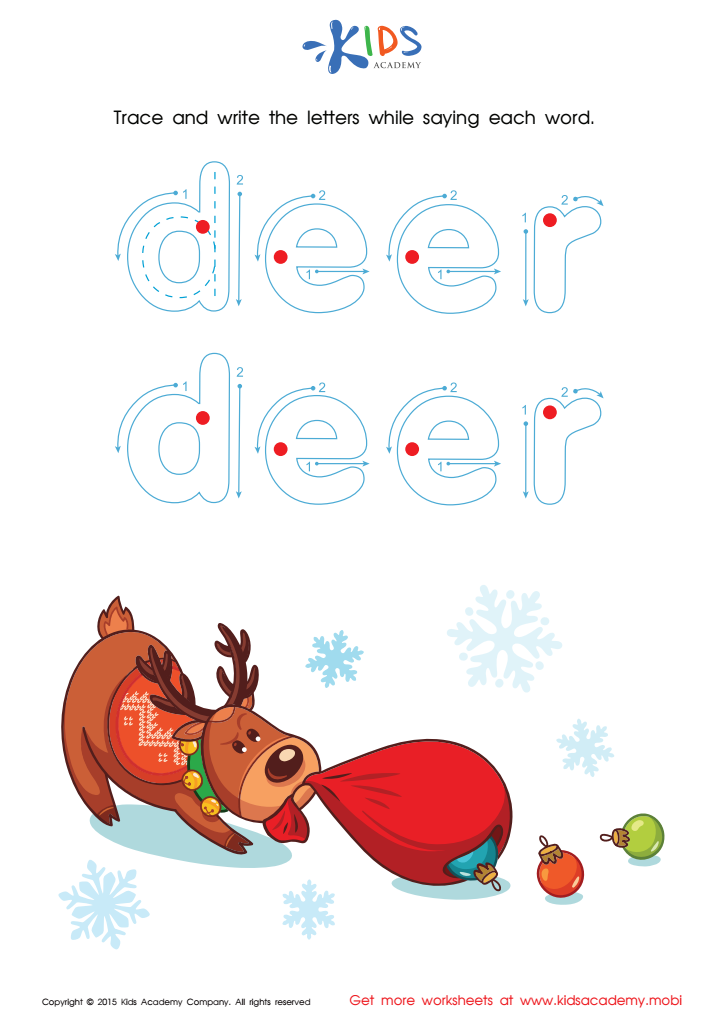
Deer Tracing Winter Words Worksheet
Want to give your kid's handwriting practice a festive twist? This colorful Christmas worksheet helps your child construct familiar sight words letter-by-letter while boosting their confidence in writing. It also teaches them essential motions for good handwriting and provides some spelling practice too. Want more free handwriting printables? Check out Kids Academy.
Deer Tracing Winter Words Worksheet
Worksheet
Join Kids Academy for Free
Who is primarily going to use this learning content?







Counting practice writing is a fundamental skill that benefits children aged 4-6 in numerous ways. At this developmental stage, children are naturally curious and eager to explore numbers and quantities. Engaging in counting practice writing fosters both number recognition and fine motor skills, providing a solid foundation for future mathematical learning. Writing numbers reinforces memory and aids in the understanding of sequencing—important concepts in early math education.
Additionally, counting practice enhances cognitive development by encouraging children to think critically about quantities and relationships. It embeds mathematical language in their daily interactions, setting the stage for verbal skills that will benefit them later in life. Teachers and parents can also use counting activities to incorporate fun and engaging methods, such as games or visual aids, promoting a positive learning experience.
Moreover, early counting practice cultivates perseverance and problem-solving abilities, essential skills throughout education. By prioritizing counting practice writing, educators and caregivers not only equip young learners with crucial math skills but also nurture a love for learning, setting them on a path to academic success and lifelong confidence in their abilities. Ultimately, this practice provides a strong base for holistic development, making it a vital focus for caregivers and educators alike.








