
Logical thinking Writing Worksheets for Ages 4-6
3 filtered results
Difficulty Level
Grade
Age
-
From - To
Subject
Activity
Standards
Unlock your child's potential with our Logical Thinking Writing Worksheets for Ages 4-6! Designed to enhance critical thinking skills, these engaging worksheets promote problem-solving and reasoning through fun, age-appropriate activities. Whether it's sequencing events, matching shapes, or completing patterns, your little ones will develop essential cognitive skills while gaining confidence in their writing abilities. Each worksheet is thoughtfully crafted to stimulate curiosity and encourage creativity, making learning a joy. Dive into our collection and watch your child flourish as they build a strong foundation for future academic success. Perfect for home or classroom use, these worksheets are a fantastic tool for every early learner!
Favorites
With answer key
Interactive
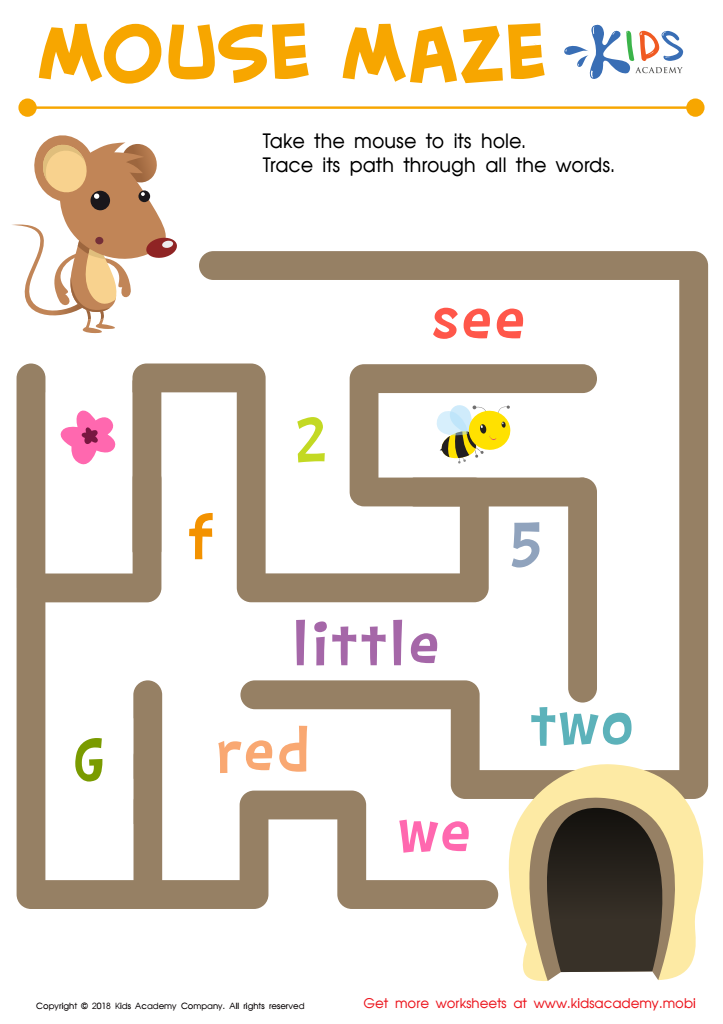
Find Words Mouse Maze Worksheet
Help your child identify words and guide the mouse home! Ask them to point out the colorful animal on the worksheet, then take their hand and show them how to trace the path, going through all the words in the maze to get the mouse back to its hole.
 Assign to My Students
Find Words Mouse Maze Worksheet
Worksheet
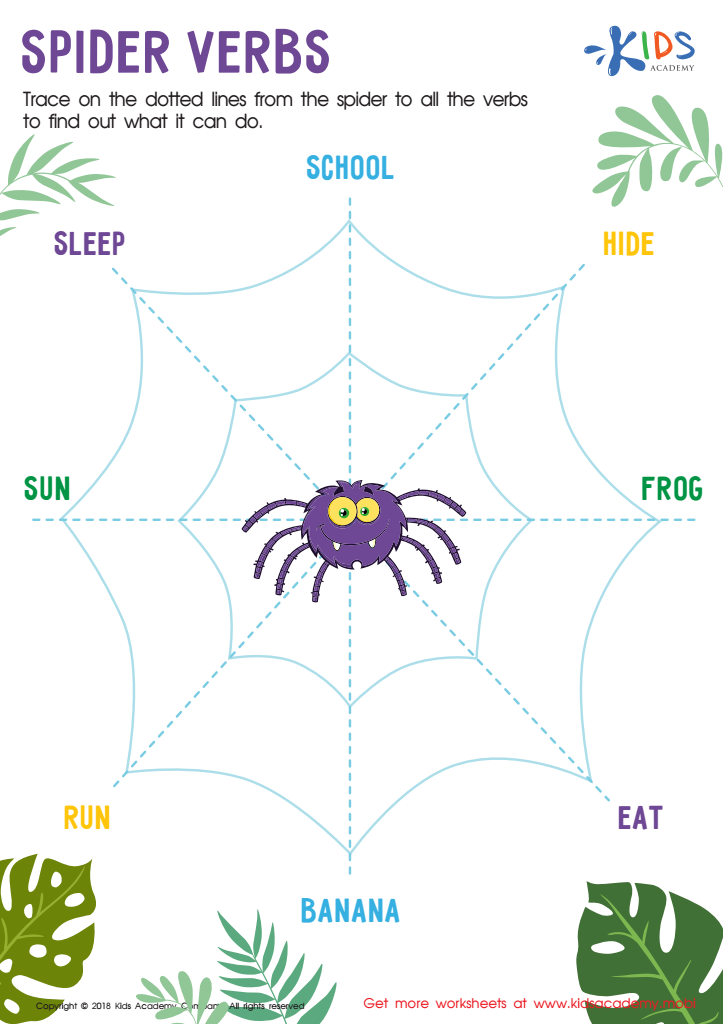
Spider Verbs Worksheet
Verbs are action words. Examples: run, play, talk. Show your child this tracing sheet for them to learn about verbs. Ask them to trace the dotted lines from the spider to the words that are verbs. These words are what the spider can do.
Spider Verbs Worksheet
Worksheet
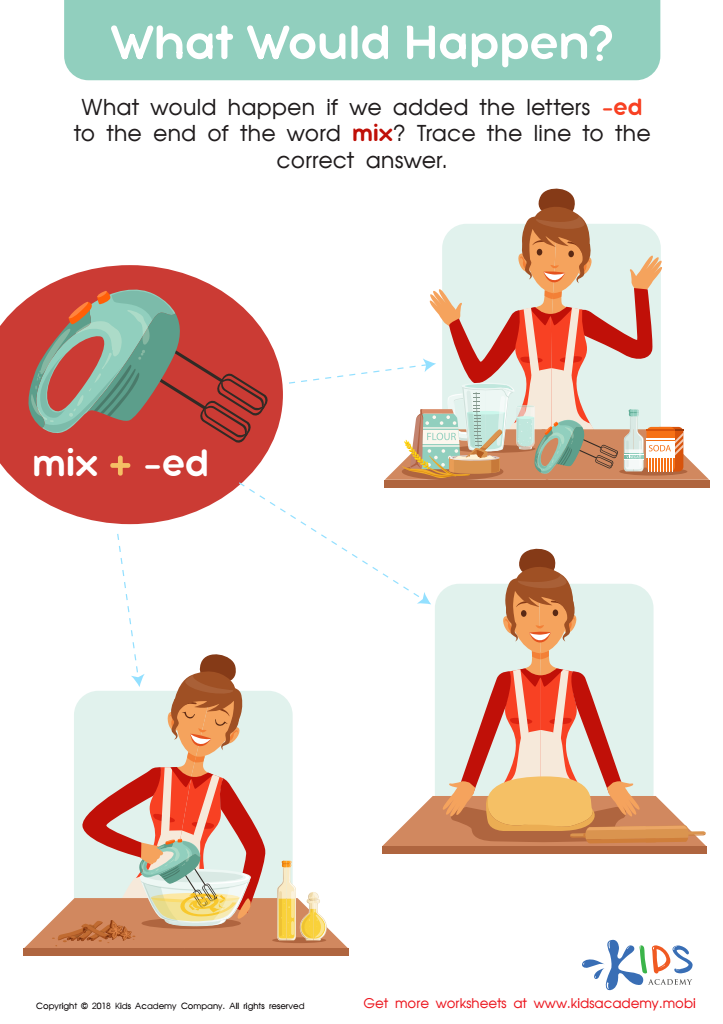
What Would Happen? Worksheet
Are your kids struggling with tenses? Use this worksheet to help them. See what they know by asking them to add '-ed' to the end of 'mix'. Guide them through the tracing sheet as they look for the correct answer.
What Would Happen? Worksheet
Worksheet
Join Kids Academy for Free
Who is primarily going to use this learning content?








Logical thinking writing for ages 4-6 is essential because it lays the foundation for critical thinking and problem-solving skills, which are crucial in a child's development. At this age, children are curious and eager to make sense of the world around them. Engaging them in activities that promote logical thinking through writing helps sharpen their reasoning abilities, allowing them to articulate thoughts and understand cause-and-effect relationships.
Parents and teachers should care about nurturing these skills because they enhance a child's ability to communicate ideas clearly and coherently. Writing encourages children to organize their thoughts, leading to better comprehension and expression. Additionally, as they craft narratives or simple stories, they learn to recognize patterns, sequences, and structures, which are key components of logical reasoning.
Moreover, fostering logical thinking through writing prepares children for future academic challenges. Skills acquired early in life contribute to their confidence and capabilities in subjects like math and science, as they learn to analyze situations critically. Ultimately, parents and teachers play a vital role in molding young minds, and supporting logical thinking writing equips children with the necessary tools to navigate both academic and real-world scenarios successfully.








