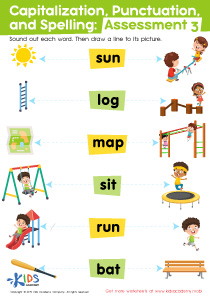
Verb identification Writing Worksheets for Ages 4-6
3 filtered results
-
From - To
Unlock your child's potential with our engaging Verb Identification Writing Worksheets for ages 4-6! Designed specifically to build strong foundational language skills, these worksheets make learning verbs fun and interactive. Each printable helps young learners easily identify action words through colorful illustrations and easy-to-follow exercises. Your child will develop critical thinking, improve their vocabulary, and enhance their writing abilities while having a blast. Perfect for both classroom settings and home practice, these worksheets are an invaluable resource for early education. Start your child's journey to language mastery today with Kids Academy's effective and enjoyable learning tools!
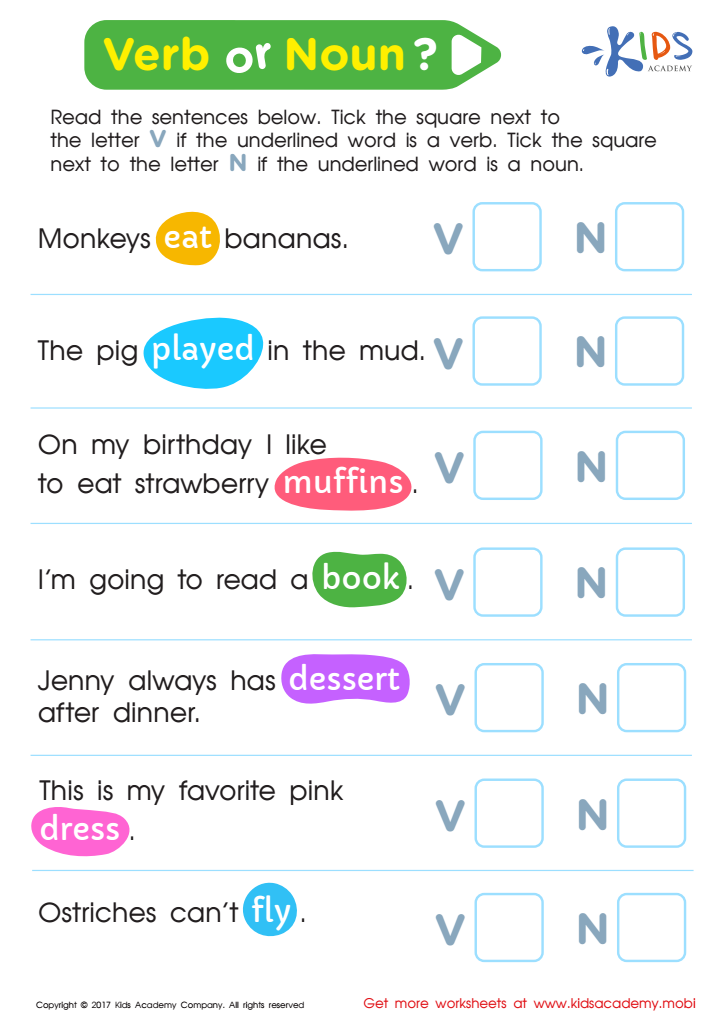
Verb or Noun Worksheet
 Assign to My Students
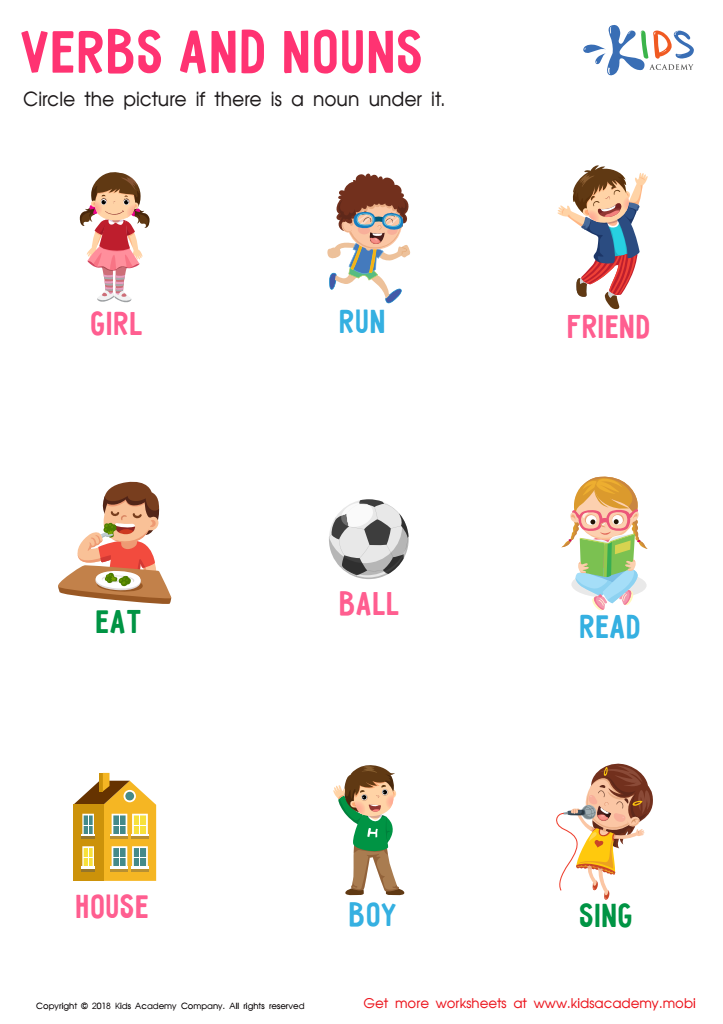
Verbs and Nouns Worksheet
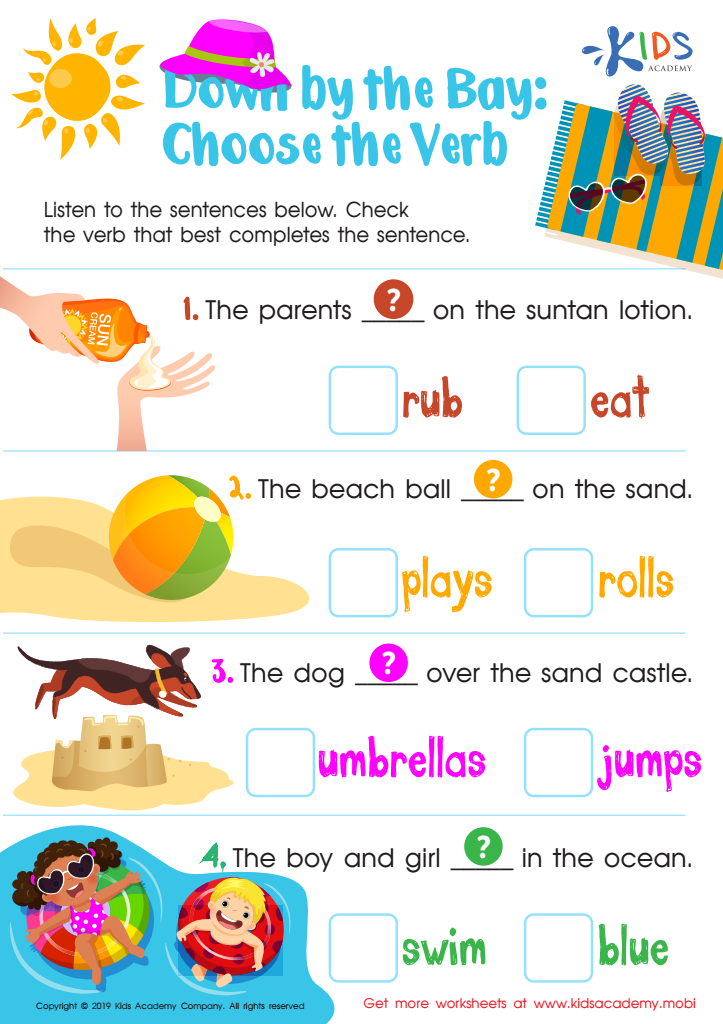
Down by the Bay: Choose the Verb Worksheet








Identifying verbs is a fundamental language skill critical for young children's development, and parents and teachers should take it seriously for several compelling reasons. First and foremost, understanding and recognizing verbs helps children grasp the basic structure of sentences. Verbs are the action words that bring sentences to life, allowing children to articulate their thoughts and describe experiences more vividly.
As children ages 4-6 are in the rapid developmental phase of acquiring language and literacy skills, mastering verb identification enriches their vocabulary. This expansion allows for more precise communication and facilitates better comprehension when listening and reading. Moreover, early proficiency in recognizing verbs sets a strong foundation for later grammatical concepts that are more complex, such as tenses and subject-verb agreement.
Encouraging verb recognition nurtures critical thinking and observation. Children begin to notice patterns in language, which enhances their cognitive skills and boosts overall academic preparedness. Practicing this skill also incorporates elements of play and engagement, crucial for young learners.
Furthermore, long-term educational benefits include improved writing abilities, as children learn to construct more diverse and dynamic sentences. Early intervention by parents and teachers in teaching verbs, therefore, significantly impacts children's linguistic development, aiding them in becoming effective communicators throughout their lives.