
Letter Tracing Practice ABC Letters Worksheets for Ages 4-7
3 filtered results
Difficulty Level
Grade
Age
-
From - To
Subject
Activity
Standards
Discover our engaging "Letter Tracing Practice ABC Letters Worksheets" designed specifically for children aged 4-7! These worksheets are a fun and effective way to help young learners develop essential handwriting skills while gaining familiarity with the alphabet. Each worksheet features clear, dotted letters that guide kids as they practice tracing both uppercase and lowercase letters. Additionally, vibrant illustrations accompany each letter to stimulate interest and enhance learning. Perfect for parents and teachers alike, our resources promote fine motor skills and letter recognition, laying a strong foundation for reading and writing. Start your child's literacy journey today!
Favorites
With answer key
Interactive
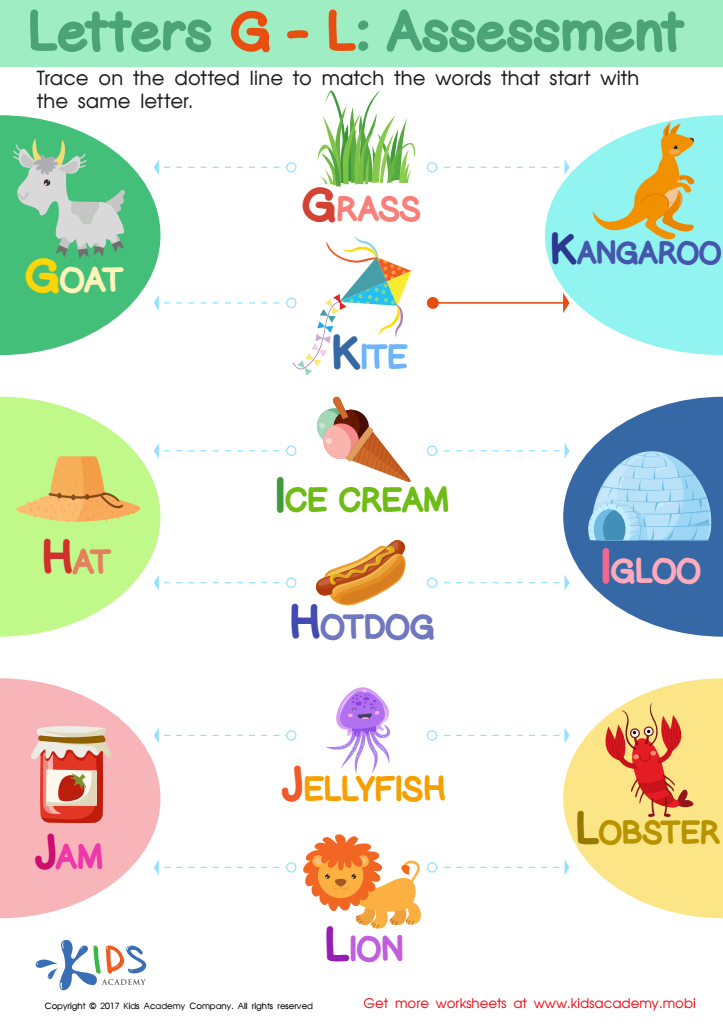
Letters G-L Worksheet
This fun worksheet helps preschoolers develop reading and phonics skills. It gets kids to match G-L words that start with the same letter, making it engaging and educational.
Letters G-L Worksheet
Worksheet





Letter F Coloring Sheet
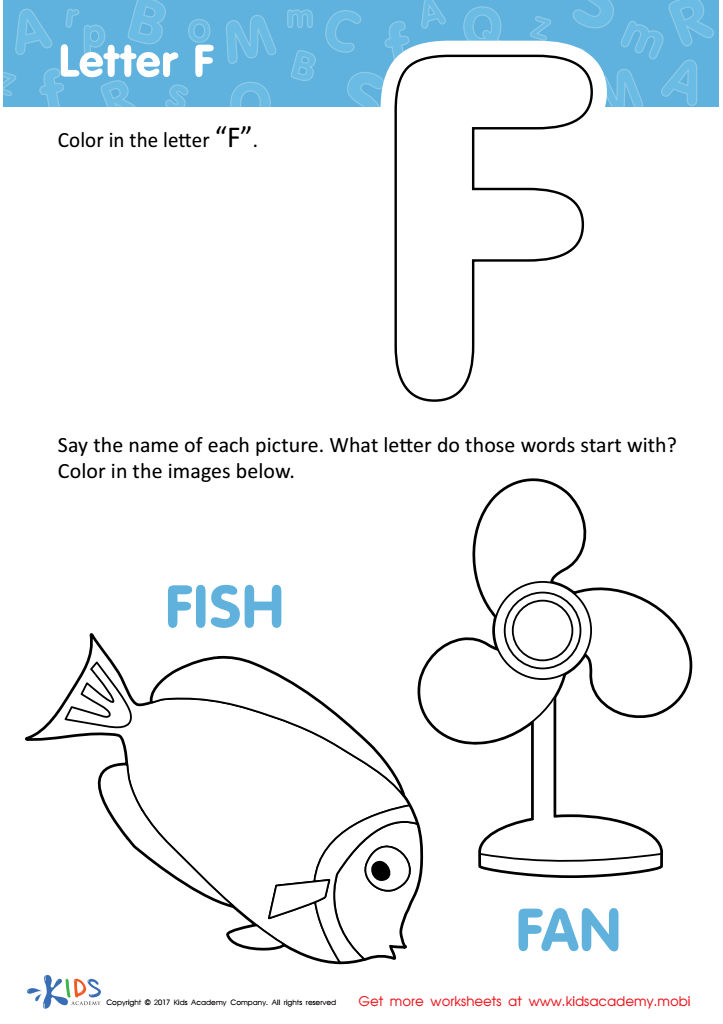
Coloring pages help kids learn to recognize letters and sounds. Our "F" page has kids color a fish and a fan. It's a great way to introduce them to the letter "F" using words they already know.
Download (PDF)
 Assign to My Students
Assign to My Students
Letter F Coloring Sheet
Worksheet
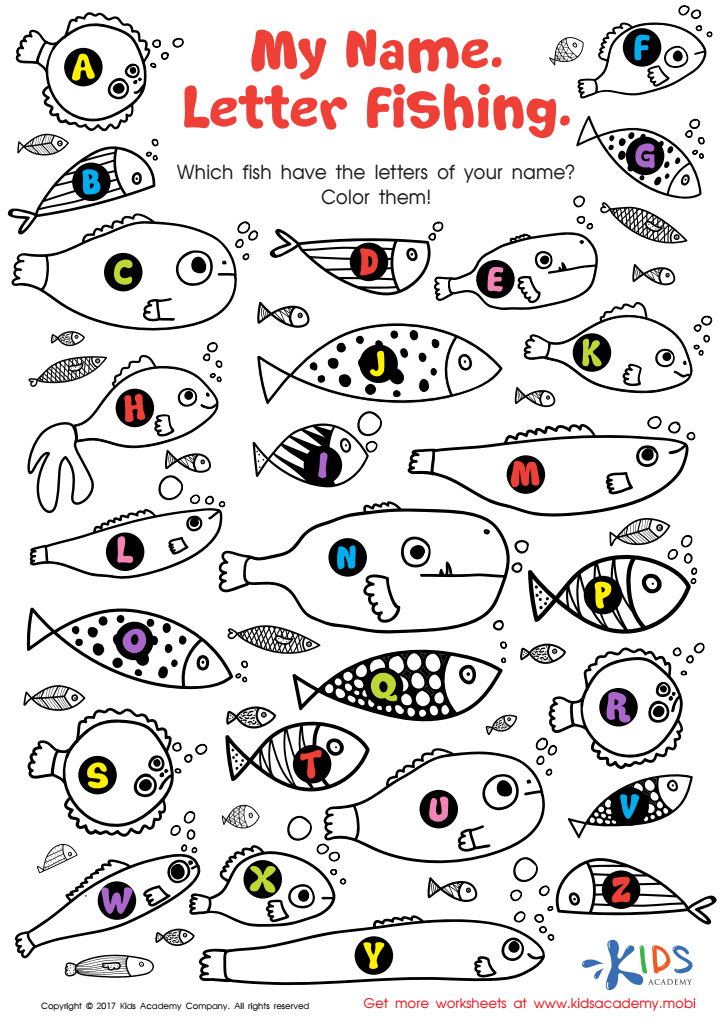
My Name: Letter Fishing Worksheet
Dive into the deep sea and search for fish with a letter on them. Can you find all the letters from your name? Color your favorite fish with crayons and be creative! On the other side, use the letters you found to write your name. Have fun coloring and finding the letters of your name! (80 words)
Download (PDF)
Assign to My Students
Assign to My Students
My Name: Letter Fishing Worksheet
Worksheet
Join Kids Academy for Free
Who is primarily going to use this learning content?







Letter tracing practice is a vital component of early literacy and fine motor development for children aged 4-7. Parents and teachers should prioritize this activity for several reasons. First, tracing helps young learners develop handwriting skills, which are essential for effective communication. By guiding their hands along the letters, children gain muscle memory that enhances their ability to write independently.
Secondly, letter tracing strengthens early literacy by familiarizing children with the alphabet. As they trace each letter, they also build recognition, which forms a foundation for reading and spelling. This practice fosters phonemic awareness, critical for developing strong reading skills later on.
Beyond literacy, letter tracing also supports fine motor skills and hand-eye coordination. As young children manipulate pencils or crayons to trace each letter, they refine their grip and control, which are crucial for numerous everyday tasks.
Moreover, tracing letters can be an engaging and fun activity, promoting a positive attitude toward learning. Parents and teachers can incorporate games and art into the practice, making it less monotonous and more interactive.
Overall, emphasizing letter tracing practice not only equips children with essential writing and reading skills but also supports their overall cognitive and motor development. Investing in this early skill saves time and enhances their academic journey.







