Phonics practice ABC Letters Worksheets for Ages 4-7
3 filtered results
-
From - To
Explore our engaging Phonics Practice ABC Letters Worksheets, specially designed for children ages 4-7! These interactive worksheets provide a fun way for young learners to enhance their phonics skills while mastering the alphabet. Each worksheet features colorful illustrations and activities that make learning letters enjoyable. With exercises focused on letter recognition, sounds, and simple word formation, children will develop a strong foundation in reading and writing. Perfect for use at home or in the classroom, our phonics worksheets are ideal for reinforcing learning and boosting confidence in early literacy. Download your free printable worksheets today and watch your child thrive!
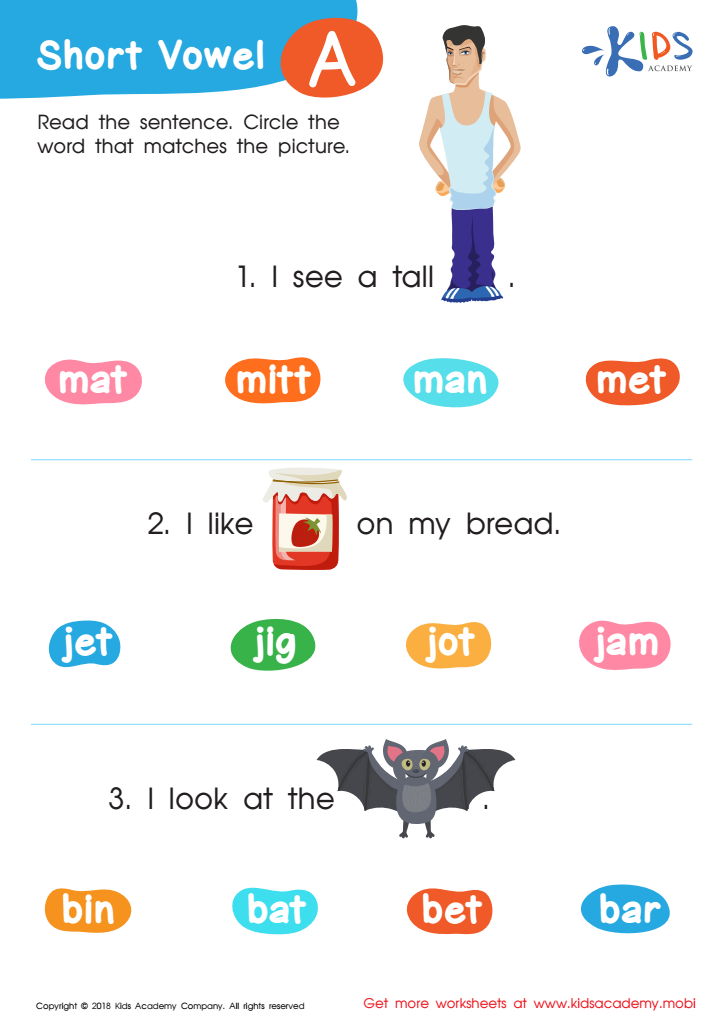
Short Vowel /a/ Worksheet







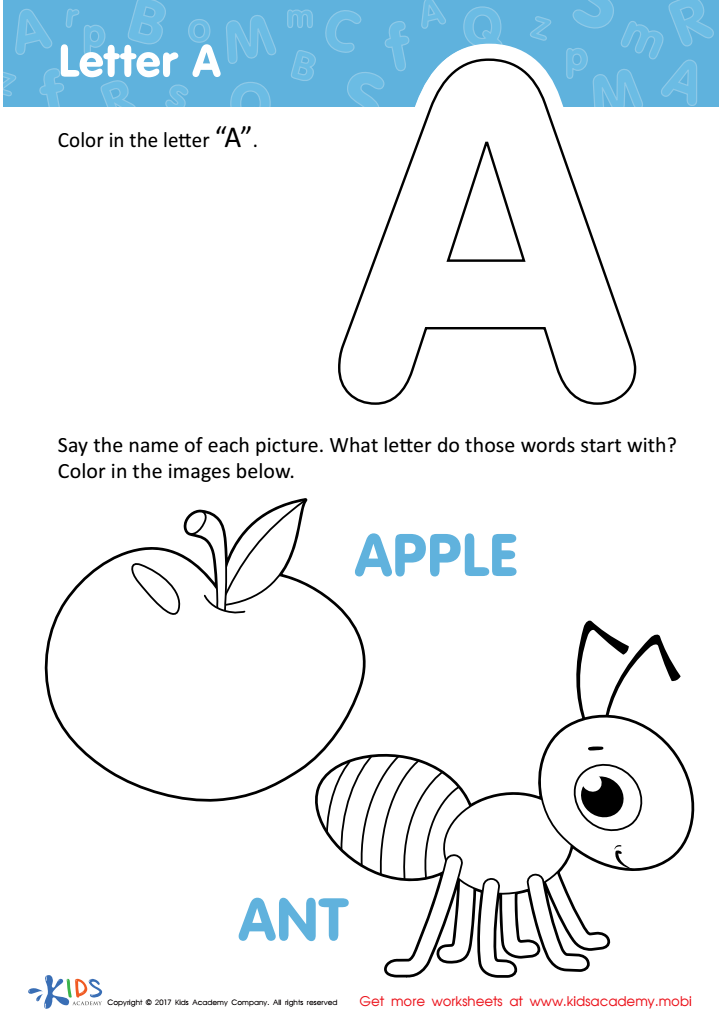
Letter A Coloring Sheet
 Assign to My Students
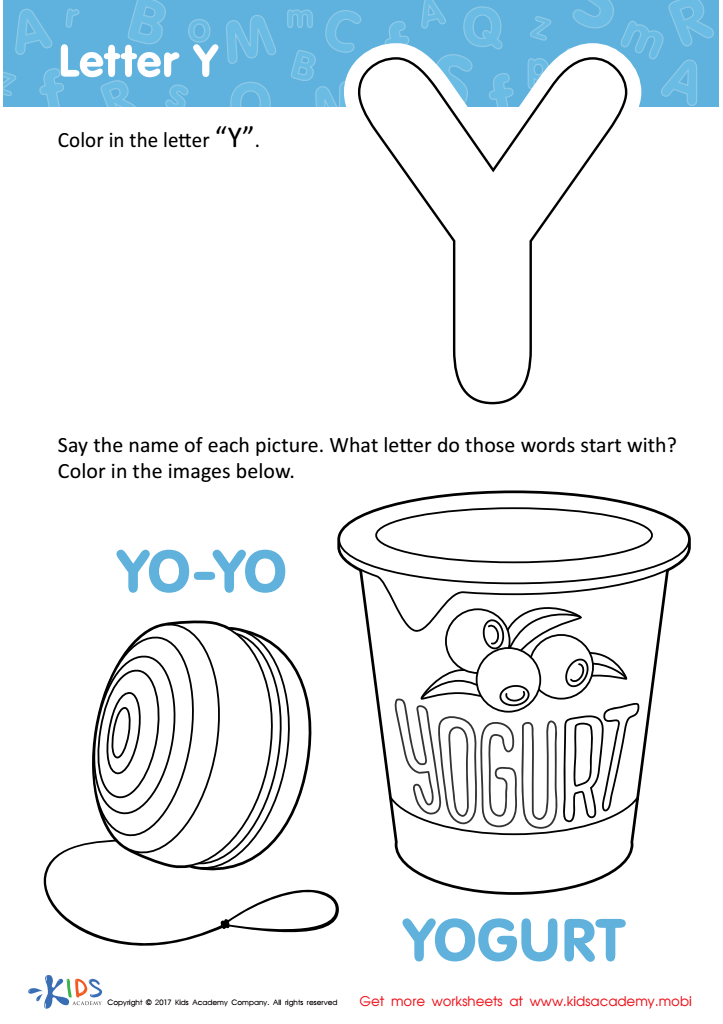
Letter Y Coloring Sheet
Assign to My Students








Phonics practice is crucial for children aged 4 to 7 as it lays the foundation for effective reading and writing skills. During this developmental stage, children are highly receptive to learning about the relationships between letters and sounds. By engaging in phonics activities, they begin to understand how sounds combine to form words, which enhances their ability to decode new vocabulary and gain confidence in their reading abilities.
Parents and teachers should prioritize phonics practice because it fosters literacy and compositional skills that are essential for academic success. Early exposure to phonics not only aids in reading fluency but also contributes to improved spelling and comprehension. Moreover, a solid understanding of phonics helps in developing a child's ability to independently tackle unfamiliar texts—a vital skill as they progress through their education.
Additionally, phonics practice can make learning enjoyable through games, songs, and interactive activities, further igniting a child's love for reading. This early intervention sets the stage for lifelong literacy habits and prepares students for future challenges in their academic journeys. By supporting phonics education, parents and teachers play a significant role in nurturing confident, literate learners ready to explore the world through reading.







