
Sound recognition Consonants Worksheets for Ages 4-7
5 filtered results
Difficulty Level
Grade
Age
-
From - To
Subject
Activity
Standards
Welcome to our Sound Recognition Consonants Worksheets for Ages 4-7! Designed for young learners, these engaging worksheets help kids master consonant sounds through fun exercises and activities. Our resources include interactive games, tracing tasks, and picture matching exercises that make sound recognition enjoyable and effective. Aligning with early childhood education standards, these worksheets enhance phonemic awareness and auditory discrimination, laying the foundation for early reading skills. Perfect for home or classroom use, they encourage independent learning while fostering creativity. Start your child's exciting journey into the world of letters and sounds with our thoughtfully crafted consonant worksheets today!
Favorites
With answer key
Interactive
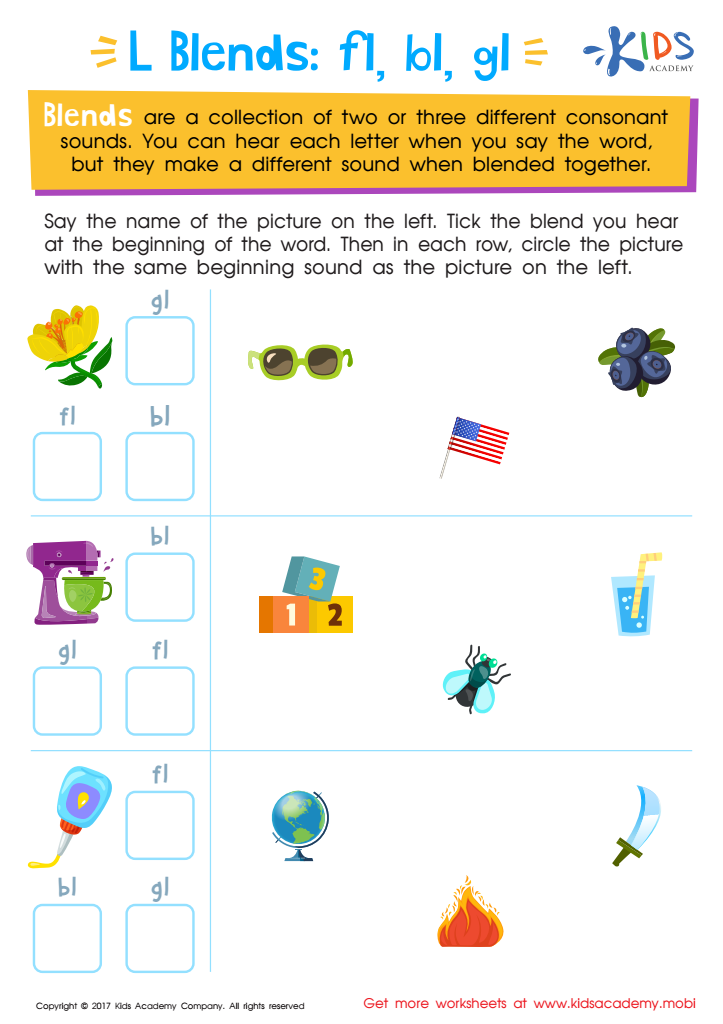
Blending Consonants: "Fl", "Bl" and "Gl" Printable
Help your child master consonant blends Fl, Bl, and Gl with this printable worksheet. Find words associated with the pictures and learn to better understand the difference between consonant blends. Vibrant images motivate and aid in learning. Download now for improved phonics success!
 Assign to My Students
Blending Consonants: "Fl", "Bl" and "Gl" Printable
Worksheet
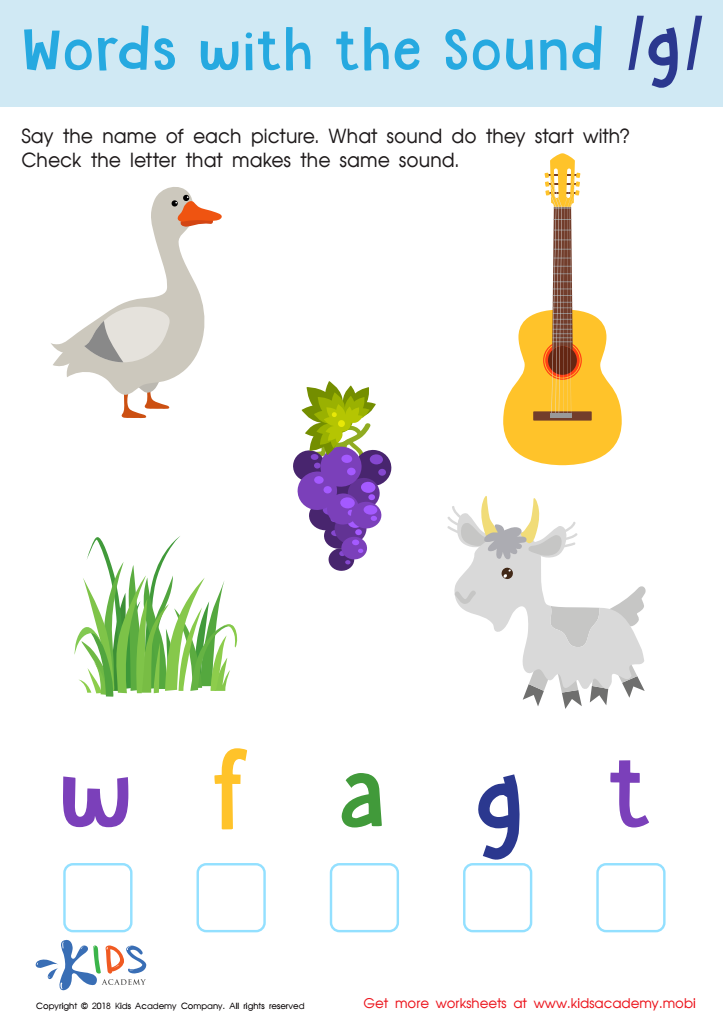
Words with sound g Reading Worksheet
Help your child learn the soft "g" sound with this phonics worksheet. Ask them to name each picture, then identify the letter sound it begins with. If it's "g", they can check the box. Have them repeat each word, listening for the soft "g" sound before moving on to the next page.
Words with sound g Reading Worksheet
Worksheet
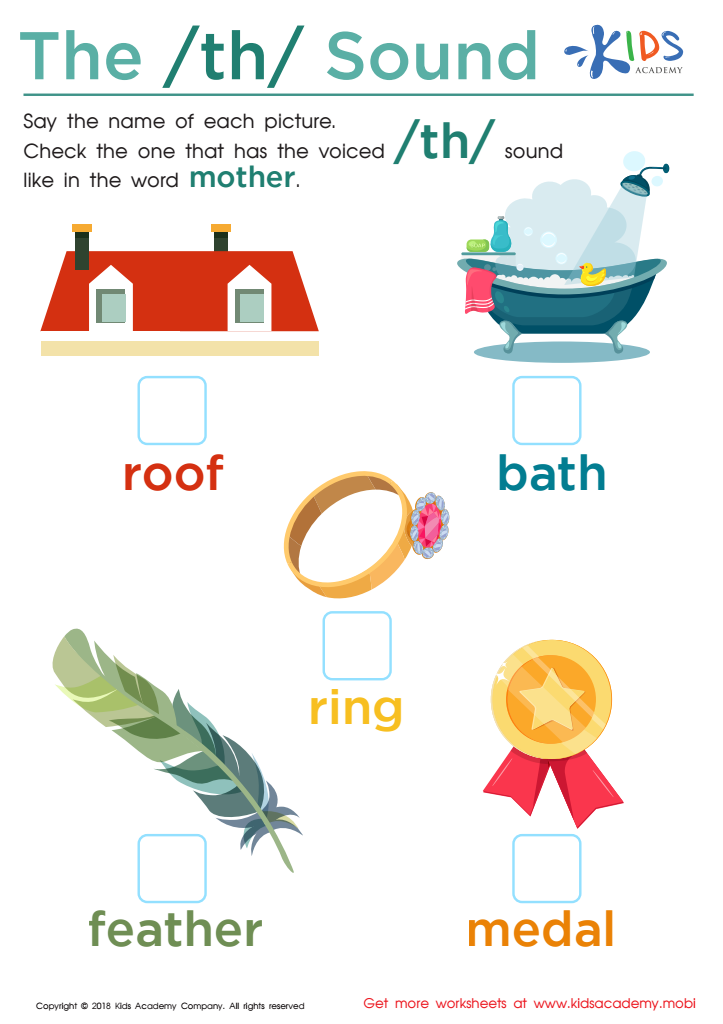
The /th/ Sound Worksheet
Confuse your students no more: have them use this worksheet to understand the /th/ sound and its two variants. With pictures, ask them to say the name of each one. Help them identify the voiced /th/ sound, like in 'mother', by having them say it aloud. Download the pdf to get started.
The /th/ Sound Worksheet
Worksheet
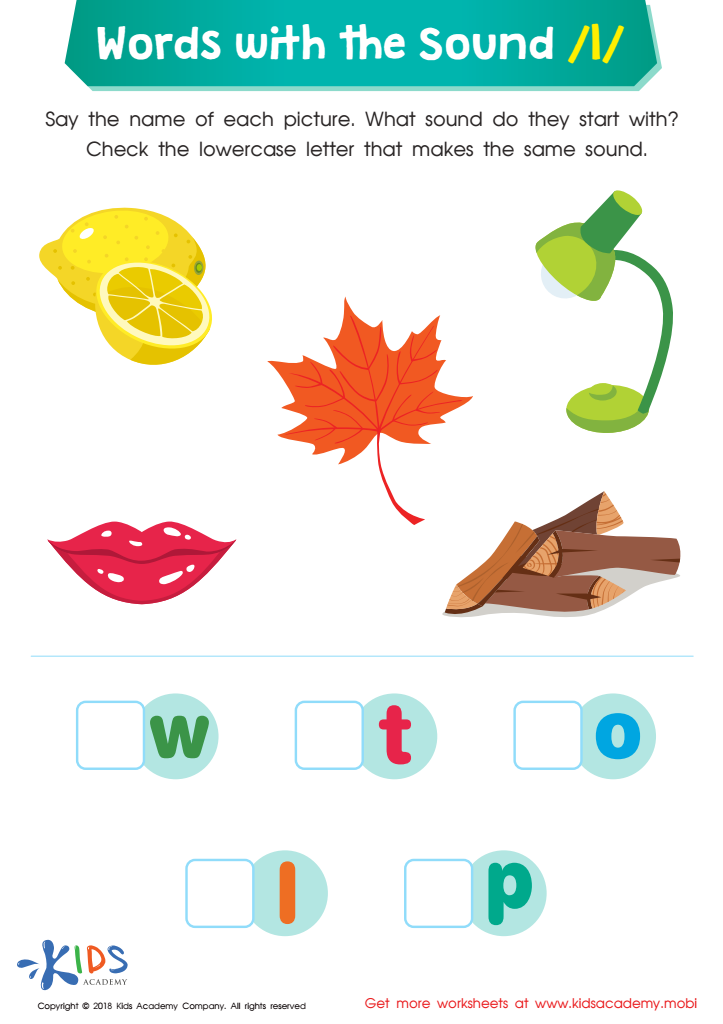
Words with Sound L Reading Worksheet
This PDF worksheet is great for helping emerging readers isolate initial sounds. Kids name familiar pictures, then identify the correct letter for the "l" sound. This worksheet strengthens fine motor skills, plus builds visual discernment. It's fun and colorful too!
Words with Sound L Reading Worksheet
Worksheet
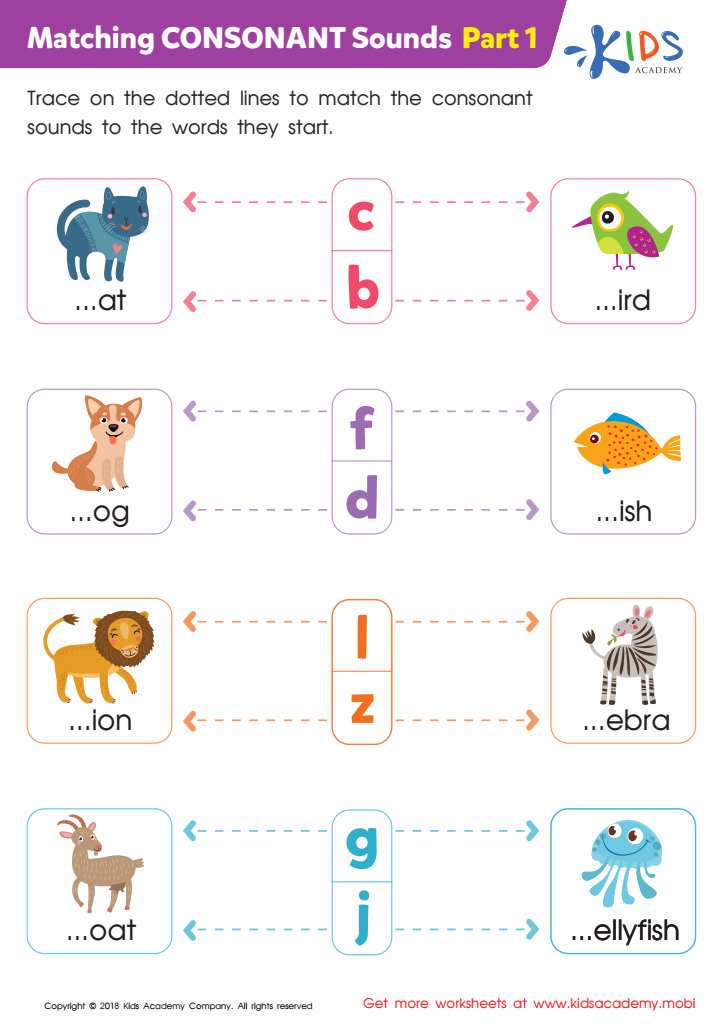
Matching Consonant Sounds: Part 1 Worksheet
Decide which letter matches each word and picture in this fun phonics worksheet. Slide your finger over each word, trying out each letter to check for matches. Once each pair is solved, trace the dotted lines with pencil to complete the printable. Who knew learning could be so enjoyable?
Matching Consonant Sounds: Part 1 Worksheet
Worksheet
Join Kids Academy for Free
Who is primarily going to use this learning content?



Sound recognition of consonants is a fundamental aspect of early literacy that crucially supports children's reading and writing skills. For children aged 4-7, mastering consonant sounds lays the groundwork for decoding words, which is essential for successful reading. As they begin to understand that letters represent sounds, they can start to blend these sounds to form words, enhancing their ability to communicate effectively.
For parents and teachers, fostering this skill is incredibly important as it not only boosts children's confidence in literacy but also promotes a love for reading. Engaged learners are more likely to explore books and stories, building vocabulary and comprehension skills along the way. Additionally, recognizing consonant sounds helps children with spelling and writing, further enriching their communication abilities.
Incorporating playful and interactive sound recognition activities, such as games, songs, and rhymes, can make learning enjoyable, thereby encouraging children's enthusiasm for literacy. Ultimately, a strong foundation in sound recognition equips children with the tools they need to thrive academically and encourages a lifelong journey of learning and discovery. By prioritizing this crucial component of early education, parents and teachers can have a lasting impact on a child's educational success.







