Sound identification Elementary Phonics Worksheets for Ages 4-7
4 filtered results
-
From - To
Enhance your child's reading skills with our engaging Sound Identification Elementary Phonics Worksheets, designed specifically for ages 4-7. These interactive worksheets make learning fun while helping young learners recognize and manipulate sounds in words. With a variety of activities focusing on phonemic awareness, children will develop essential decoding skills, making reading more accessible and enjoyable. Our carefully curated materials provide a solid foundation in phonics, fostering independence and confidence in early literacy. Explore our diverse resources today to inspire a lifelong love of reading in your child! Perfect for classrooms or at home, these worksheets are a fantastic tool for developing budding readers.
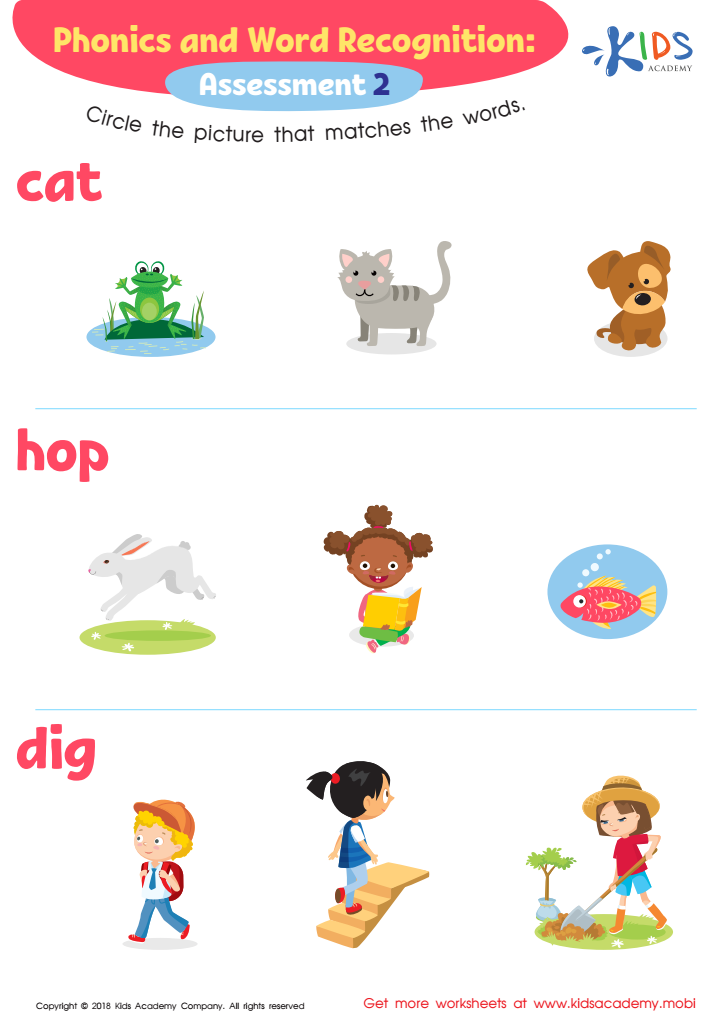
Phonological Awareness: Assessment 2 ELA Worksheet
 Assign to My Students
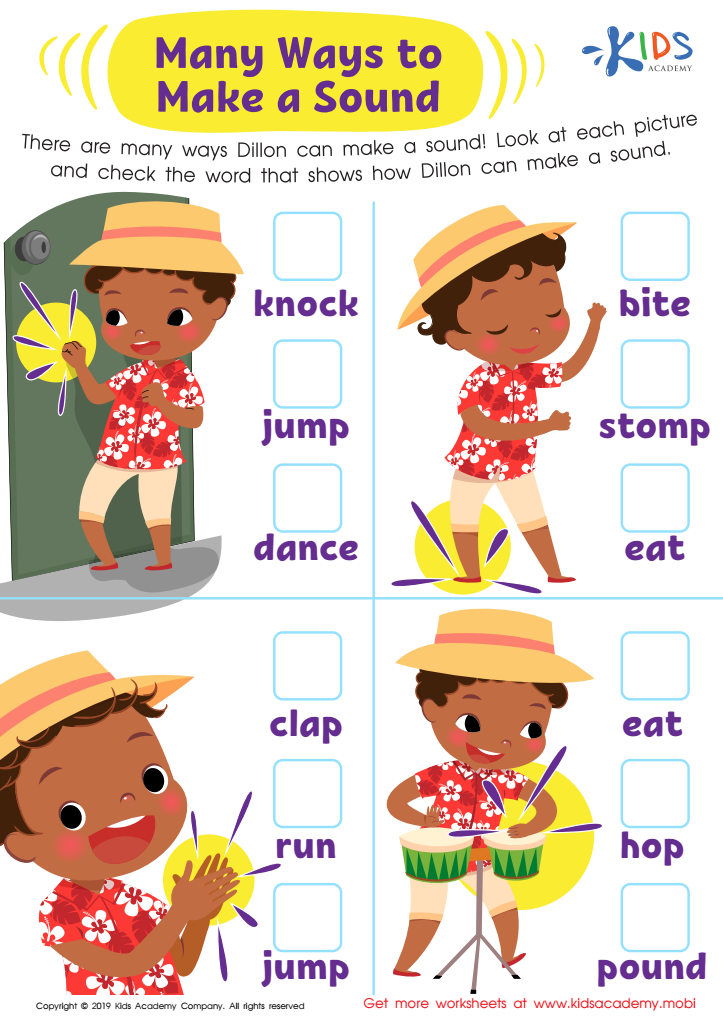
Many Ways to Make a Sound Worksheet
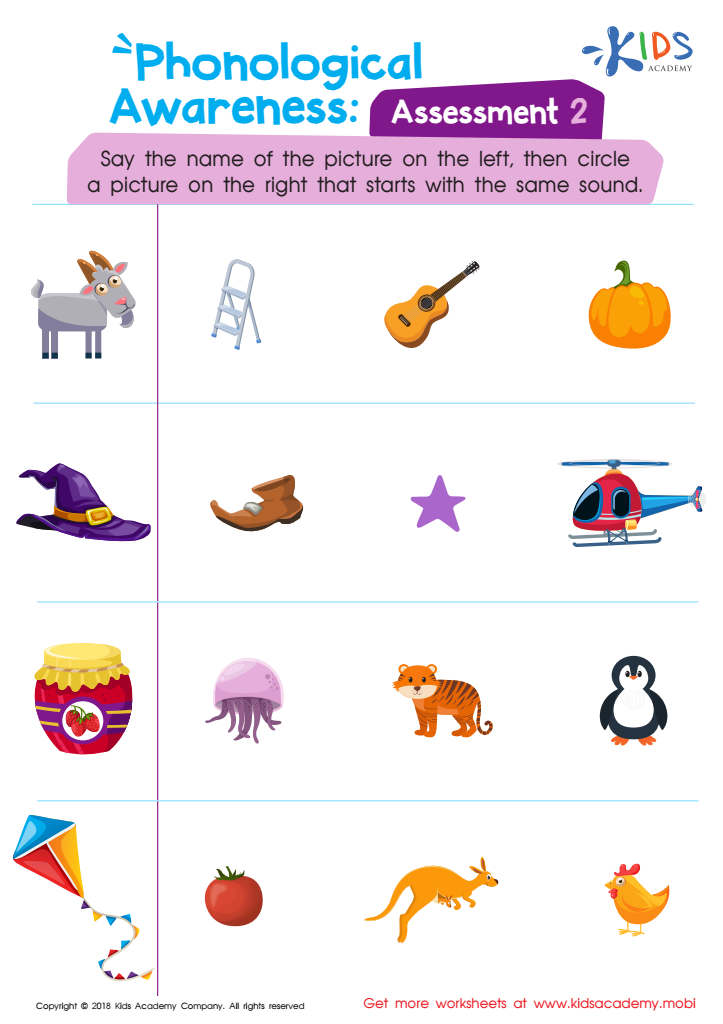
Phonological Awareness: Assessment 2 Worksheet
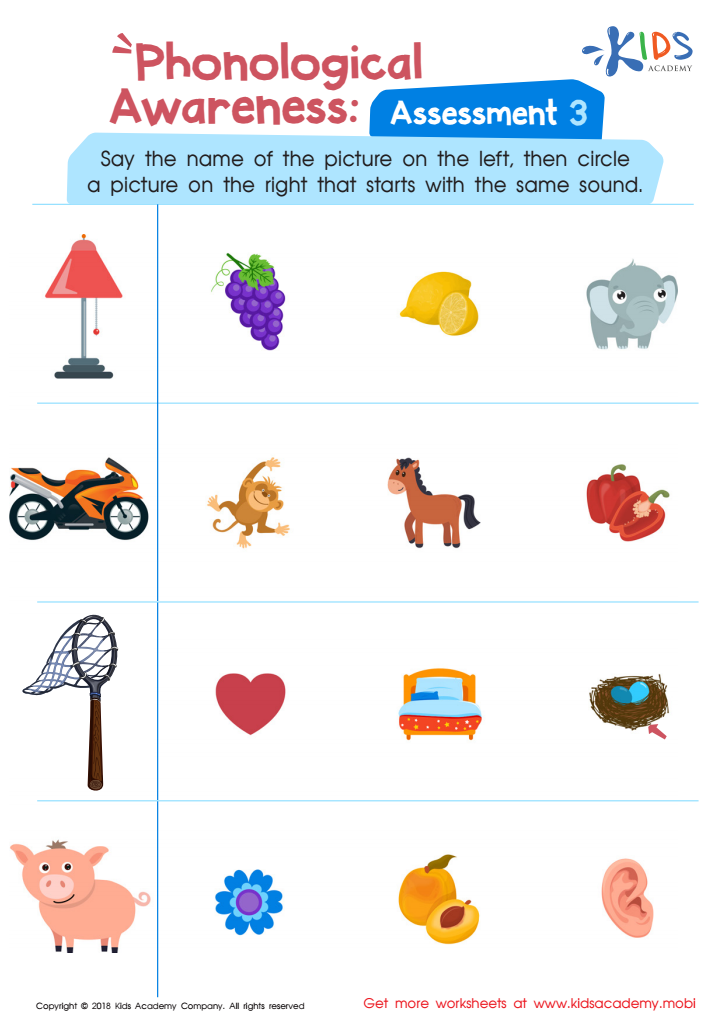
Phonological Awareness: Assessment 3 Worksheet




Sound identification is a foundational component of literacy that significantly impacts young children's reading and writing skills. For parents and teachers of children ages 4-7, understanding and teaching phonics is crucial as it provides the building blocks for effective communication.
When children can identify sounds associated with letters and letter combinations, they begin to decode words, an essential skill for reading fluency. Phonics helps children recognize the relationship between sounds and their corresponding letters, which enhances their ability to sound out words independently. This process fosters confidence and encourages a love for reading, setting the stage for academic success.
Additionally, a strong grasp of phonics aids in spelling, allowing children to articulate their thoughts more clearly in writing. By investing time in sound identification, parents and teachers can support not only literacy development but also foster critical thinking and comprehension skills.
Moreover, strong phonics knowledge can reduce frustration in early readers, preventing feelings of inadequacy that may arise from struggling with reading. By prioritizing phonics instruction, both parents and teachers can create a supportive environment that nurtures literacy and lifelong learning. This ultimately lays a strong foundation for future academic achievements and personal growth.







