Vocabulary development Elementary Phonics Worksheets for Ages 4-7
4 filtered results
-
From - To
Boost your child's language skills with our Vocabulary Development Elementary Phonics Worksheets designed for ages 4-7. These engaging and educational worksheets introduce young learners to essential phonics concepts, enhancing their vocabulary and reading abilities. Each activity focuses on letter sounds, word recognition, and simple sentence construction, providing a fun, interactive experience that encourages a love for learning. Our carefully crafted worksheets are perfect for both classroom settings and home learning, helping children build a strong foundation in language arts. Empower your child’s literacy journey with our expertly designed resources today!
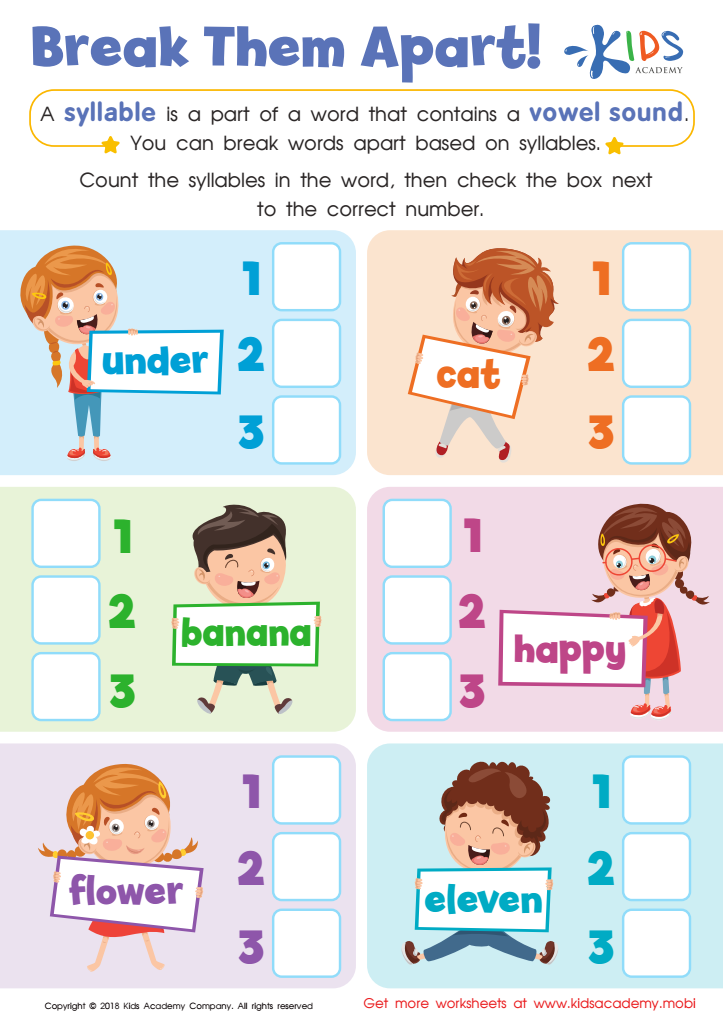
Reading: Break Them Apart Worksheet
 Assign to My Students
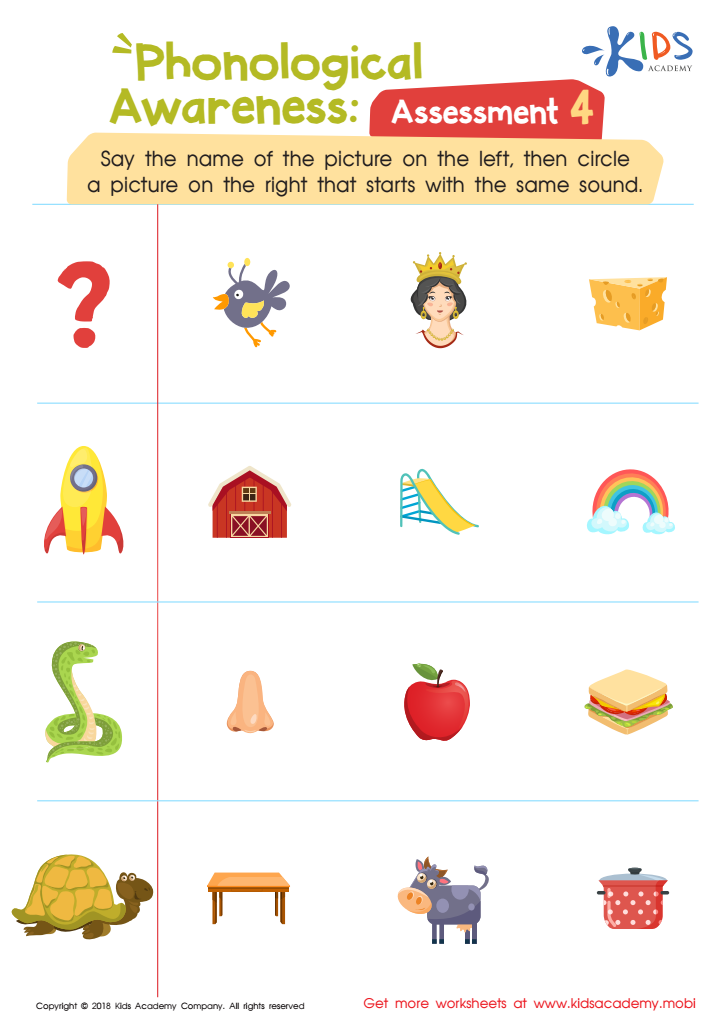
Phonological Awareness: Assessment 4 Worksheet
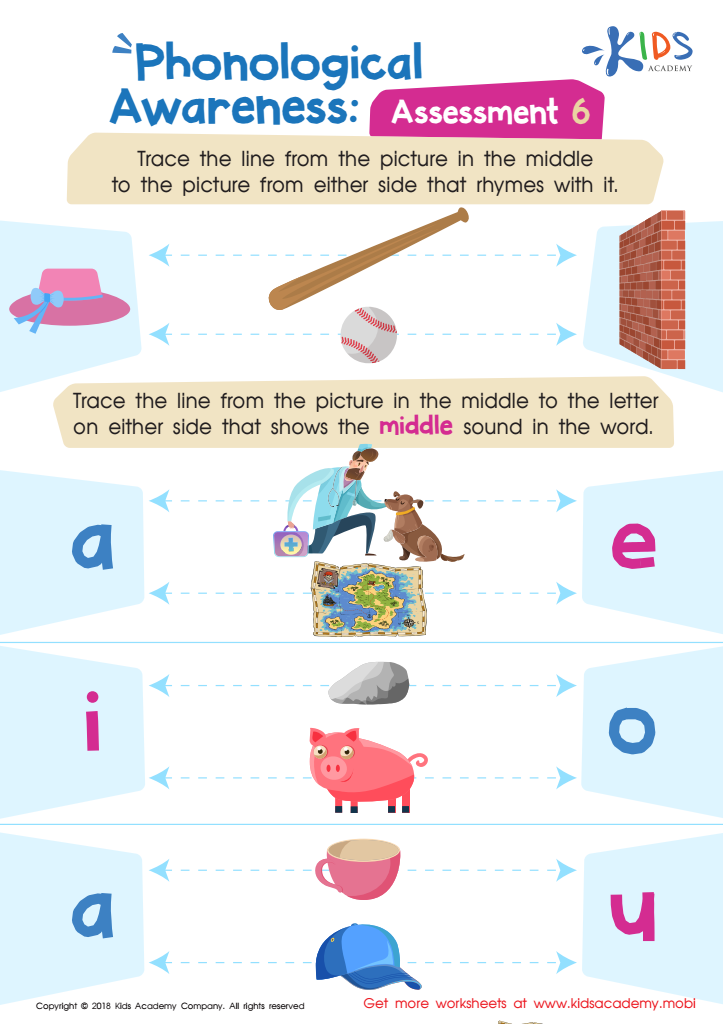
Phonological Awareness: Assessment 6 Worksheet
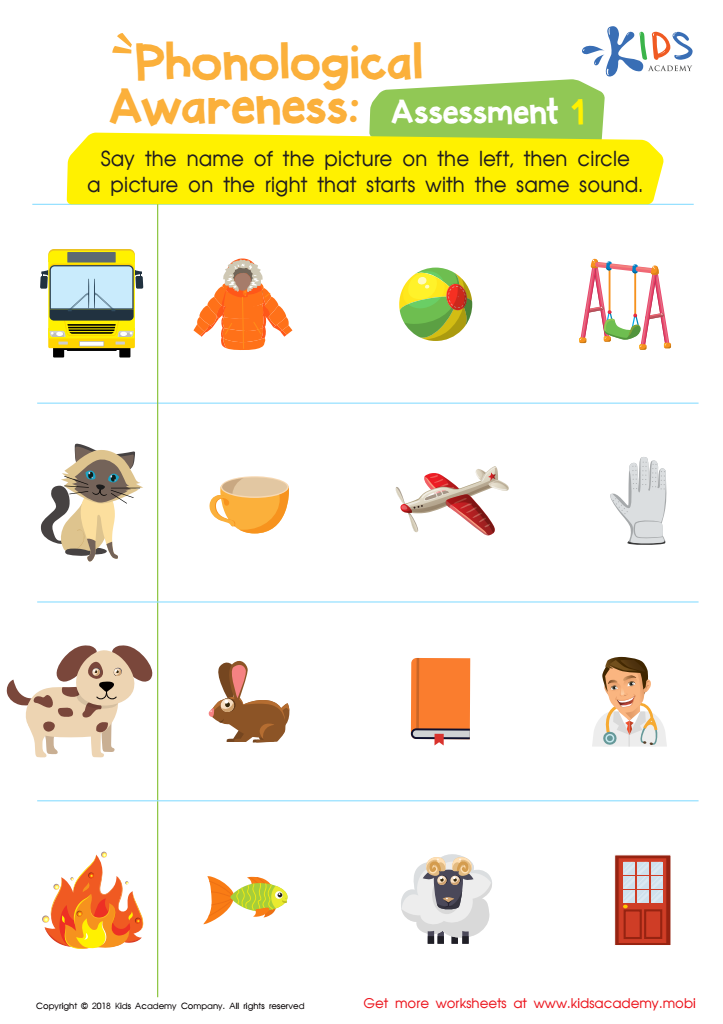
Phonological Awareness: Assessment 1 Worksheet




Vocabulary development and elementary phonics are critical for children ages 4-7 as they lay the foundation for successful reading and communication skills. During these formative years, a child's brain is highly receptive to language acquisition. Introducing vocabulary and phonics early helps with recognizing sounds, enhancing pronunciation, and understanding word meanings.
Phonics instructions improve children’s ability to decode words by connecting sounds (phonemes) with their corresponding letters or letter groups (graphemes). This skill is essential for reading fluency, allowing children to approach new words with confidence. A robust vocabulary, on the other hand, enables children to grasp and comprehend reading material fully. It helps in expressing thoughts clearly and boosts social interactions, leading to better self-esteem and academic success.
For parents and teachers, focusing on these areas also prevents potential reading difficulties later in life. Early intervention ensures children do not fall behind, making their educational journey smoother and more enjoyable. Ultimately, strong vocabulary and phonics skills serve as stepping stones for lifelong learning and intellectual growth. Investing in these areas fosters a love for reading, nurturing well-rounded, articulate individuals capable of critical thinking and imaginative exploration.







