Alphabetical order Alphabet Worksheets for Ages 4-7
3 filtered results
-
From - To
Our Alphabetical Order Alphabet Worksheets are designed for children ages 4-7, offering engaging and interactive activities that help build foundational literacy skills. Kids will enjoy arranging letters and words while developing their understanding of alphabetical order, and enhancing their ability to recognize and sequence the alphabet. These colorful worksheets are perfect for young learners, providing a fun and educational way to improve their reading readiness and cognitive abilities. Crafted by educational experts, this collection ensures your child gains essential skills with age-appropriate exercises and engaging content. Foster a love for learning with our Alphabetical Order Worksheets!
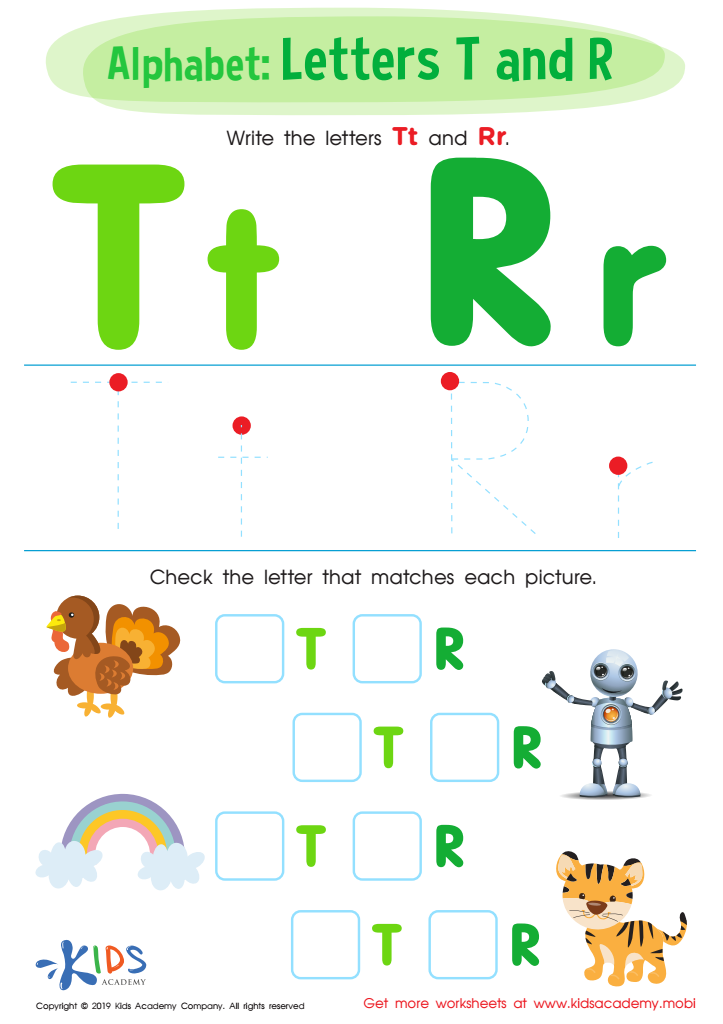
Letters T and R Worksheet
 Assign to My Students
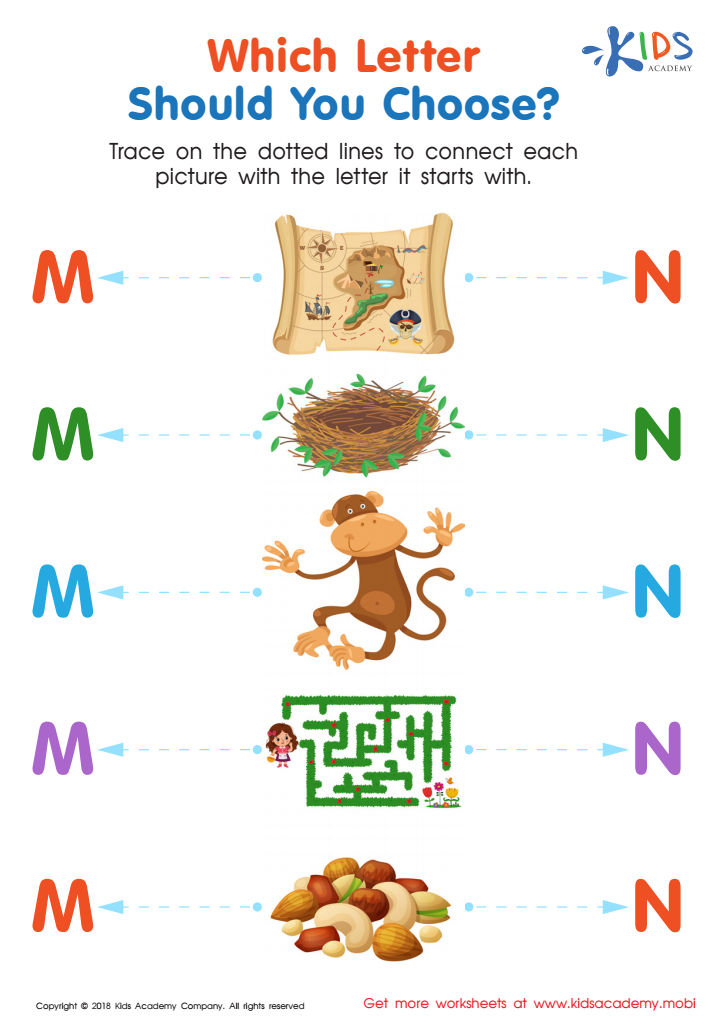
Which Letter Should you Choose? Worksheet
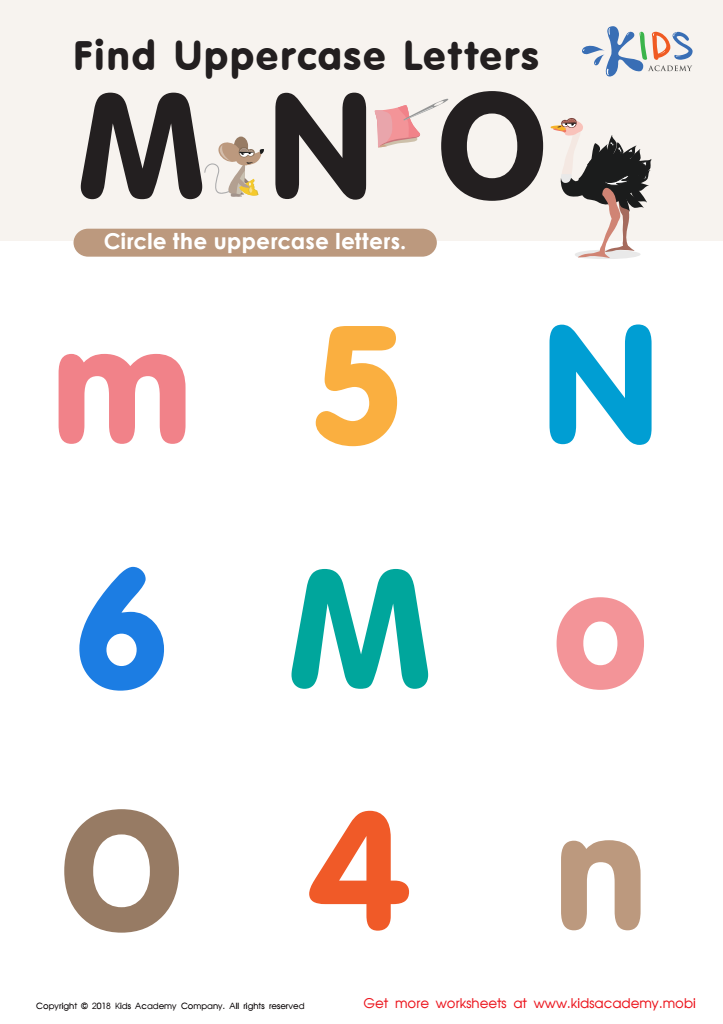
Find Uppercase Letters M, N, and O Worksheet






Parents and teachers should care about teaching alphabetical order to children ages 4-7 because it lays a crucial foundation for their literacy skills and overall cognitive development. Learning the alphabet is one of the first steps in reading and writing proficiency. Alphabetical order helps young children recognize and give meaning to letters, enabling them to understand how letters form words. This understanding fosters early reading skills, making it easier for them to decode words and comprehend text as they progress through school.
Moreover, knowing alphabetical order aids in organizational skills. It becomes a practical tool for children in everyday tasks, such as looking up information in dictionaries, navigating books, or even understanding how libraries organize materials. This skill extends beyond their academic life, building a structured way of processing information.
Importantly, with technological advancements, recognizing and using alphabetical order helps children in digital literacy. Activities like sorting computer files and using search algorithms also rely on alphabetical knowledge.
In conclusion, the frequently overlooked skill of understanding alphabetical order is a cornerstone for child development. It plays a significant role in literacy and extends into other realms of organization and technology, proving invaluable for young learners as they navigate both academic challenges and practical, everyday tasks.







