
Reading practice Alphabet Worksheets for Ages 4-7
6 filtered results
Difficulty Level
Grade
Age
-
From - To
Subject
Activity
Standards
Boost your child's reading skills with our engaging Alphabet Worksheets, designed for ages 4-7. Perfect for young learners, these worksheets make mastering the alphabet a fun and interactive experience. Kids will love tracing letters and practicing simple words, all while building a strong foundation in reading. Engaging activities are tailored to develop phonemic awareness, proper letter formation, and early literacy skills. These printable resources support various learning styles, making them ideal for home or classroom use. Enhance your child's learning journey and foster a lifelong love for reading with Kids Academy's high-quality alphabet worksheets!
Favorites
With answer key
Interactive
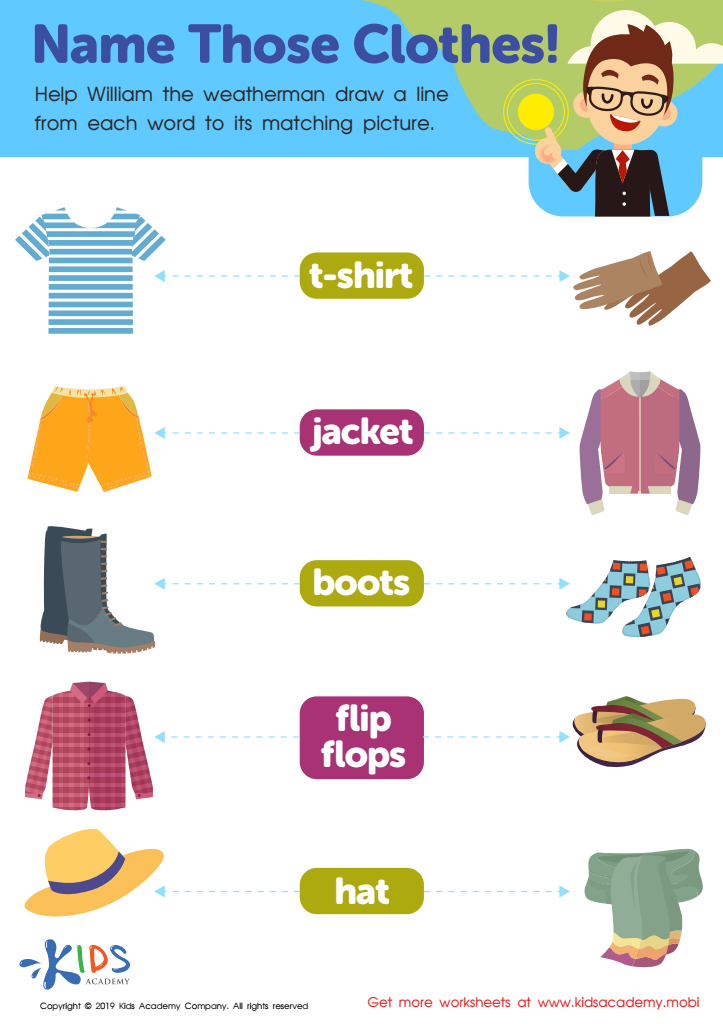
Name Those Clothes Worksheet
This worksheet will help your preschooler build their vocabulary, develop life-skills and work on fine motor skills. They'll analyze which clothing goes with the weatherman and match it to the word. It's a fun and interactive way to recognize high-frequency words.
 Assign to My Students
Name Those Clothes Worksheet
Worksheet
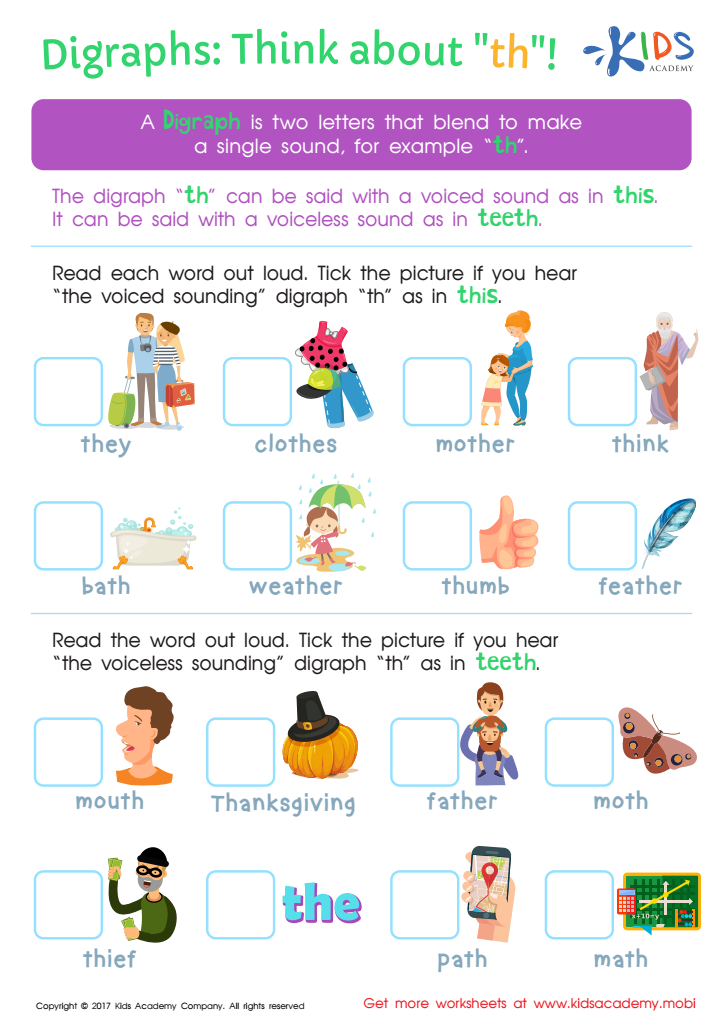
Digraphs: Think About "th" Worksheet
Help your child master phonics with this illustrated digraph Th printable worksheet. It will help recognize "Th" words, differentiate voiced and voiceless sounds and understand key concepts. Use similar words while they work to reap its full benefits!
Digraphs: Think About "th" Worksheet
Worksheet
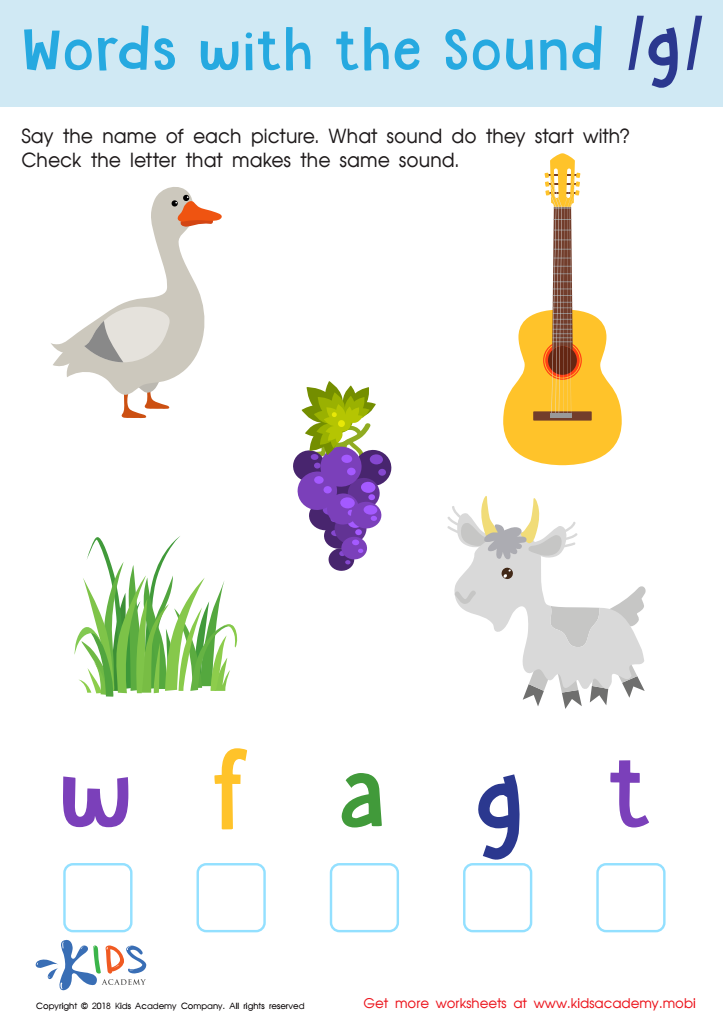
Words with sound g Reading Worksheet
Help your child learn the soft "g" sound with this phonics worksheet. Ask them to name each picture, then identify the letter sound it begins with. If it's "g", they can check the box. Have them repeat each word, listening for the soft "g" sound before moving on to the next page.
Words with sound g Reading Worksheet
Worksheet
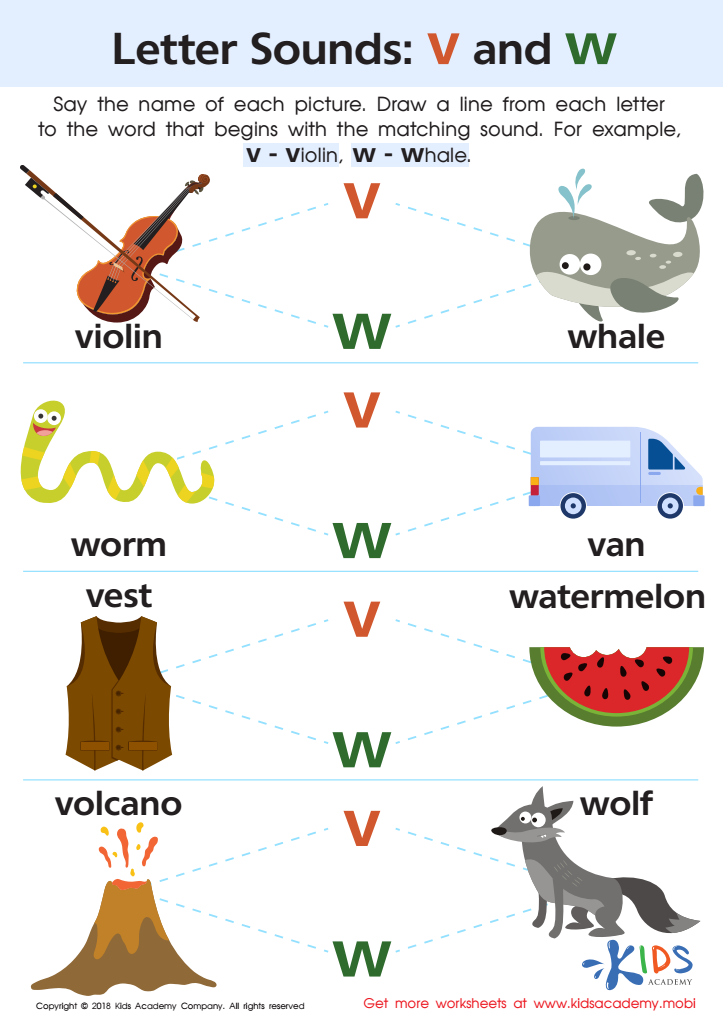
Letter V and W Sounds Worksheet
Help your child master the sounds of W & V while completing this fun phonics worksheet. Have them trace the dotted line from letter to picture while saying words like "worm", "violin" and "van" aloud to notice how each word begins with either W or V. Listen and pay attention to the pronunciation to complete the practice.
Letter V and W Sounds Worksheet
Worksheet
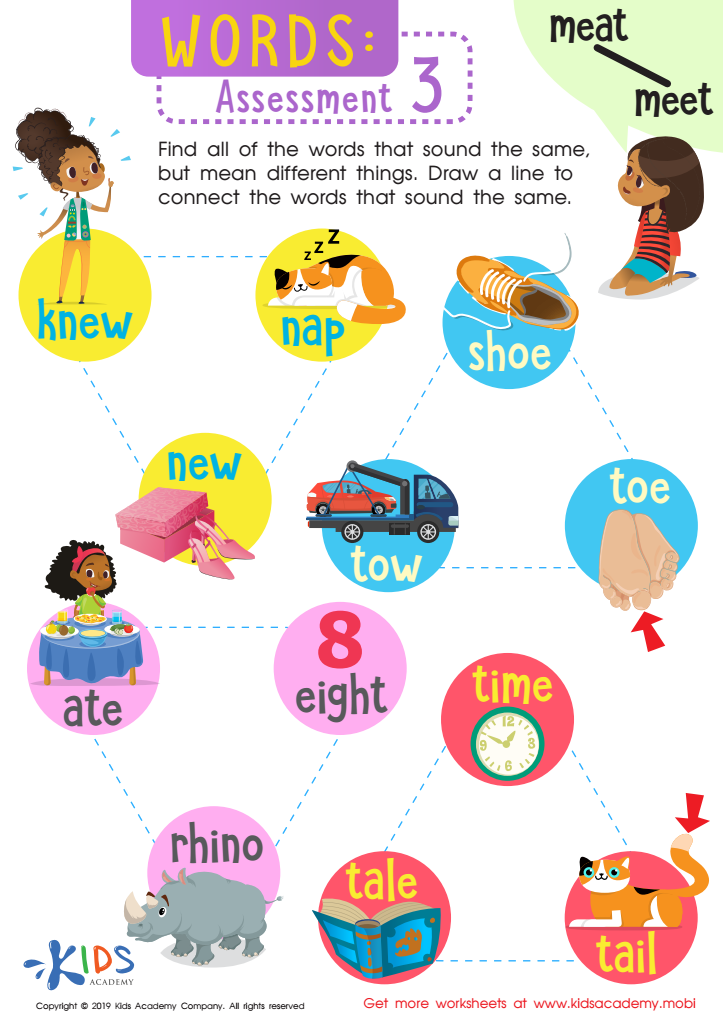
Words: Asessment 3 Worksheet
Assess your child's knowledge of homonyms with words like "toe" and "tow". This fun worksheet helps find words that sound the same but have different meanings and spellings. Use it to introduce homographs--words spelled the same with different meanings!
Words: Asessment 3 Worksheet
Worksheet
Join Kids Academy for Free
Who is primarily going to use this learning content?







.jpg)
Reading practice and alphabet familiarity are essential for children aged 4-7 because they form the foundation of literacy skills that are critical for future academic success. During these formative years, children's brains are particularly receptive to learning new skills, and a strong emphasis on reading and letter recognition can significantly enhance their cognitive and language development.
Firstly, understanding the alphabet is the building block of learning to read. Recognizing letters and associating them with specific sounds (phonics) enables children to begin decoding words, which is crucial for reading fluency. When children practice reading, they improve their vocabulary, comprehension, and ability to construct sentences, which benefits their communication skills.
Moreover, early reading practice encourages a love for reading. Children who are regularly exposed to reading tend to develop a positive attitude towards books and learning, fostering a lifelong habit of reading for pleasure and information. This early exposure can also improve attention span, concentration, and imagination.
From a broader perspective, strong reading skills link directly to academic performance across all subjects, as reading is integral to understanding instructions, following stories, and learning new concepts. Therefore, parents and teachers should prioritize alphabet learning and reading practice to set their children on a path to educational achievement and personal growth.







