Rhyming skills Alphabet Worksheets for Ages 4-7
5 filtered results
-
From - To
Enhance your child's linguistic development with our Rhyming Skills Alphabet Worksheets for Ages 4-7. Specifically designed to make learning fun and engaging, these worksheets help young learners grasp the concept of rhyming while reinforcing alphabet knowledge. Ideal for preschool and early elementary students, each worksheet offers a colorful, interactive experience to connect sounds and letters. Through playful exercises and creative prompts, children not only learn to recognize rhymes but also build a strong foundation in reading and phonics. Perfect for homeschooling or supplementary practice, these age-appropriate resources ensure a seamless learning journey.
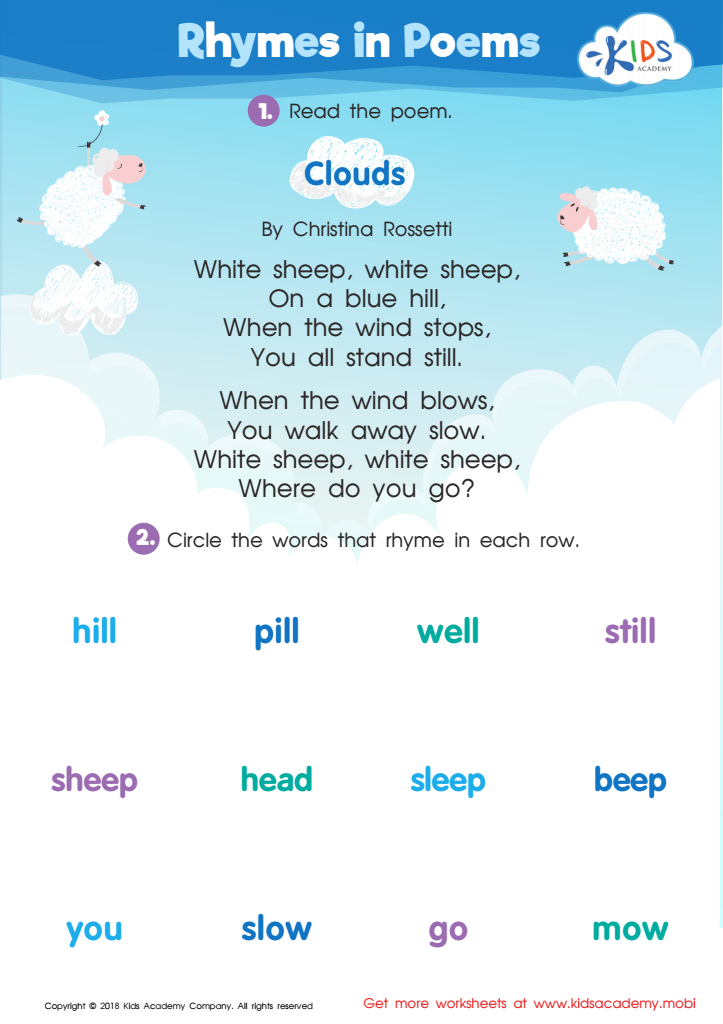
Rhymes in Poems Worksheet
 Assign to My Students
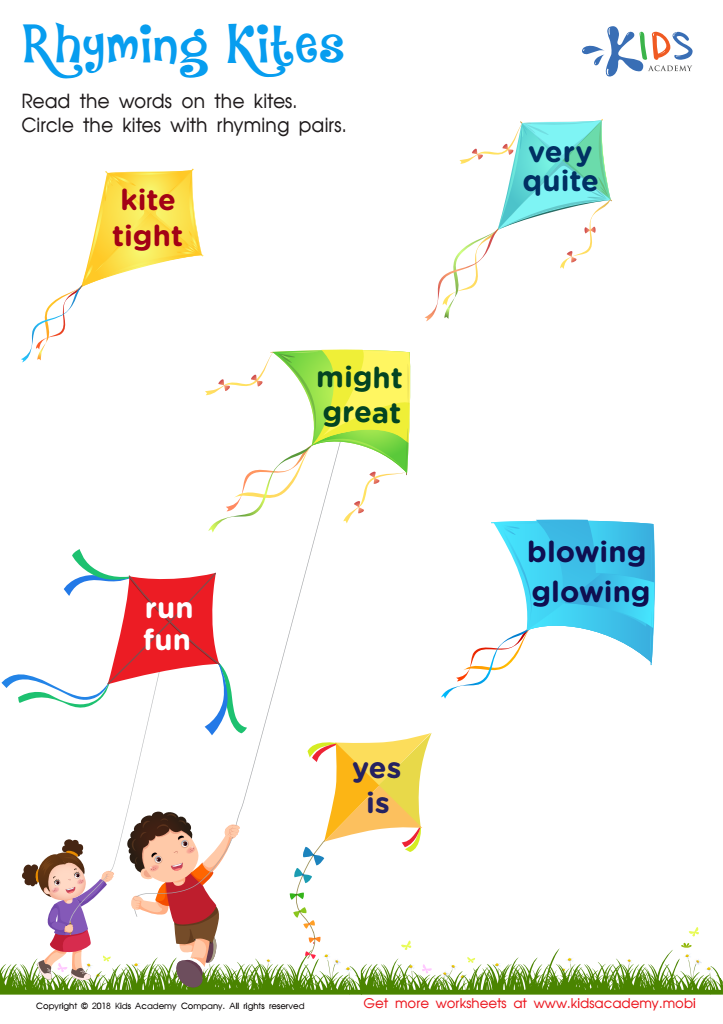
Rhyming Kites Worksheet
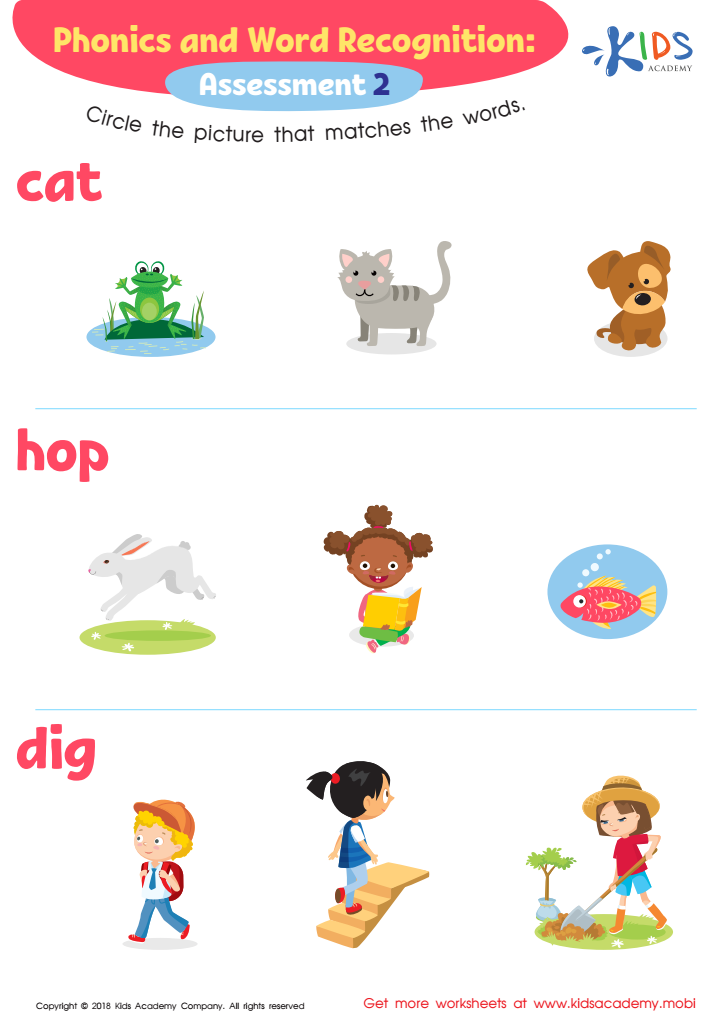
Phonological Awareness: Assessment 2 ELA Worksheet
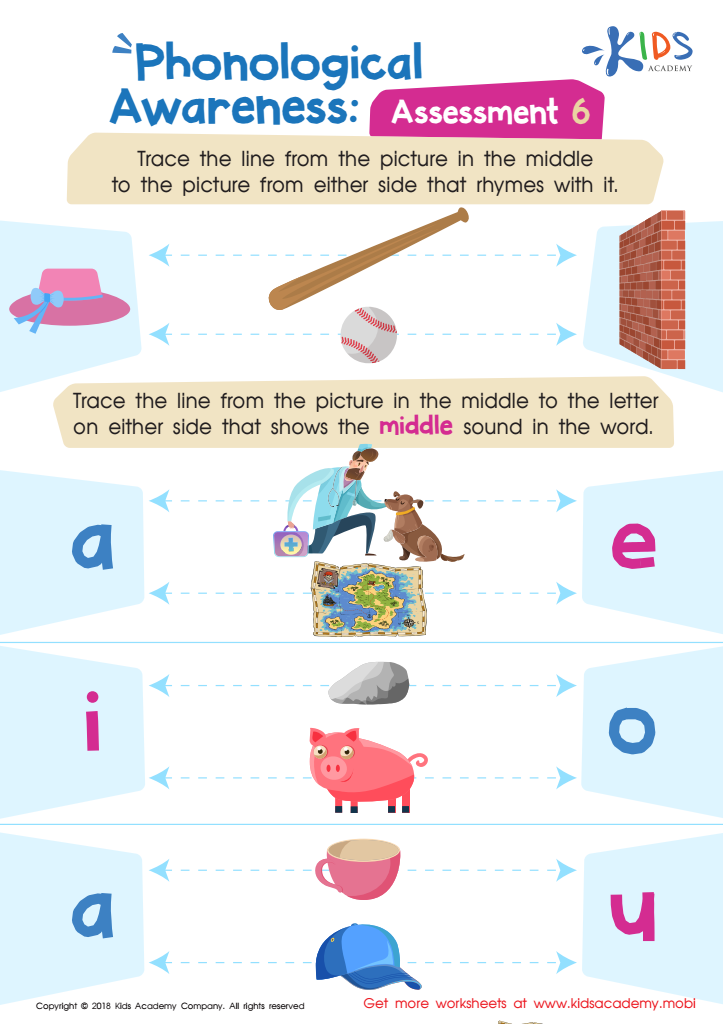
Phonological Awareness: Assessment 6 Worksheet
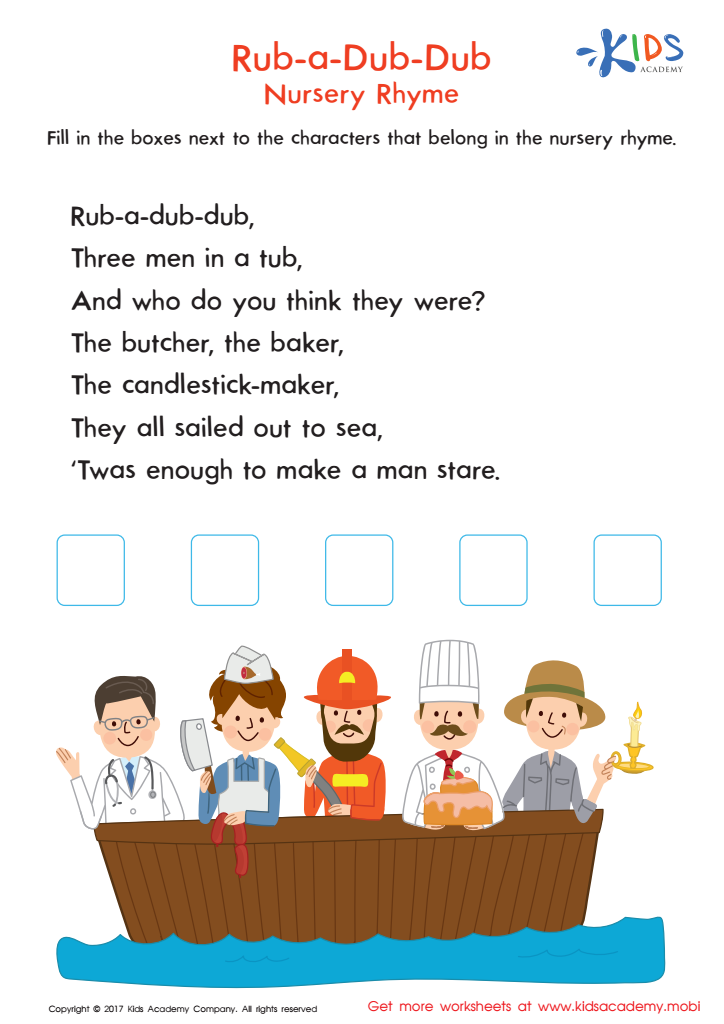
Rub a Dub Dub Printable







Parents and teachers play a crucial role in a child’s early education, and nurturing rhyming skills alongside alphabet learning can significantly impact the child's literacy development. Rhyming skills are foundational for understanding phonological awareness, the ability to recognize and work with sounds in spoken language. For children aged 4-7, rhymes help in grasping the connection between sounds and letters, a critical step in learning to read and spell.
When children engage with rhymes, they become adept at recognizing sound patterns, understanding syllable structures, and enhancing their listening skills. These activities introduce them to new vocabulary and spark an interest in the rhythm and musicality of language, making the learning process enjoyable and memorable.
Incorporating rhymes with alphabet learning ensures that children can link letters to their corresponding sounds, reinforcing their comprehension of the fundamentals of phonics. It aids in improving their pronunciation, fluency, and the ability to decode new words. Rhymes often tell a story or evoke images, promoting imagination and cognitive abilities.
Ultimately, through the combined focus on rhyming skills and alphabet knowledge, children are set on a path towards becoming confident readers and effective communicators, laying a strong educational foundation for future academic success.







