Sound differentiation Alphabet Worksheets for Ages 4-7
4 filtered results
-
From - To
Discover our engaging Sound Differentiation Alphabet Worksheets specifically designed for children aged 4-7! These worksheets are perfect for helping young learners identify and differentiate between various sounds associated with each letter of the alphabet. Through fun activities, kids enhance their phonemic awareness, essential for early literacy skills. Our thoughtfully crafted exercises encourage hands-on learning, making it easy for educators and parents to support their child's reading journey. These printable resources feature colorful illustrations and accessible layouts, ensuring an enjoyable and effective learning experience. Get started today and empower your child's journey in understanding the sounds of letters!
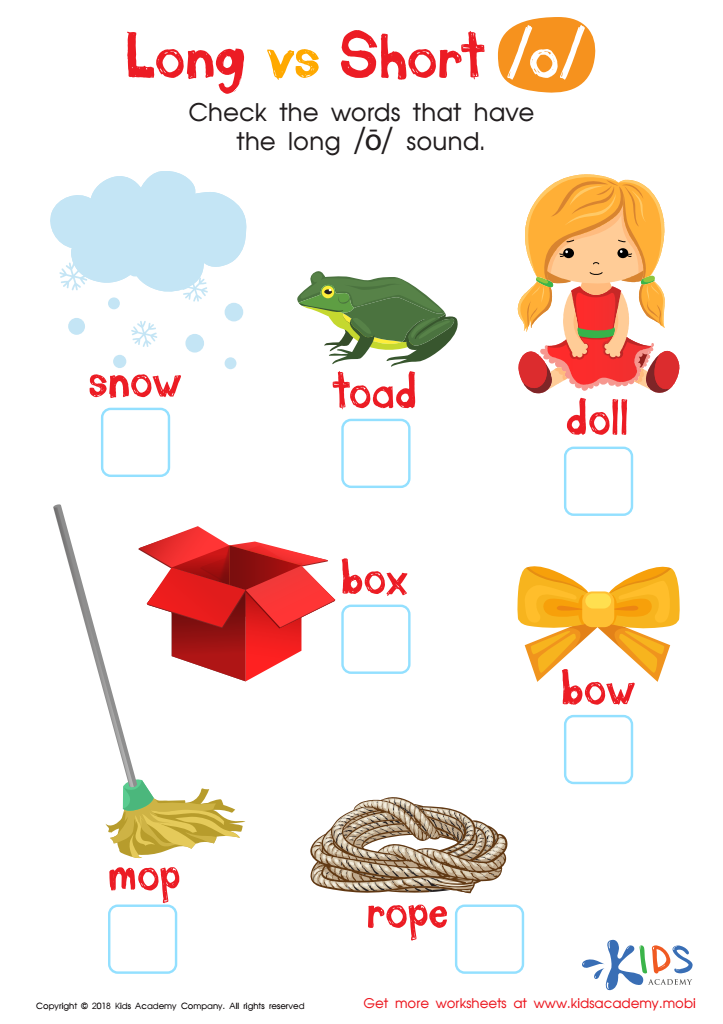
Long vs Short O Reading Worksheet
 Assign to My Students
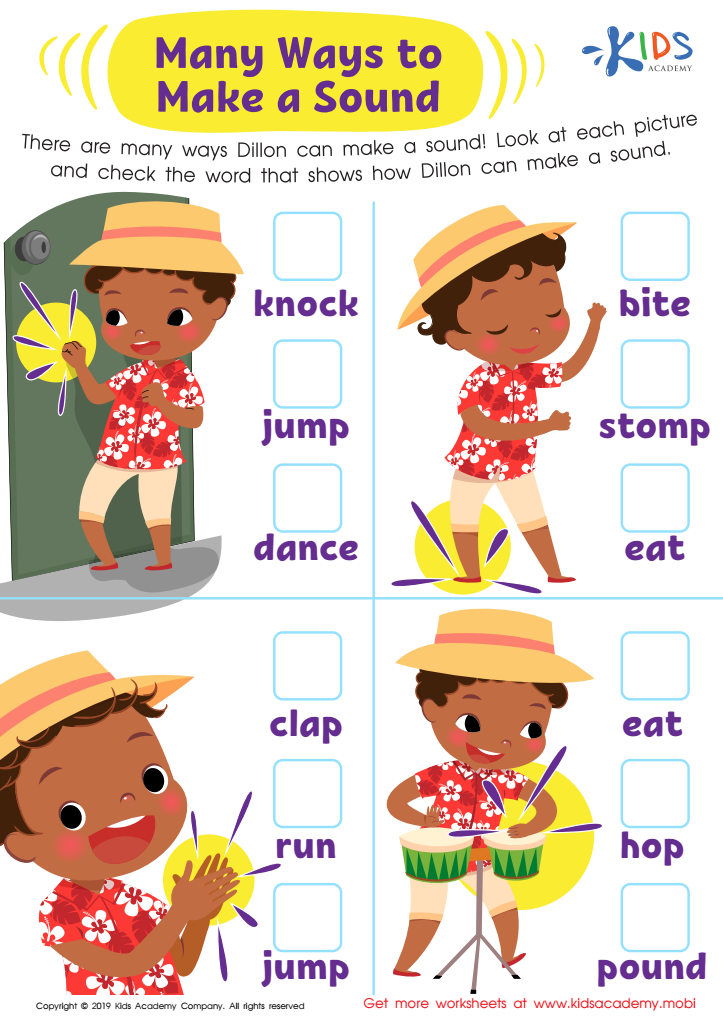
Many Ways to Make a Sound Worksheet
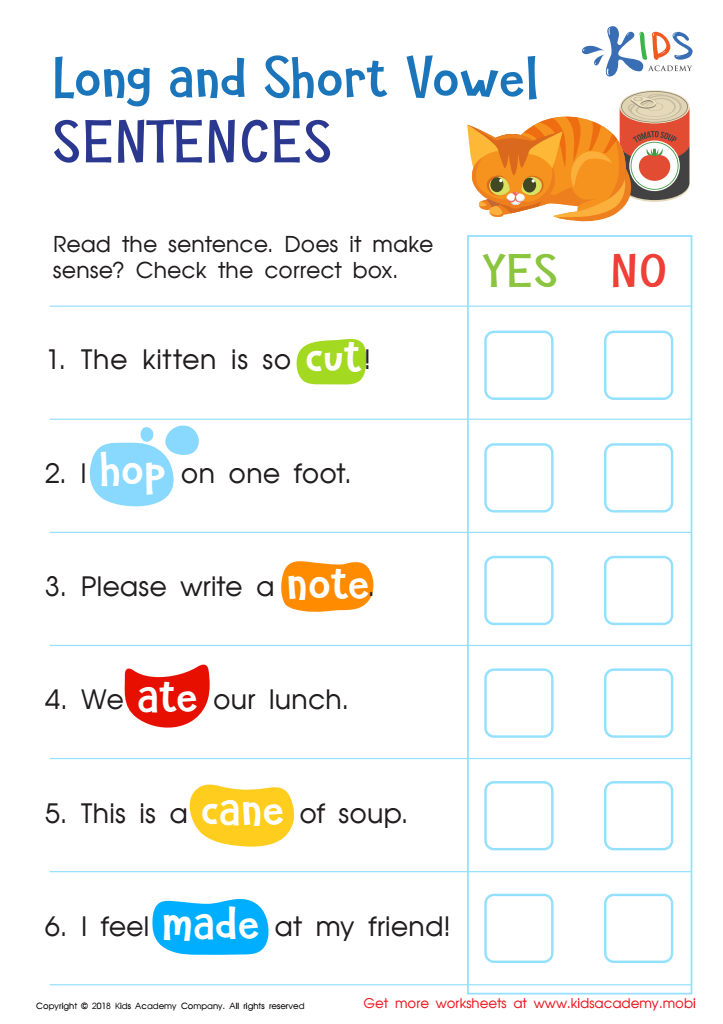
Long and Short Vowel Sentences: Assessment Worksheet
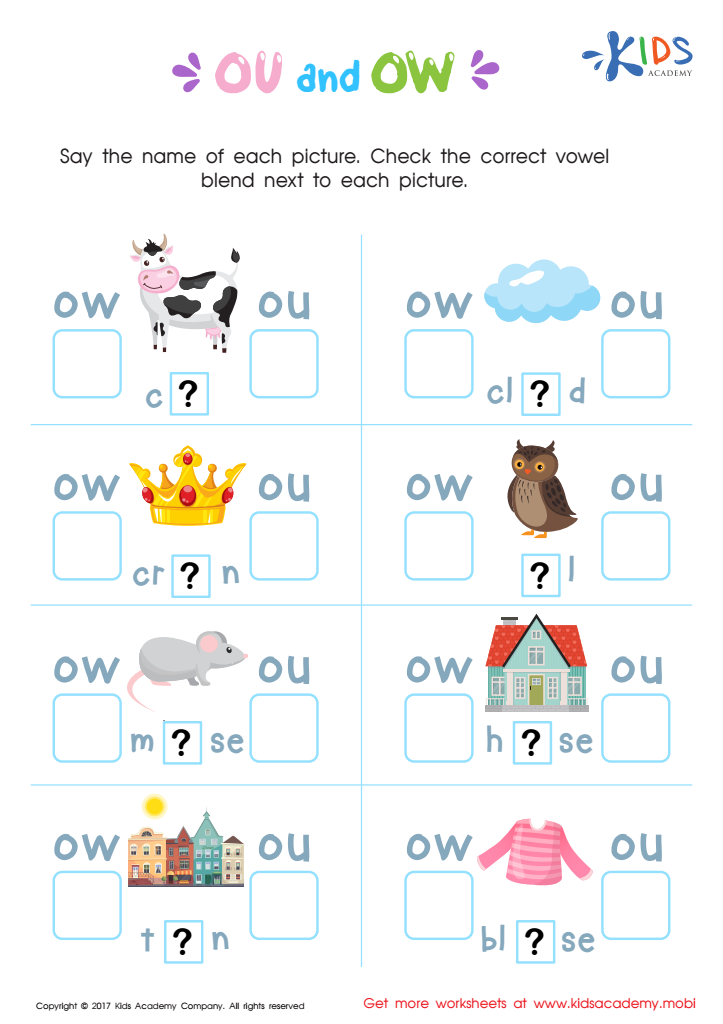
OU and OW Words Worksheet








Sound differentiation in the alphabet is crucial for young learners aged 4 to 7, as it forms the foundation of their reading and writing skills. During these formative years, children are developing phonemic awareness— the ability to hear, identify, and manipulate individual sounds in spoken words. Understanding sound differentiation helps in recognizing that letters correspond to specific sounds, which is essential for effective phonics instruction.
When parents and teachers emphasize sound differentiation, they equip children with vital tools to decode new words and improve their vocabulary. This approach allows children to develop strong language skills and fosters confidence in their ability to read. Moreover, early mastery of sound differentiation can reduce frustration and anxiety around reading, making literacy a more enjoyable experience.
In a diverse learning environment, tailored strategies that cater to varying abilities and learning styles can further enhance these skills. Supportive adults can encourage practice through games, discussions, and phonics-based activities, ensuring children engage with reading on multiple levels. Ultimately, understanding sound differentiation lays the groundwork for academic success and a lifelong love of learning, highlighting why parents and teachers should prioritize this critical skill in early education.







