Alphabet Recognition Letter J Worksheets for Ages 4-7
3 filtered results
Difficulty Level
Grade
Age
-
From - To
Subject
Activity
Standards
Discover our engaging Alphabet Recognition Letter J worksheets, specifically designed for children ages 4-7. These interactive resources promote early literacy skills while making learning fun! Our worksheets feature a variety of activities that help young learners identify and familiarize themselves with the letter J, enhancing their recognition abilities. Kids will enjoy coloring, tracing, and completing cute illustrations related to the letter J, ensuring an enjoyable and effective learning experience. Perfect for home or classroom use, these worksheets support both fine motor skills and cognitive development. Start your child’s alphabet journey with our innovative Letter J worksheets today!
Favorites
With answer key
Interactive
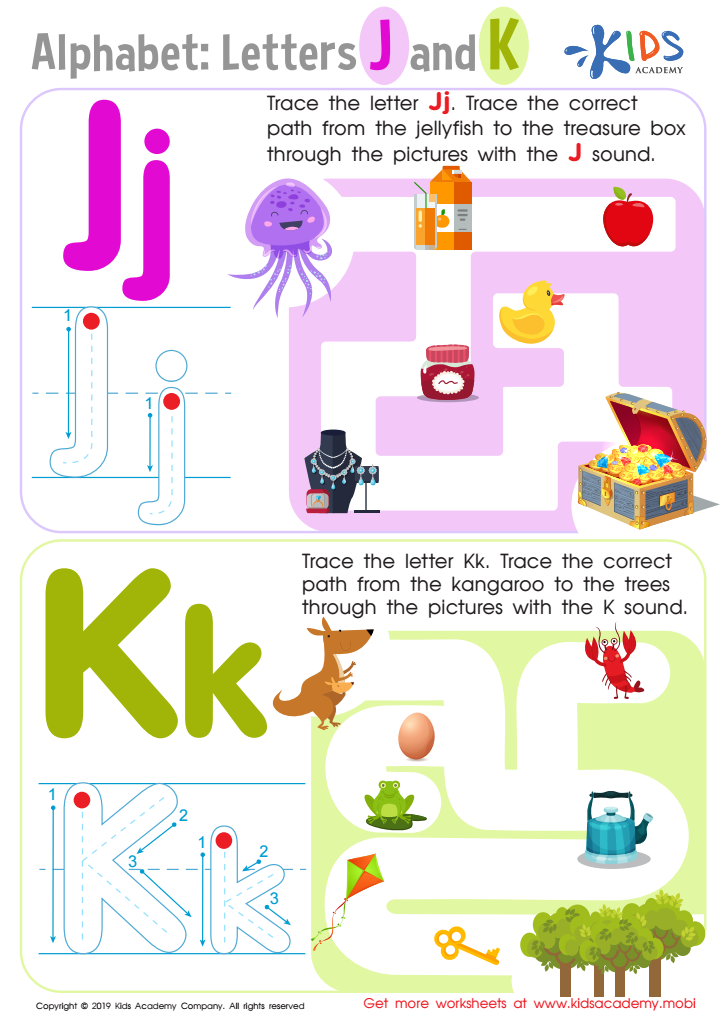
Letters J and K Tracing Worksheet
Tracing the letters «J» and «K» is the first step. Help the jellyfish find a path to the treasure chest with pictures of the «J» sound, and assist the kangaroo in finding a path to the trees with pics of «K». Fun, educational and enjoyable for children!
 Assign to My Students
Letters J and K Tracing Worksheet
Worksheet
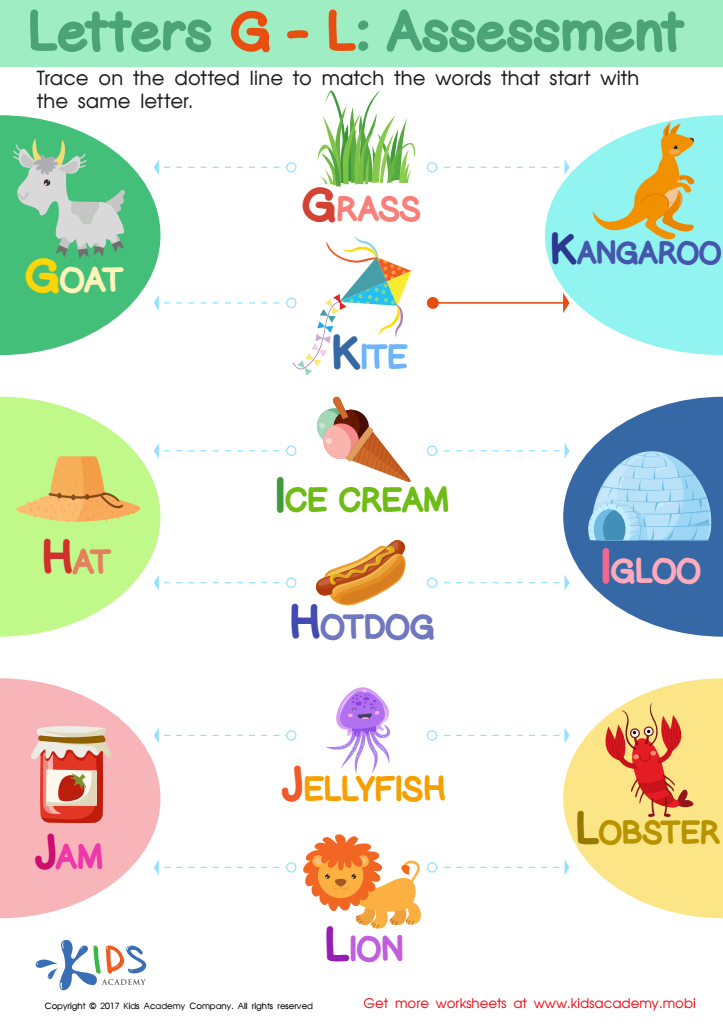
Letters G-L Worksheet
This fun worksheet helps preschoolers develop reading and phonics skills. It gets kids to match G-L words that start with the same letter, making it engaging and educational.
Letters G-L Worksheet
Worksheet
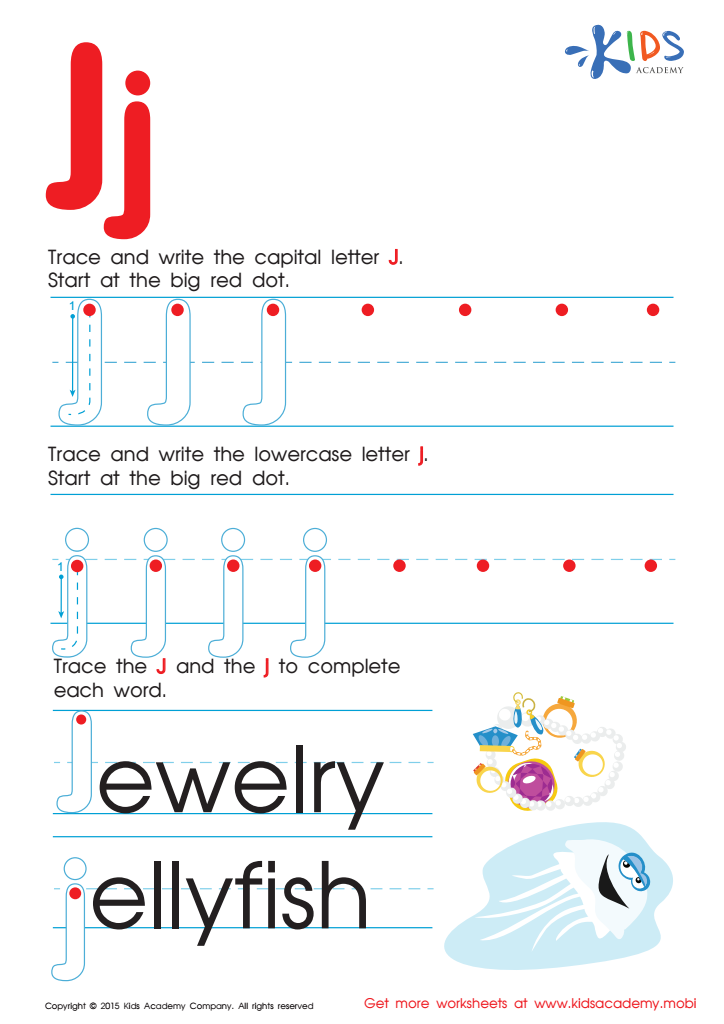
Letter J Tracing Page
Trace and write the letter "J" with our ABC worksheet - start at the big red dot! Have fun completing words like jewelry, jellyfish and more. Check out our kindergarten activities for more alphabet practice.
Letter J Tracing Page
Worksheet
Join Kids Academy for Free
Who is primarily going to use this learning content?




Alphabet recognition is a fundamental skill essential for early literacy development, and recognizing the letter "J" is crucial for children aged 4-7. Firstly, mastering individual letters, including "J," enables children to decode words as they learn to read. "J" can often be found in common vocabulary, such as "jump," "juice," and "jungle," reinforcing the connection between letters and their sounds.
Second, recognizing "J" and its corresponding sound (/j/) lays the groundwork for phonemic awareness, a critical skill in developing reading fluency. Young learners who are familiar with letters can begin forming words and discovering patterns in language, which boosts their confidence as emerging readers.
Additionally, letters often correspond to the names of key concepts or items that resonate with children's interests. For instance, topics about "jellyfish" or "juicy fruits" can engage students, making learning more relevant and exciting.
Finally, early alphabet recognition encourages cognitive skills such as memory and visual discrimination. Teachers and parents should prioritize playing engaging games, reading books that emphasize "J," and incorporating it into daily activities to support their child’s overall literacy development, paving the way for future academic success.