
Letter Tracing Letter Recognition Worksheets for Ages 4-7
6 filtered results
Difficulty Level
Grade
Age
-
From - To
Subject
Activity
Standards
Welcome to our "Letter Tracing Letter Recognition Worksheets" designed for children ages 4-7! These engaging and interactive worksheets are perfect for young learners to develop their alphabet skills through tracing and recognition. Our resources help enhance fine motor skills and reinforce letter shapes, making learning fun and effective. Each worksheet features colorful illustrations and engaging activities that capture children's attention while promoting early literacy. Ideal for home or classroom use, these activities encourage independent learning and boost confidence as children master each letter. Explore our collection today and support your child's journey toward reading readiness!
Favorites
With answer key
Interactive
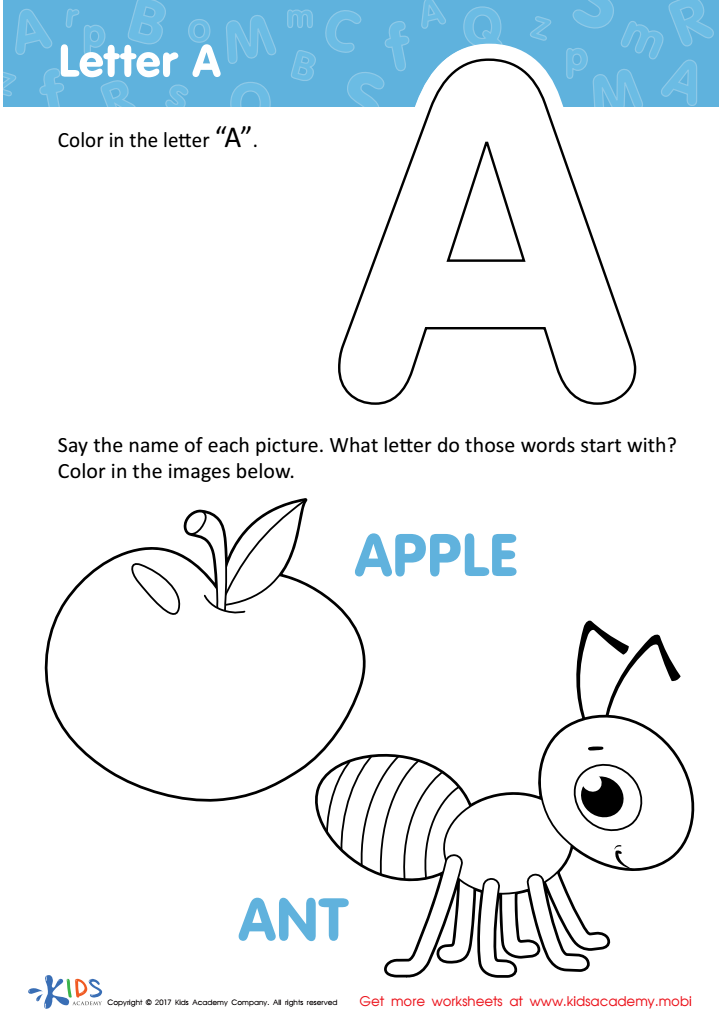
Letter A Coloring Sheet
This letter "A" coloring page is great for introducing kids to the alphabet! Let them exercise their creativity while they learn to recognize letters and sounds - it's a fun and easy way to help them get started.
Download (PDF)
 Assign to My Students
Assign to My Students
Letter A Coloring Sheet
Worksheet
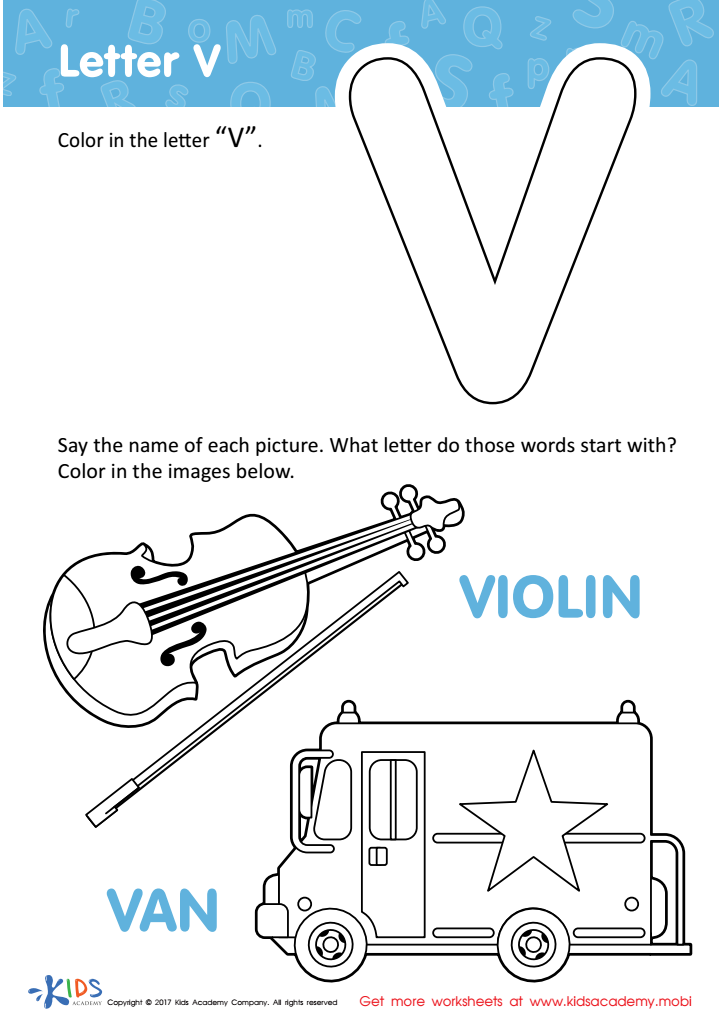
Letter V Coloring Sheet
This fun letter V coloring page can boost your child's knowledge of the letter "V" and its sound. Help them pronounce it correctly, too!
Download (PDF)
Assign to My Students
Assign to My Students
Letter V Coloring Sheet
Worksheet
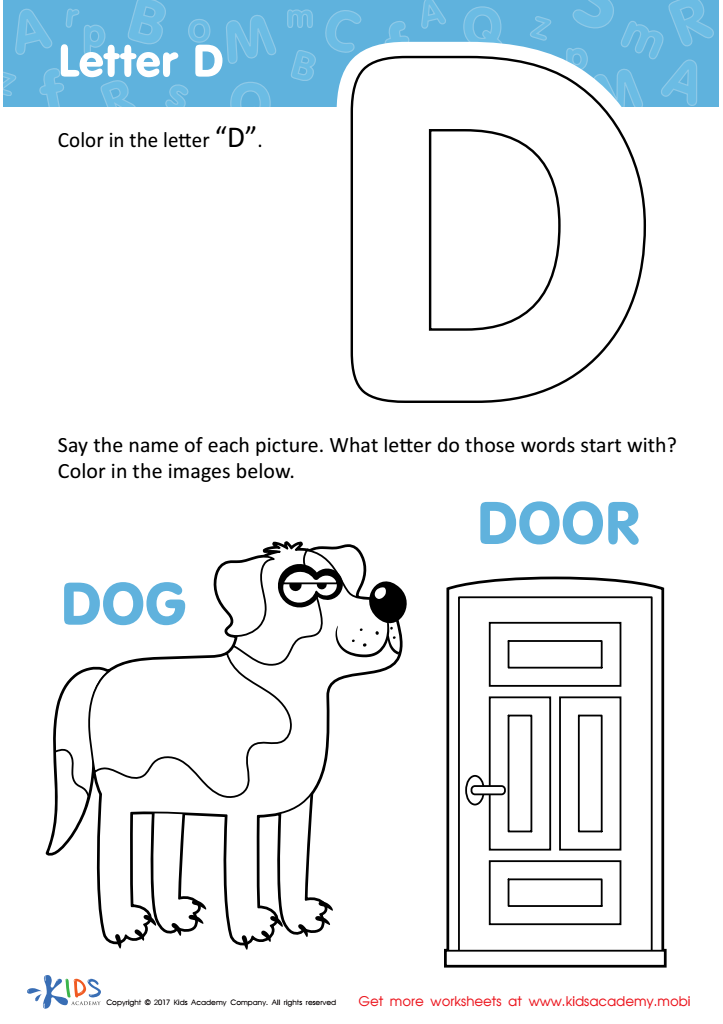
Letter D Coloring Sheet
Coloring with this letter "D" page is a great way to encourage your child's creativity while they learn the letter "D" and its sound. It's a fun activity to stimulate their imagination!
Download (PDF)
Assign to My Students
Assign to My Students
Letter D Coloring Sheet
Worksheet
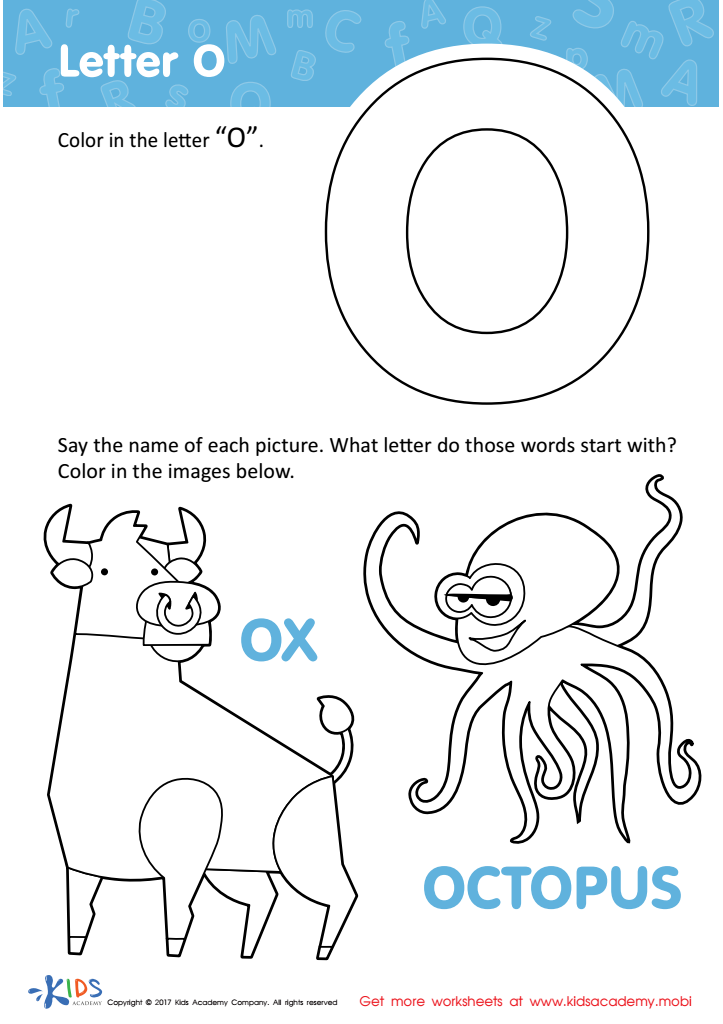
Letter O Coloring Sheet
Oh my! The letter "O" is so much fun. Coloring in the octopus and ox on this delightful letter "O" coloring page can help your child have fun while strengthening their recognition of the letter and sound.
Download (PDF)
Assign to My Students
Assign to My Students
Letter O Coloring Sheet
Worksheet
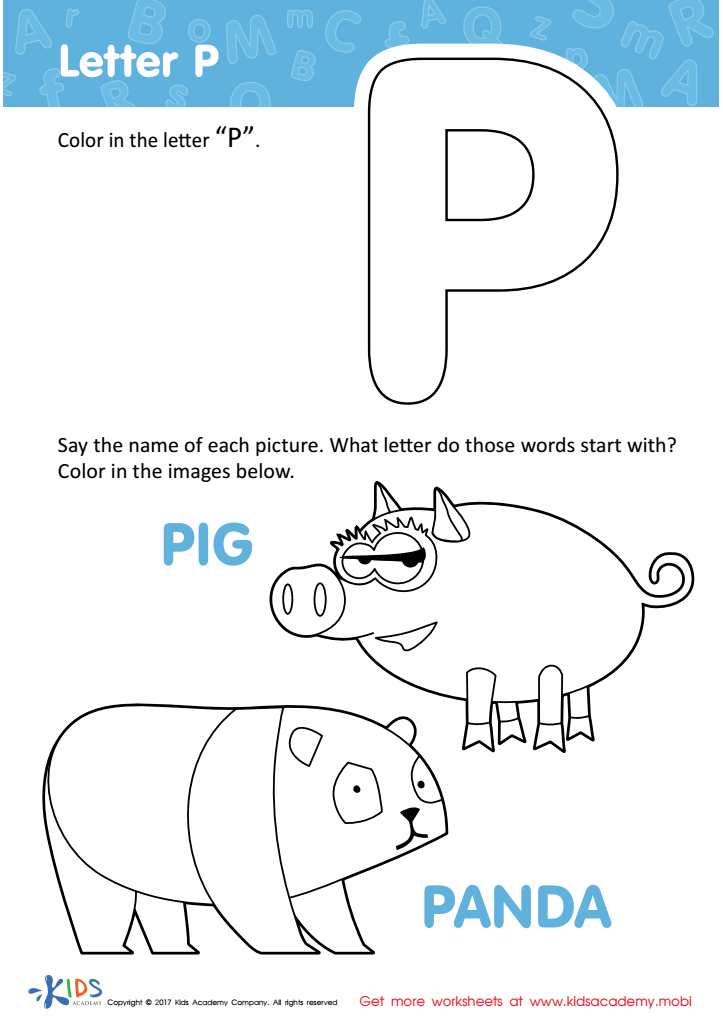
Letter P Coloring Sheet
Encourage your child's creativity and letter recognition with this "P" coloring page! Through coloring animals such as pigs and pandas, your little one will get to know the sound of the letter "P" and have fun too!
Download (PDF)
Assign to My Students
Assign to My Students
Letter P Coloring Sheet
Worksheet
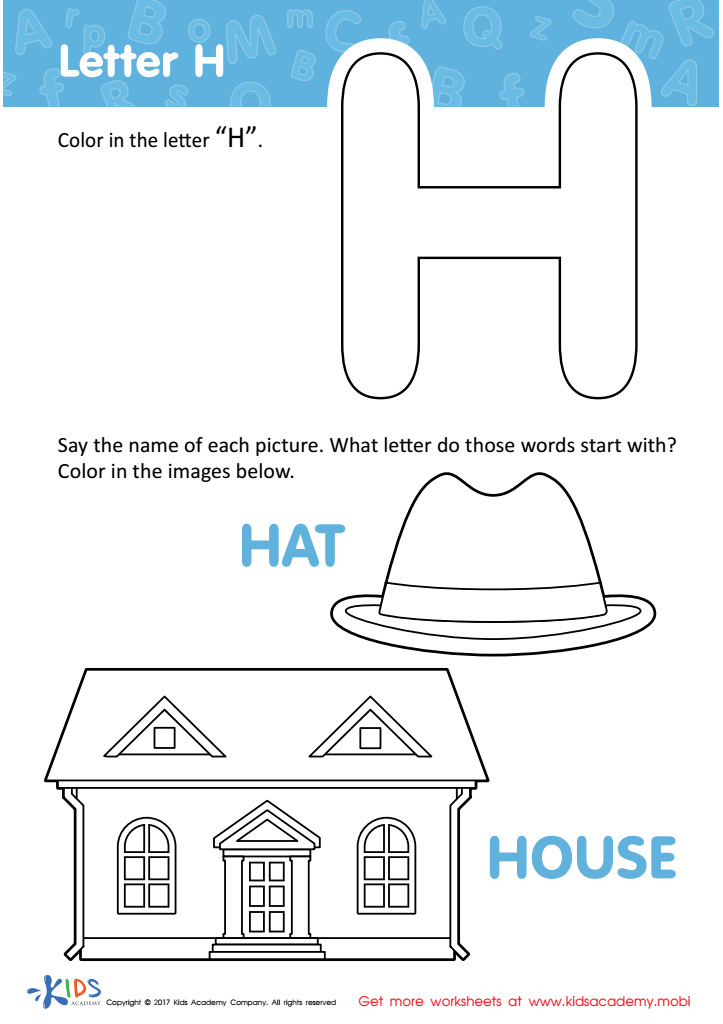
Letter H Coloring Sheet
This fun "H" coloring page will help your child recognize the letter and sound of "H"! With a hat and house to color, your little learner will have a blast picking colors and creating designs, all while learning about the letter "H"!
Download (PDF)
Assign to My Students
Assign to My Students
Letter H Coloring Sheet
Worksheet
Join Kids Academy for Free
Who is primarily going to use this learning content?








Letter tracing and letter recognition are fundamental skills for early literacy development in children aged 4-7. Engaging in letter tracing activities allows children to develop fine motor skills essential for writing while reinforcing their understanding of letter shapes. This hands-on experience also links visual recognition with physical recall, strengthening their ability to identify letters in different contexts.
When parents and teachers prioritize letter tracing, they create a multisensory learning environment that caters to diverse learning styles. Research shows that children who practice letter tracing are more likely to succeed in reading and writing, as it lays a solid foundation for phonics and spelling.
Moreover, early exposure to letter recognition boosts children's confidence and enthusiasm for learning. It encourages a love for reading, vital for academic achievement across subjects. Additionally, recognizing letters helps children decode words, paving the way for stronger language skills.
In essence, parents and teachers should care about letter tracing and recognition because they are integral to nurturing productive, confident, and literate learners. Investing time in these activities fosters essential skills that support long-term educational success, ensuring that children are prepared for future challenges in school and beyond.







