Vowel Recognition Long And Short Vowel Worksheets for Ages 4-7
4 filtered results
Difficulty Level
Grade
Age
-
From - To
Subject
Activity
Standards
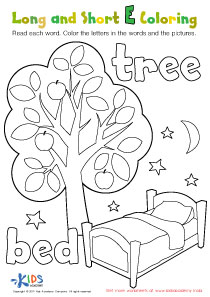
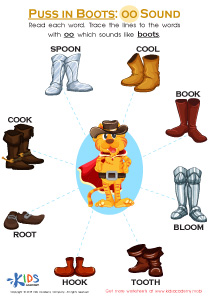
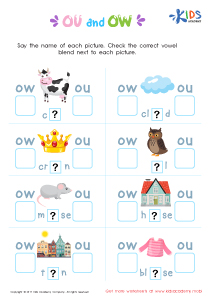
Discover our engaging Vowel Recognition Worksheets, designed specifically for children aged 4-7! These interactive resources focus on distinguishing long and short vowel sounds, providing a solid foundation for early reading skills. Our printable worksheets include a variety of fun activities, such as matching, coloring, and filling in the blanks, that keep young learners motivated and excited. Each worksheet is thoughtfully created to cater to diverse learning styles, helping students practice vowel sounds in an enjoyable way. Empower your child’s literacy development today and watch them grow in confidence while mastering vowel recognition with our educational resources!
Favorites
With answer key
Interactive
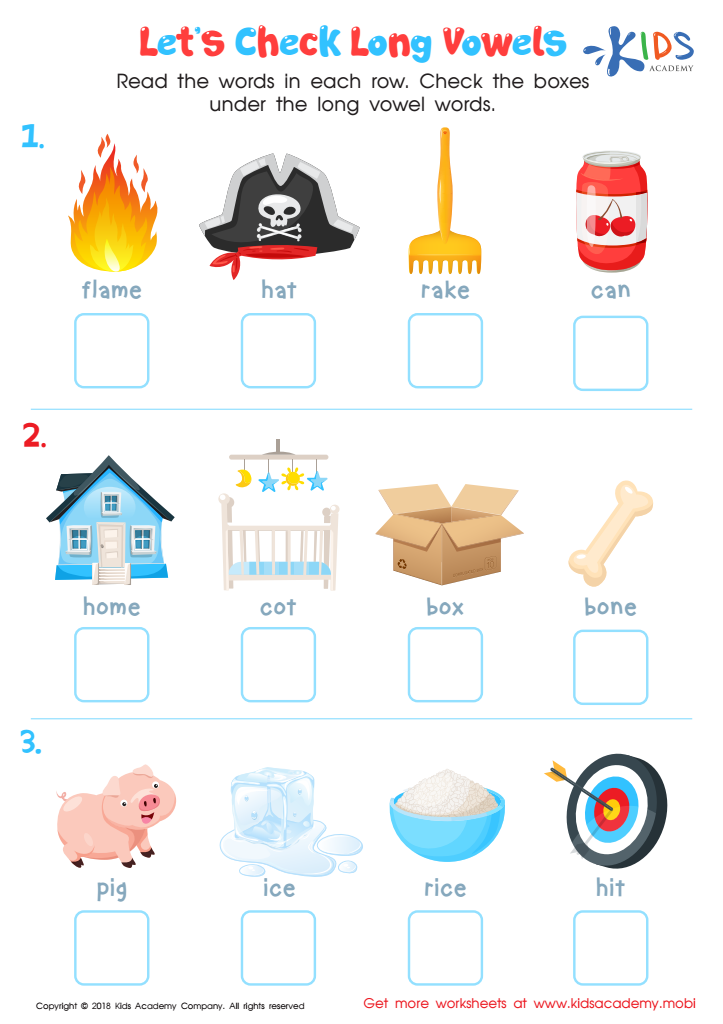
Let's Check Long Vowels: Assessment Worksheet
This worksheet helps your child identify objects and learn long vowel sounds. Ask them to say the names of the four objects in each row. Then, help them check the boxes to confirm they know the long vowel sounds. This will help them develop their reading skills.
 Assign to My Students
Let's Check Long Vowels: Assessment Worksheet
Worksheet
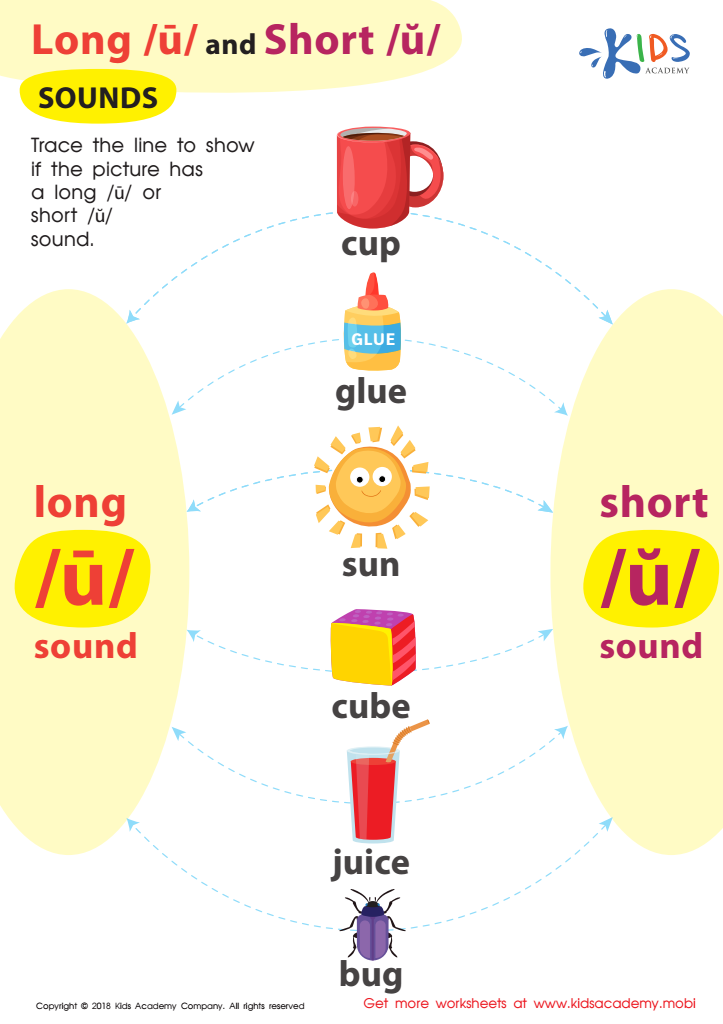
Reading: Long U and Short U Sounds Worksheet
Learning about long and short vowel sounds can be tricky, especially with the letter U. Extra practice with this worksheet is recommended for mastering this sound. Children read words with the different vowel sounds and categorize them. Great for instruction, practice and reteaching in reading classes.
Reading: Long U and Short U Sounds Worksheet
Worksheet
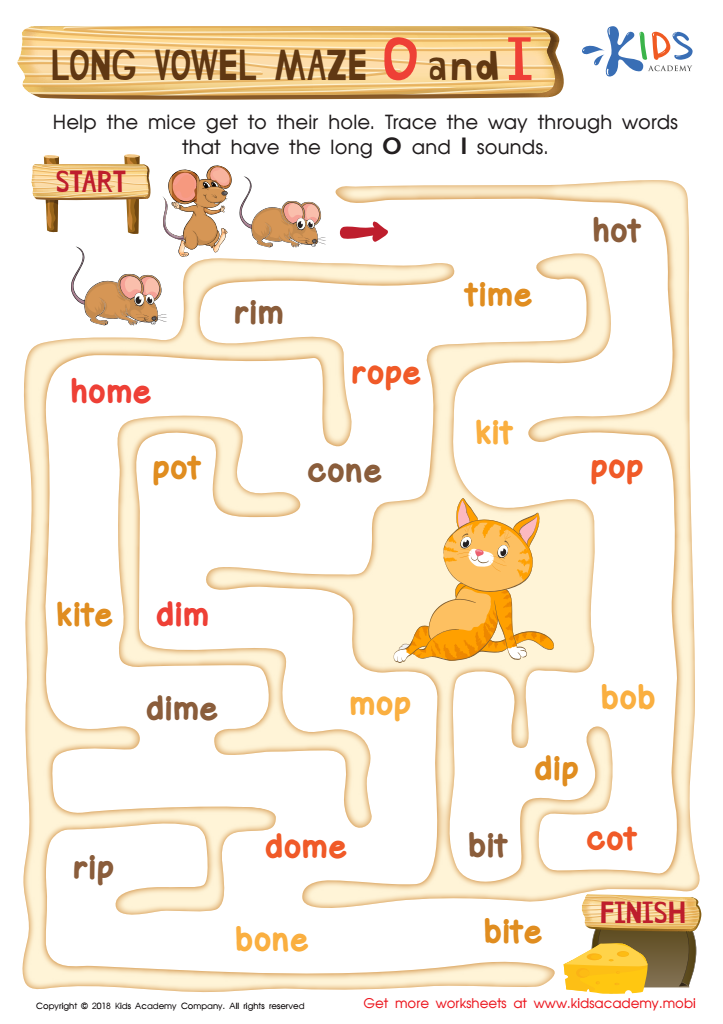
Long Vowel Maze /o/ and /i/ Worksheet
Help your new readers have fun and build their sight word vocabulary! Guide the mice to their prize cheese by having them trace the route on the worksheet, using words with the long o and long i sounds. But watch out for the kitty!
Long Vowel Maze /o/ and /i/ Worksheet
Worksheet
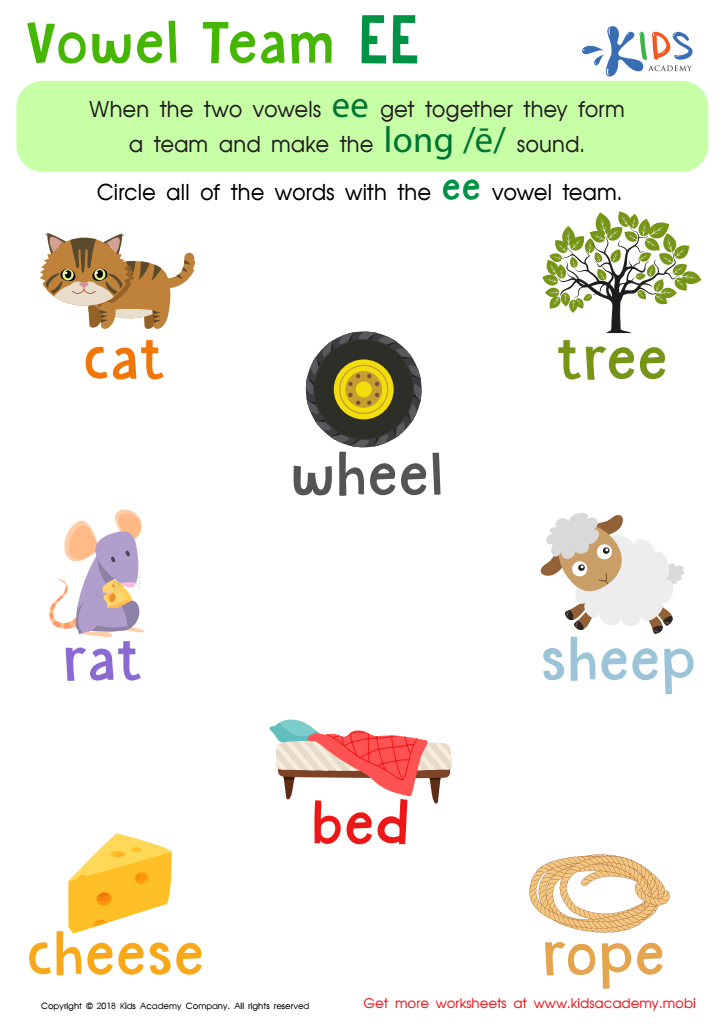
Reading: Vowel Team EE Worksheet
This worksheet is perfect for helping young learners master the /ee/ vowel team. It shows the first vowel with a long sound and the second vowel silent. It also provides pictures for unfamiliar words for readers of all levels. It's an ideal resource for teaching phonics skills.
Reading: Vowel Team EE Worksheet
Worksheet
Join Kids Academy for Free
Who is primarily going to use this learning content?




Vowel recognition, specifically the distinction between long and short vowels, is crucial for children aged 4-7 as it lays the foundation for their reading and writing skills. Vowels are the building blocks of words, and understanding their sounds is vital for phonemic awareness. This recognition allows children to decode words more effectively and improves their ability to read fluently.
Additionally, differentiating between long and short vowels enhances vocabulary development. When children grasp the concept of vowel sounds, they can make connections between written words and their meanings. This skill is essential for successful spelling and comprehension, fostering confidence as they navigate books and writing activities.
From a developmental perspective, engaging with long and short vowels supports auditory discrimination and cognitive skills, essential for language acquisition. Early mastery of these concepts can prevent reading difficulties down the line, promoting a positive and enriching learning experience.
For parents and teachers, prioritizing vowel recognition not only supports academic achievement but also spurs a love for reading. By fostering these foundational skills, adults can set children on a successful path through school, helping them to become enthusiastic, capable, lifelong learners. Effective early literacy instruction cultivates curious minds and empowers children for future challenges.