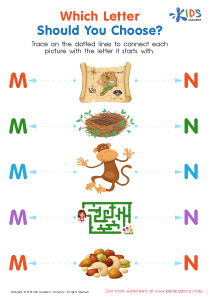
Lowercase identification Lowercase/Small Letters Worksheets for Ages 4-7
5 filtered results
-
From - To
Discover our engaging "Lowercase Identification Worksheets" designed specifically for children aged 4 to 7! These worksheets provide a fun and interactive way for young learners to recognize and master lowercase letters. With colorful illustrations and diverse activities, children will enjoy tracing, identifying, and matching small letters, ultimately enhancing their reading and writing skills. These resources are perfect for parents and educators seeking to support early literacy in a playful manner. Transform learning into an enjoyable adventure and watch your child's confidence grow as they identify and understand lowercase letters. Start exploring today and foster a love for the alphabet!
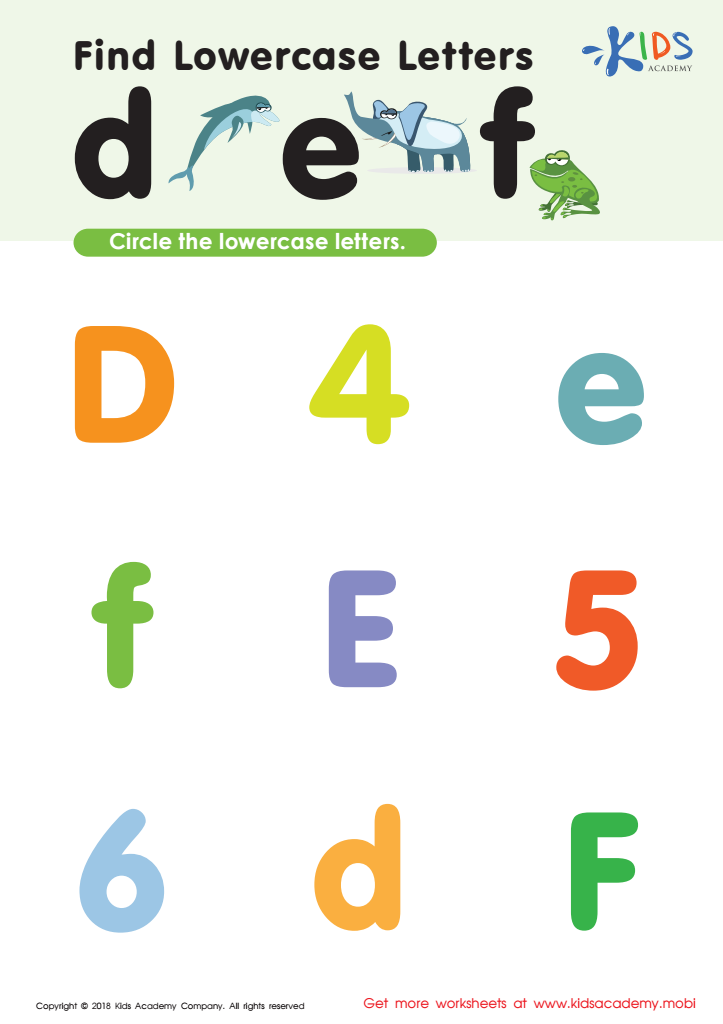
Find Lowercase Letters d e f Worksheet
 Assign to My Students
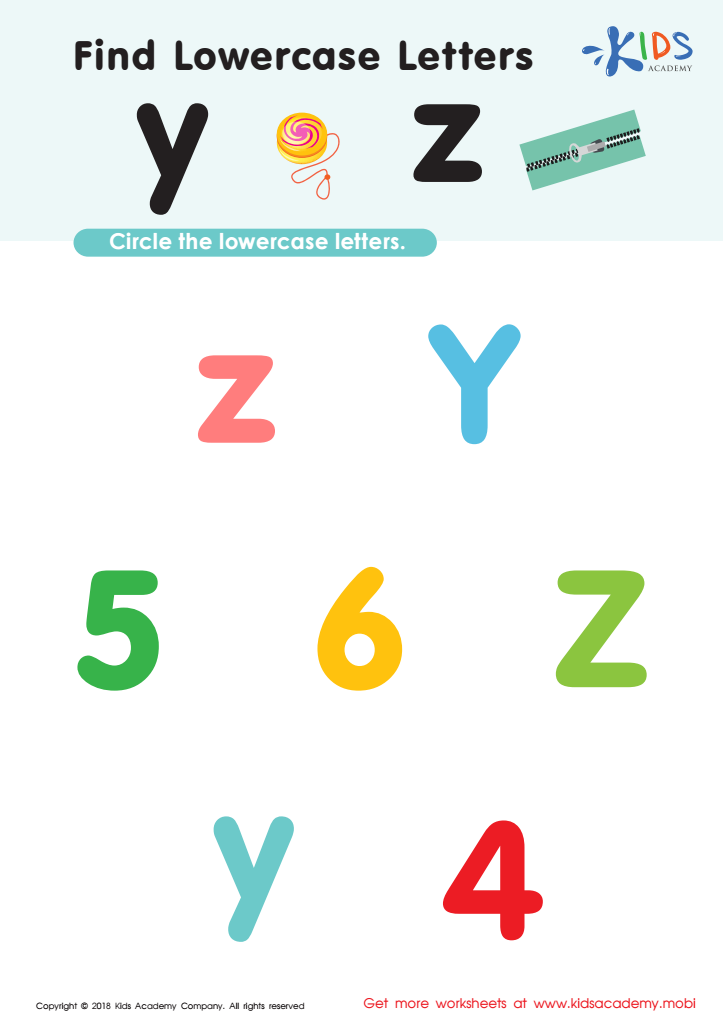
Find Lowercase Letters y z Worksheet
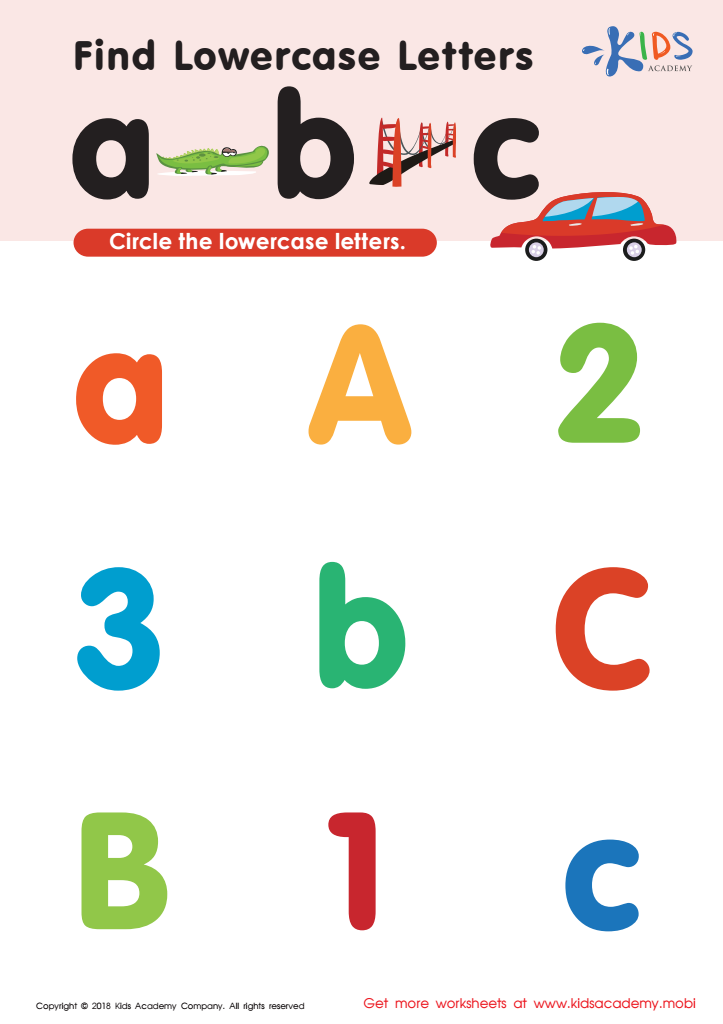
Find lowercase letters a b c Worksheet
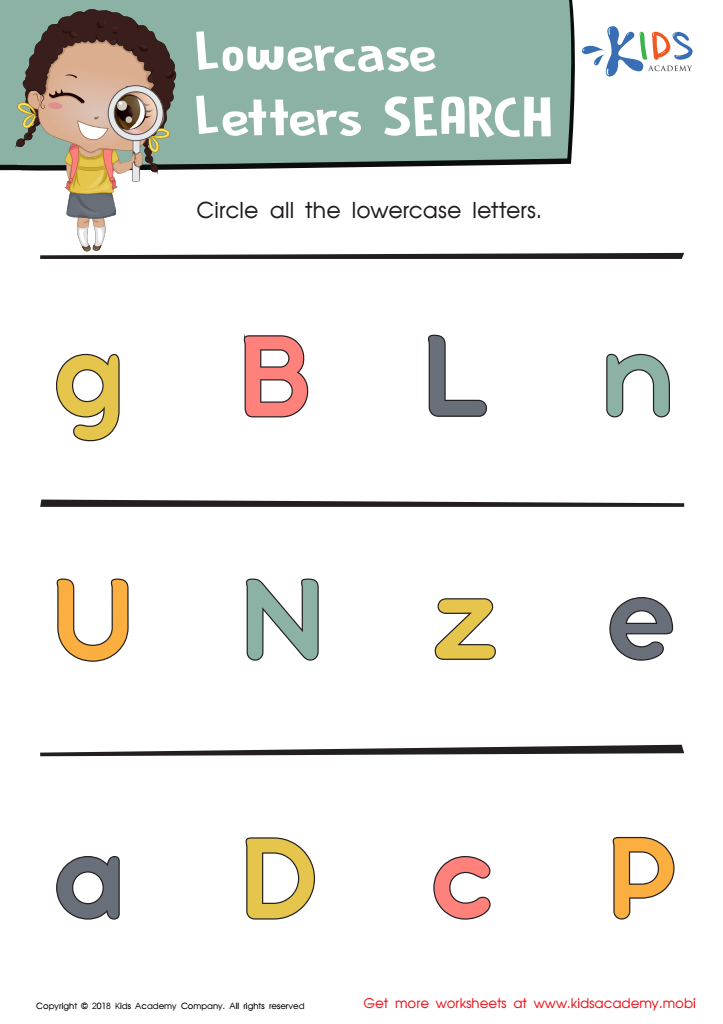
Lowercase Letters Search: Assessment Worksheet
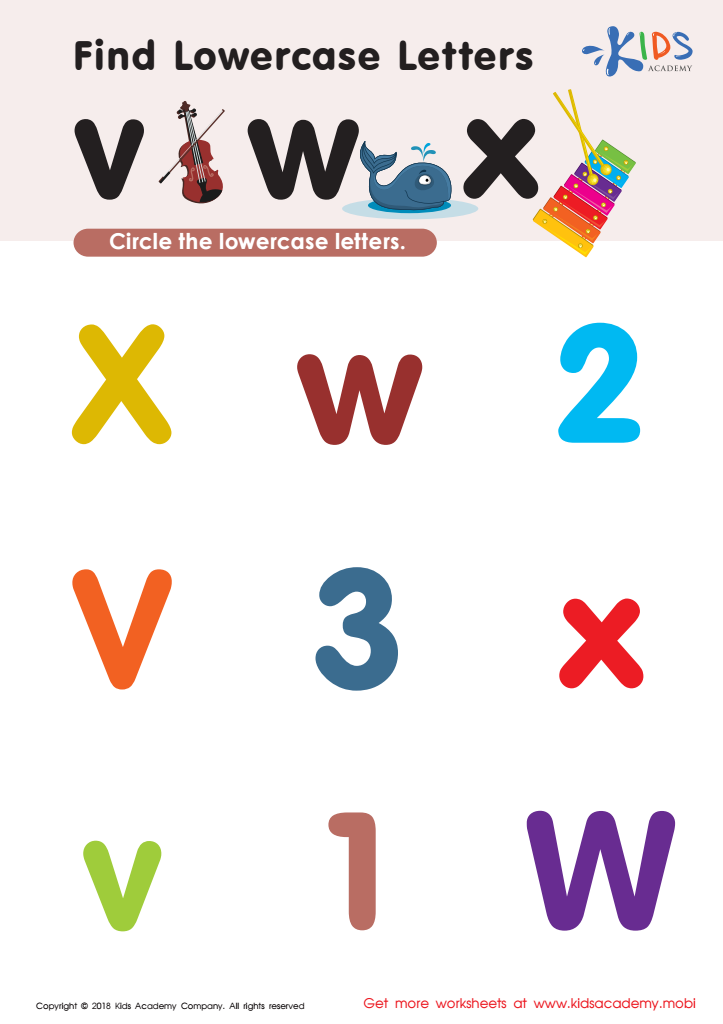
Find Lowercase Letters v w x Worksheet


Lowercase letter identification is a crucial skill for children aged 4-7 as it forms the foundation for reading and writing. At this age, children are beginning to recognize words and understand basic phonics, making exposure to lowercase letters essential. Unlike uppercase, which the children typically encounter first in signage, most text is written in lowercase. Recognizing these letters helps children decode words more effectively, improving their reading fluency.
Furthermore, lowercase letters contribute to early writing skills. When kids learn to write, they primarily use lowercase letters, so proficiency in identifying these letters supports their handwriting development. Children also benefit socially and emotionally as they gain confidence in reading and writing, fostering a love for literacy.
For teachers and parents, fostering lowercase letter identification can be engaging and fun. Through games, storytime, and interactive activities, adults can promote an environment that encourages exploration of language. Supporting children in mastering lowercase letters not only leads to academic success but instills a lifelong appreciation for reading. Therefore, the emphasis on lowercase letters is vital for early literacy development, setting the stage for future learning and communication skills.