Alphabet Recognition Missing Letters Worksheets for Ages 4-7
3 filtered results
-
From - To
Welcome to our Alphabet Recognition Missing Letters Worksheets page, designed specifically for children ages 4-7. These engaging worksheets help young learners develop their literacy skills by identifying and filling in missing letters in various words. Perfect for preschool and early grade teachers, these resources make learning the alphabet fun and interactive. Each worksheet features colorful designs and age-appropriate exercises that cater to different learning styles. Foster your child's love for reading and writing with our carefully crafted activities, enhancing their phonemic awareness and spelling abilities. Start your child's journey to literacy today with our exciting missing letters worksheets!
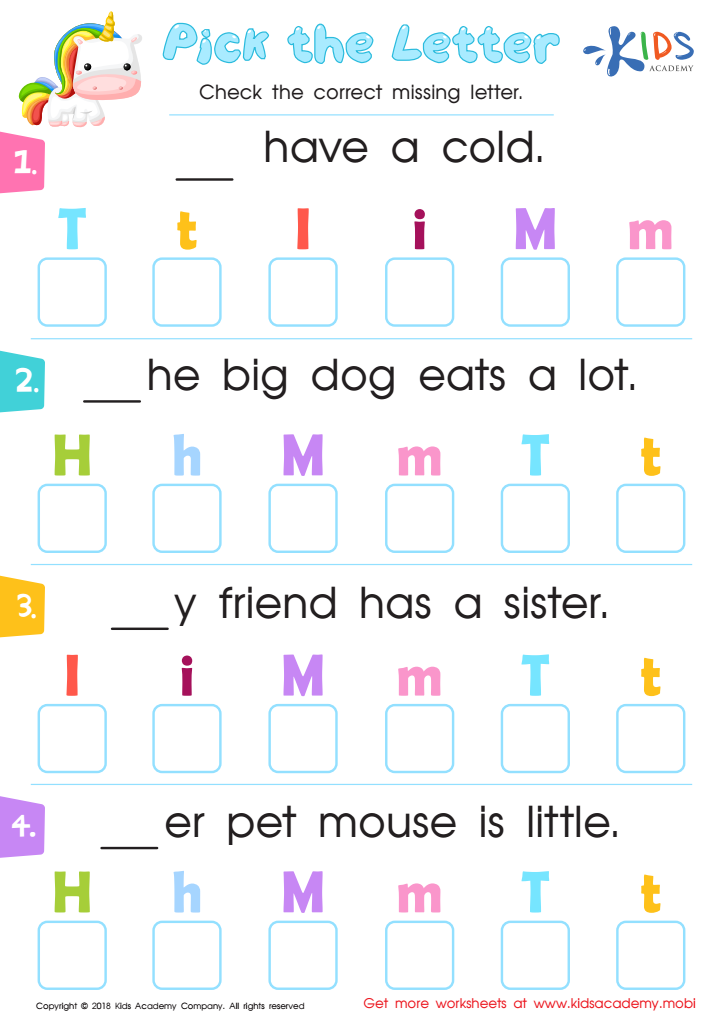
Pick the Letter Worksheet
 Assign to My Students
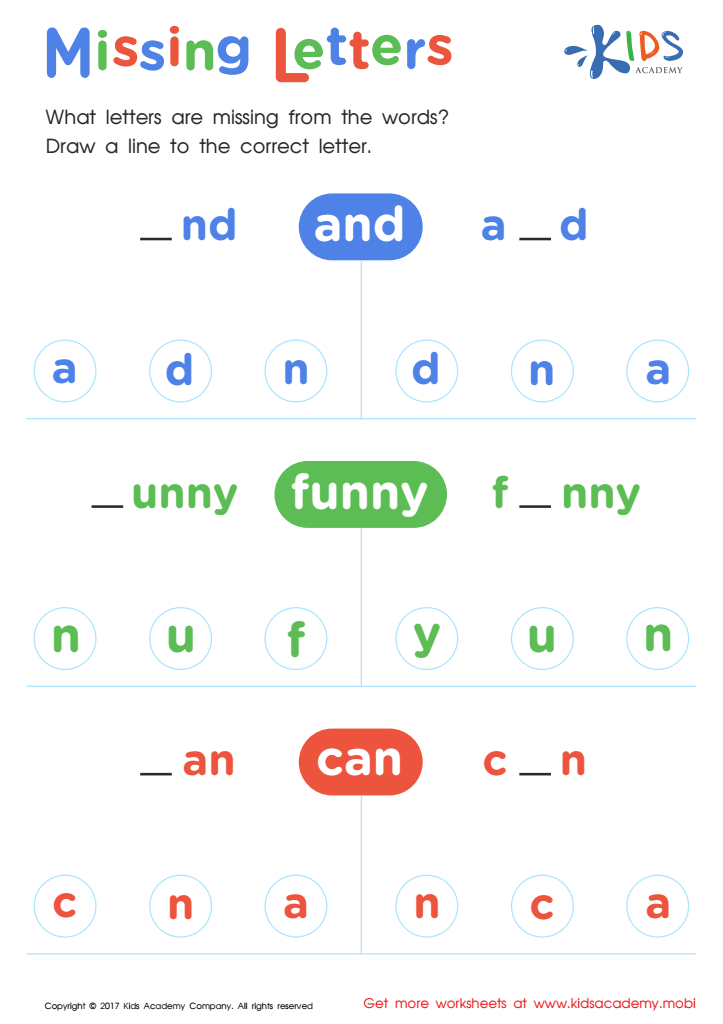
Missing Letters Worksheet
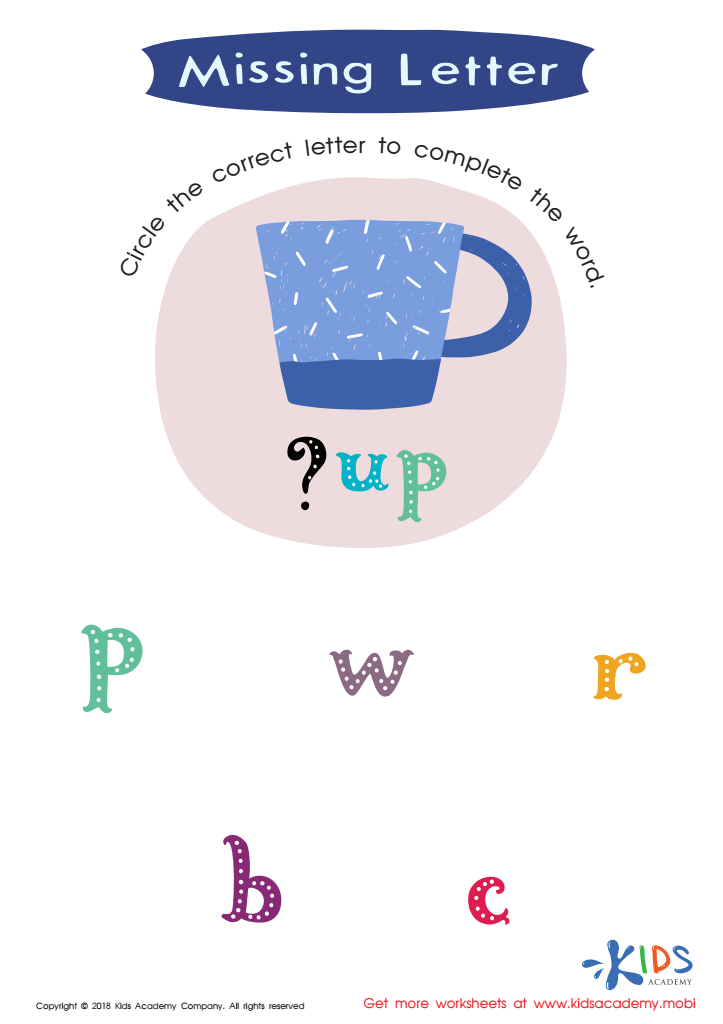
Missing Letter Worksheet



Alphabet recognition, specifically missing letters, is a crucial milestone for children aged 4-7, forming the foundation for literacy skills. Parents and teachers should prioritize this learning aspect for several reasons. Firstly, proficiency in recognizing letters enhances a child's ability to read and write, as they learn to identify and manipulate the alphabet. Missing letters exercises stimulate cognitive development, helping children improve their memory, attention, and problem-solving abilities.
Moreover, these activities promote phonemic awareness, allowing children to connect sounds with their corresponding letters. This connection is vital for early reading fluency, which is essential for successful academic progress. Engaging in missing letters activities also makes learning enjoyable, encouraging a love for literacy that lasts a lifetime.
Additionally, early mastery of letter recognition can boost a child's confidence. As they gain skills in literacy, they are more likely to participate in classroom discussions and feel competent in their academic abilities. Finally, fostering these skills at a young age prepares children for more complex language tasks, ensuring they are equipped for future educational challenges. Parents and teachers play a key role in supporting this development, ultimately laying the groundwork for lifelong literacy and learning success.







