Color Identification Phonics Worksheets for Ages 4-7
4 filtered results
-
From - To
Explore our engaging Color Identification Phonics Worksheets designed for children aged 4-7! These worksheets combine phonics lessons with vibrant color-learning activities, making learning fun and interactive. Young learners will enhance their color recognition skills while building foundational phonics knowledge. Each worksheet features delightful illustrations and easy-to-follow exercises that guide kids through identifying and associating colors with corresponding words. Perfect for preschool and early elementary educators, these resources are tailored to support auditory and visual learning styles. Foster creativity and confidence in reading as your child discovers the joyful world of colors. Download now to bring vibrant learning to your classroom!
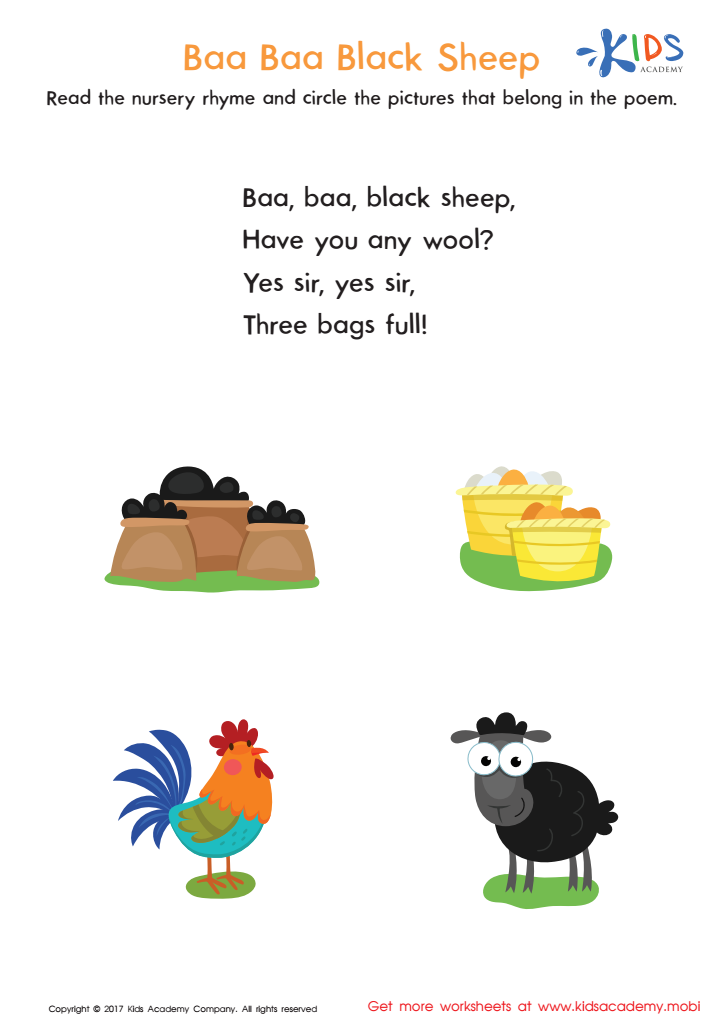
Baa Baa Black Sheep Printable
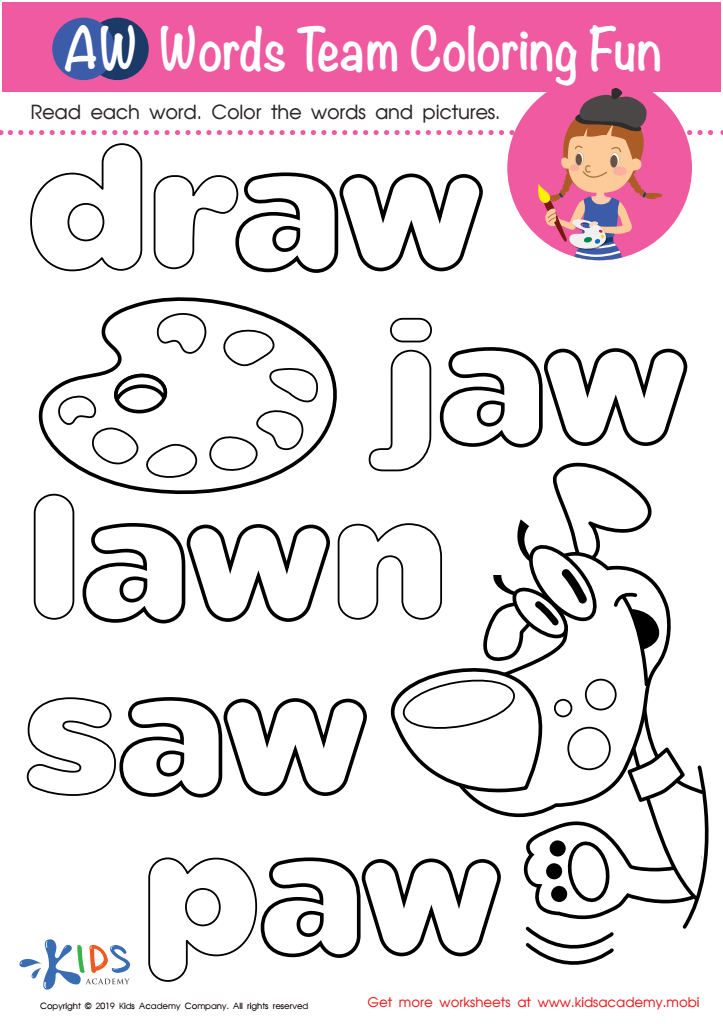
AW Words Team Coloring Fun Worksheet
 Assign to My Students
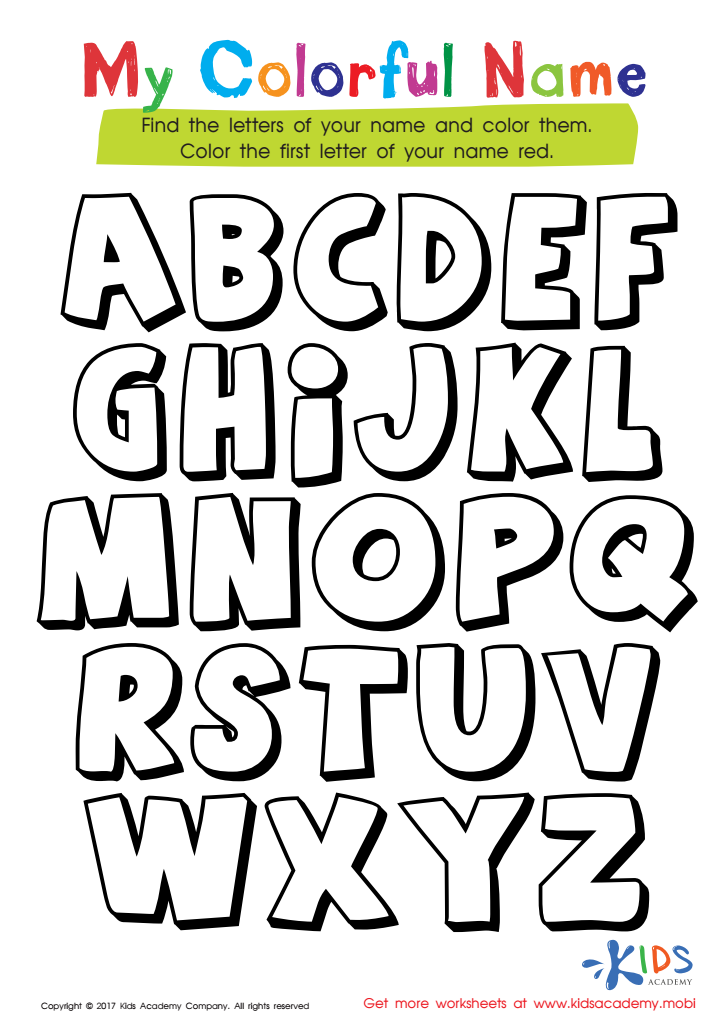
My Colorful Name Worksheet
Assign to My Students
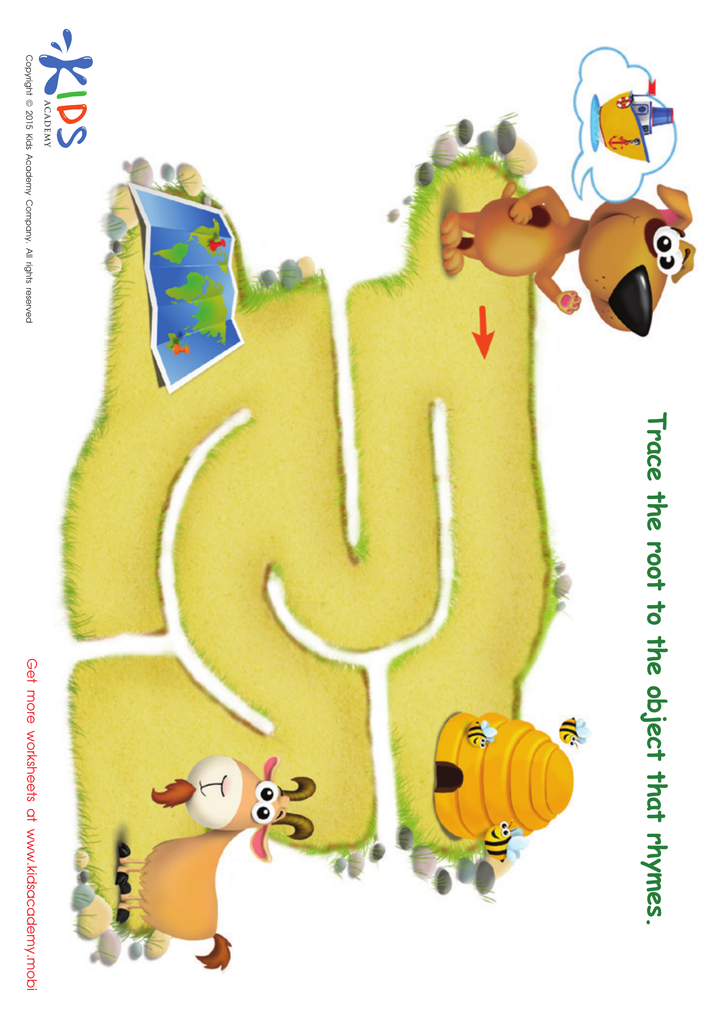
Boat Rhyming Words Worksheet








Color Identification Phonics is essential for children aged 4-7 because it forms the foundation of early literacy and cognitive development. At this pivotal age, children are quickly absorbing language and concepts. By integrating color identification with phonics, educators and parents can create a multisensory learning experience. Recognizing colors not only enhances a child's vocabulary but also aids in pattern recognition and categorization—skills crucial for academic success.
Additionally, color identification can make phonics instruction more engaging. Children often find learning materials that use vibrant colors and illustrations more appealing. This engagement can foster a love of learning and encourage active participation.
Furthermore, studies suggest that children learn better through integrated approaches that interplay different subjects, like language and visual cues. Helping children recognize letters and sounds while associating them with colors creates mental associations that reinforce learning.
Lastly, caregivers should recognize that early mastery of these skills directly supports future reading abilities, writing proficiency, and overall communication skills. By prioritizing Color Identification Phonics, parents and teachers can provide children with a robust framework that empowers them for lifelong learning.







