Filters

7 filtered results

Clear all filters
Favorites
With answer key
Interactive

7 filtered results

Difficulty Level

Grade


Unlock the world of reading for your child aged 4-7 with our engaging Phonics Worksheets, designed to enhance phonics skills development. These worksheets provide a fun and interactive way for young learners to master essential phonetic principles, improve letter-sound recognition, and boost their reading fluency. Each carefully crafted activity targets specific phonics skills, ensuring that children build a strong foundation for future literacy success. From matching sounds with letters to blending words, our resources make learning enjoyable and effective. Explore our diverse array of worksheets today and watch your child become a confident reader in no time!

Check out this FREE Trial Lesson on Phonics for age 4-7!

Digraphs

Favorites
With answer key
Interactive
  • 4-7
  • Phonics skills development
  • Phonics
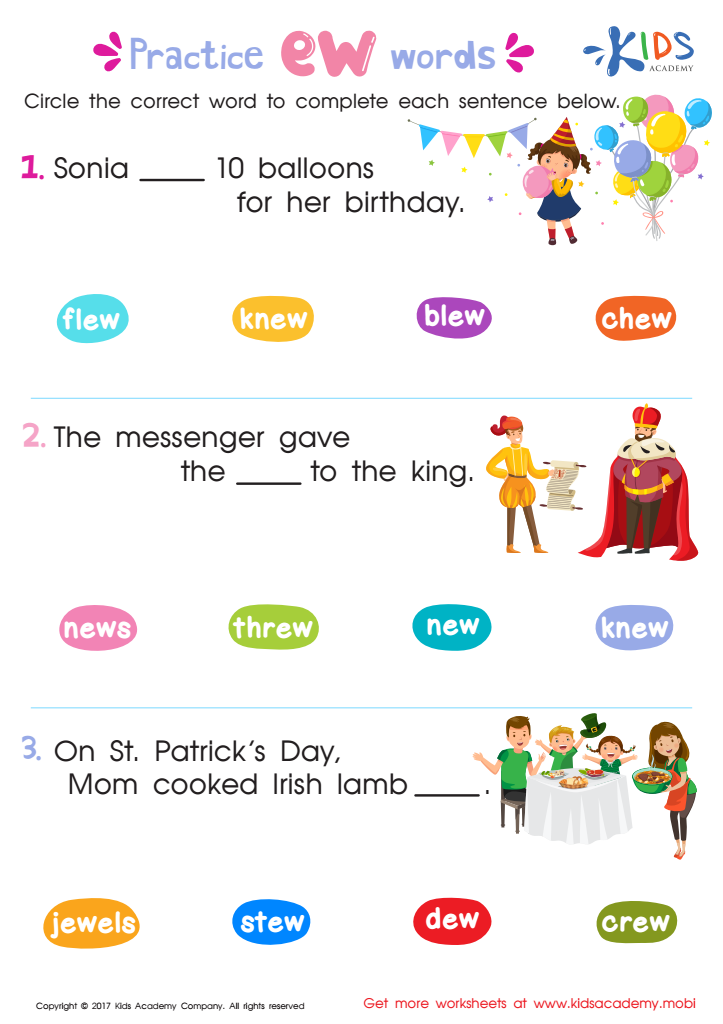
Ew words worksheet
Ew words worksheet

EW Words Worksheet

Practice the diphthong ew and boost your child's vocabulary with this fun ew words worksheet! Filled with illustrations, it will help your child hone their reading and spelling skills. Plus, the tricky words will make it both enjoyable and rewarding!
EW Words Worksheet
Worksheet
Words with sound j Reading Worksheet

Words with sound j Reading Worksheet

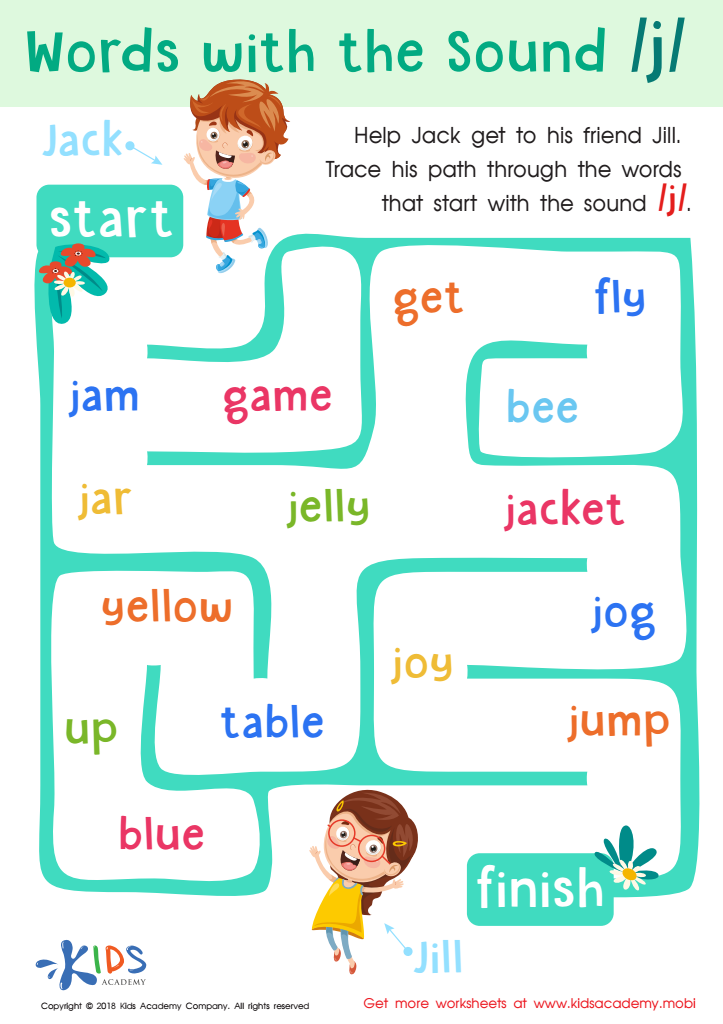
Don't be fooled: The letter J sounds like G in this letter sounds maze! Kids will enjoy helping Jack find Jill by listening to beginning sounds and tracing a path to the exit. Choose words that start with the letter J sound to complete the challenging maze!
Words with sound j Reading Worksheet
Worksheet
Words with Sound Q Reading Worksheet

Words with Sound Q Reading Worksheet

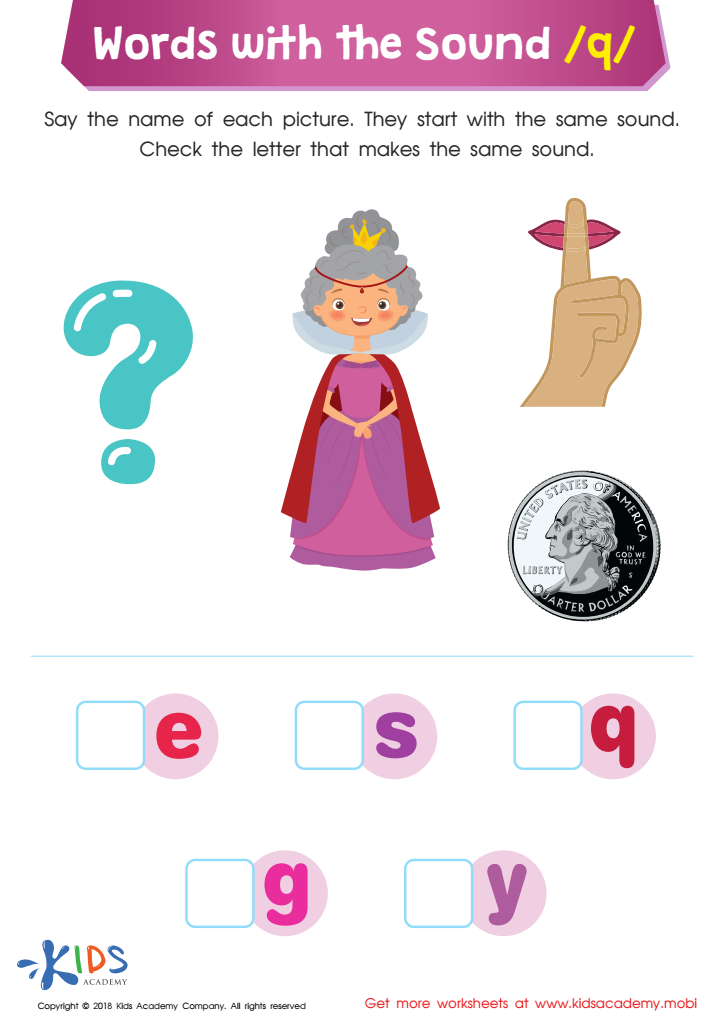
Beginning readers will love this free PDF worksheet! Bright colors and familiar pictures make it fun, as they say the name of each image and work on fine motor skills. Letters “q” is featured among others, helping to recognize and isolate its sound, which is often seen with a “u” behind it.
Words with Sound Q Reading Worksheet
Worksheet
Phonics for Kids | Short Vowel Sound U | PDF Worksheet 2

Short Vowel Sound U Worksheet

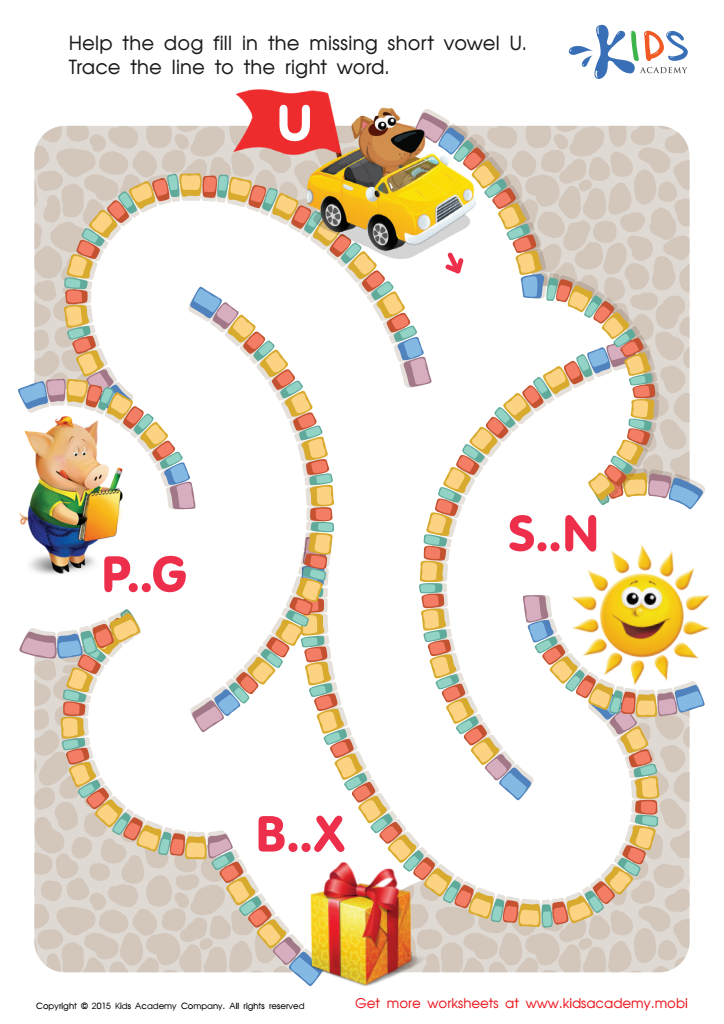
Practice abc phonics to help young learners link sounds to letters. This free printable phonics worksheet helps your kid learn the short vowel sound U. Guide them through the maze to help the dog complete the word "sun". Make sure they say the word out loud to emphasize the short U sound. Check out more phonics worksheets with mazes here.
Short Vowel Sound U Worksheet
Worksheet
Vowel team ai Worksheet

Vowel team ai Worksheet

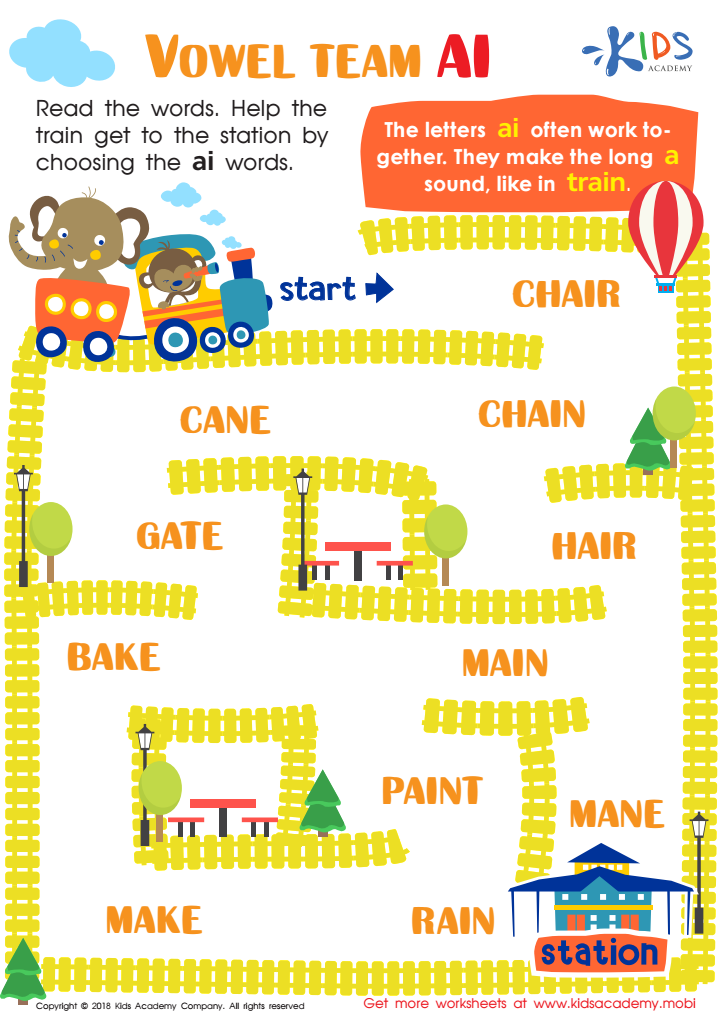
Kids will have a blast learning about the -ai digraph with this fun worksheet. They'll read words with it and practice their motor skills as they help the animal duo get back to the train station. With success, they'll smile and enjoy the activity!
Vowel team ai Worksheet
Worksheet
Long and Short I Worksheet

Long and Short I Worksheet

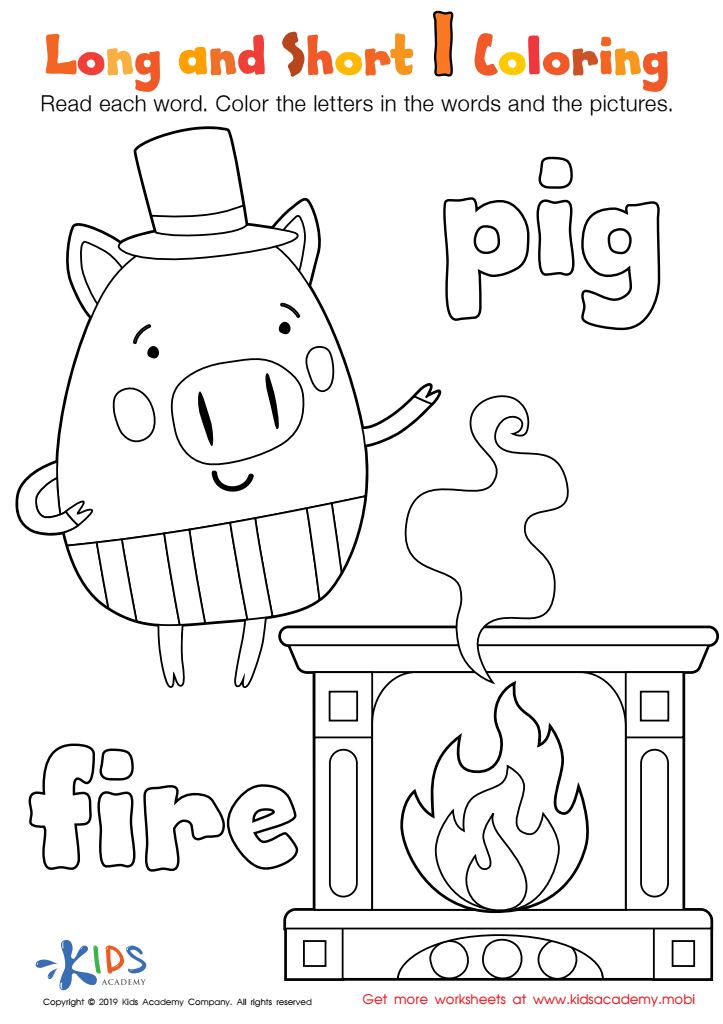
Print the worksheet and have the students read "pig" and "fire". Check for understanding the difference between long and short vowels. Color in words and pictures to make learning phonics fun! This exercise is perfect for introducing the topic to your students.
Download (PDF)
Assign to My Students
Long and Short I Worksheet
Worksheet
Long and Short O Worksheet

Long and Short O Worksheet

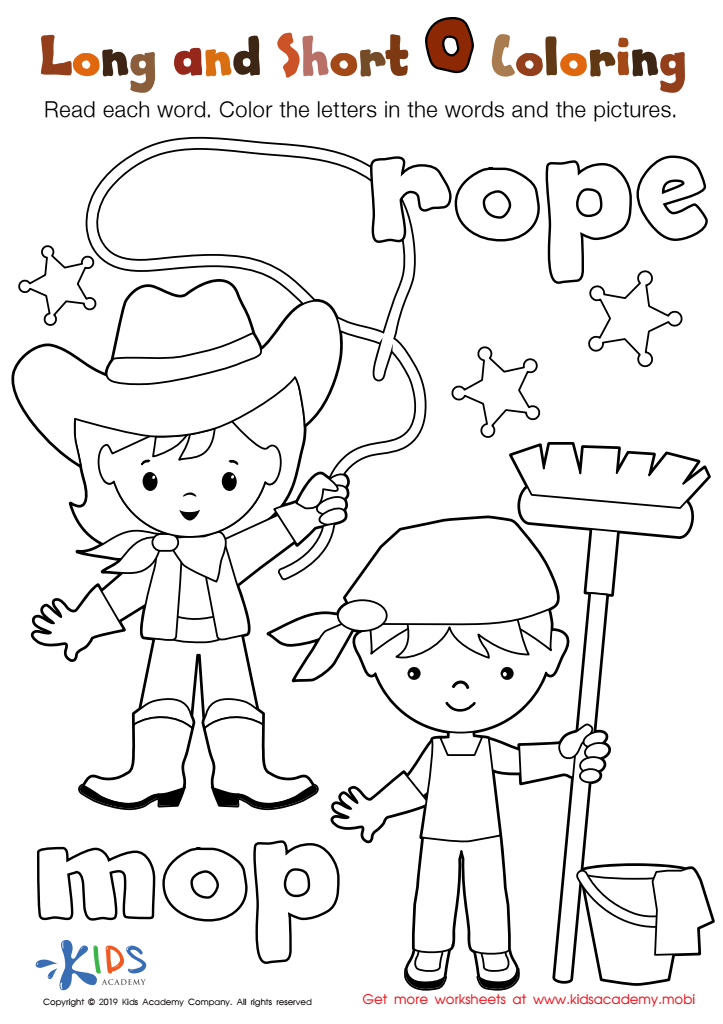
Help your students recognize the difference between long and short «Os» with this fun printout. Let them read and color-in "rope" and "mop" simultaneously. Listen to the different sounds, then color the words and pictures. Great for classes, it'll make your phonics lesson memorable and enjoyable.
Download (PDF)
Assign to My Students
Long and Short O Worksheet
Worksheet


Parents and teachers should prioritize phonics skills development for children aged 4-7 because these foundational skills are crucial for reading proficiency and overall literacy development. Phonics instruction helps children understand the relationships between letters and their corresponding sounds. This understanding forms the basis for decoding words, which is essential as they begin to read independently.

During the ages of 4-7, children are in a critical stage of brain development, making them particularly receptive to learning sounds and letters. Effective phonics instruction fosters not only reading skills but also boosts vocabulary, comprehension, and writing abilities. When children can confidently decode words, they are more likely to engage with reading materials, enhancing their cognitive and imaginative capabilities.

Moreover, strong phonics skills contribute to academic success across subjects, as reading is a foundational skill in all areas of learning. For parents and teachers, supporting phonics development means equipping children with the tools they need to succeed both inside and outside the classroom. By investing time and resources into phonics education, they are fostering a lifelong love for reading, which has far-reaching benefits for personal and academic growth. In short, phonics is essential for literacy development and foundational skills that last a lifetime.