Problem-Solving Skills Phonics Worksheets for Ages 4-7
4 filtered results
-
From - To
Unlock your child's problem-solving potential with our engaging Problem-Solving Skills Phonics Worksheets, designed for ages 4-7. At Kids Academy, we blend phonics practice with critical thinking exercises, making learning interactive and fun. Our expertly crafted worksheets support the development of reading skills while nurturing cognitive abilities essential for problem-solving. Perfect for early learners, each activity builds a foundation in letter recognition, sound blending, and sentence formation. Empower your young learner to tackle challenges confidently, enhancing both their literacy and logical thinking. Dive into a world of fun, education, and growth with our comprehensive phonics resources!
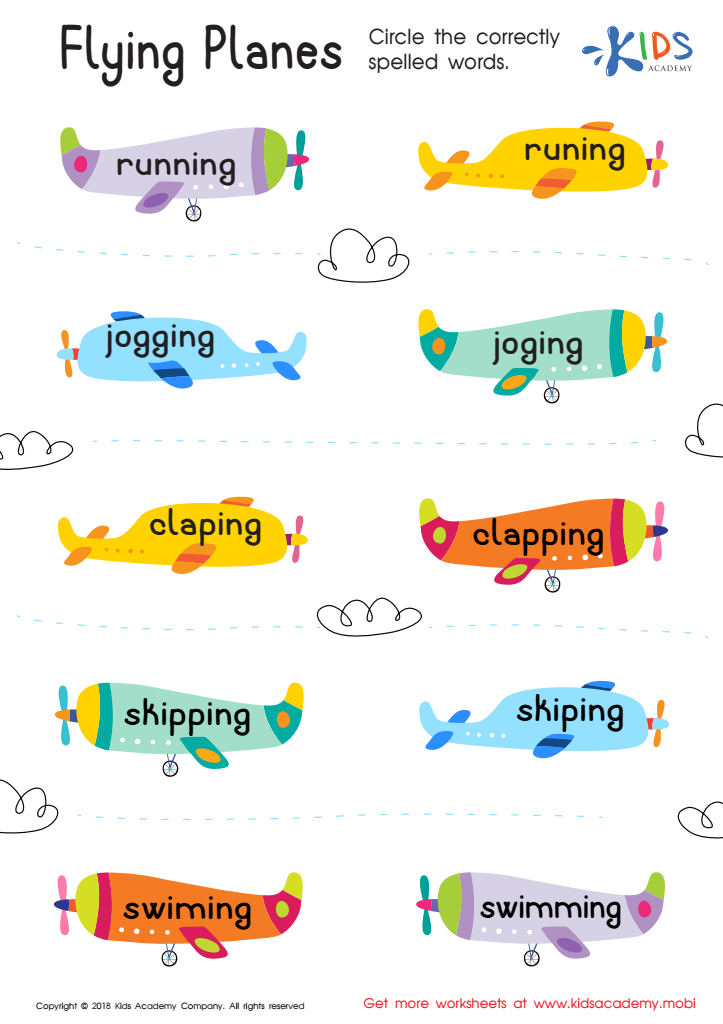
Flying Planes Worksheet
 Assign to My Students
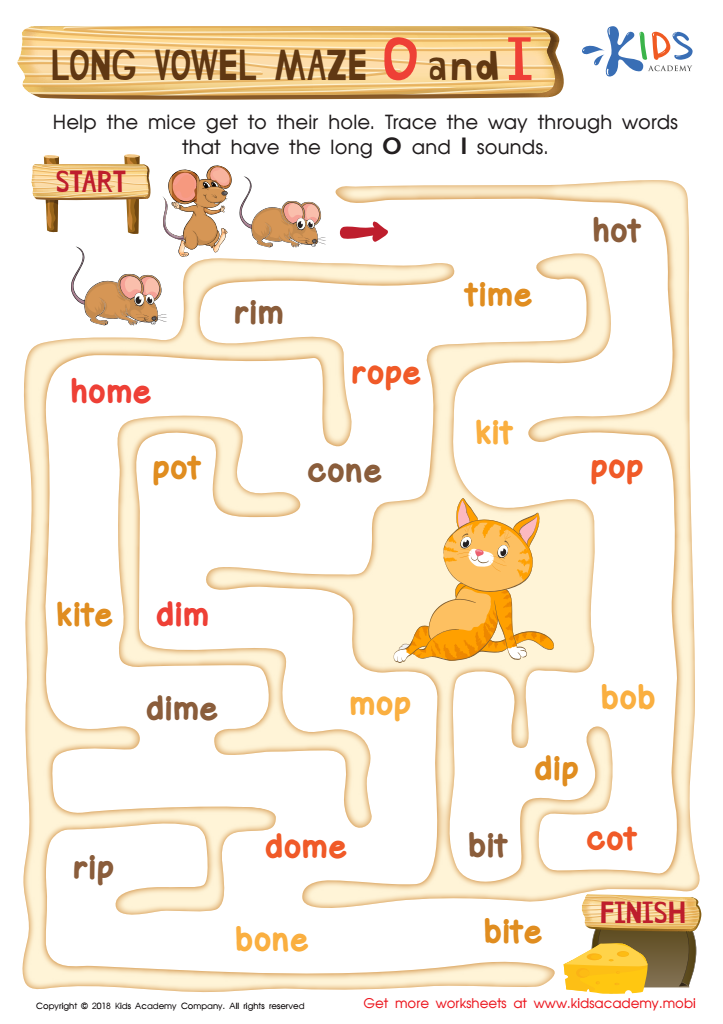
Long Vowel Maze /o/ and /i/ Worksheet
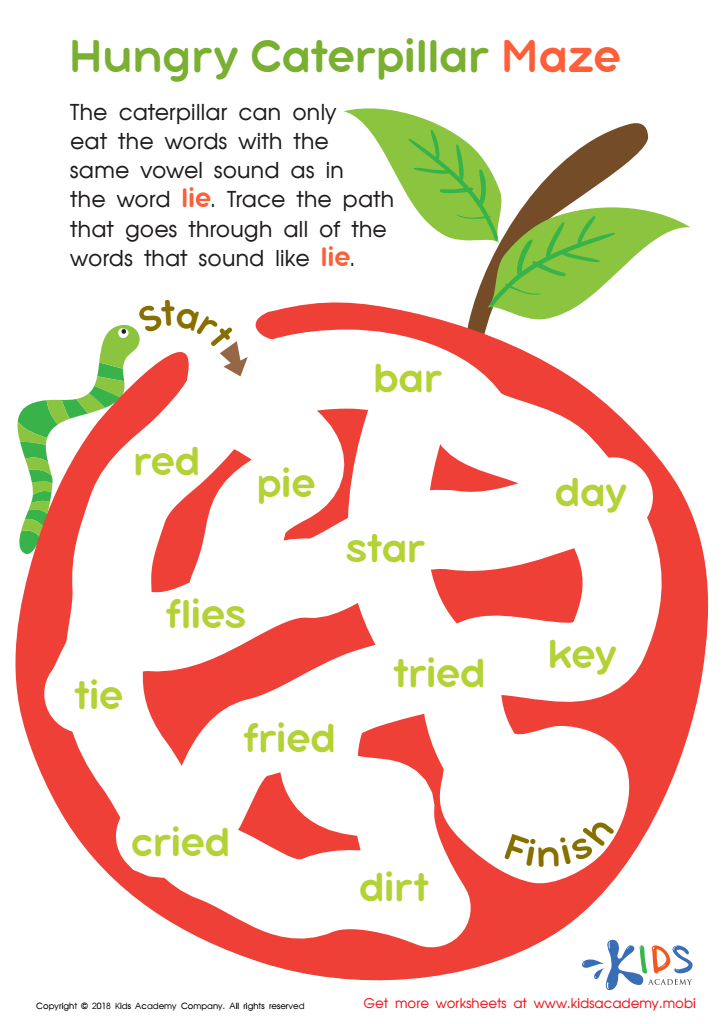
Hungry Caterpillar Maze Worksheet
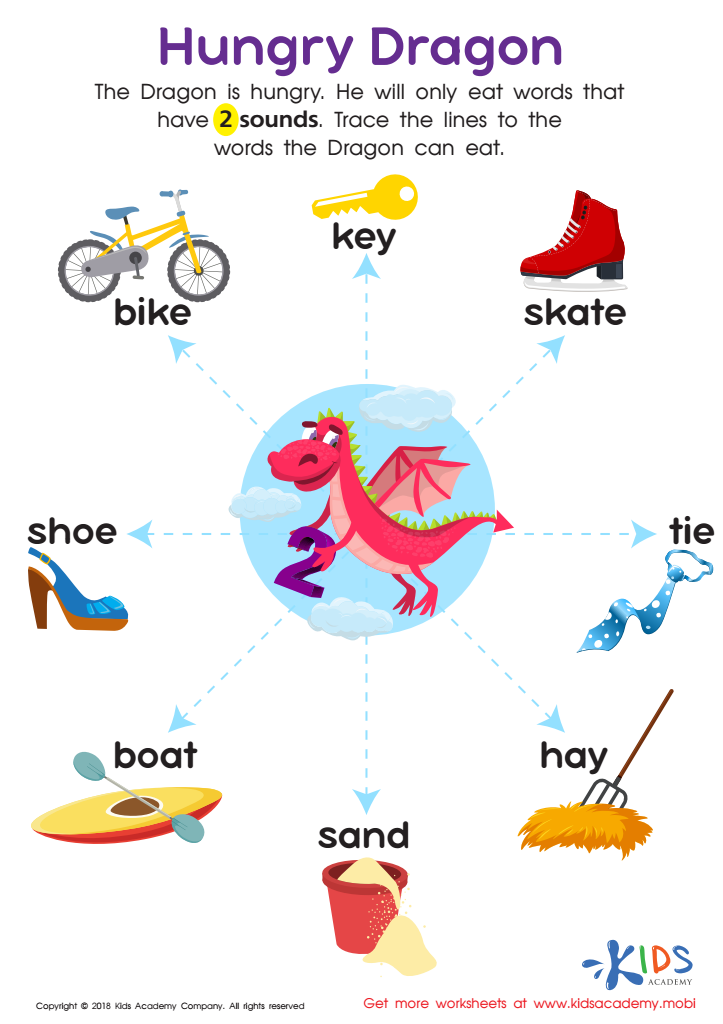
Hungry Dragon Worksheet








Parents and teachers should prioritize problem-solving skills and phonics for children aged 4-7 because these foundational abilities are crucial for early cognitive development and literacy. During these formative years, children's brains are incredibly adaptive and primed for learning. Phonics, the method of teaching reading by correlating sounds with letters or groups of letters, is essential as it helps children decode new words, thereby improving their reading fluency and comprehension. When children can read well, they can explore new ideas and expand their knowledge independently.
Simultaneously, problem-solving skills teach children to approach challenges logically and creatively. These skills are not only relevant for academic tasks but also for everyday life scenarios. By instilling problem-solving abilities early, children learn to think critically, make decisions, and develop resilience. For example, if they encounter a difficult word while reading, problem-solving skills enable them to use context clues or sound out the word rather than giving up.
Incorporating both phonics and problem-solving into early education sets a strong foundation for future academic and personal success. These skills promote a love for learning, ensuring that children remain curious, confident, and capable of tackling complex problems as they grow older. Therefore, focusing on these areas is a significant step towards holistic child development.







