Our Reading Skills Development Phonics Worksheets for Ages 4-7 are designed to make learning to read an exciting and rewarding experience for young learners. Each worksheet is thoughtfully crafted to strengthen foundational reading skills using engaging and age-appropriate activities. Focused on phonics, these worksheets help children associate sounds with letters, enhance their vocabulary, and master word recognition. With vibrant illustrations and fun exercises, our worksheets capture kids' attention and ensure effective learning. Ideal for use at home or in the classroom, these resources support early reading skills and set the stage for lifelong literacy success. Unlock your child's reading potential today!

Check out this FREE Trial Lesson on Phonics for age 4-7!

One-to-one Letter-sound Correspondence

Favorites
With answer key
Interactive
  • 4-7
  • Reading skills development
  • Phonics
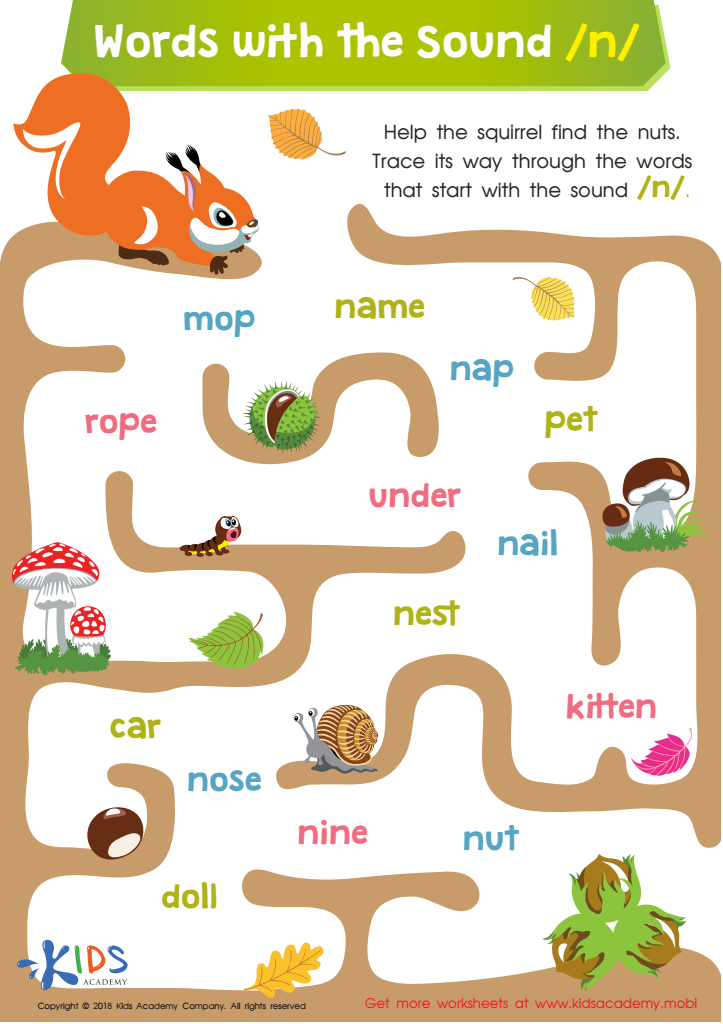
Words with Sound N Reading Worksheet

Words with Sound N Reading Worksheet

Young readers will love the colourful pictures and simple sight words on this download worksheet. They can trace their way through the maze as they help the cute squirrel reach his acorns, finding words with the sound "n" as they go. It's a fun way to work on reading skills - they won't even realise they're learning!
Words with Sound N Reading Worksheet
Worksheet
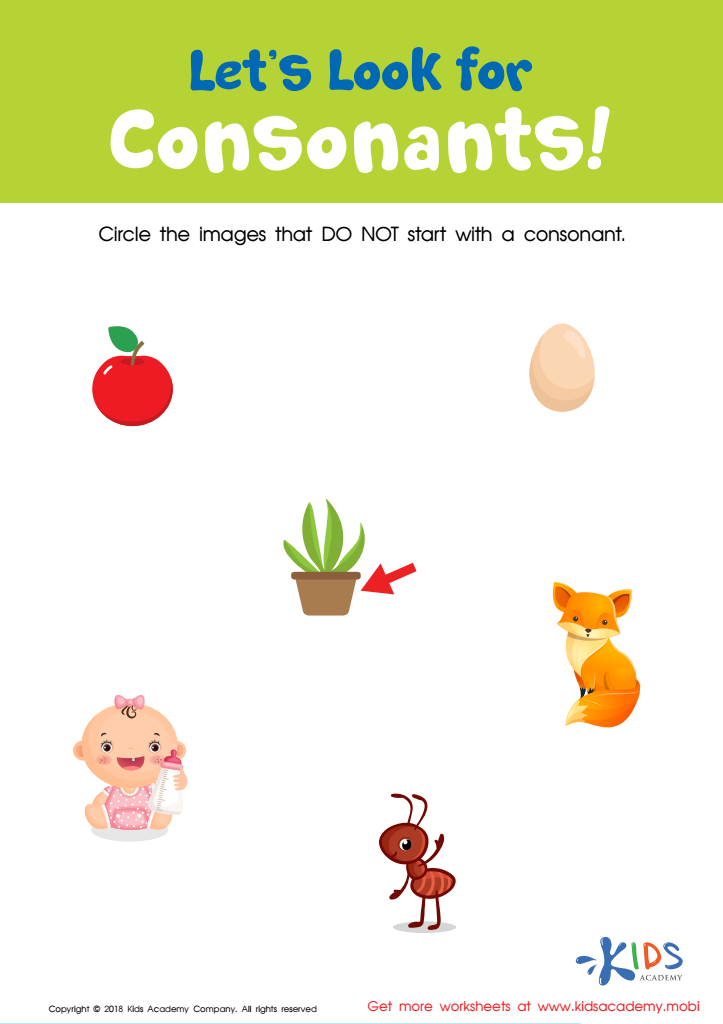
Let's Look for Consonants Worksheet

Let's Look for Consonants Worksheet

Help kids learn consonants and words that start with them. Ask them to recite the alphabet, then explain consonants are all letters but the 5 vowels. Use the worksheet to ask them to circle items without a consonant. Emphasize that's 21 consonants.
Let's Look for Consonants Worksheet
Worksheet
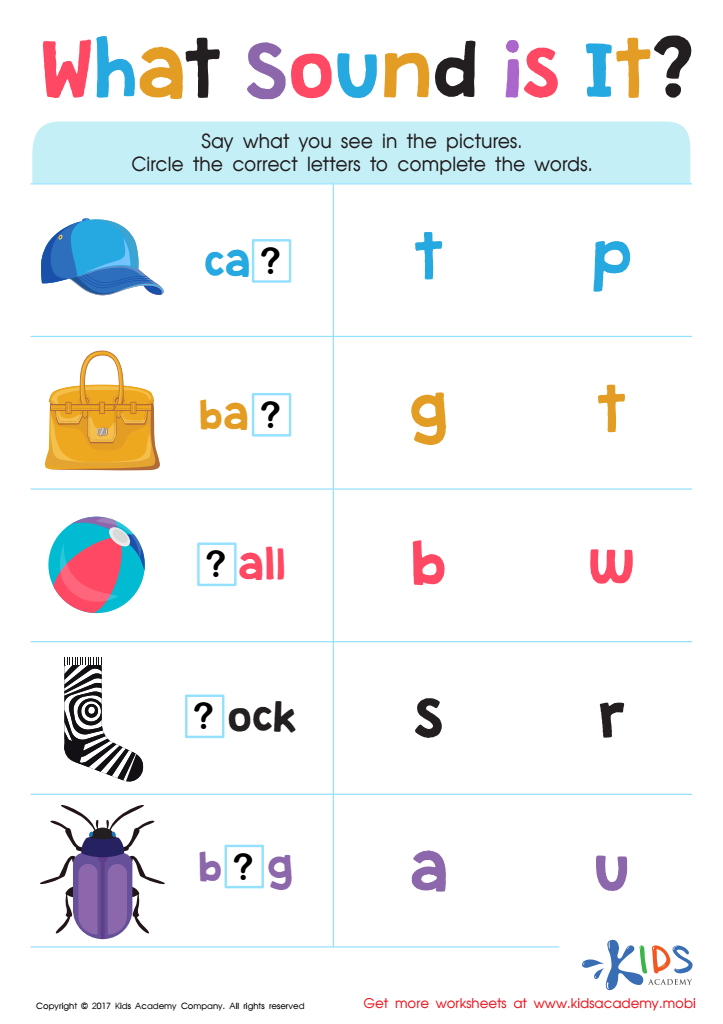
What Sound Is it? Worksheet

What Sound Is it? Worksheet

Have your child say the words for the pictures on this fun worksheet. As he or she sounds out the word, your child will use the provided letter choices to complete it, building reading and phonics skills. Visual cues make it easier to identify the correct beginning, middle, or end sound.
What Sound Is it? Worksheet
Worksheet
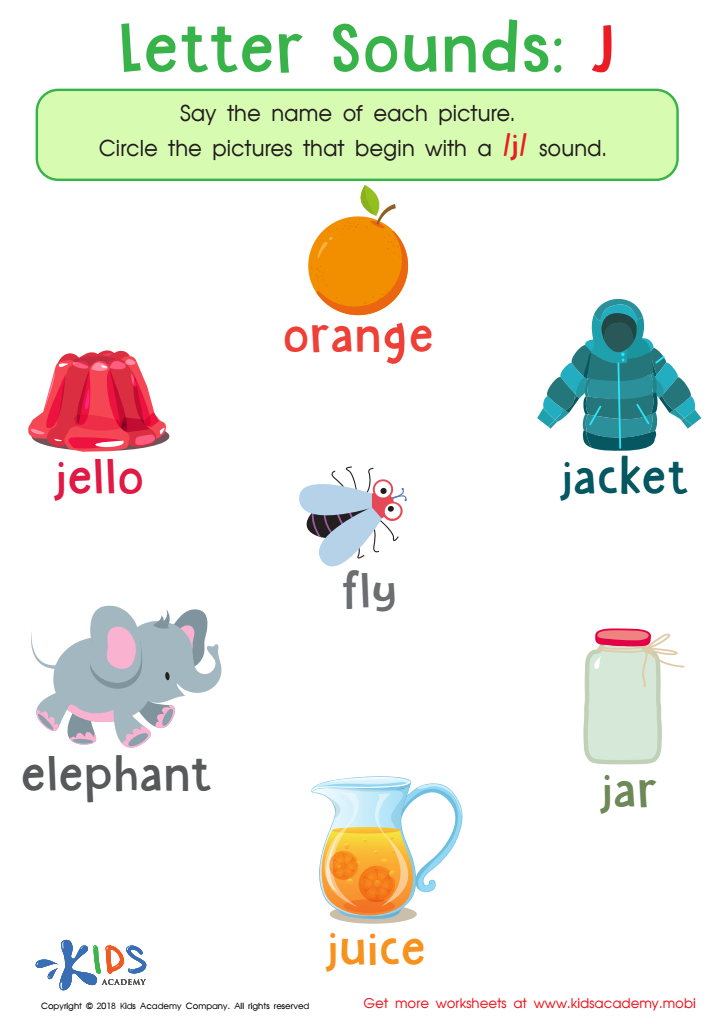
Letter Sounds: J Printable Worksheet

Letter Sounds: J Printable Worksheet

Preschoolers can learn to identify letter sounds by focusing on beginning sounds. This cute and colorful worksheet reviews the hard “j” sound. Kids can point it out by naming the words and circling only those starting with the “j” sound. Read the text out loud and listen closely!
Letter Sounds: J Printable Worksheet
Worksheet
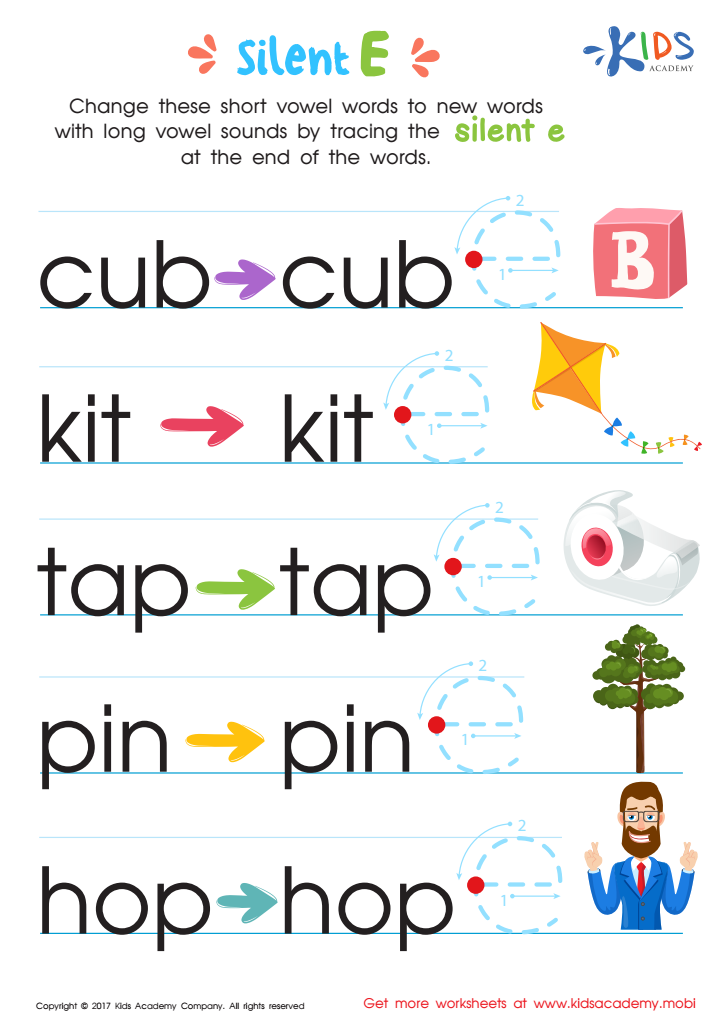
Silent e worksheet
Silent e worksheet

Silent E Words Worksheet

The letter e is amazing - it changes words without making a sound! Boost spelling and phonics with this Silent e worksheet from Kids Academy - fun and colorful!
Silent E Words Worksheet
Worksheet
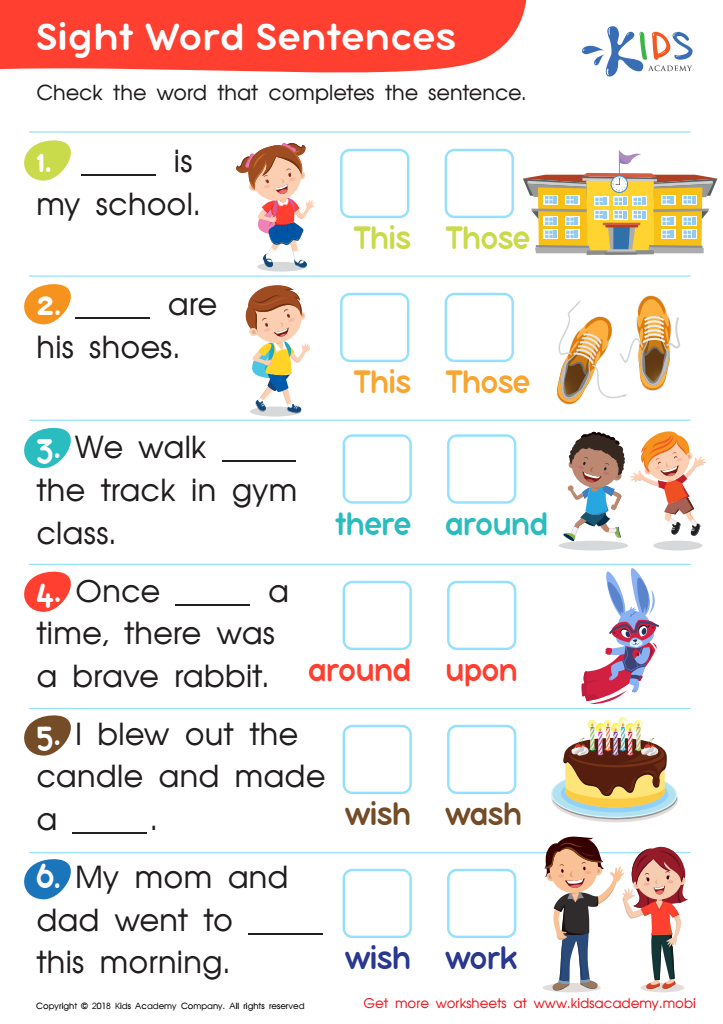
Sight Word Sentences Worksheet

Sight Word Sentences Worksheet

Improve reading fluency! Have students fill in the blank with the correct sight word to complete sentences. Sight words are often tricky to decode - they don't follow phonics or spelling rules. To read smoothly, young learners must know them by memory. Use this printable and help kids master their sight words!
Sight Word Sentences Worksheet
Worksheet
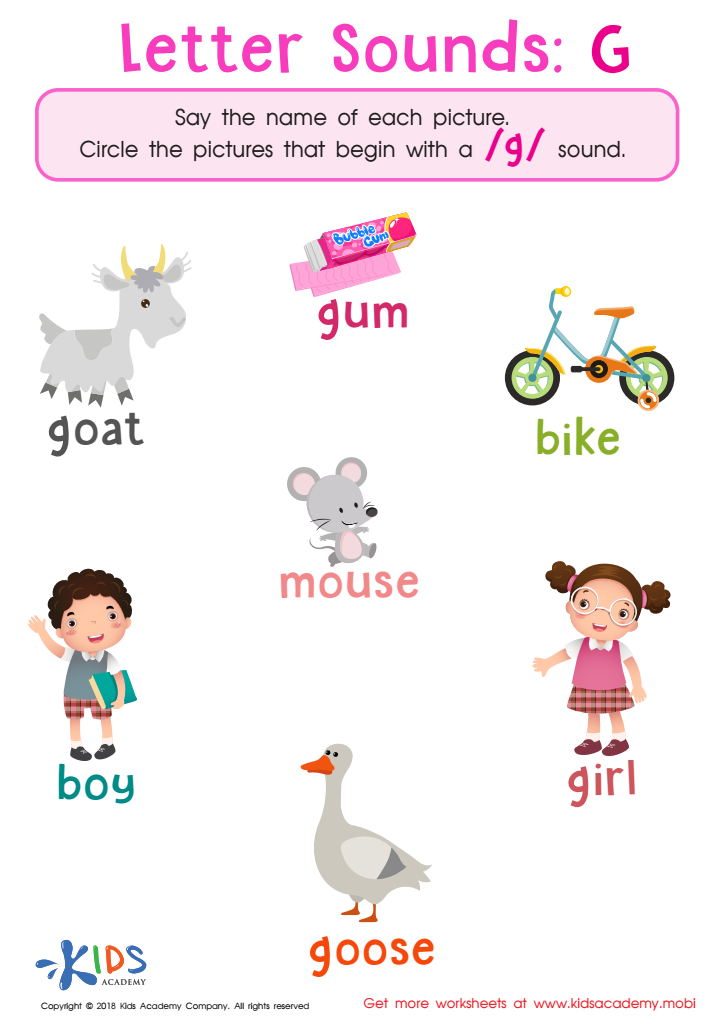
Letter G Sounds Worksheet

Letter G Sounds Worksheet

Help emerging readers build confidence by giving them practice identifying hard "G" with this free PDF worksheet. They'll use picture clues to name the words, and practice fine-motor skills tracing circles around the corresponding pics. It's a great way to introduce or reinforce hard "G" words.
Letter G Sounds Worksheet
Worksheet


Reading skills development is crucial for children ages 4-7 because it lays the foundation for their future academic success and cultivates a lifelong love for reading. At this age, children are particularly receptive to learning new skills, and developing strong phonics skills is essential. Phonics involves understanding the relationship between sounds and their corresponding letters, which is a fundamental step towards becoming proficient readers.

When children successfully grasp phonics, they can decode written language more efficiently, leading to improved reading fluency and comprehension. This comprehension is essential; it allows children to understand and engage with a wide range of texts, fostering their overall learning across subjects. Additionally, early success in reading boosts a child's confidence and motivation, encouraging a positive attitude toward learning.

Moreover, strong reading skills are directly tied to better performance in school. Children with proficient reading abilities have an easier time understanding questions in various subjects, leading to better academic results. Teachers and parents play a pivotal role in guiding children through this critical process by providing structured, supportive, and engaging phonics practice.

Investing time and effort into phonics and reading skills not only enhances academic performance but also equips children with critical communication skills that will benefit them throughout their lives. This is why phonics for ages 4-7 should be a priority for parents and educators.