Rhyme recognition Phonics Worksheets for Ages 4-7
4 filtered results
-
From - To
Enhance your child’s phonics skills with our engaging Rhyme Recognition Worksheets designed for ages 4-7! These worksheets promote early literacy by helping children identify, create, and manipulate rhyming words through fun, interactive exercises. Perfect for parents and educators, our resources support phonemic awareness, vocabulary development, and reading fluency. Involve your young learners in recognizing sound patterns, fostering creativity, and building confidence in their reading abilities. With colorful illustrations and age-appropriate activities, these printable worksheets make learning enjoyable and effective. Start your phonics journey today and watch your child flourish in their language skills! Explore more at Kids Academy!
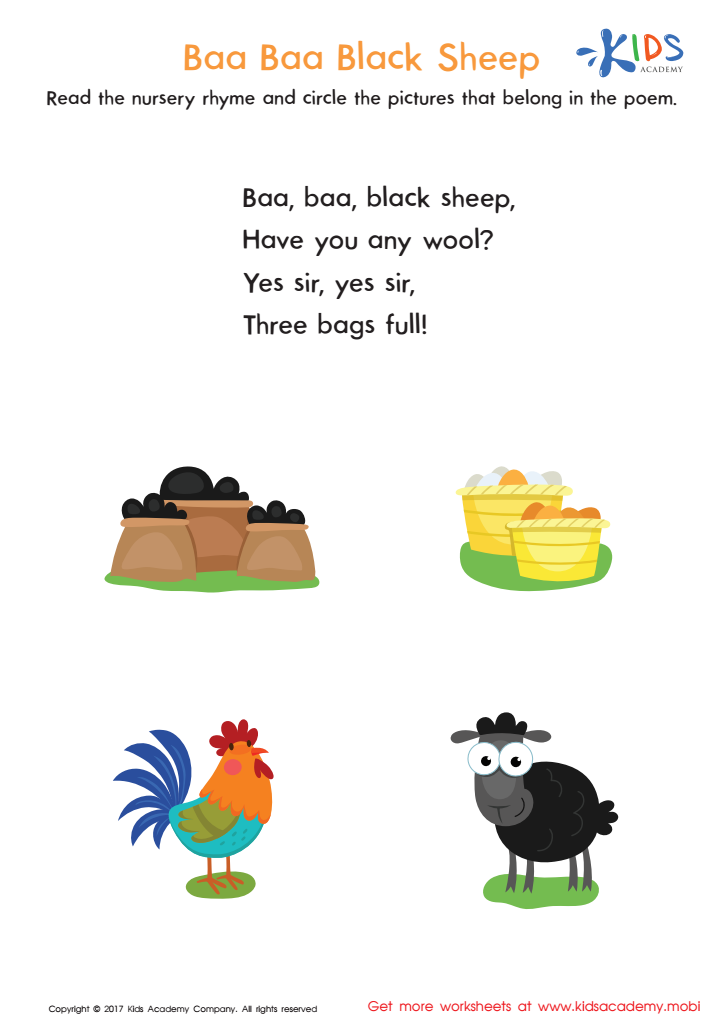
Baa Baa Black Sheep Printable
 Assign to My Students
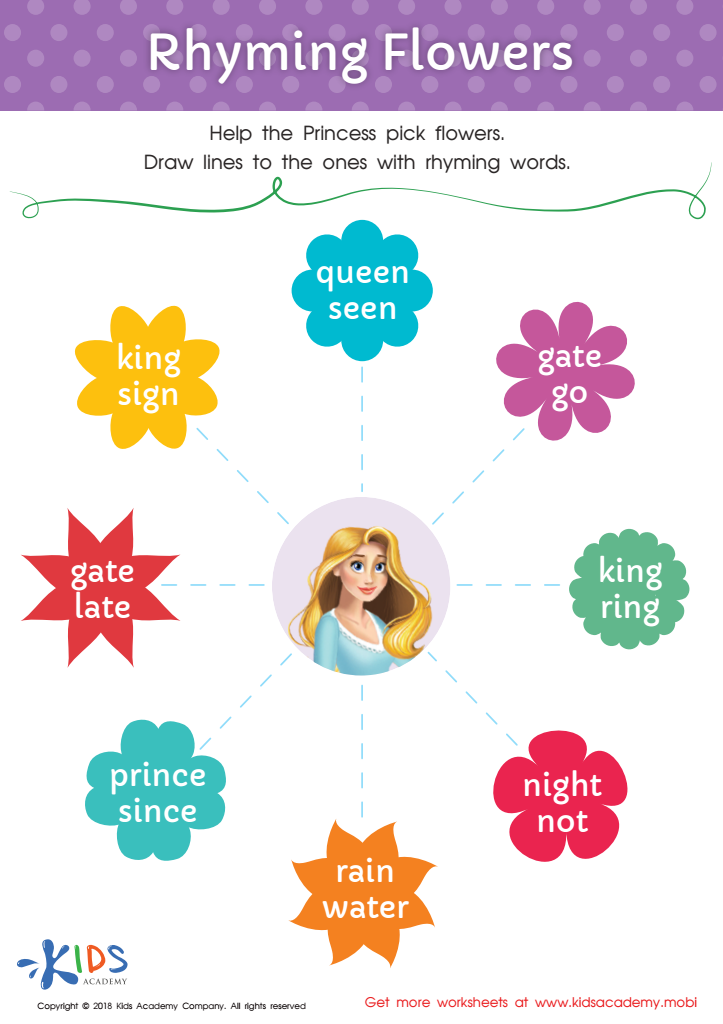
Rhyming Flowers Worksheet
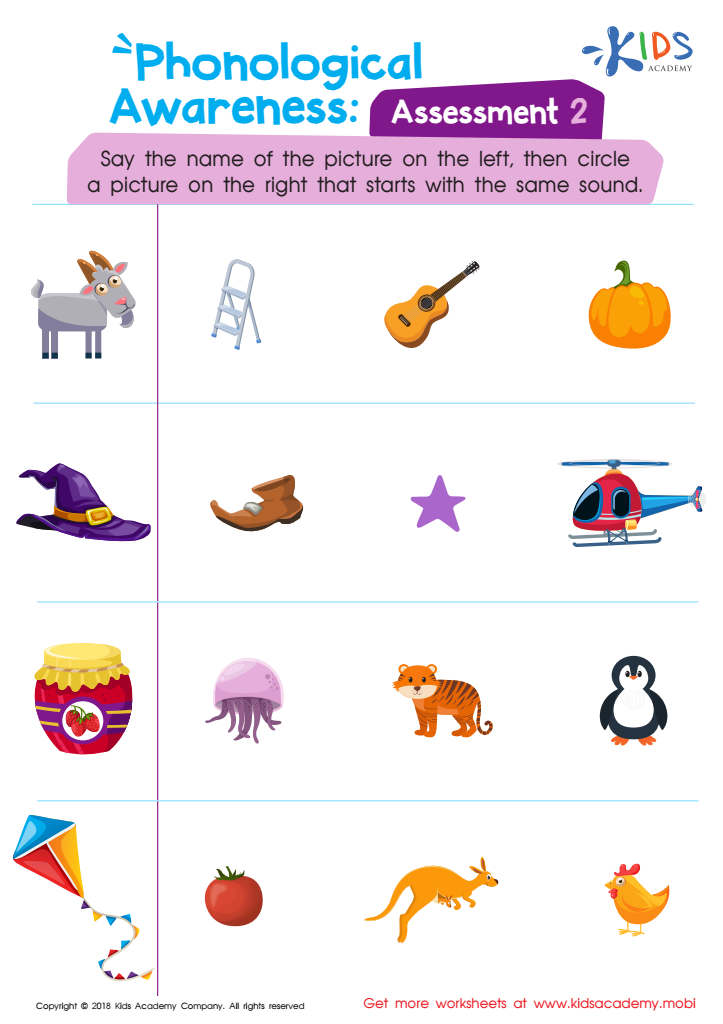
Phonological Awareness: Assessment 2 Worksheet
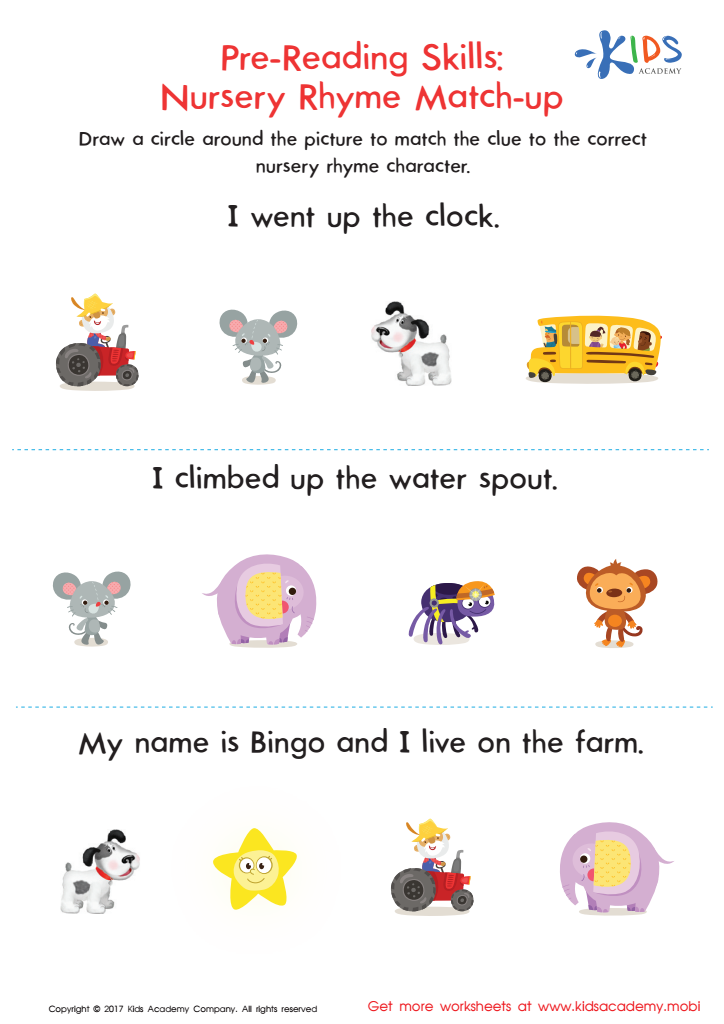
Nursery Rhyme Match–Up Worksheet








Rhyme recognition and phonics are crucial elements of early literacy development for children aged 4-7. During these formative years, children are developing foundational reading skills that significantly impact their future academic success. Rhyme recognition helps children identify and manipulate sounds in language, enhancing their phonemic awareness. This skill is vital for understanding how letters correspond to sounds, ultimately aiding in decoding words while reading.
For parents and teachers, fostering rhyme recognition can be incorporated through engaging games, songs, and stories that emphasize rhythmic patterns and sound associations. By exposing children to rhymes, educators can enhance listening skills, vocabulary acquisition, and spelling proficiency. Additionally, as children learn to recognize rhyming patterns, they build confidence in their reading abilities, making them more enthusiastic about learning.
Moreover, the ability to recognize and produce rhymes supports later writing skills as it encourages experimentation with language. Research indicates that children who are proficient in phonics perform better in reading assessments, making it essential for parents and teachers to prioritize these skills. Ultimately, rhyme recognition and phonics serve as stepping stones to academic literacy, preparing children not just for reading, but for a lifelong love of learning.







