Reading Skills Short Vowels Worksheets for Ages 4-7
4 filtered results
Difficulty Level
Grade
Age
-
From - To
Subject
Activity
Standards
Enhance your child's reading abilities with our engaging short vowels worksheets, specifically designed for kids aged 4-7. These worksheets focus on developing essential reading skills by introducing short vowel sounds through fun activities and colorful illustrations. Young learners will enjoy matching words with corresponding images, filling in the blanks, and practicing phonics—all while building their confidence in reading. Our resources make learning enjoyable and interactive, laying a solid foundation for future literacy success. Perfect for home or classroom use, these worksheets are an excellent way to spark a love for reading in your little ones! Start their reading adventure today!
Favorites
With answer key
Interactive
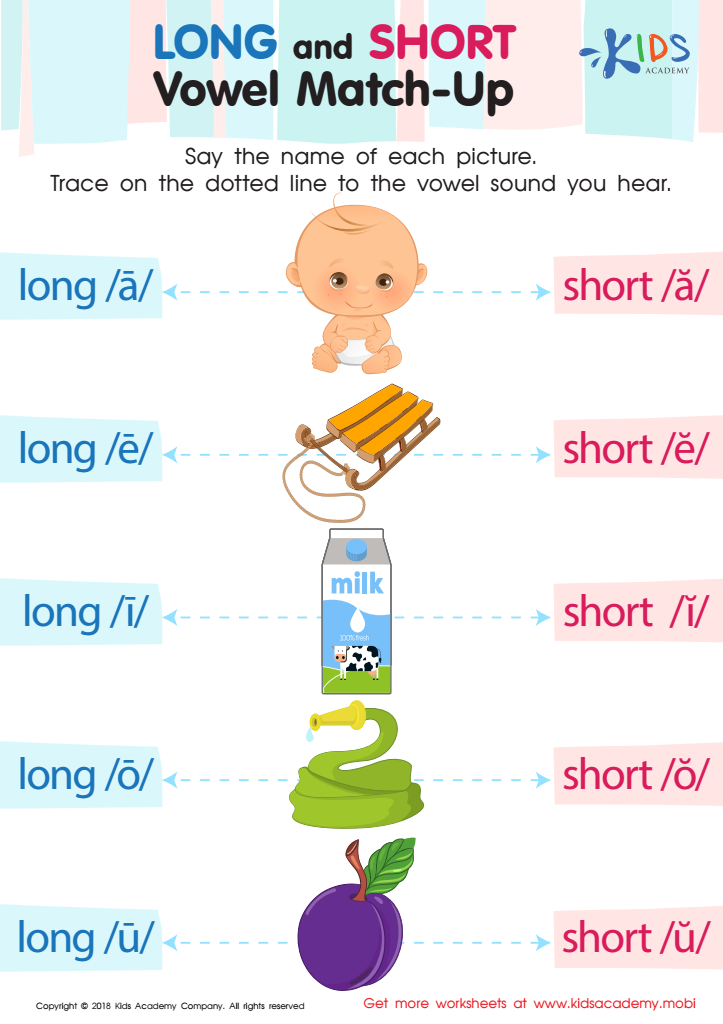
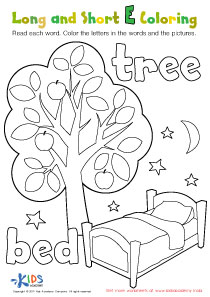
Long and Short Vowel Match up Reading Worksheet
Help your reader build confidence and refine their decoding skills! This worksheet combines long and short vowel recognition with a traceable component to improve fine motor skills. Your learner will name each picture and trace the dotted lines to get to the correct vowel sounds.
 Assign to My Students
Long and Short Vowel Match up Reading Worksheet
Worksheet
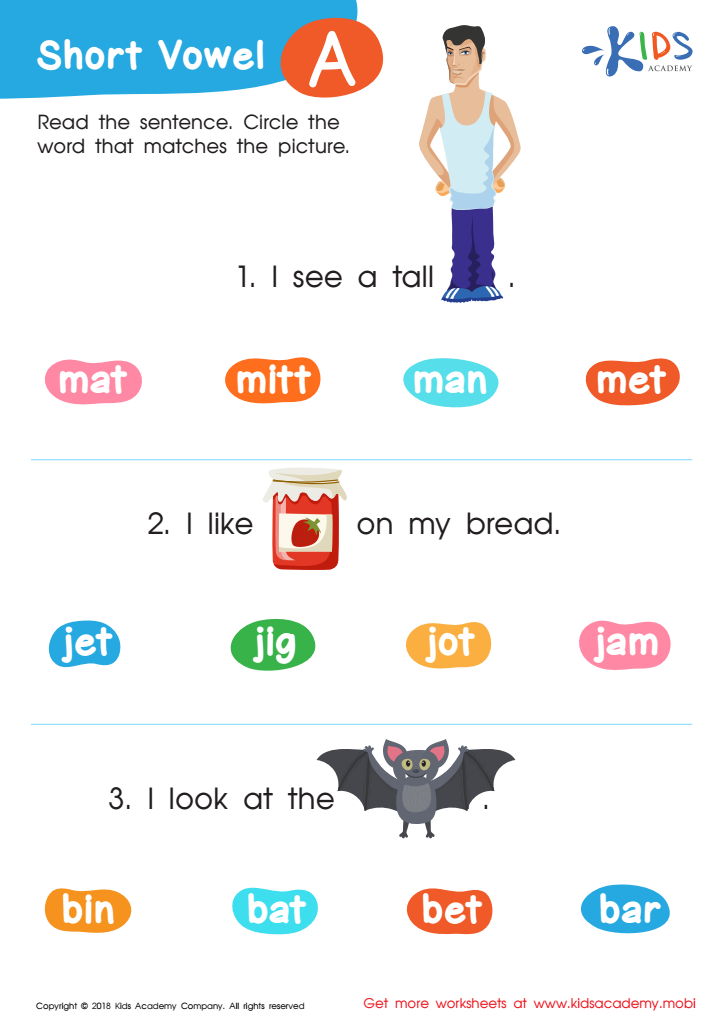
Short Vowel /a/ Worksheet
This free PDF helps new readers use sight words and pictures to read basic sentences. Then, they use accompanying word choices to find the correct word with the short a vowel sound. A key early reading skill, discriminating between short vowel sounds can be tricky in monosyllabic words, so use this PDF to help your reader reinforce it.
Short Vowel /a/ Worksheet
Worksheet
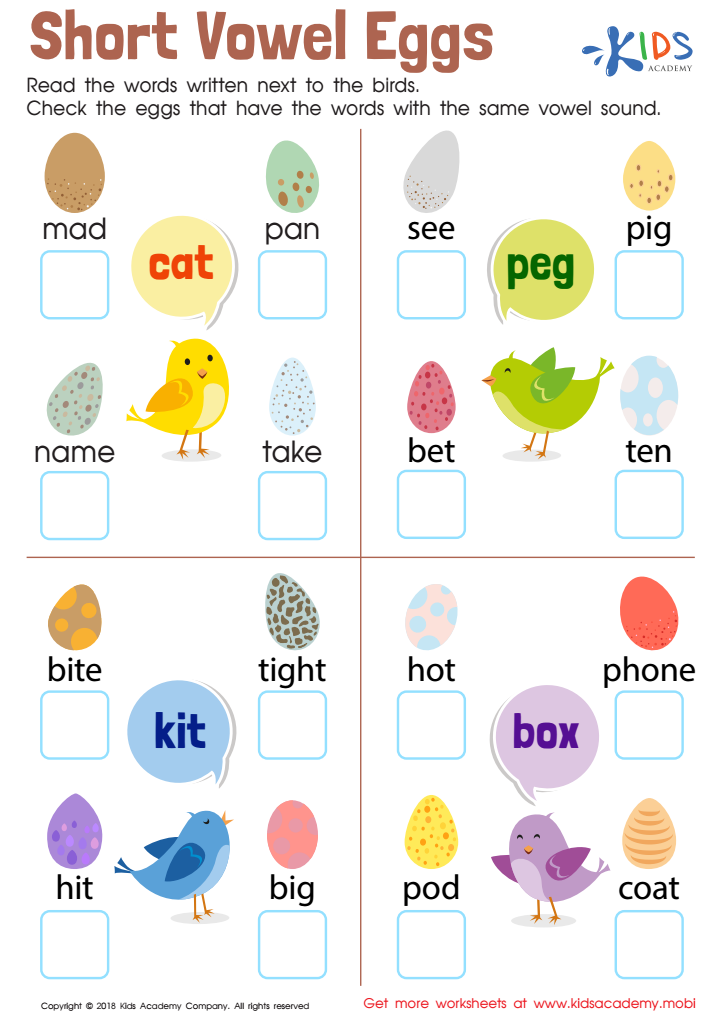
Short Vowel Eggs Worksheet
Your students will love helping these birdies pick the short vowel eggs! Have them read the words in the thought bubbles, then check off the boxes with the same short vowel sounds. The bright colors of this free Worksheet will draw them in and get them practicing their vowels!
Short Vowel Eggs Worksheet
Worksheet
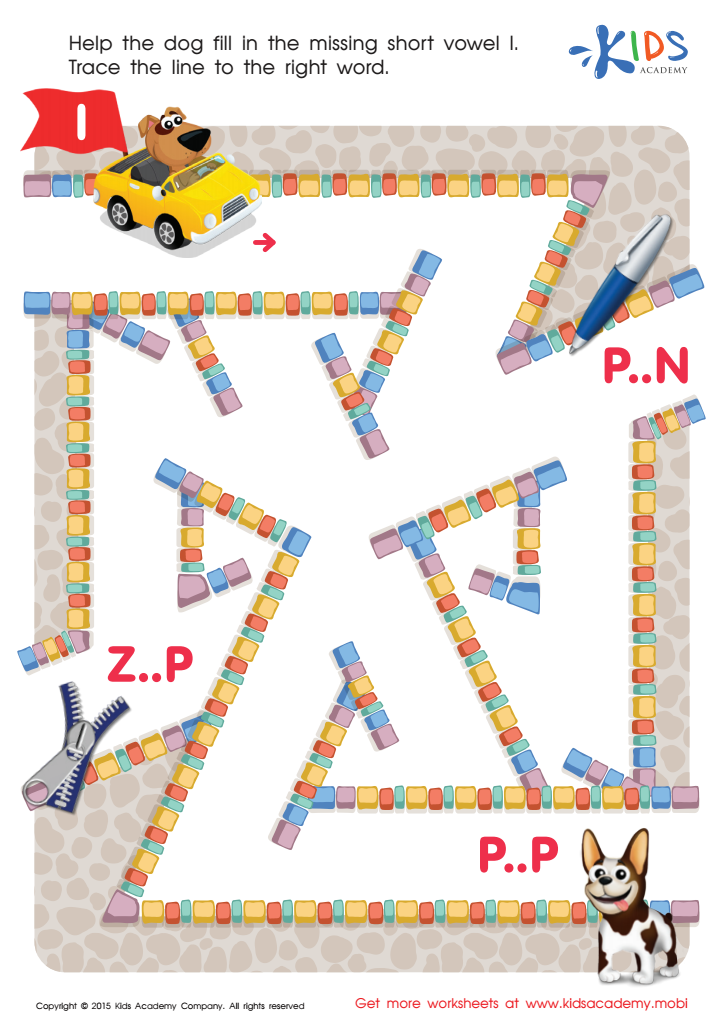
Short Vowel Sound I Worksheet
This free printable phonics worksheet will get your kid prepped for reading! It's a maze to help the dog complete the word “zip” with the missing letter I. Have your kid say the word aloud to learn the I sound. It's a great way to practice reading, writing and spelling skills. Check out here for more phonics worksheets!
Short Vowel Sound I Worksheet
Worksheet
Join Kids Academy for Free
Who is primarily going to use this learning content?



Parents and teachers should prioritize reading skills, particularly short vowels, for children aged 4-7 because they are foundational to literacy development. Short vowels are critical in helping young learners decode words, allowing them to progress from letter recognition to fluent reading. Mastering short vowels fosters phonemic awareness, which is essential for spelling and reading comprehension.
At this age, children are developing their understandings, such as blending sounds to form words. Recognizing and using short vowels equips them with the tools needed to tackle simple texts, giving them confidence and encouraging a love for reading. Moreover, fluency in short vowels can significantly enhance children’s listening and speaking skills, reinforcing their overall communication abilities.
Teachers and parents play an essential role in creating engaging and supportive environments to promote these skills through playful phonics activities, read-aloud sessions, and interactive games. Investing time and effort into short vowel mastery leads to long-term academic success, setting a strong groundwork for future learning. Additionally, proficient reading skills contribute positively to a child's social development, enabling them to interact more meaningfully with peers and educators. Overall, focusing on short vowels is a critical step in nurturing lifelong readers and learners.