Fine motor skills development Tracing Letters Worksheets for Ages 4-7
3 filtered results
-
From - To
Enhance your child's handwriting and fine motor skills with our "Tracing Letters Worksheets for Ages 4-7." Designed for young learners, these engaging worksheets guide children through tracing both uppercase and lowercase letters. Perfect for preschool and early elementary students, they encourage proper pencil grip, hand-eye coordination, and a steady hand. Our exercises make learning fun and effective with playful illustrations and easy-to-follow instructions. Boost confidence, encourage precision, and set a solid foundation for writing with these top-notch educational resources. Visit Kids Academy for a variety of printable activities that cater to sharpening your child’s developmental skills.
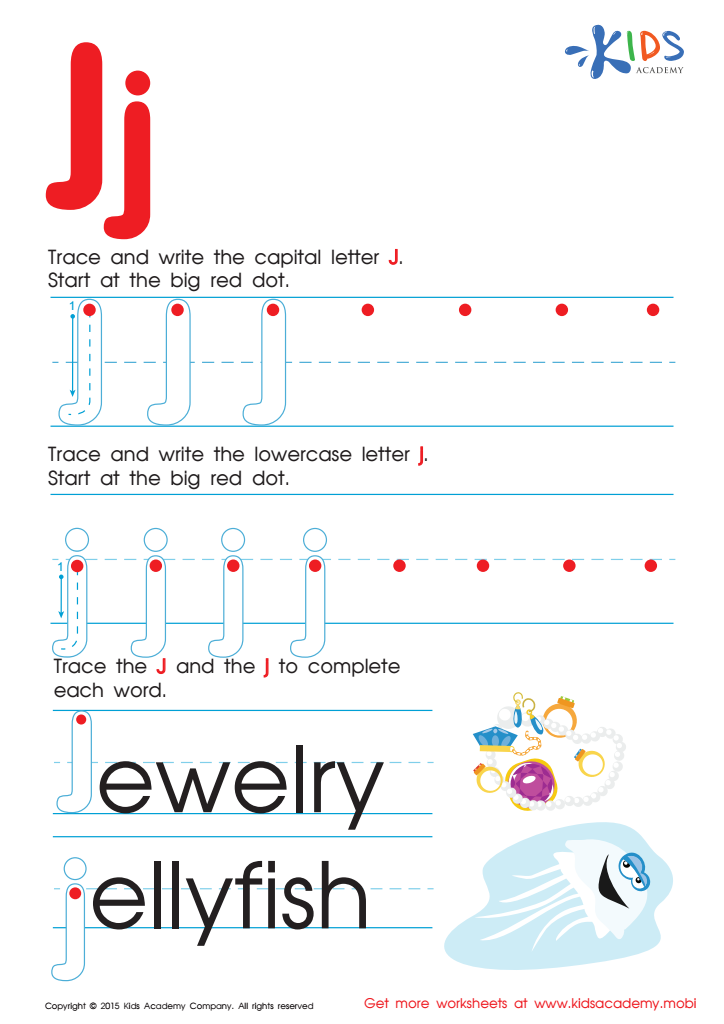
Letter J Tracing Page
 Assign to My Students
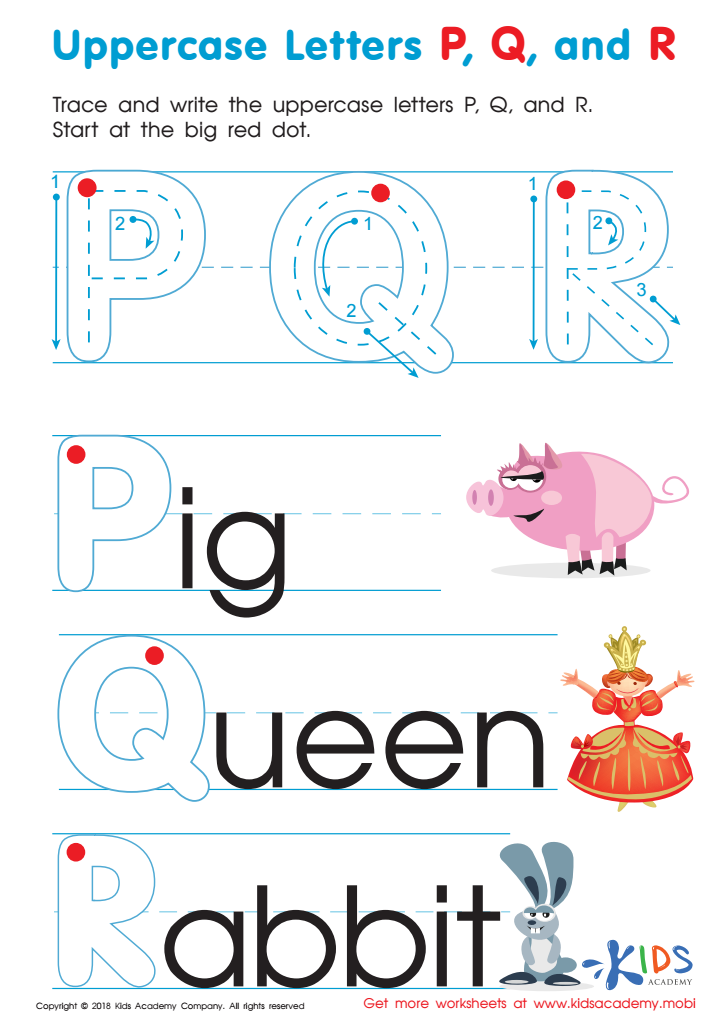
Uppercase Letters P, Q, and R Worksheet
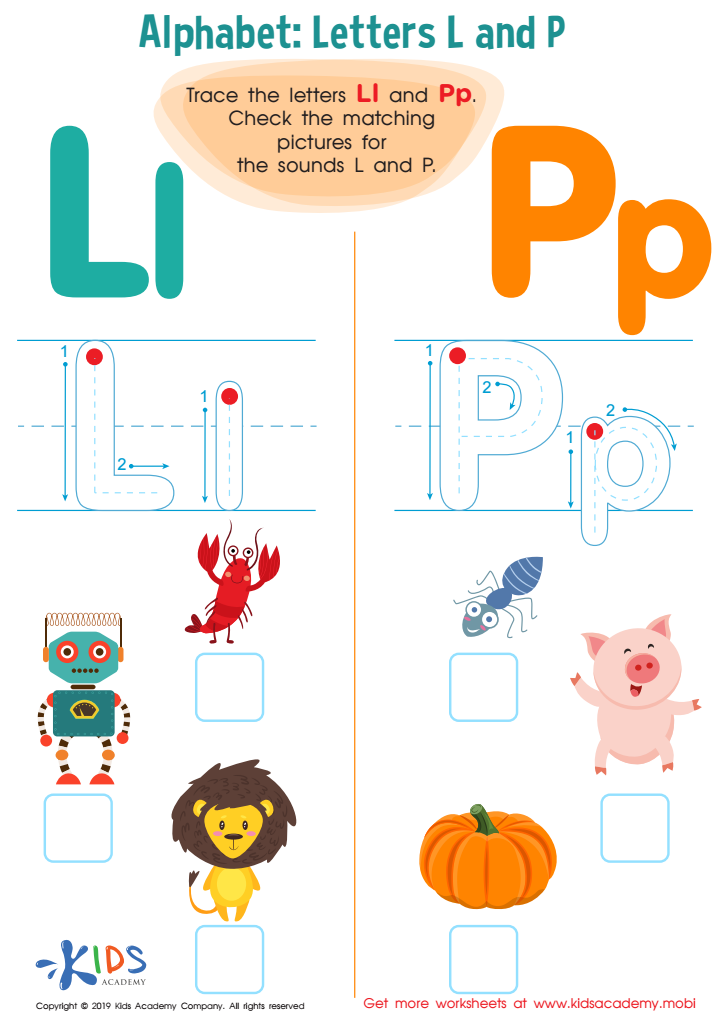
Letter L and P Tracing Worksheet







Fine motor skills development at ages 4-7 is crucial as it directly impacts a child's ability to perform essential daily tasks and sets the foundation for future academic and personal success. Tracing letters is an effective and engaging way to enhance these skills in young children. It helps strengthen hand and finger muscles, improving coordination and dexterity, which are necessary for activities like writing, buttoning a shirt, tying shoelaces, and using utensils.
By focusing on letter tracing, children also develop the precision and control required for writing. This practice not only prepares them for kindergarten and elementary-level handwriting but also bolsters their cognitive skills, such as following instructions, recognizing patterns, and understanding spatial relationships. As children learn to form letters properly, they build confidence and motivation, contributing to a positive attitude toward learning.
Moreover, tracing letters fosters early literacy skills. Children become familiar with the alphabet, letter shapes, and sounds, laying the groundwork for reading and language development. Integrating fine motor activities like letter tracing into daily routines helps children develop these critical skills in a fun, supportive environment, ultimately promoting holistic growth and ensuring they are well-prepared for future educational challenges.








