Hand-eye Coordination Tracing Letters Worksheets for Ages 4-7
6 filtered results
-
From - To
Enhance your child's hand-eye coordination with our engaging tracing letters worksheets, designed for children ages 4-7. These fun and interactive worksheets promote essential skills as young learners trace both uppercase and lowercase letters. By focusing on precise movements, children develop fine motor skills and boost their confidence in writing. Accompanied by vibrant illustrations, our tracing exercises make learning the alphabet exciting and enjoyable. Whether at home or in the classroom, these worksheets provide a perfect blend of skill-building and creativity. Download our hand-eye coordination tracing letters worksheets today and watch your child flourish in their educational journey!
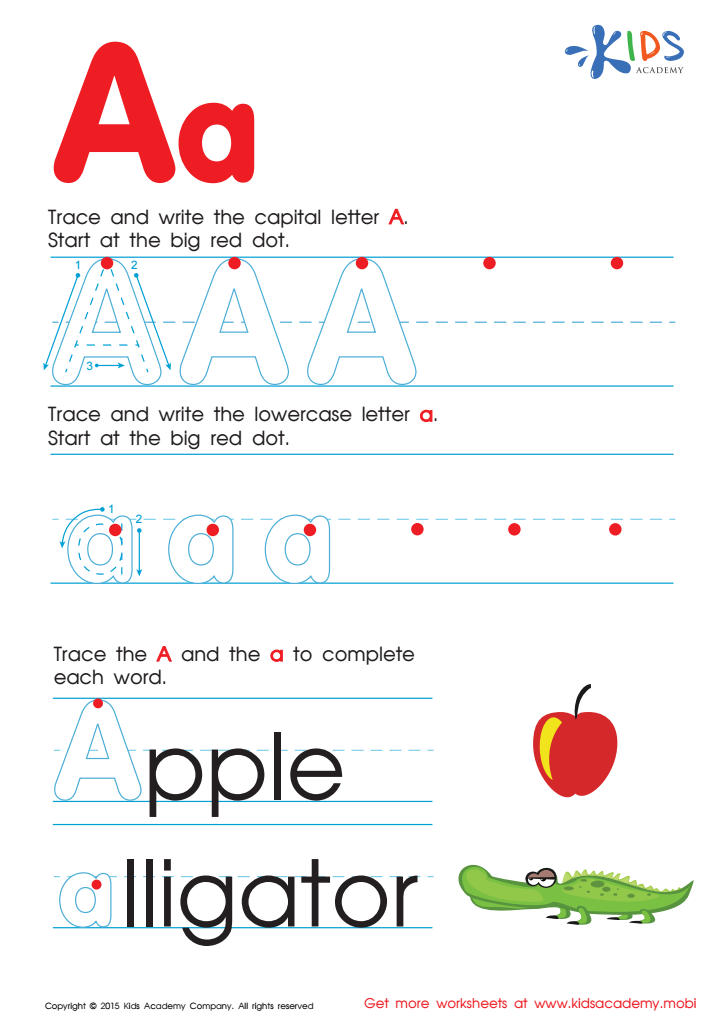
Letter A Tracing Page
 Assign to My Students
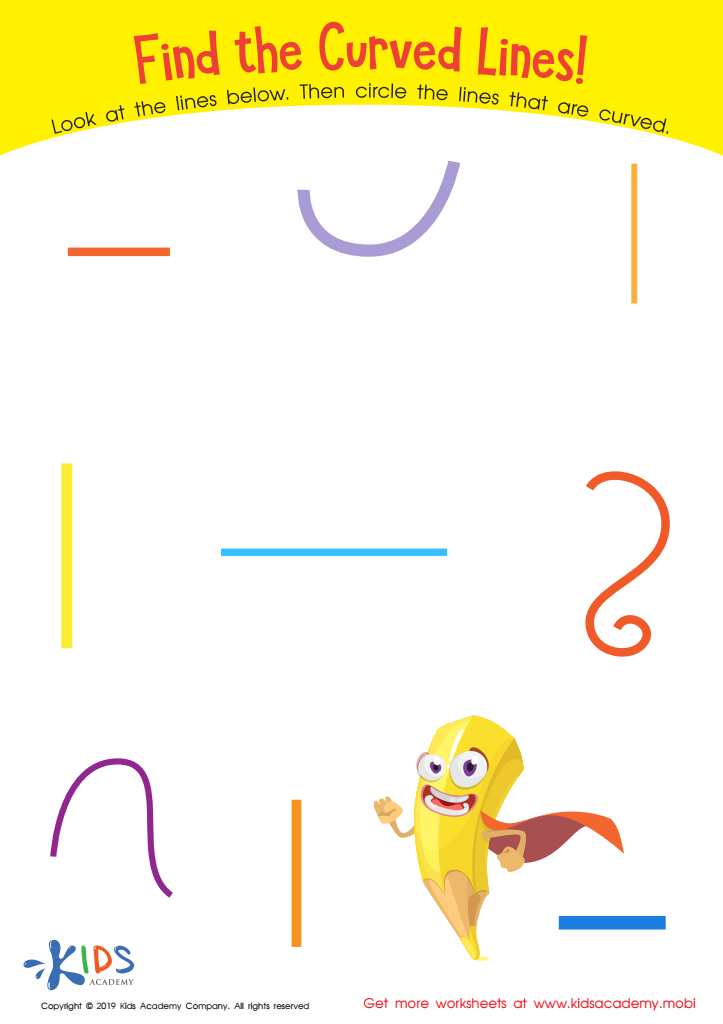
Find the Curved Lines! Worksheet
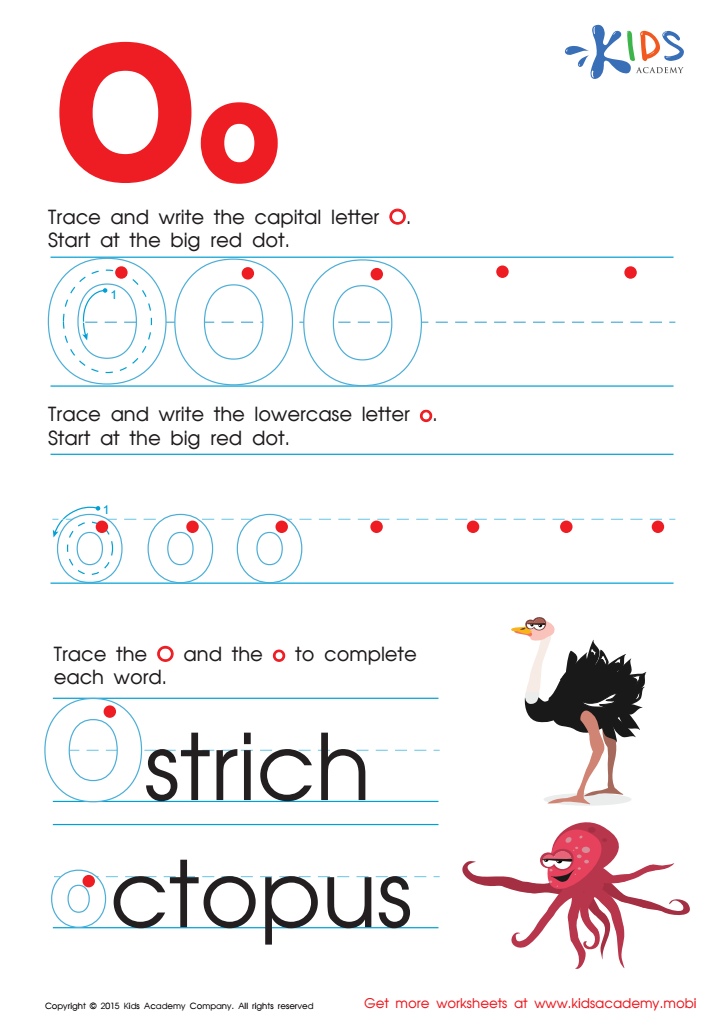
Letter O Tracing Page

Letter P Tracing Page

Letter H Tracing Page

Letter D Tracing Page







Hand-eye coordination is a crucial skill for children, particularly those aged 4-7, as it forms the foundation for various developmental milestones. Tracing letters helps to strengthen this coordination through the integration of visual perception and motor skills. As children trace, they learn to control their hand movements in conjunction with their visual input, enhancing their ability to write, draw, and engage in activities that require precision.
Moreover, developing hand-eye coordination during these formative years directly influences literacy and cognitive skills. Mastery of letter forms allows children to progress in reading and writing, fostering greater confidence in their overall academic abilities. Additionally, these activities promote fine motor skills, necessary for tasks ranging from using scissors to buttoning clothing, contributing to overall independence.
Parents and teachers should care because investing time in such exercises provides a playful yet effective approach to learning that yields long-term benefits. By nurturing hand-eye coordination, adults empower children to approach future academic and life challenges with resilience. Furthermore, it enhances social interaction, as many tracing activities can be done collaboratively, thus supporting emotional and social development. In summary, tracing letters is not only about learning letters but also about cultivating essential skills for lifelong learning.








