
Writing practice Tracing Letters Worksheets for Ages 4-7
4 filtered results
Difficulty Level
Grade
Age
-
From - To
Subject
Activity
Standards
Boost your child’s handwriting skills with our Tracing Letters Worksheets for ages 4-7! Designed to engage young learners, these worksheets provide a fun way to practice letter formation, improve fine motor skills, and enhance writing confidence. Each activity offers clear, guided instructions to help children from preschool to early elementary master both uppercase and lowercase letters. Ideal for classroom use or at-home learning, our vibrant worksheets capture your child's interest while laying a solid foundation for literacy. Witness their excitement as they trace, write, and soar through the alphabet with ease and enjoyment!
Favorites
With answer key
Interactive

Letter A Tracing Page
Trace and write the letter "A"! Start with the big red dot, then do the capital and lowercase versions. Then write it again with two words - apple and alligator. Download more tracing worksheets at Kids Academy.
 Assign to My Students
Letter A Tracing Page
Worksheet
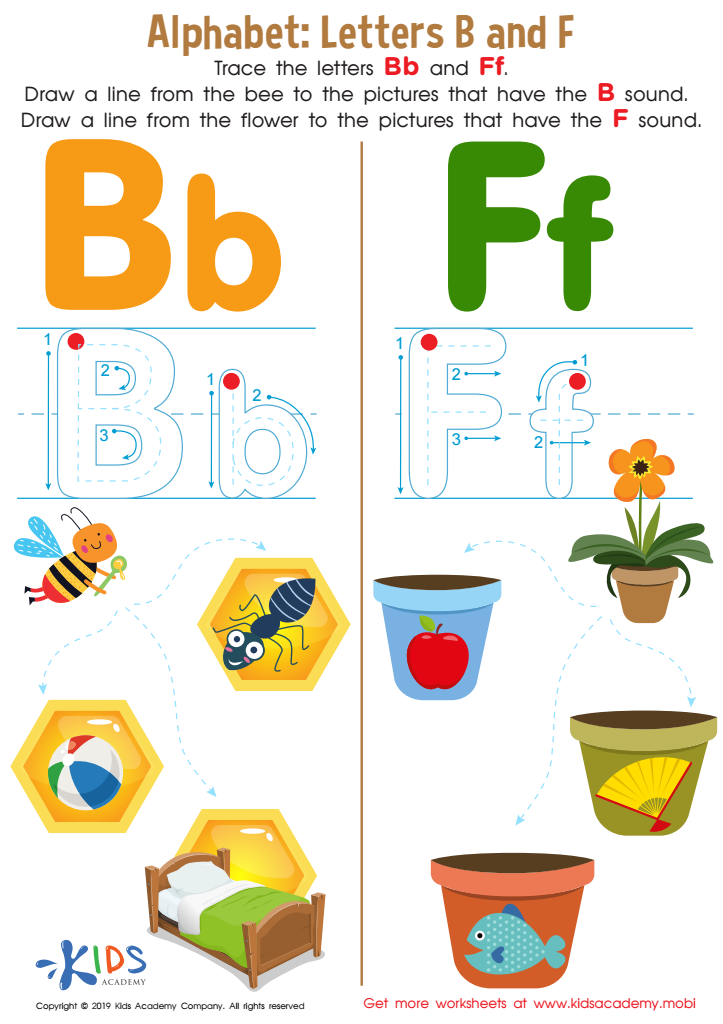
Letters B and F Tracing Worksheet
Does your kid know the letters B and F? This tracing sheet helps them practice by tracing each letter, then drawing a line from a bee and a flower to related words. Recognizing words with pictures develops a great skill, and students will master it in no time!
Letters B and F Tracing Worksheet
Worksheet
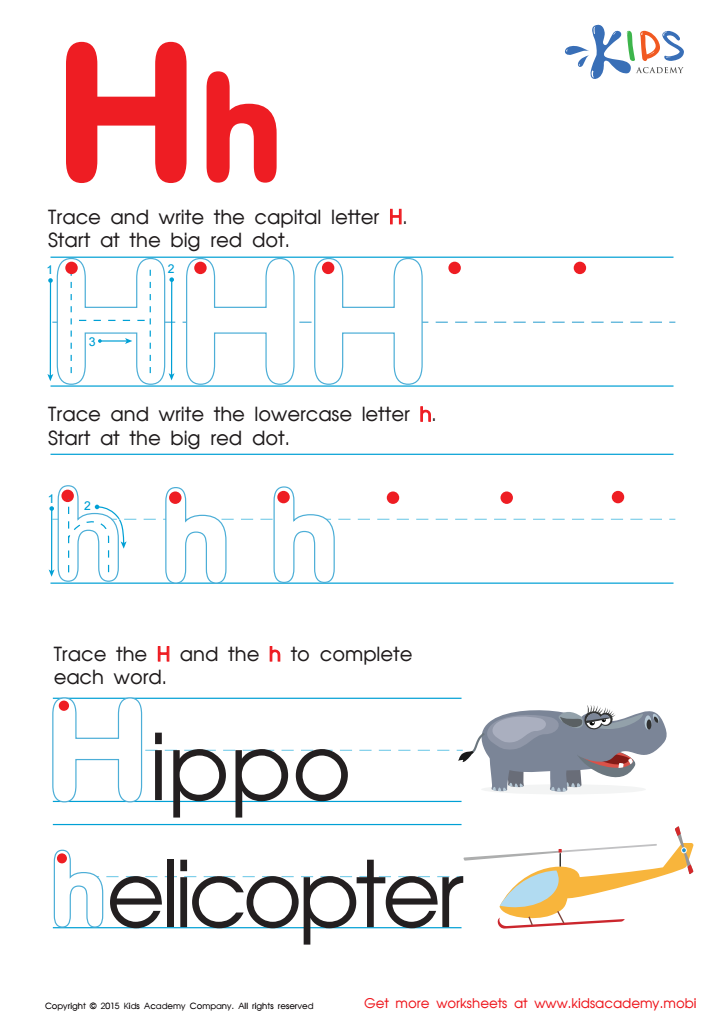
Letter H Tracing Page
Trace the letter "H", then practice writing its lowercase form. Finally, choose your favorite form of transport and ride away! Get our worksheets to make learning fun and easy.
Letter H Tracing Page
Worksheet
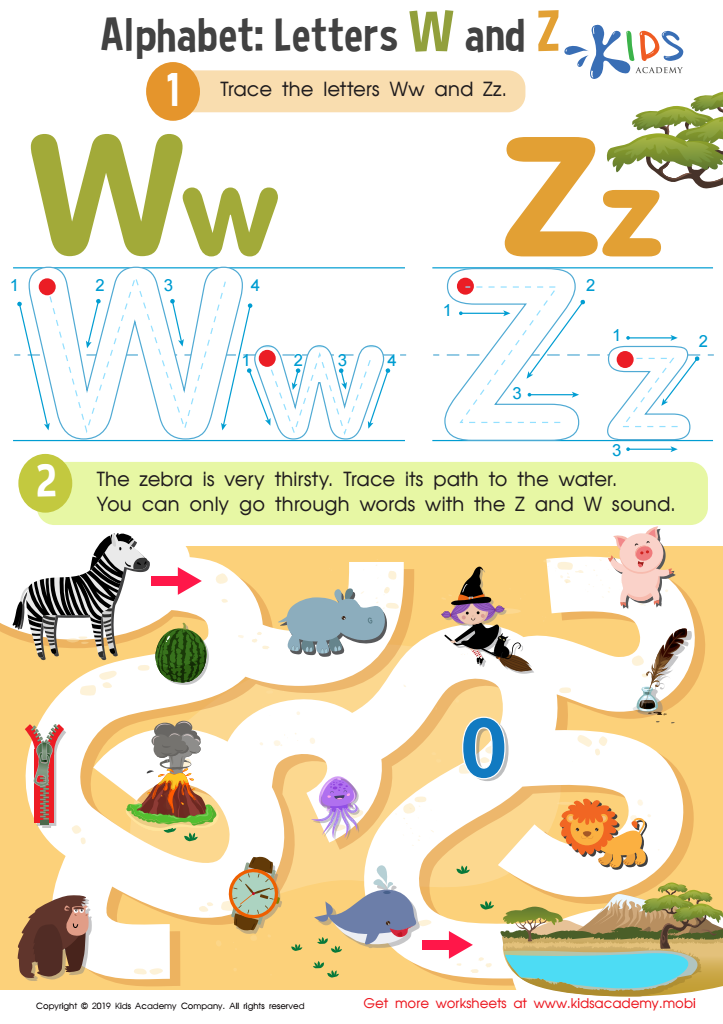
Letters W and Z Tracing Worksheet
Kids will go on a safari exploration of letters W and Z with this worksheet. Students will trace «W» and «Z» and then help the zebra find their watering hole, only following the path of the «W» and «Z» words among many others. It'll be a fun learning activity!
Letters W and Z Tracing Worksheet
Worksheet
Join Kids Academy for Free
Who is primarily going to use this learning content?



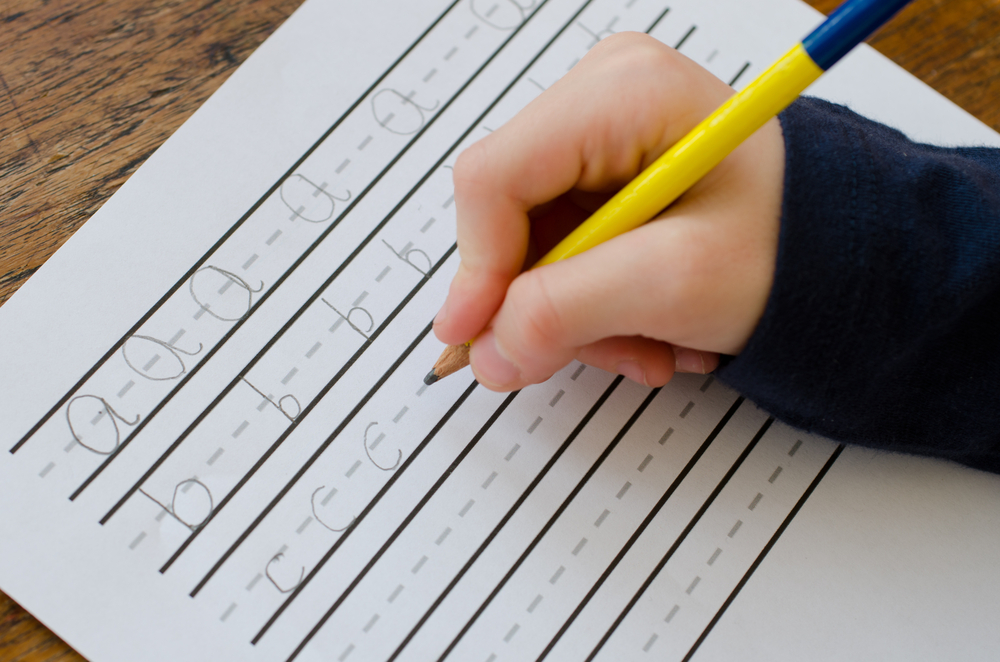



Writing practice, particularly tracing letters, is crucial for children aged 4-7 because it lays the foundation for essential literacy skills. At this developmental stage, children are refining their fine motor skills, which are important for writing. Tracing letters helps strengthen these skills by allowing children to practice precise hand movements. It also enhances hand-eye coordination, a critical ability for numerous other academic and everyday tasks.
Translating thought into written form is a fundamental part of communication. Early practice with tracing letters helps children understand the alphabet and its connection to language phonetics, harboring better reading and writing proficiency later on. It builds familiarity and confidence, making the otherwise daunting task of writing much more approachable and enjoyable.
Additionally, tracing letters contributes to cognitive development by engaging attention spans and improving focus. As children follow the lines and shapes of each letter, they practice patience and perseverance—skills invaluable in academic pursuits and life beyond. Starting writing practice early ensures that children approach educational challenges with a positive and proactive attitude which fosters a lifelong love for learning.
Ultimately, introducing children to writing through tracing letters sets a robust groundwork for their academic journey, encouraging literacy, fine motor skills, and cognitive abilities—all crucial ingredients for their future success.








