Alphabet familiarity Upper & Lowercase Letters Worksheets for Ages 4-7
7 filtered results
-
From - To
Introducing our engaging "Alphabet Familiarity Upper & Lowercase Letters Worksheets" designed specifically for children ages 4-7. These worksheets are perfect for helping young learners recognize and differentiate between uppercase and lowercase letters. Through a variety of fun and interactive activities, kids will enhance their letter recognition skills, vocabulary, and phonemic awareness. Each worksheet nurtures creativity and boosts confidence in literacy, making learning enjoyable. Perfect for classroom use or at-home practice, these resources simplify the teaching process while keeping children motivated. Explore our vibrant and educational worksheets to lay a strong foundation in reading and writing today!
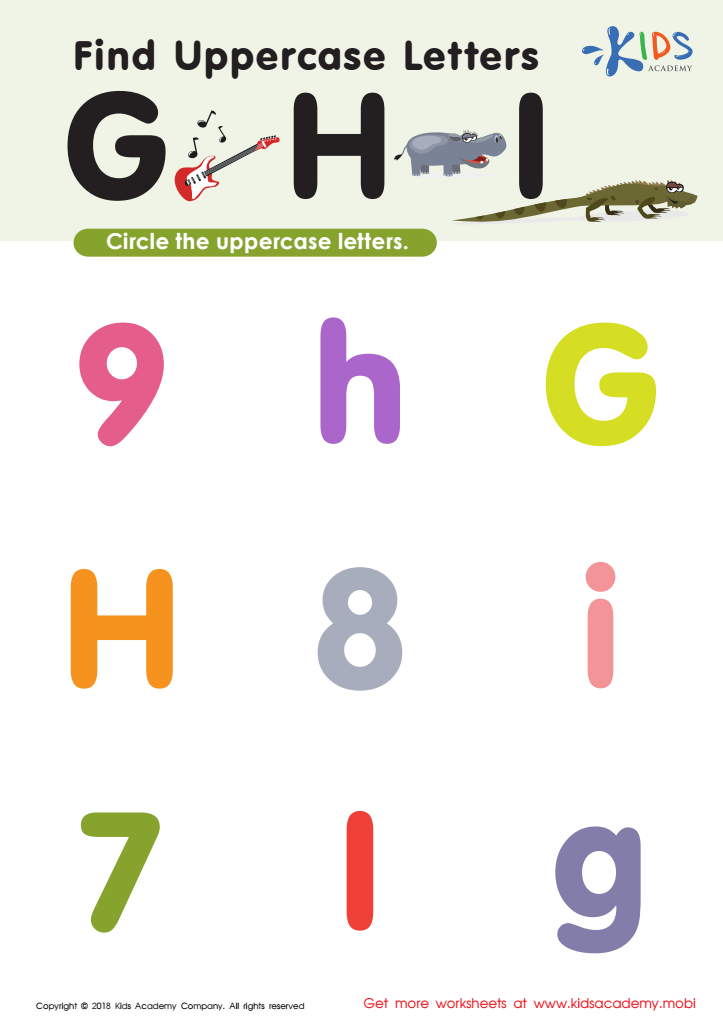
Find Uppercase Letters G, H, and I Worksheet
 Assign to My Students


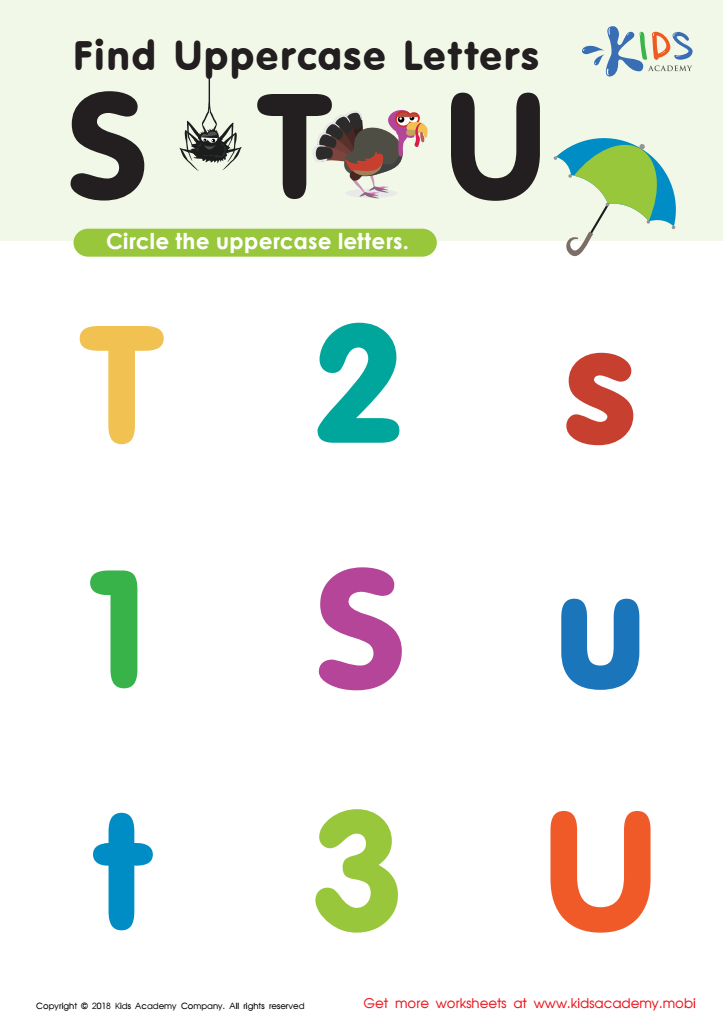
Find Uppercase Letters Worksheet
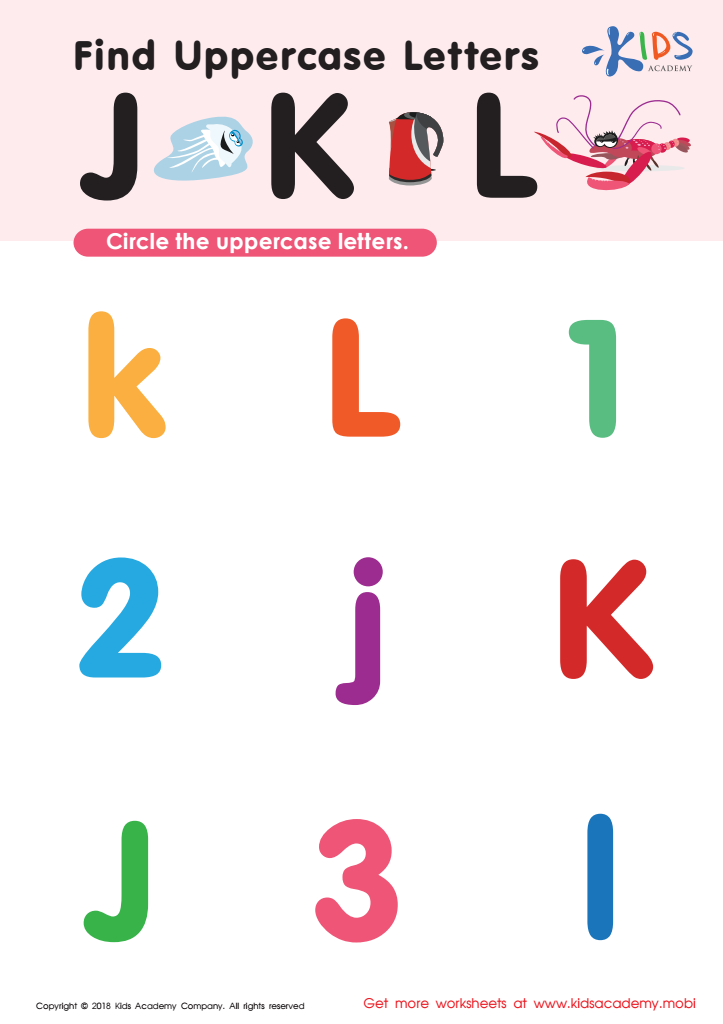
Find Uppercase Letters J, K, and L Worksheet
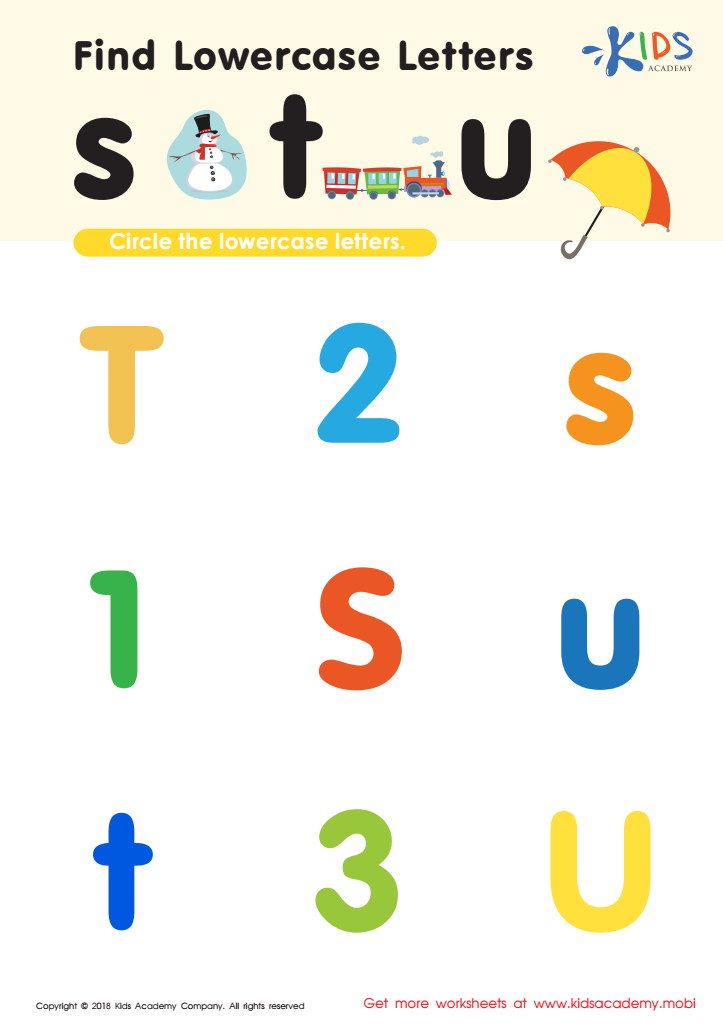
Find lowercase Letters s t u Worksheet
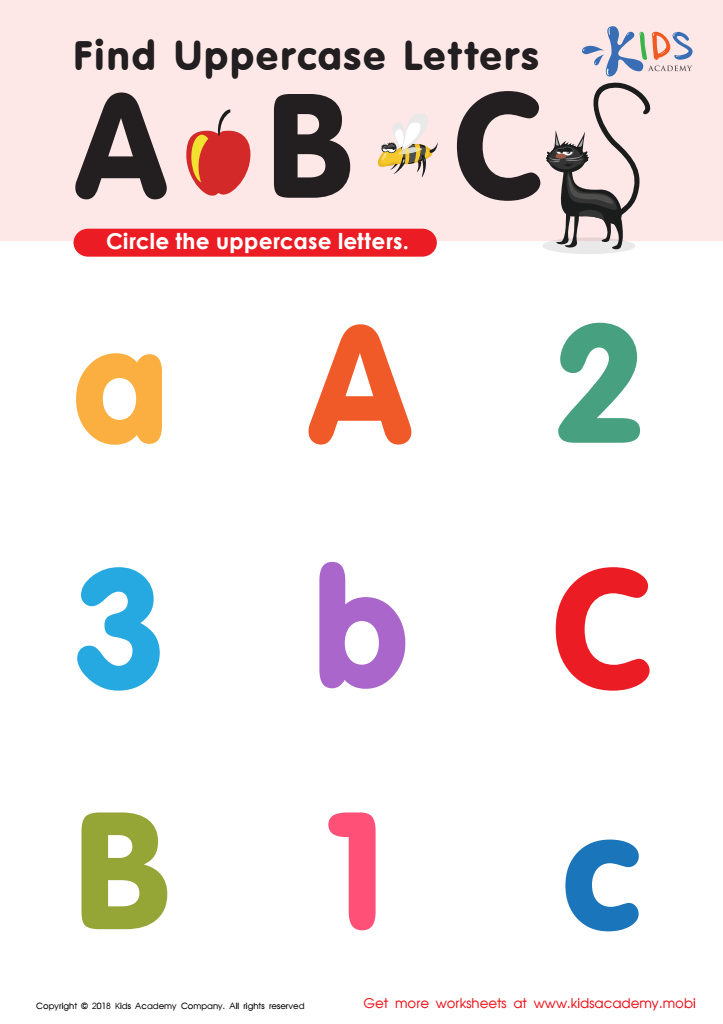
Find Uppercase Letters A, B, and C Worksheet
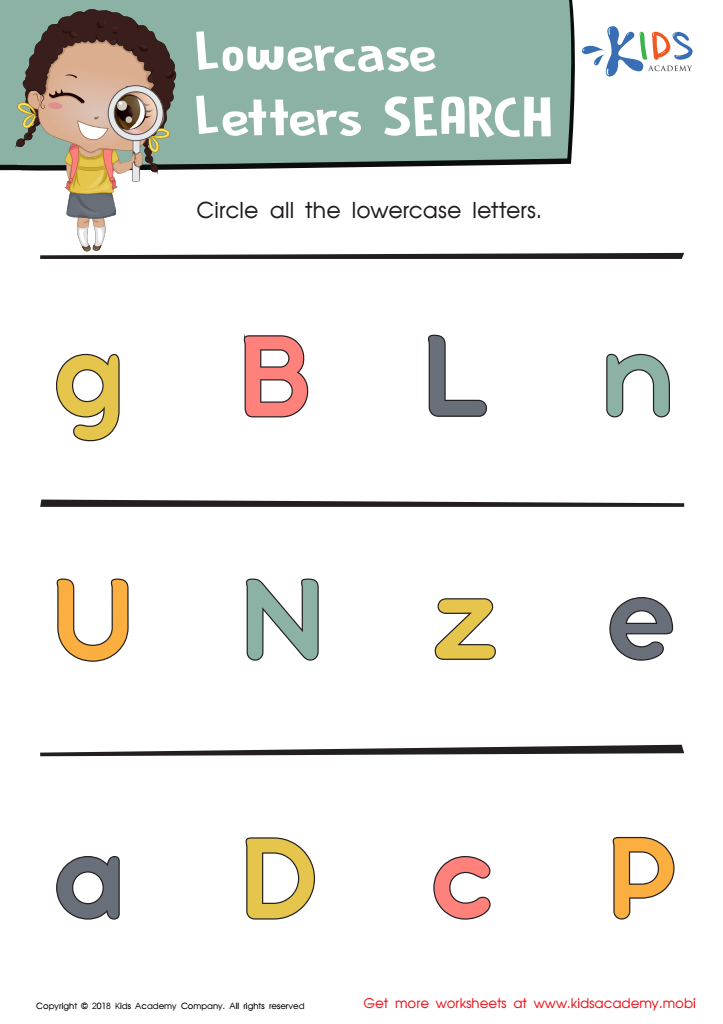
Lowercase Letters Search: Assessment Worksheet
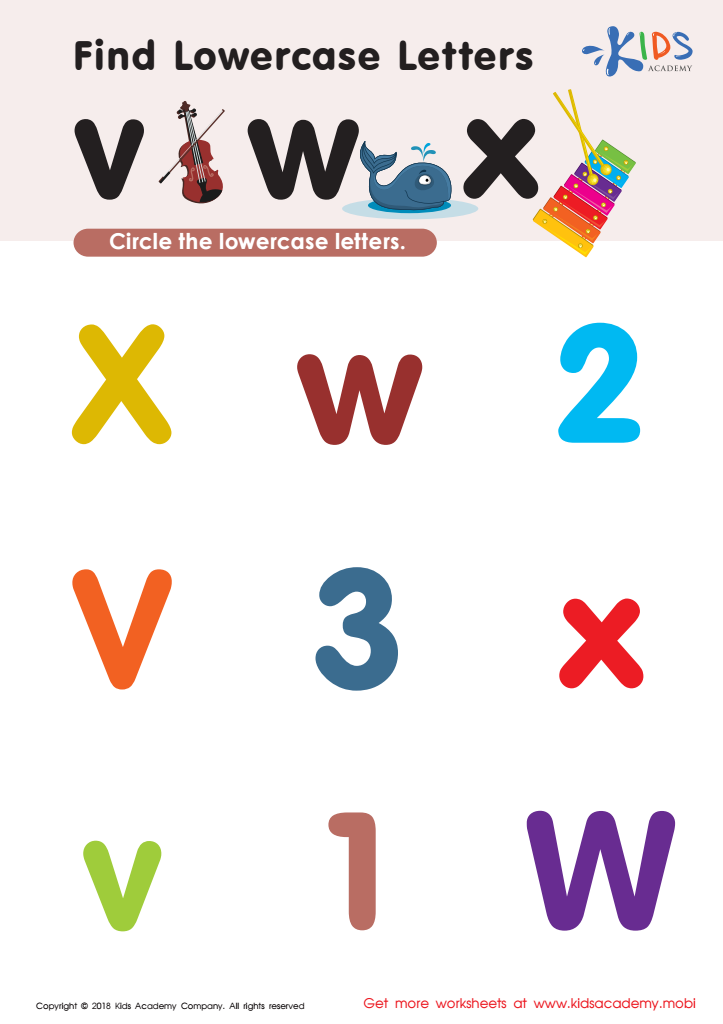
Find Lowercase Letters v w x Worksheet






Alphabet familiarity, encompassing both uppercase and lowercase letters, is essential for children aged 4-7 as it forms the foundation for reading and writing skills. At this developmental stage, children are beginning to engage with text, making letter recognition critical for their literacy journey. Understanding the distinction between uppercase and lowercase letters aids in the decoding process, allowing young learners to recognize words more effectively.
Moreover, familiarity with letters contributes to a child’s confidence in their ability to read and write. This early mastery encourages positive attitudes toward learning, reducing anxiety surrounding literacy tasks. When children grasp the concept that letters can alter the meaning of words based on their case (e.g., "cat" vs. "Cat"), they develop a deeper understanding of language nuances.
Additionally, caring about alphabet familiarity promotes engagement in educational activities. Classic games, songs, and stories that reinforce letter recognition can be highly beneficial. Involving parents and teachers in this process fosters a supportive learning environment, where children feel valued and encouraged in their progress. This collaboration not only enhances literacy development but also builds social-emotional skills, paving the way for lifelong learning. Ensuring that children are proficient in alphabet recognition is thus essential for their overall academic success.







