Filters

10 filtered results

Clear all filters
Favorites
With answer key
Interactive

10 filtered results

Difficulty Level

Grade


Help your child master the alphabet with our Alphabet Recognition Uppercase Letters Worksheets for ages 4-7. Designed to provide fun and engaging practice, these worksheets focus on helping young learners identify each uppercase letter, enhancing their letter recognition skills. Perfect for preschoolers and early elementary students, our worksheets feature colorful images, tracing activities, and interactive exercises to make learning enjoyable and effective. Boost your child's confidence in alphabet recognition and lay a solid foundation for their reading and writing journey with these comprehensive, educational resources. Download now for free and start learning today!

Check out this FREE Trial Lesson on Uppercase Letters for age 4-7!

Tracing Uppercase Letters J-R

Favorites
With answer key
Interactive
  • 4-7
  • Alphabet Recognition
  • Uppercase Letters
Uppercase Letters A, B, and C Worksheet Preview

Uppercase Letters A, B, and C Worksheet

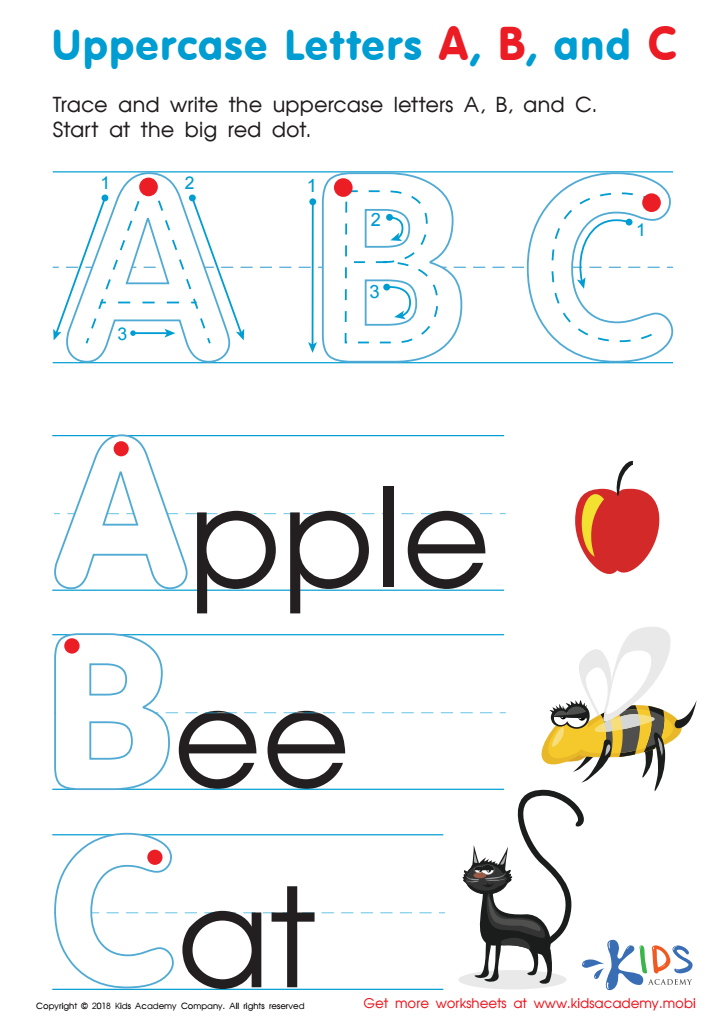
See that big red dot? Have your child use it as a guide to trace A, B and C on this fun worksheet. It features lively pictures to help link letter sounds. Have them practice proper pencil strokes on the letters at the top, then write beside each graphic. Let the learning and fun begin! 80 words
Uppercase Letters A, B, and C Worksheet
Worksheet
Uppercase Letters J, K, and L Worksheet Preview

Uppercase Letters J, K, and L Worksheet

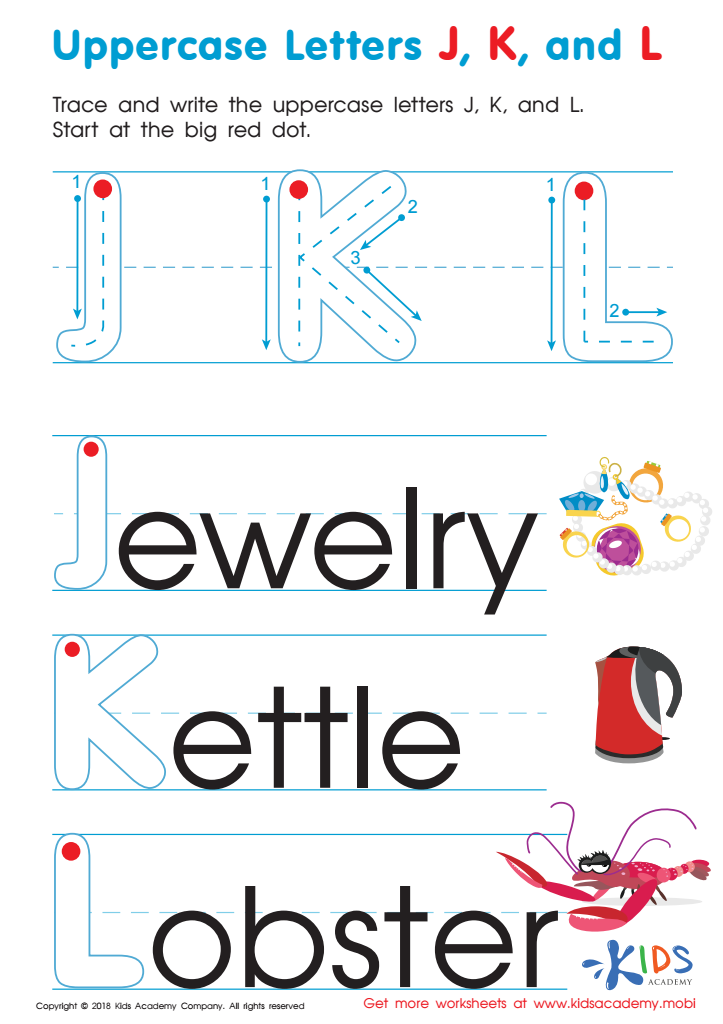
Jewelry, kettle and lobster share a common trait: their names start with J, K and L, 3 letter neighbors found in the middle of the alphabet. This traceable worksheet helps kids learn letter sounds and practice writing. Arrows and tracing lines make it easy to form neat pencil strokes. Red dot shows where kids should start. Perfect for preschoolers and kindergarteners!
Uppercase Letters J, K, and L Worksheet
Worksheet
Uppercase Letters M, N, and O Worksheet Preview

Uppercase Letters M, N, and O Worksheet

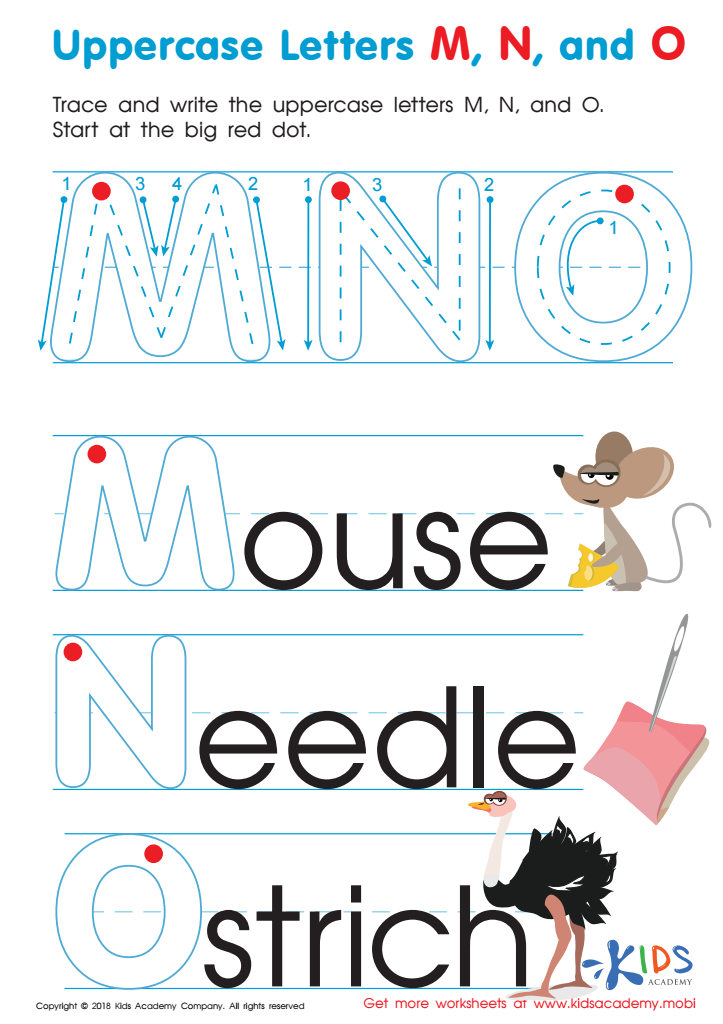
Download our easy-to-understand worksheet to help kids write M and N with ease! They'll trace dotted lines and follow arrows as they fill in the letters using a big red dot as a guide. The cute graphics will help them remember sounds too! Get your child writing quickly and confidently with this fun activity.
Uppercase Letters M, N, and O Worksheet
Worksheet
Uppercase Letters G, H, and I Worksheet Preview

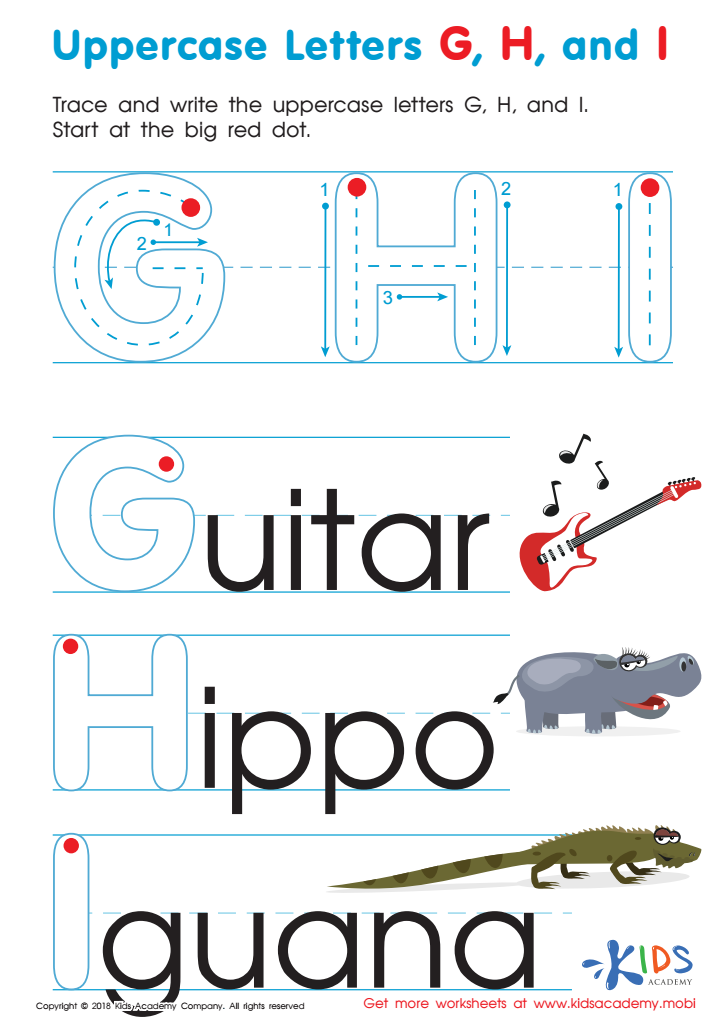
Uppercase Letters G, H, and I Worksheet

Trace each letter with the big red dot, connecting them to sounds as you go. Then write G to I. Congrats on a job well done! Rock on with a cute hippo and iguana while working on this delightful kindergarten worksheet!
Uppercase Letters G, H, and I Worksheet
Worksheet
Find Uppercase Letters P, Q, and R Worksheet Preview
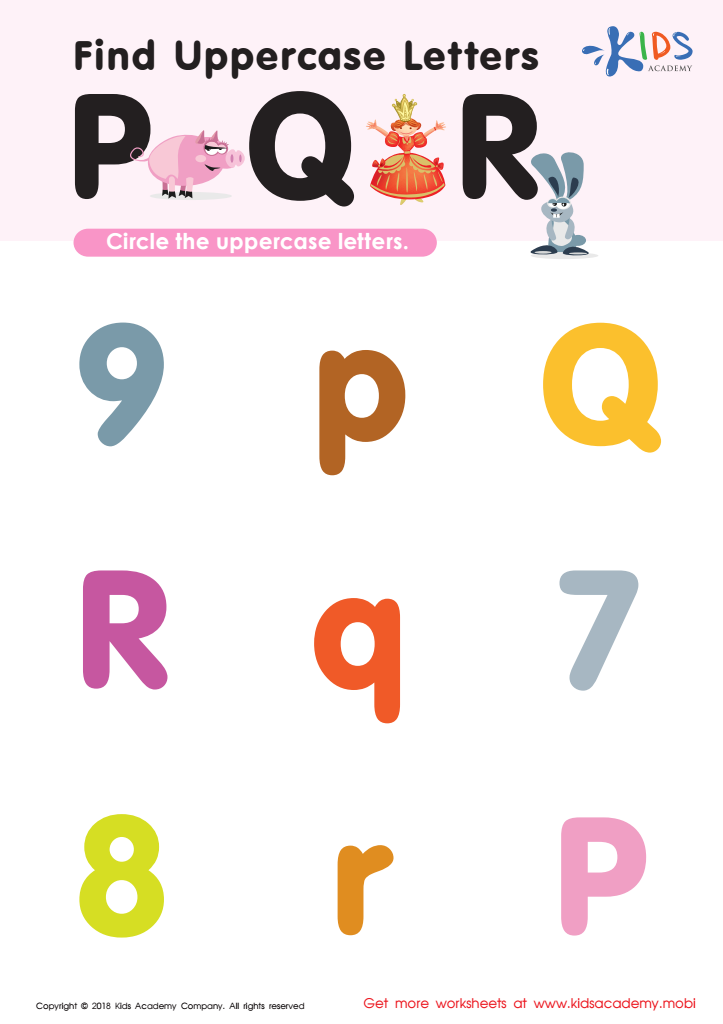
Find Uppercase Letters P, Q, and R Worksheet

Kids learn best when they can make connections. This free printable worksheet guides kids to solve the puzzle using the example letters P, Q, and R, supported by graphics and colors. Point out the page is pink, like the pig (which starts with P!) and solve by finding and circling the uppercase letters – be careful of the numbers!
Find Uppercase Letters P, Q, and R Worksheet
Worksheet
Uppercase Letters P, Q, and R Worksheet Preview

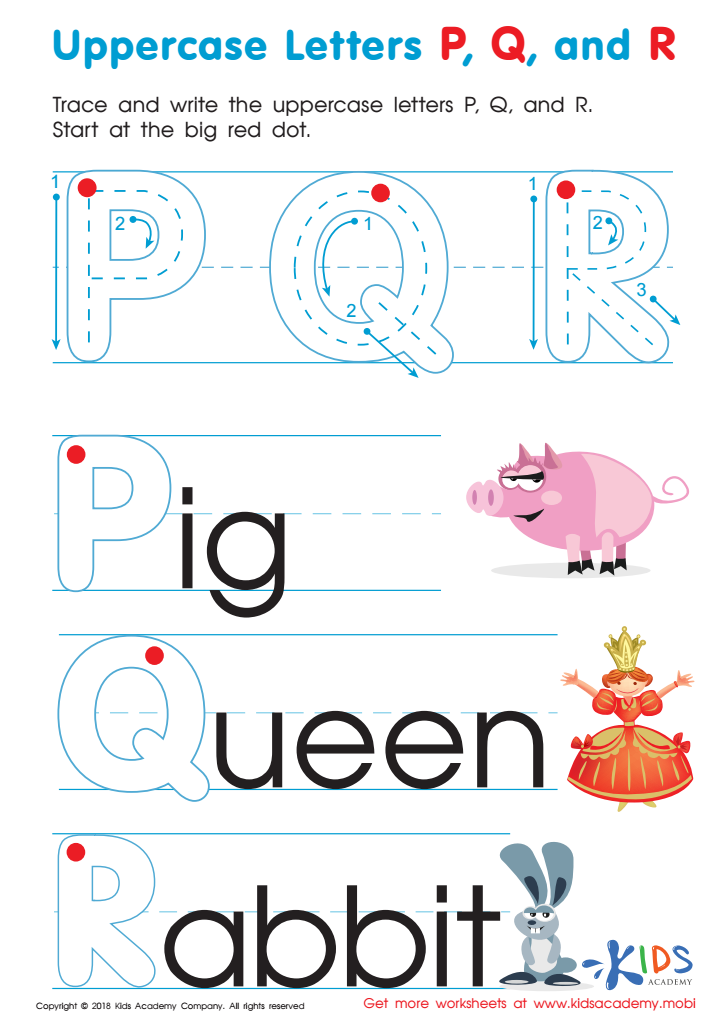
Uppercase Letters P, Q, and R Worksheet

Cute images of a pig, queen and rabbit make it fun to learn letter sounds. Follow the arrows to learn the strokes, then trace each letter from the big red dot. Perfect for kids to learn how to read and write P, Q, and R!
Uppercase Letters P, Q, and R Worksheet
Worksheet
Identifying Uppercase Letters Worksheet Preview

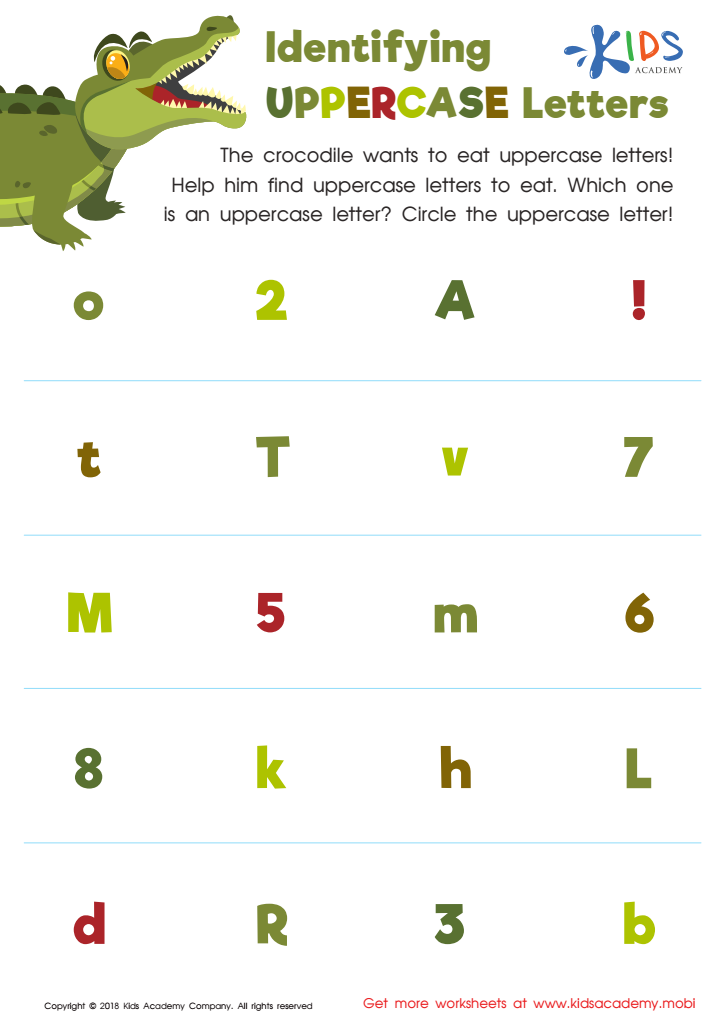
Identifying Uppercase Letters Worksheet

It's essential for kindergarteners to know the distinction between uppercase and lowercase letters. This skill will aid them when starting to write. They can practice by selecting the uppercase letters among a mix of lowercase, uppercase letters and numbers. Whatever their level of learning, give your child confidence with this PDF!
Identifying Uppercase Letters Worksheet
Worksheet
Uppercase Letters D, E, and F Worksheet Preview

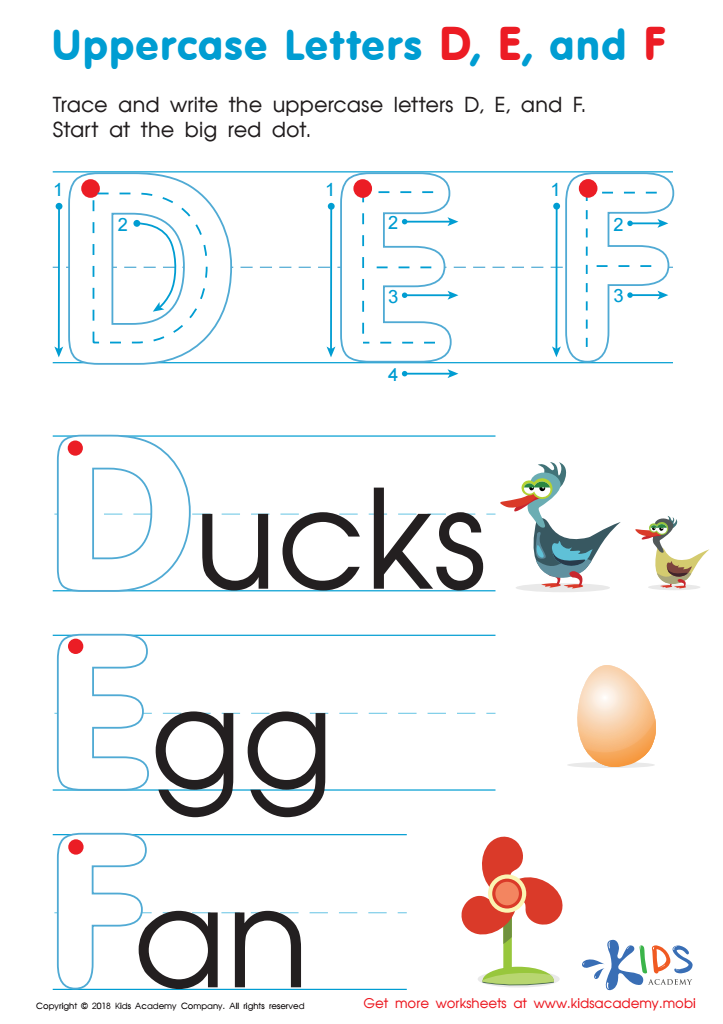
Uppercase Letters D, E, and F Worksheet

A-F are important letters! Get kids tracing with this free printable worksheet. Help them learn the right pencil strokes by following the tracing lines, starting at the big red dot. Reinforce letter sounds with the colorful pictures. 80 words.
Uppercase Letters D, E, and F Worksheet
Worksheet
Uppercase Letters Y Z Worksheet

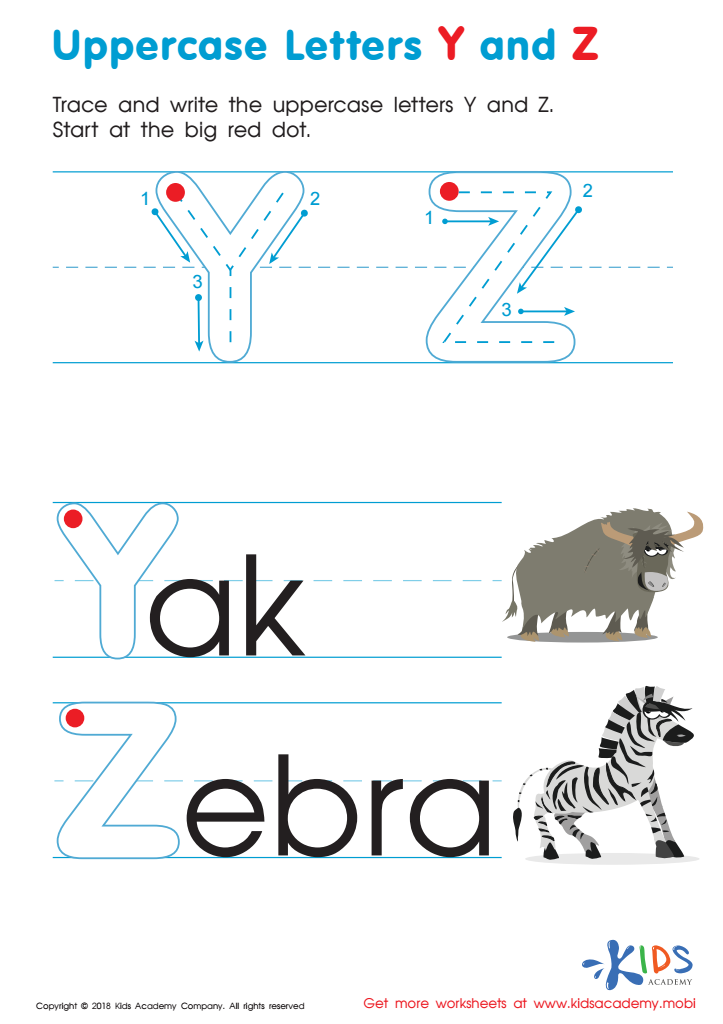
Uppercase Letters Y Z Worksheet

Help your child learn their ABCs with this fun tracing activity! They must trace and write Y and Z in uppercase form, starting from the red dot. Kids will love the fun images for extra engagement. Guiding their hand carefully will help them practice and perfect their writing skills.
Uppercase Letters Y Z Worksheet
Worksheet
Uppercase Letters V, W, and X Worksheet


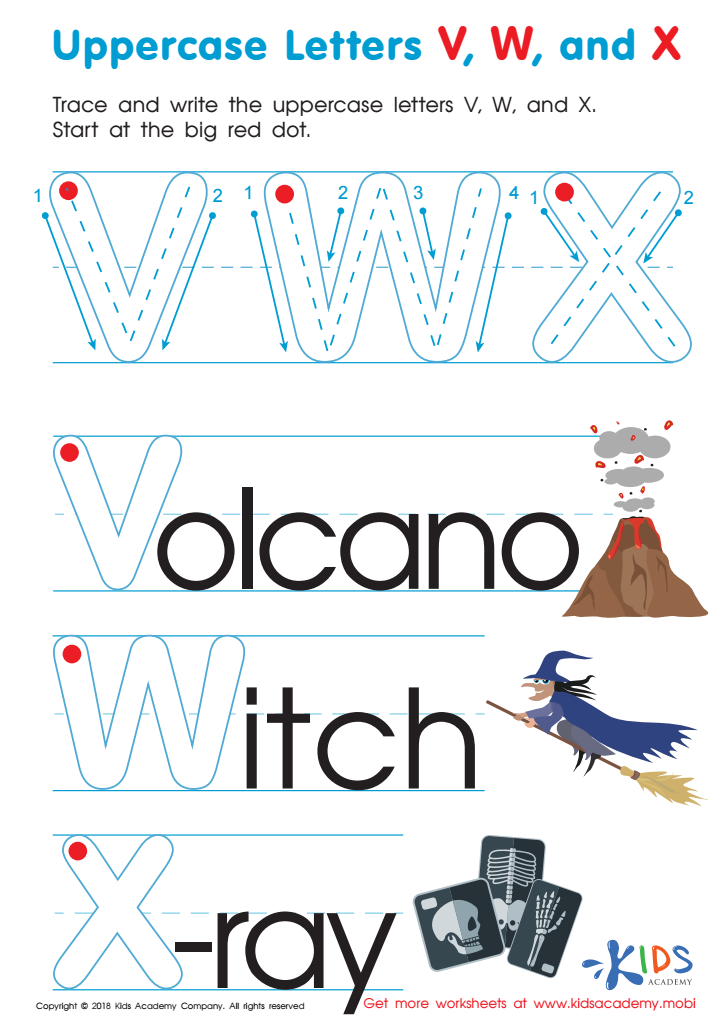
Uppercase Letters V, W, and X Worksheet

This worksheet is perfect for kids struggling to write uppercase letters V, W, and X. Warm up their brains first by having them name words starting with these letters. Then, help them trace and write each letter from the big red dot. With your assistance, they will quickly sharpen their writing skills.
Uppercase Letters V, W, and X Worksheet

Worksheet


Alphabet recognition, specifically of uppercase letters, for children aged 4-7 is a fundamental skill that serves as the cornerstone for their emergent literacy. Understanding and identifying uppercase letters is crucial for several reasons. First, it provides children with the basic building blocks for reading and writing. Familiarity with uppercase letters allows children to decode simple words, understand written instructions, and begin to grasp phonemic awareness, which is vital for later literacy success.

Secondly, the consistent visual form of uppercase letters helps young learners distinguish between different symbols and shapes, promoting cognitive development. Since uppercase letters are often used to start sentences and in proper nouns, recognizing them fosters comprehension skills and helps children understand the structure and mechanics of written language.

Furthermore, early knowledge and proficiency with uppercase letters can boost a child's confidence and motivation. Successfully identifying letters and forming words gives children a sense of achievement, which is crucial in nurturing a positive attitude toward learning.

Parents and teachers play a pivotal role in this developmental stage, offering the support and resources necessary for practice and reinforcement. Engaging activities, playful interaction, and consistent reinforcement – whether in the classroom or at home – all contribute to a child's smooth transition to fluent reading and writing, setting a powerful foundation for their academic future.