Handwriting practice Uppercase Letters Worksheets for Ages 4-7
6 filtered results
Difficulty Level
Grade
Age
-
From - To
Subject
Activity
Standards
Enhance your child's writing skills with our Handwriting Practice Uppercase Letters Worksheets! Designed for ages 4-7, these worksheets provide engaging exercises to help children master uppercase letter formation. Through fun, age-appropriate activities, kids will strengthen their fine motor skills, gain confidence in writing, and develop a solid foundation for future literacy. Perfect for at-home practice or classroom use, each worksheet includes clear instructions and appealing designs to keep young learners motivated and entertained. Start your child's handwriting journey today with our expertly crafted resources, foster a love for writing, and watch their skills flourish!
Favorites
With answer key
Interactive
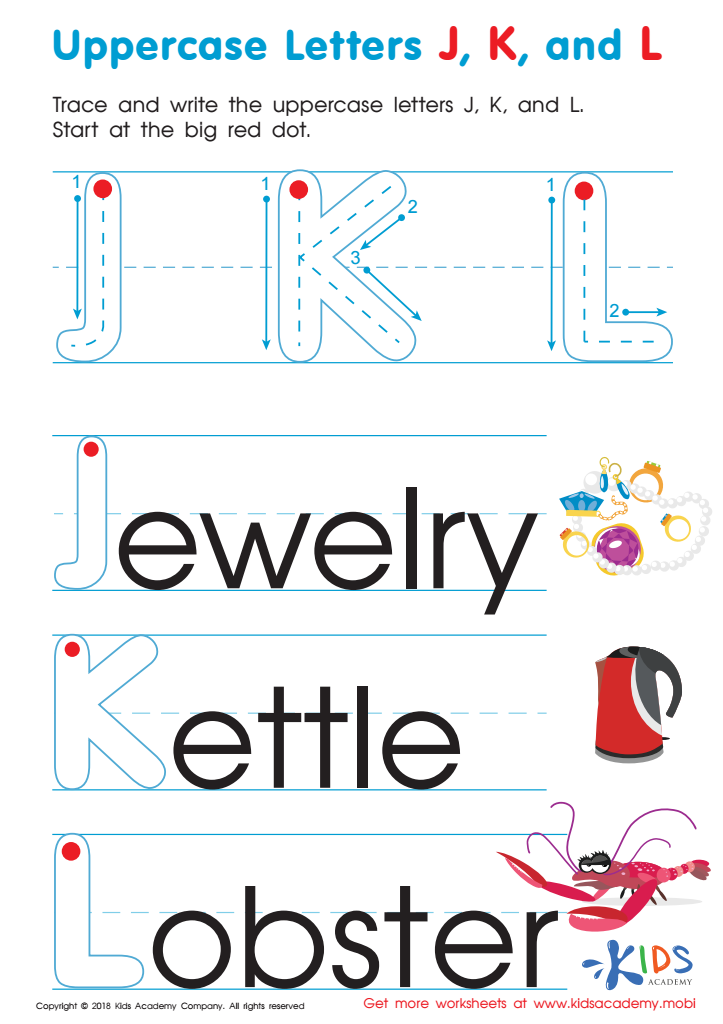
Uppercase Letters J, K, and L Worksheet
Jewelry, kettle and lobster share a common trait: their names start with J, K and L, 3 letter neighbors found in the middle of the alphabet. This traceable worksheet helps kids learn letter sounds and practice writing. Arrows and tracing lines make it easy to form neat pencil strokes. Red dot shows where kids should start. Perfect for preschoolers and kindergarteners!
 Assign to My Students
Uppercase Letters J, K, and L Worksheet
Worksheet
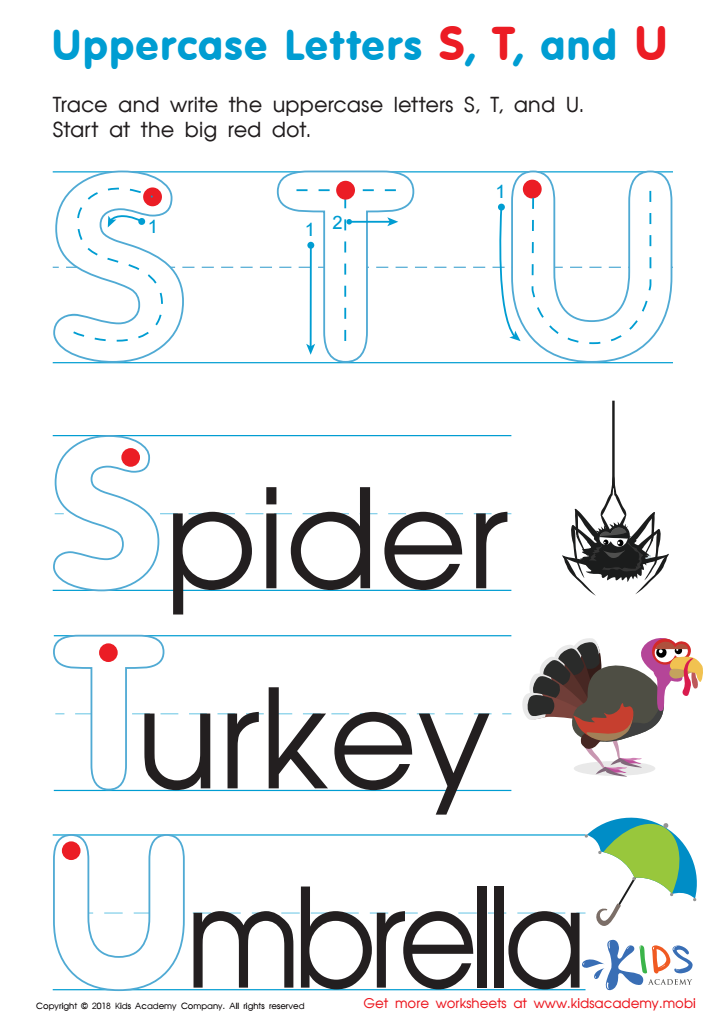
Uppercase Letters S, T, and U Worksheet
Help your kids learn to write upper-case letters with this fun tracing sheet. Start at the big red dot for each letter: S, T, and U. Show them the pictures and ask what letter each word starts with. Guide their hand and watch them learn!
Uppercase Letters S, T, and U Worksheet
Worksheet
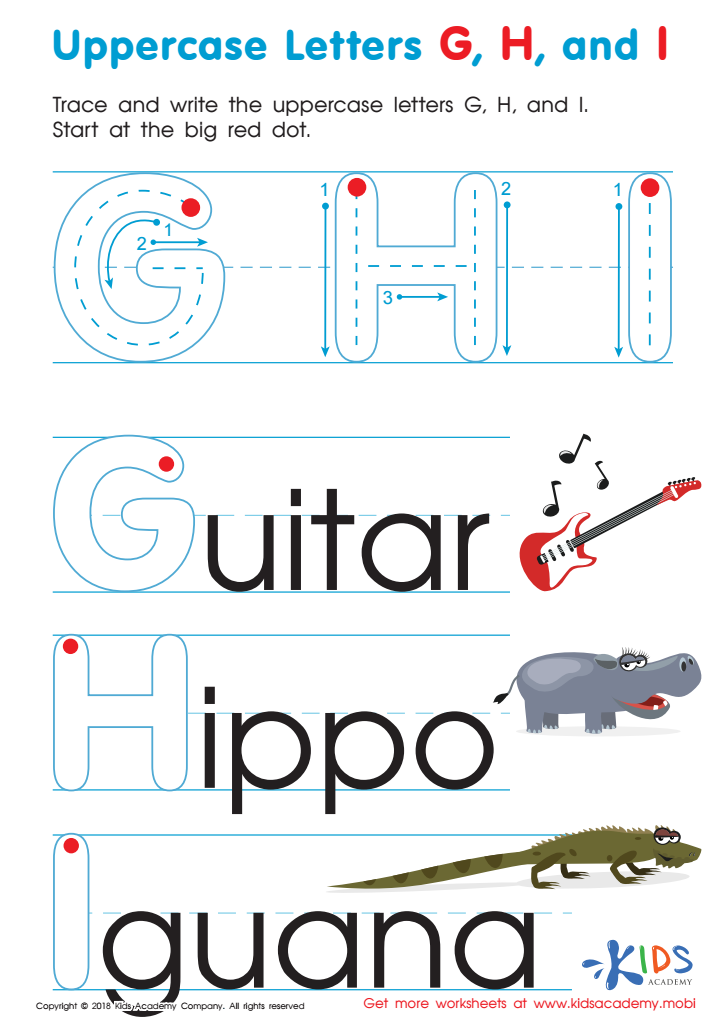
Uppercase Letters G, H, and I Worksheet
Trace each letter with the big red dot, connecting them to sounds as you go. Then write G to I. Congrats on a job well done! Rock on with a cute hippo and iguana while working on this delightful kindergarten worksheet!
Uppercase Letters G, H, and I Worksheet
Worksheet
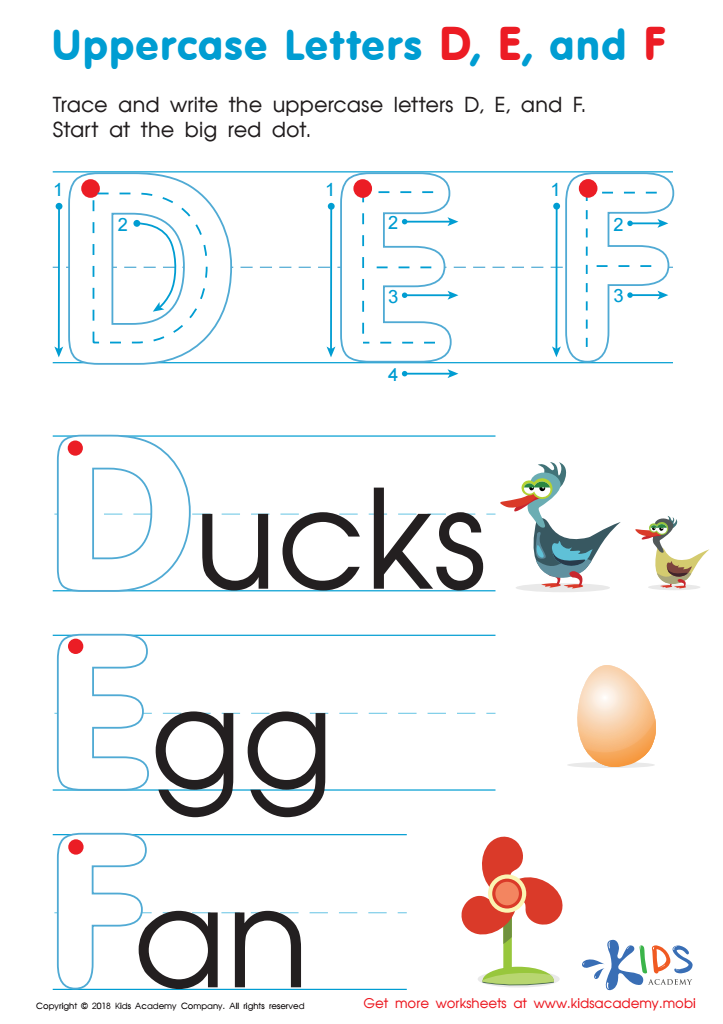
Uppercase Letters D, E, and F Worksheet
A-F are important letters! Get kids tracing with this free printable worksheet. Help them learn the right pencil strokes by following the tracing lines, starting at the big red dot. Reinforce letter sounds with the colorful pictures. 80 words.
Uppercase Letters D, E, and F Worksheet
Worksheet
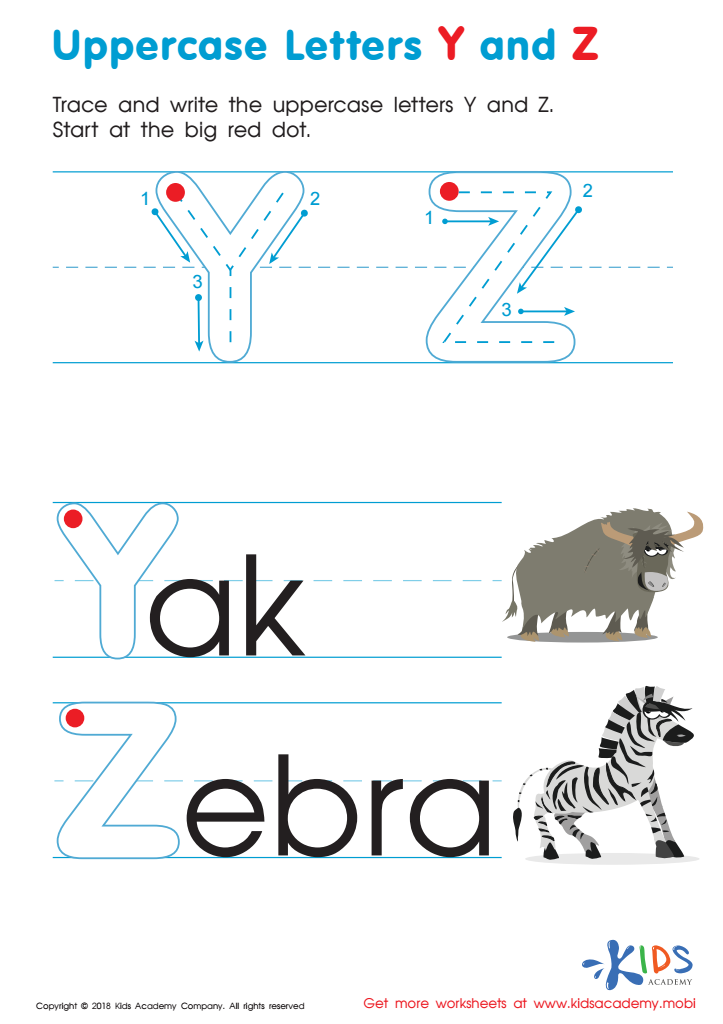
Uppercase Letters Y Z Worksheet
Help your child learn their ABCs with this fun tracing activity! They must trace and write Y and Z in uppercase form, starting from the red dot. Kids will love the fun images for extra engagement. Guiding their hand carefully will help them practice and perfect their writing skills.
Uppercase Letters Y Z Worksheet
Worksheet
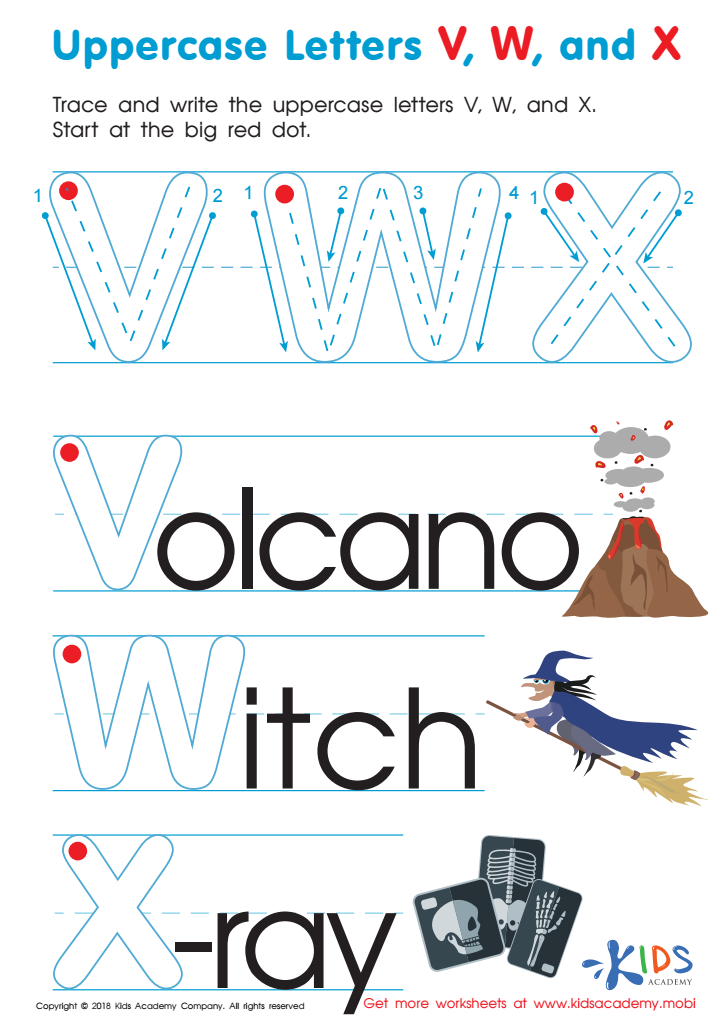
Uppercase Letters V, W, and X Worksheet
This worksheet is perfect for kids struggling to write uppercase letters V, W, and X. Warm up their brains first by having them name words starting with these letters. Then, help them trace and write each letter from the big red dot. With your assistance, they will quickly sharpen their writing skills.
Uppercase Letters V, W, and X Worksheet
Worksheet
Join Kids Academy for Free
Who is primarily going to use this learning content?








Handwriting practice, particularly for uppercase letters, is fundamental for children ages 4-7 as it lays the groundwork for essential literacy skills. During these formative years, developing fine motor skills is critical, and practicing uppercase letters aids in this progression. Proper handwriting promotes muscle control and coordination, which are crucial for various tasks beyond writing, like drawing and even buttoning clothes.
Moreover, uppercase letter familiarity helps children recognize letter shapes, which is vital for reading readiness. It establishes a solid connection between their visual and cognitive understanding of alphabetic characters. Standardizing these letters early ensures consistency in learning, reducing confusion when children later move on to more complex aspects of writing and reading.
Children's confidence grows as they master these foundational skills. This early success fosters a positive attitude towards learning and school in general. Teachers and parents see considerable benefits: skilled writers pay more attention to other educational content as less mental energy is spent on orthographic considerations. Training in proper letter formation reduces the likelihood of developing poor writing habits that can become challenging to correct later.
In sum, dedicated practice of uppercase letters not only enhances fine motor skills and alphabet knowledge but also builds a crucial educational foundation, ensuring children are well-prepared for future academic challenges.