Cognitive Development Vowels Worksheets for Ages 4-7
3 filtered results
-
From - To
Discover our engaging Cognitive Development Vowels Worksheets designed for children ages 4 to 7. These worksheets foster essential skills by introducing vowels through fun and interactive activities. Helping young learners master vowel recognition, sound association, and pronunciation is our goal. With colorful illustrations and captivating exercises, kids will enjoy exploring the world of vowels while enhancing their cognitive abilities. Perfect for teachers and parents, these worksheets encourage independent learning and critical thinking, laying a strong foundation for early literacy. Download now and watch your child's confidence soar as they become more proficient in recognizing and using vowels!
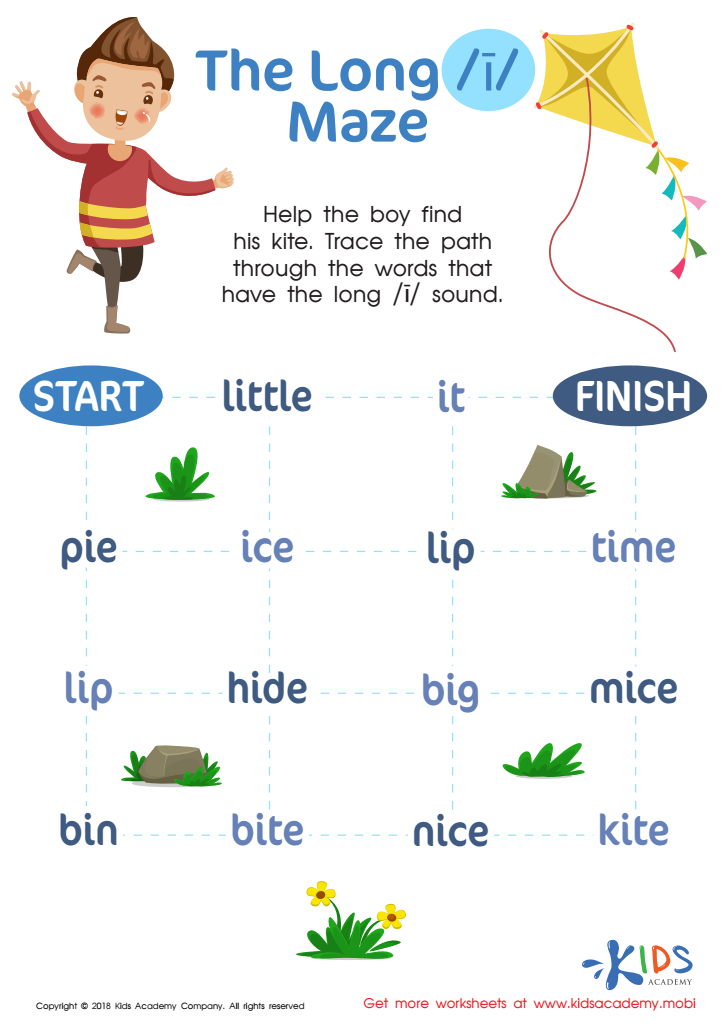
The Long I Maze Reading Worksheet
 Assign to My Students
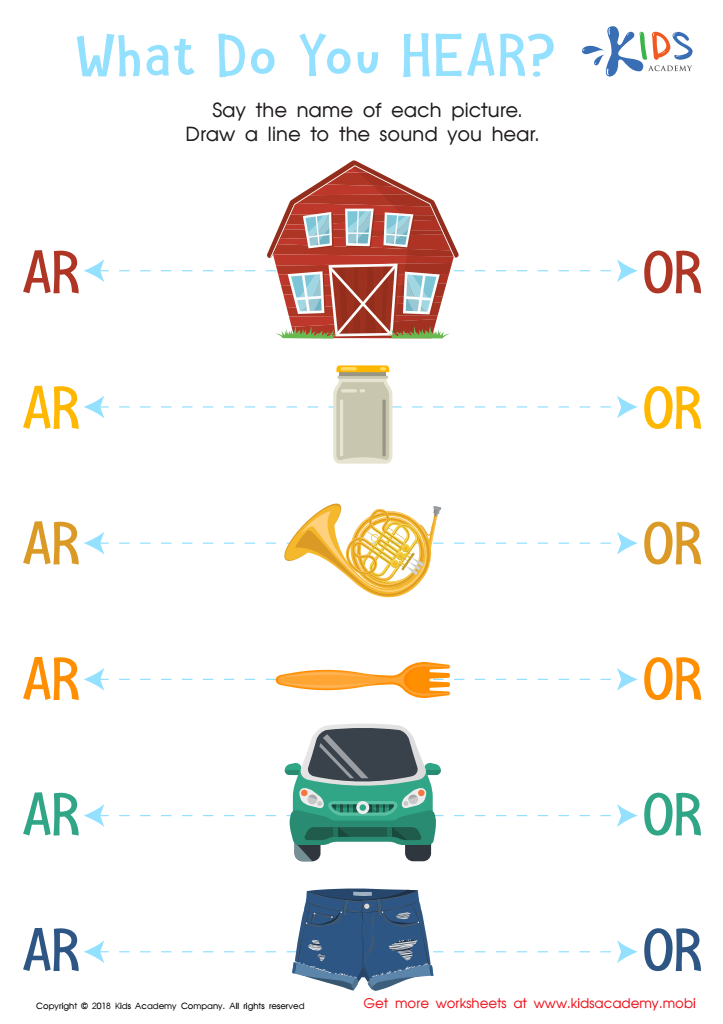
What do you hear Worksheet

Find Hens Nest Reading Worksheet





Cognitive development is crucial for children aged 4-7, as this stage lays the foundation for critical thinking, problem-solving, and academic skills. During these formative years, children are highly receptive to learning and manipulation of language, particularly vowels, which are fundamental to word formation and pronunciation. Understanding and mastering vowels enhances phonemic awareness, enabling kids to decode words, leading to improved reading skills and literacy.
Teachers and parents should care about cognitive development in terms of vowels because it directly influences communication abilities and confidence in literacy. Engaging children in activities that emphasize vowel sounds, like phonics games, songs, and storytelling, fosters an enjoyable learning environment that stimulates their cognitive growth. Additionally, recognizing the varying developmental stages helps in tailoring educational approaches suitable for individual learning needs.
Moreover, strong foundational skills in vowel recognition and usage can greatly impact a child’s attitude toward learning and school, creating lifelong learners who approach challenges with enthusiasm. As cognition develops, it also supports social interactions and emotional understanding. By prioritizing cognitive development in early education, parents and teachers set the stage for success in academics and everyday life, empowering children to thrive in an increasingly complex world.







