Sound differentiation Vowels Worksheets for Ages 4-7
3 filtered results
-
From - To
Explore our engaging "Sound Differentiation Vowels Worksheets" designed for children ages 4-7! These worksheets provide a fun and interactive way for young learners to develop their understanding of vowel sounds, essential for early reading and speaking skills. With a variety of activities, including matching, coloring, and identifying vowels in words, children will build confidence in auditory recognition and pronunciation. Each worksheet promotes critical thinking and encourages language development through playful learning. Ideal for both classroom settings and home practice, these resources offer an effective approach to mastering vowel sounds while making learning enjoyable. Start your child's phonetic journey today!
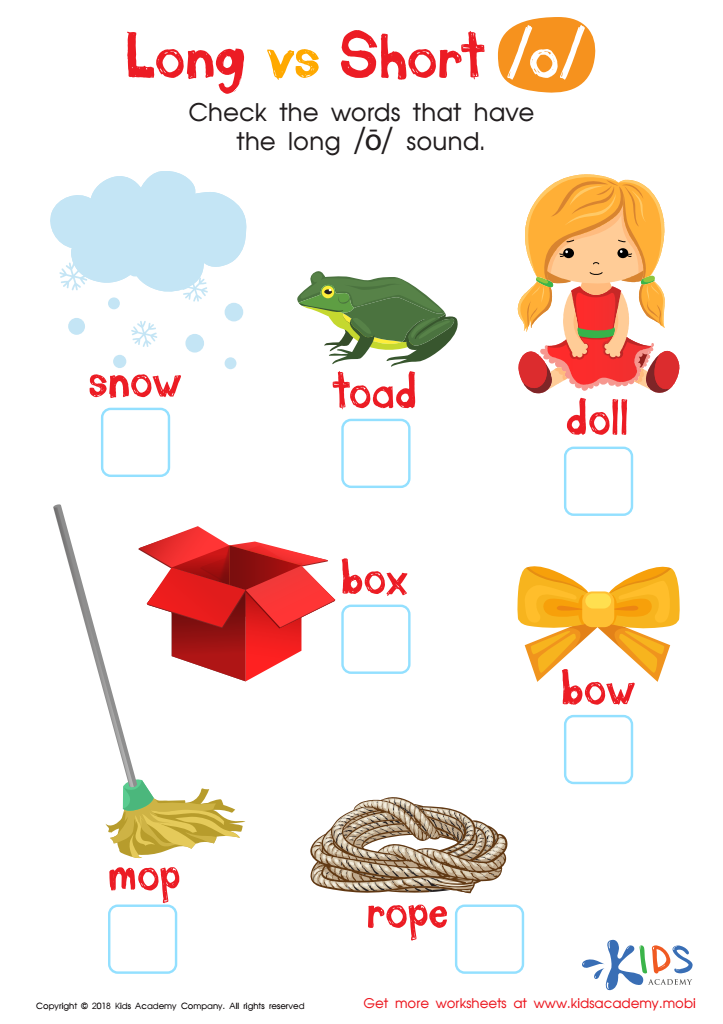
Long vs Short O Reading Worksheet
 Assign to My Students
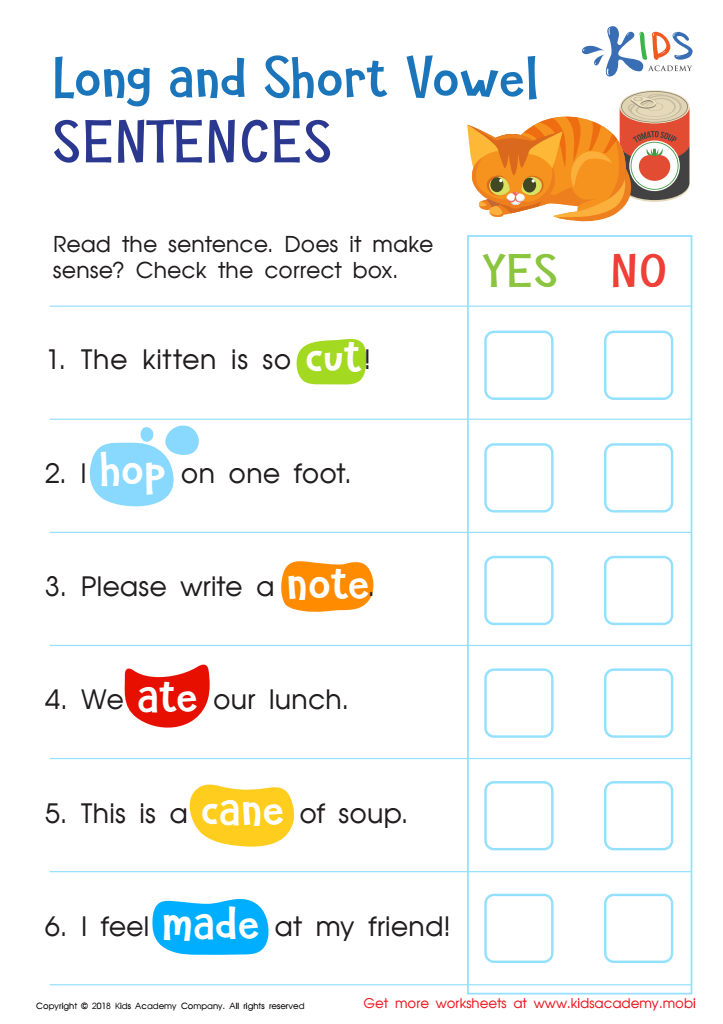
Long and Short Vowel Sentences: Assessment Worksheet
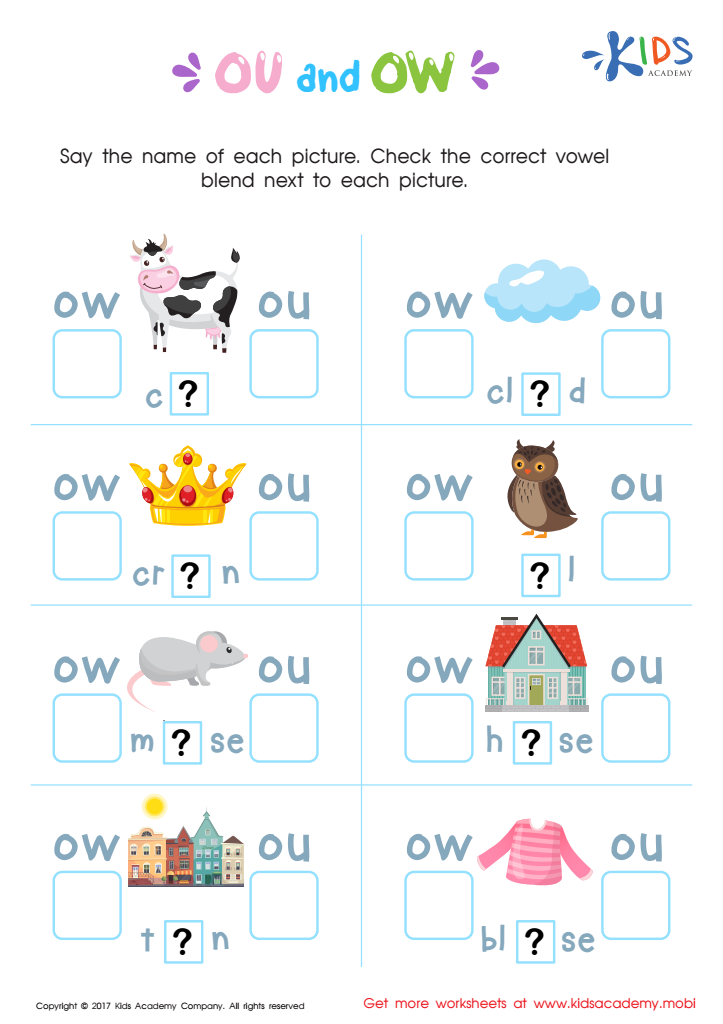
OU and OW Words Worksheet





Sound differentiation of vowels is crucial for children aged 4-7, as it lays the foundation for reading, writing, and overall literacy development. At this age, children are beginning to explore language and develop phonemic awareness, which is vital for understanding how sounds form words. Distinguishing between vowel sounds helps children decode words, enabling them to read effectively and improve their spelling skills.
When children can differentiate between vowel sounds, they are better equipped to recognize and produce different word patterns and rhymes, contributing to more comprehensive language skills. This ability also supports their comprehension, as understanding the sounds of vowels helps them grasp more complex vocabulary in the future.
Moreover, sound differentiation aids in language development, fostering better communication skills. Parents and teachers play an important role in guiding this learning through engaging activities, games, and storytelling that emphasize sound recognition. Early interventions in sound differentiation can lead to greater confidence in reading. Consequently, fostering this skill creates a more inclusive classroom environment, addressing various learning styles, and setting each child on a successful literacy path. This focus will not only enhance academic achievement but also create a love for reading that can last a lifetime.







