Chess knowledge Chess Worksheets for Ages 4-7
3 filtered results
-
From - To
Discover a fun and educational way to introduce your child to the world of chess with our engaging chess knowledge worksheets designed for ages 4-7. These printable resources promote essential skills such as critical thinking, problem-solving, and strategic planning through exciting activities. Each worksheet is tailored to help young learners recognize chess pieces, understand their movements, and appreciate the game's basic rules, all while encouraging creativity and concentration. Perfect for home or classroom use, our worksheets make learning chess an enjoyable experience, helping children build a strong foundation in this timeless game. Explore our collection and watch your child's skills grow!
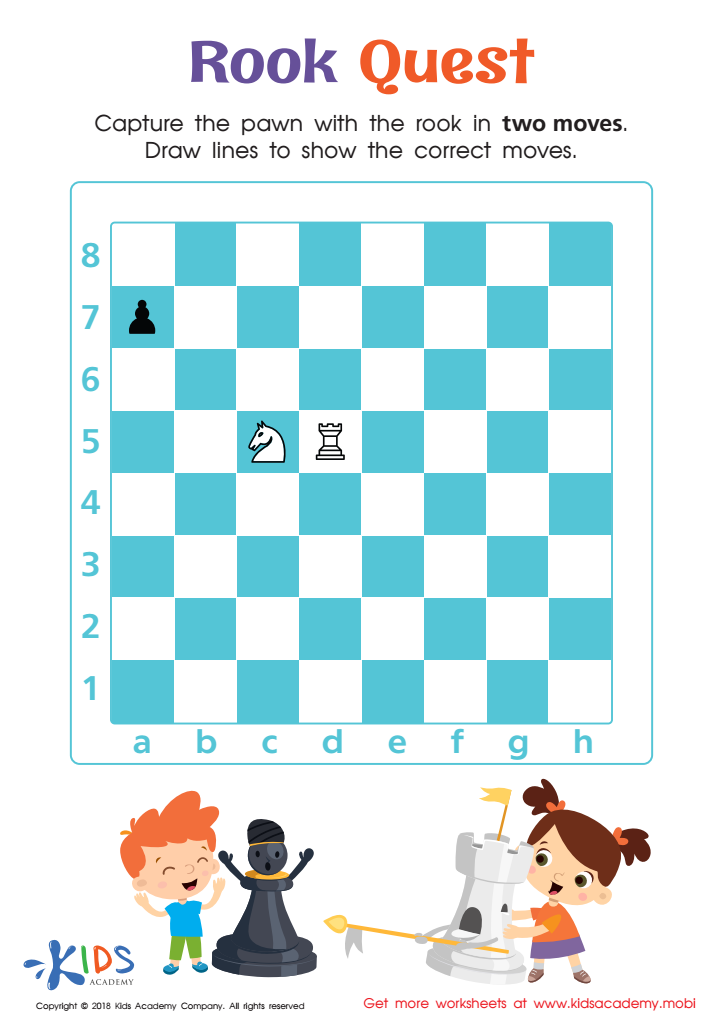
Rook Quest Worksheet
 Assign to My Students
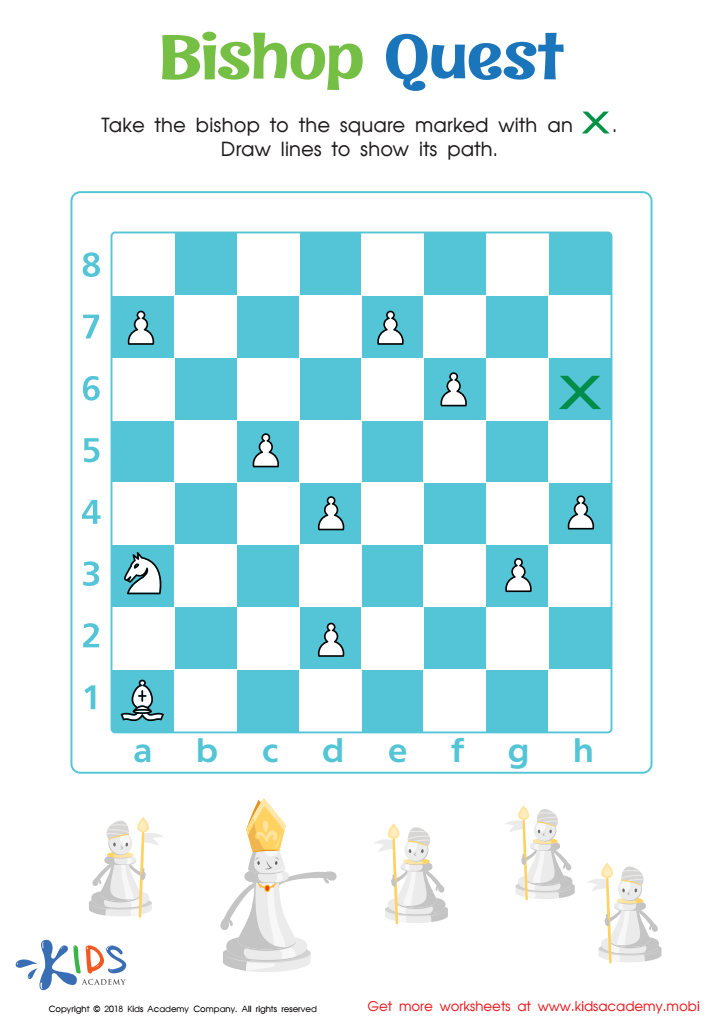
Bishop Quest Worksheet
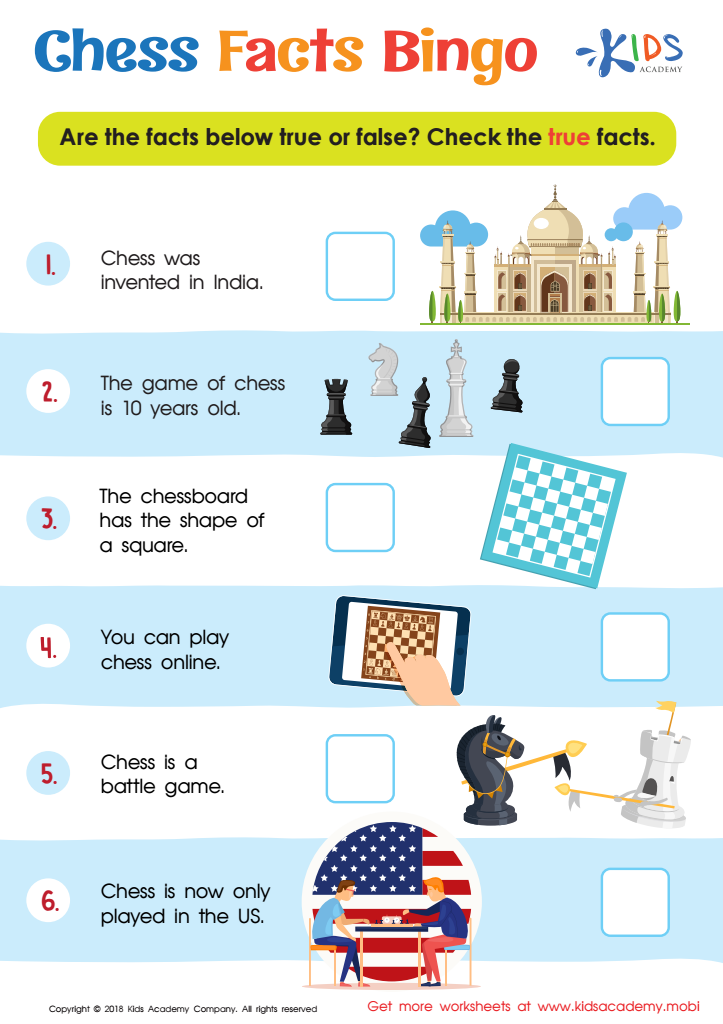
Chess Facts Bingo Worksheet







Parents and teachers should care about introducing chess to children ages 4-7 for several compelling reasons. Firstly, chess enhances critical thinking skills. The game encourages young minds to plan ahead, foresee consequences, and make strategic decisions, fostering analytical abilities that are beneficial across various subjects in school.
Moreover, chess promotes patience and discipline. As children play, they learn the importance of taking their time and focusing on their moves, a skill that translates well to classroom activities. This game also nurtures problem-solving skills, as kids are often faced with obstacles on the board that require creative solutions.
Socially, chess can help children develop relational skills as they interact with peers during matches. They learn how to win graciously and accept losses with sportsmanship, cultivating emotional intelligence early on.
Additionally, engaging with chess can boost self-esteem. As children practice and improve, they gain a sense of accomplishment that encourages a growth mindset.
Overall, integrating chess into early education not only provides an enriching recreational activity but also serves as a powerful tool for cognitive and emotional development, making it a valuable investment in a child's future.