Critical thinking enhancement Chess Worksheets for Ages 4-7
4 filtered results
-
From - To
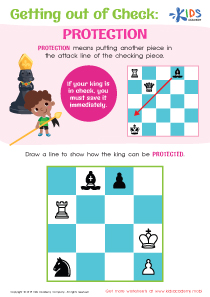
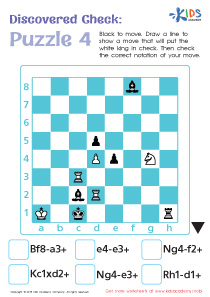
Unlock your child's potential with our engaging Critical Thinking Enhancement Chess Worksheets designed specifically for ages 4-7! These worksheets incorporate playful chess-themed activities that not only introduce the fundamentals of the game but also foster essential critical thinking skills. Children will practice problem-solving, strategizing, and decision-making through fun exercises tailored to their developmental stage. Each worksheet combines adventure and learning, allowing young minds to explore creative solutions while enjoying the captivating world of chess. Perfect for parents and educators seeking to enrich early cognitive skills, our printable worksheets make learning both accessible and enjoyable. Explore today and watch your child's confidence soar!
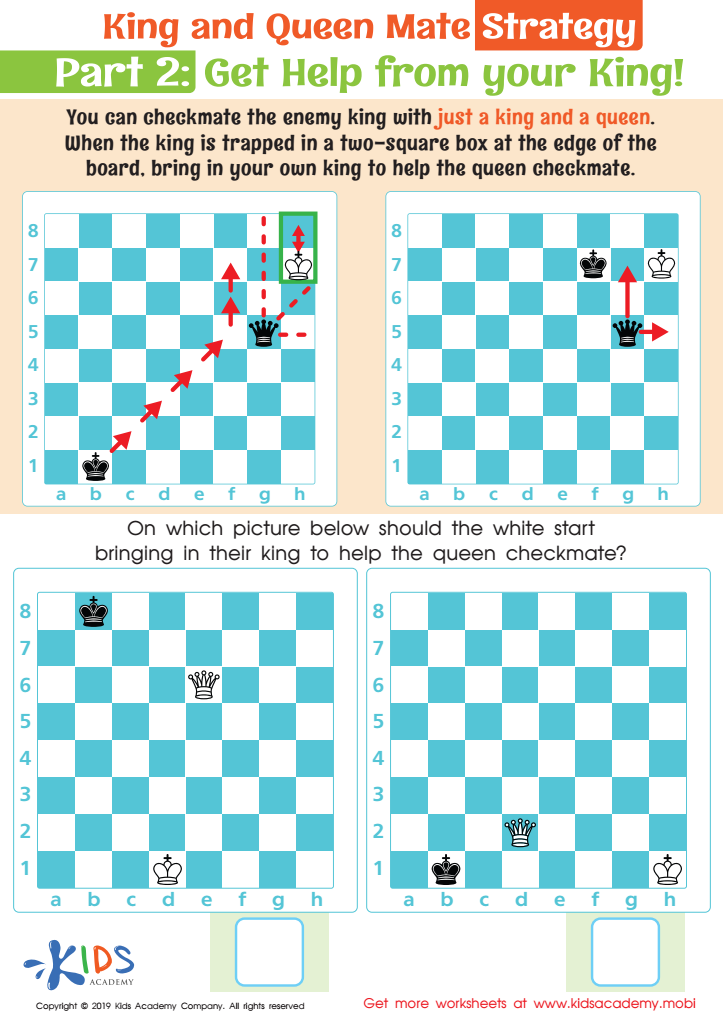
King and Queen Mate Strategy: Part 2 Worksheet
 Assign to My Students
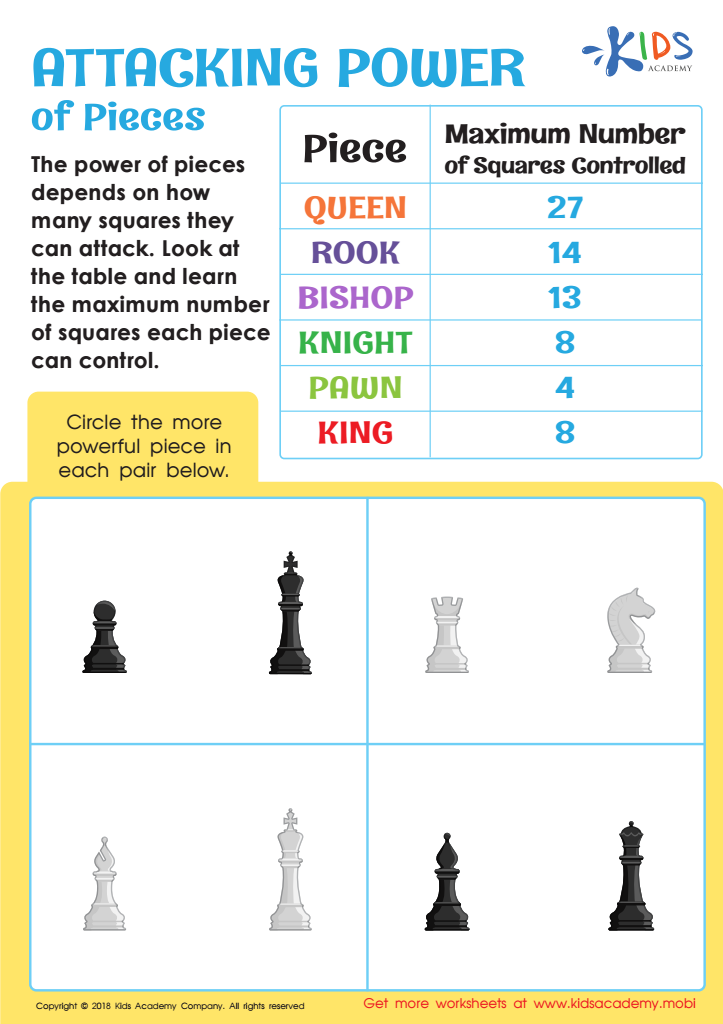
Attacking Power of Chess Pieces Worksheet
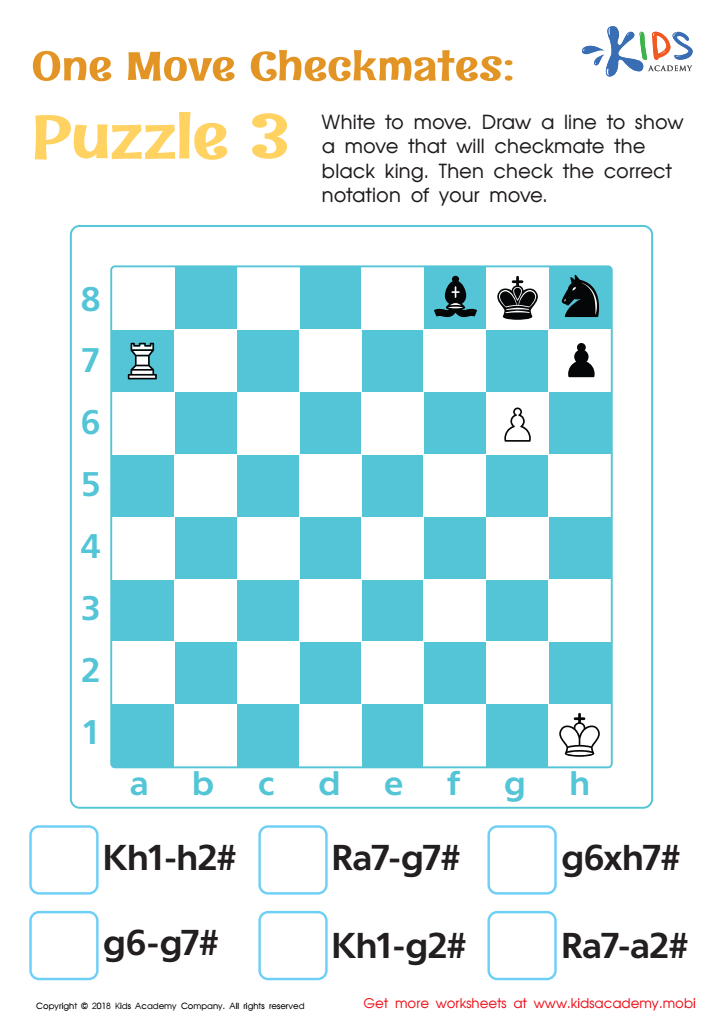
One Move Checkmates: Puzzle 3 Worksheet
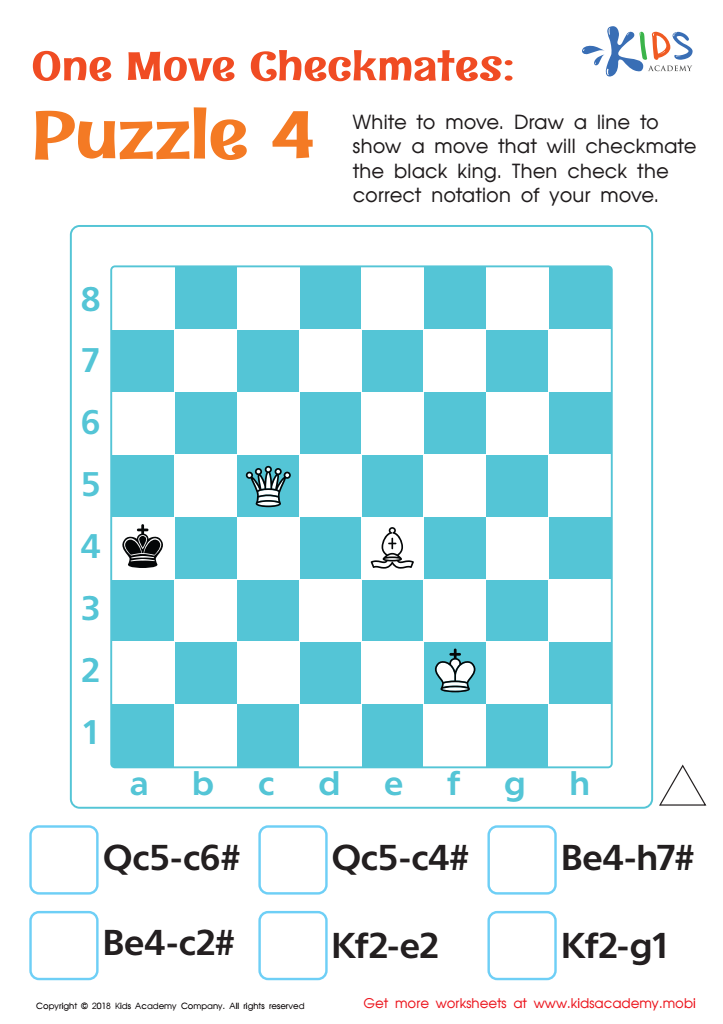
One Move Checkmates: Puzzle 4 Worksheet







Critical thinking enhancement through chess for young children ages 4-7 is vital for several reasons. First, engaging children in chess promotes cognitive development and helps them develop essential problem-solving skills. The game teaches them to analyze situations, foresee consequences, and make strategic decisions, nurturing a mindset that values reasoning over memorization.
Moreover, chess encourages patience and perseverance. Young players learn that not every move will yield immediate success, fostering resilience when facing challenges. This skill translates into other areas of life, reinforcing the notion that success is often the result of continuous effort and learning from mistakes.
Socially, chess also provides opportunities for interaction and collaboration among peers. It encourages communication skills as children discuss moves and strategies, paving the way for teamwork and sportsmanship.
Furthermore, introducing chess at a young age helps reinforce important concepts such as pattern recognition, concentration, and the ability to think longitudinally, skills essential in academic pursuits and real-life situations. Parents and teachers should prioritize critical thinking through chess to equip children for future challenges, promote intellectual growth, and foster a lifelong love of learning, making it a valuable investment in their overall development.